The intimate nature of sharehouse living creates unique challenges when romantic relationships between residents come to an end, transforming what should be a private matter into a community-wide experience that affects every aspect of daily life. Understanding how breakups ripple through shared living spaces becomes essential for both the involved parties and innocent bystanders who suddenly find themselves navigating complex social dynamics they never anticipated when signing their rental agreements.
The confined physical space of sharehouses intensifies emotional situations exponentially, turning ordinary relationship endings into elaborate social dramas that can permanently alter the character and harmony of entire living communities. When two people who once shared intimate moments must continue occupying the same building, using the same kitchen, and attending the same house gatherings, the potential for ongoing conflict and awkwardness creates stress that extends far beyond the original couple to encompass every resident within the shared environment.
The Immediate Aftermath and Shock Waves
The initial period following a breakup in a sharehouse typically generates the most intense disruption to established social patterns and living routines. Dating while living in Tokyo sharehouses explores the complexities that lead to these situations, but the aftermath presents entirely different challenges that require delicate navigation from all involved parties.
The emotional intensity of fresh breakups manifests in various ways that immediately impact communal spaces and shared resources. Kitchen usage patterns shift dramatically as former partners attempt to avoid simultaneous meal preparation, leading to complicated scheduling conflicts that affect other residents’ dining routines. Bathroom queues become exercises in strategic timing as individuals desperately try to maintain distance from their ex-partners while managing basic daily hygiene needs.
Common area utilization transforms from natural social gathering spaces into carefully negotiated territories where neutral parties must consider the emotional landmines of seating arrangements, entertainment choices, and conversation topics. The spontaneous social interactions that typically characterize healthy sharehouse communities become calculated endeavors fraught with potential for uncomfortable encounters and renewed conflicts.
Social Network Fragmentation and Alliance Formation
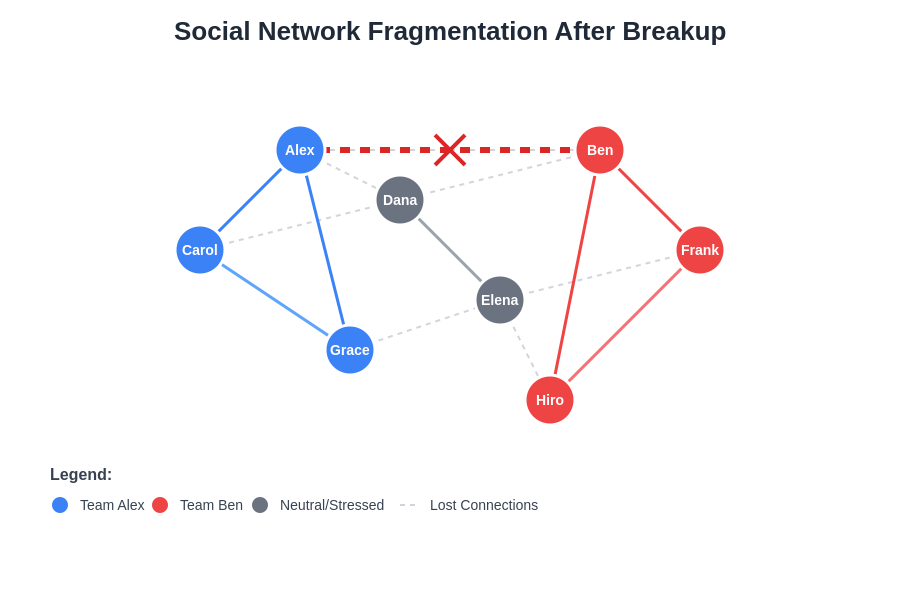
Breakups inevitably create social divisions within sharehouse communities as residents naturally align themselves with different sides of the conflict, whether consciously or unconsciously. Making friends through Tokyo sharehouse communities typically involves organic relationship building, but breakups can shatter these connections and force residents to choose loyalties they never intended to declare.
The formation of informal support networks around each party often leads to the emergence of competing social groups within the same physical space. Close friends of the couple may find themselves in particularly difficult positions, feeling obligated to provide emotional support while attempting to maintain neutrality and preserve their own living situations. These divided loyalties frequently result in reduced communication between house members and the dissolution of previously cohesive group activities.
Long-established house traditions such as communal dinners, movie nights, and weekend outings may become casualties of the social fragmentation as organizers struggle to navigate guest lists and participation dynamics without inadvertently causing additional pain or conflict. The ripple effects extend to seemingly unrelated social interactions as casual conversations become potential triggers for renewed arguments or emotional outbursts.
Physical Space Negotiations and Territory Disputes
The practical aspects of shared living become significantly more complicated when former romantic partners must continue coexisting in limited physical space. How personal space needs vary dramatically becomes painfully relevant as individuals seek to establish boundaries and create emotional distance within the constraints of shared accommodation.
Storage arrangements that once involved casual sharing of refrigerator space, closet areas, and common belongings must be renegotiated to prevent ongoing contact and potential disputes over personal property. The division of shared purchases, from kitchen appliances to cleaning supplies, can become contentious issues that require mediation from house management or neutral residents who find themselves reluctantly drawn into private conflicts.
Laundry schedules, previously informal arrangements based on convenience and availability, transform into strategic planning exercises designed to minimize encounters and reduce the likelihood of awkward interactions over shared washing machines and drying areas. The simple act of retrieving mail or packages becomes fraught with anxiety as residents attempt to predict and avoid their former partners’ movements throughout the building.
Communication Breakdown and House Management Challenges
The deterioration of communication between former partners often extends to broader house communication systems, affecting everything from utility bill discussions to household maintenance coordination. How to handle roommate conflicts without moving out provides general guidance, but romantic breakups present unique challenges that standard conflict resolution strategies may not adequately address.
House meetings become uncomfortable exercises in diplomatic navigation as facilitators attempt to address practical concerns while avoiding topics that might trigger emotional responses or renewed arguments between the affected parties. Simple decisions about household purchases, cleaning schedules, or visitor policies may become complicated negotiations requiring careful consideration of both parties’ emotional states and practical needs.
The informal communication networks that typically help sharehouses function smoothly may break down as residents become reluctant to serve as intermediaries or message carriers between former partners. This communication vacuum can lead to practical problems going unaddressed and important house information failing to reach all residents effectively.
Impact on Neutral Residents and Stress Distribution
Perhaps the most underappreciated aspect of sharehouse breakups involves the significant impact on residents who have no direct involvement in the romantic relationship but find their living experience dramatically altered by the emotional fallout. These innocent bystanders often experience increased stress levels, disrupted routines, and diminished enjoyment of their home environment through no fault of their own.
The emotional labor required to navigate the changed social dynamics falls disproportionately on neutral residents who may feel obligated to provide support, mediate conflicts, or simply endure the ongoing tension that permeates shared spaces. Living with Japanese roommates in Tokyo sharehouses can add cultural complexity to these situations as different approaches to conflict and emotional expression create additional layers of misunderstanding.
Neutral residents may find themselves walking on eggshells, constantly monitoring their words and actions to avoid accidentally triggering emotional responses or being perceived as taking sides in conflicts they never wanted to be involved in. The mental energy required for this constant vigilance can be exhausting and may lead to their own consideration of moving out to escape the toxic atmosphere.
Long-term Consequences and Community Recovery
The long-term effects of sharehouse breakups often persist long after the initial emotional intensity subsides, fundamentally altering the character and social dynamics of living communities in ways that may never fully return to their previous state. Some relationships within the house may be permanently damaged by the positions people took during the initial conflict period, creating lasting divisions that affect future interactions and social activities.
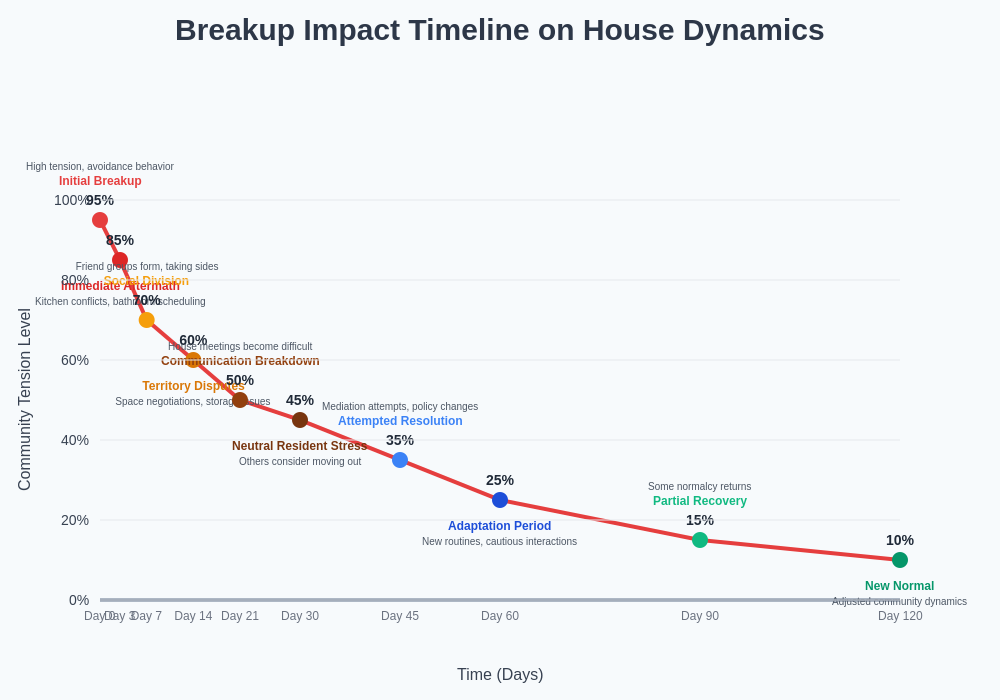
The departure of one or both parties involved in the breakup, while often providing relief from immediate tension, creates its own set of challenges as the house community must adapt to new residents and attempt to rebuild the social connections that were disrupted by the conflict. Real stories from Tokyo sharehouse residents often include accounts of how these situations evolved over time and the various strategies different houses employed to heal and move forward.
Trust issues may develop among residents who witnessed how quickly harmonious living situations can deteriorate, leading to more guarded approaches to forming friendships and romantic connections within shared living environments. The house’s reputation may also suffer as word spreads about dramatic conflicts, potentially affecting its ability to attract quality residents in the future.
Prevention Strategies and House Policies
Many sharehouses have developed informal or formal policies regarding romantic relationships between residents, though enforcement and effectiveness vary widely depending on house management approaches and community culture. Japanese sharehouse rules every foreigner should know may include guidelines about interpersonal relationships, though these often focus more on general behavior expectations than specific romantic relationship protocols.
Some houses implement cooling-off periods when relationships end, encouraging one party to find alternative accommodation temporarily to allow emotions to settle before attempting to resume normal cohabitation. Others rely on community mediation approaches that involve neutral residents in facilitating discussions and establishing boundaries that all parties can respect moving forward.
The most successful prevention strategies often involve establishing clear communication channels and conflict resolution procedures before problems arise, creating frameworks that can be activated when tensions develop rather than attempting to create solutions in the midst of emotional crises.
Healing and Moving Forward
The process of community healing following significant relationship breakups requires patience, understanding, and often active intervention from house management or respected long-term residents who can facilitate dialogue and help establish new social norms. Why building real friendships takes longer than expected becomes particularly relevant as houses work to rebuild trust and social connections after major disruptions.
Successful recovery often involves acknowledging the impact the situation had on all residents and working collectively to establish new traditions, social activities, and interaction patterns that don’t depend on the previously existing social structure. This may include rotating house meeting leadership, creating new communal activities, or even physical rearrangements of common spaces to help establish fresh associations and memories.
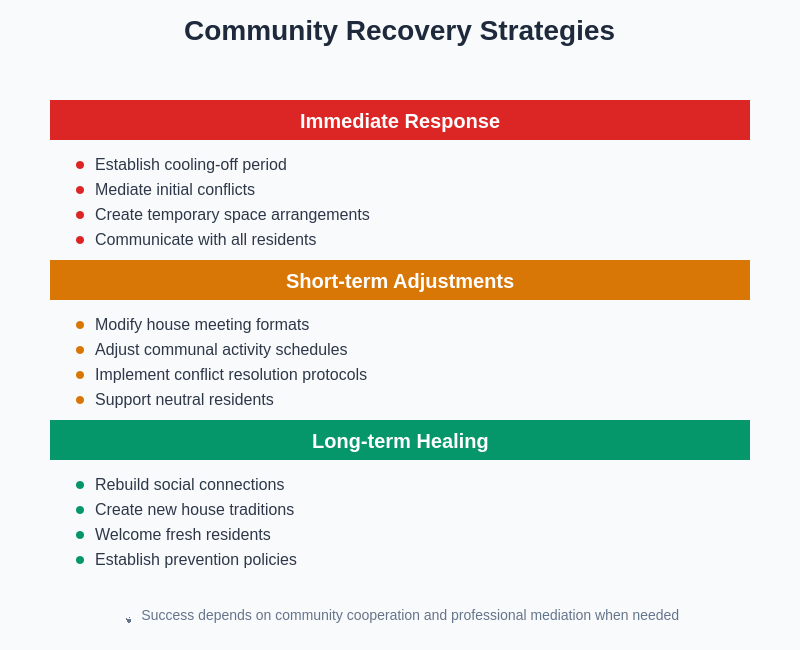
The introduction of new residents during the recovery period can serve as catalysts for positive change, bringing fresh energy and perspectives that help the community move beyond past conflicts. However, this transition must be managed carefully to ensure new residents receive accurate information about house dynamics without being immediately drawn into ongoing tensions or residual conflicts.
Cultural Considerations in International Houses
International sharehouses face additional complexity when breakups occur between residents from different cultural backgrounds, as varying approaches to conflict resolution, emotional expression, and social harmony can create misunderstandings and compound existing tensions. How cultural differences affect friendship building becomes critically important when emotional situations arise that require sensitive navigation across cultural boundaries.
Different cultural expectations about privacy, family involvement, and appropriate behavior during relationship endings can create friction not only between the former partners but also among neutral residents who may have varying comfort levels with emotional displays and conflict resolution approaches. What one culture considers normal processing of relationship problems may seem inappropriate or excessive to residents from different backgrounds.
The language barriers that exist in many international sharehouses can also complicate emotional situations as nuanced feelings and concerns may be difficult to express or understand across linguistic differences, leading to misinterpretations and escalating tensions that might be avoided with clearer communication.
The experience of witnessing or being affected by relationship breakups in sharehouse environments provides valuable lessons about human nature, conflict resolution, and the delicate balance required to maintain harmonious shared living situations. While these situations are never pleasant for anyone involved, they often serve as catalysts for developing stronger communication skills, greater empathy, and more resilient community structures that benefit all residents in the long run.
Understanding the far-reaching impacts of romantic relationship endings in shared living environments helps both current and prospective sharehouse residents prepare for these inevitable challenges and develop strategies for minimizing their negative effects while supporting community healing and growth. The key lies in recognizing that breakups in sharehouses are never purely private matters and require community-wide consideration and support to navigate successfully.
Disclaimer
This article is for informational purposes only and does not constitute professional relationship or legal advice. Every breakup situation is unique, and the dynamics described may not apply to all sharehouses or cultural contexts. Readers experiencing relationship difficulties in shared living situations should consider seeking appropriate support and guidance based on their specific circumstances and local resources.