Living in a sharehouse fundamentally transforms how you approach shopping, particularly when it comes to bulk purchasing and coordinated buying strategies. The dynamics of shared living spaces create both unprecedented opportunities for cost savings and unique challenges that individual apartment dwellers never encounter. Understanding these changes becomes essential for maximizing the financial and practical benefits of communal living while navigating the complex social and logistical considerations that emerge when multiple people share resources and storage space.
The transition from individual to group purchasing requires developing new skills in coordination, communication, and compromise that extend far beyond simple cost calculations. These skills become valuable life lessons that residents carry forward into future living situations and professional environments. The collaborative nature of bulk shopping in sharehouses creates opportunities for cultural exchange, relationship building, and practical problem-solving that enriches the overall living experience while providing tangible financial benefits.
The Economics of Group Purchasing Power
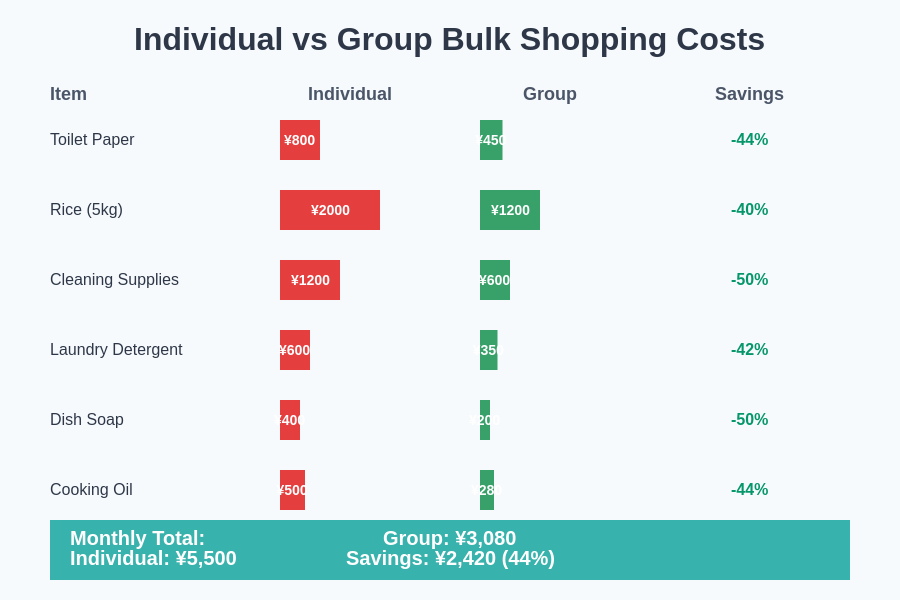
Bulk shopping in sharehouse environments generates significant cost savings through increased purchasing power and economies of scale that individual residents could never achieve alone. Group buying power reduces individual costs through coordinated purchases of essential items like cleaning supplies, toilet paper, rice, and other household necessities that every resident uses regularly.
The mathematical advantages become apparent when comparing per-unit costs between individual and group purchases. Large packages of everyday items typically offer substantial discounts compared to smaller quantities, but these savings only become accessible when multiple people coordinate their purchasing decisions and storage capabilities. The collective buying power of five to ten residents can unlock wholesale pricing tiers and bulk discounts that would be impractical for individual apartment dwellers.
Beyond direct cost savings, group purchasing reduces transportation costs and shopping frequency for individual residents. Instead of multiple people making separate trips to purchase similar items, coordinated shopping trips maximize efficiency while minimizing time investment and travel expenses. These efficiency gains become particularly valuable for residents with busy schedules or limited access to personal transportation options.
The coordination required for successful group purchasing also creates opportunities for residents to share knowledge about local shopping opportunities, seasonal sales, and specialty stores that offer particularly attractive bulk pricing options. This information sharing creates compound benefits that extend beyond immediate cost savings to include improved local knowledge and shopping expertise that benefits all participants.
Storage Challenges and Creative Solutions
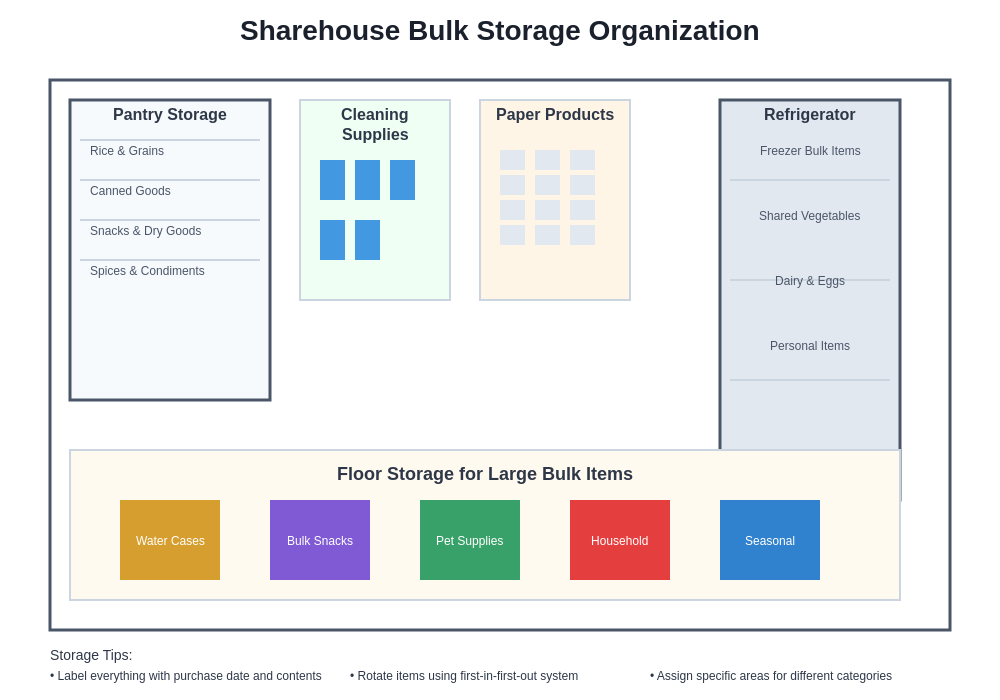
The practical realities of bulk shopping in sharehouses immediately reveal storage limitations that force creative problem-solving and space optimization strategies. Limited storage forces you to live minimally while simultaneously requiring careful coordination of shared storage spaces for bulk purchases that benefit all residents.
Common storage challenges include refrigerator space allocation, pantry organization, and finding appropriate areas for large packages of non-perishable items without creating clutter or blocking essential pathways. These challenges require systematic approaches to inventory management and clear agreements about storage rights and responsibilities among residents who contribute to group purchases.
Creative solutions often involve designating specific storage areas for bulk items, implementing rotation systems for refrigerator space, and establishing clear labeling protocols that prevent confusion about ownership and usage rights. Some sharehouses develop sophisticated inventory tracking systems that help residents monitor consumption rates and coordinate replacement purchases before running out of essential items.
The storage limitations also influence purchasing decisions, favoring items with longer shelf lives, compact packaging, and universal appeal among residents. These constraints naturally guide groups toward purchasing strategies that emphasize practical necessities over luxury items or specialty products that may not appeal to all contributors.
Coordination Mechanics and Communication Systems
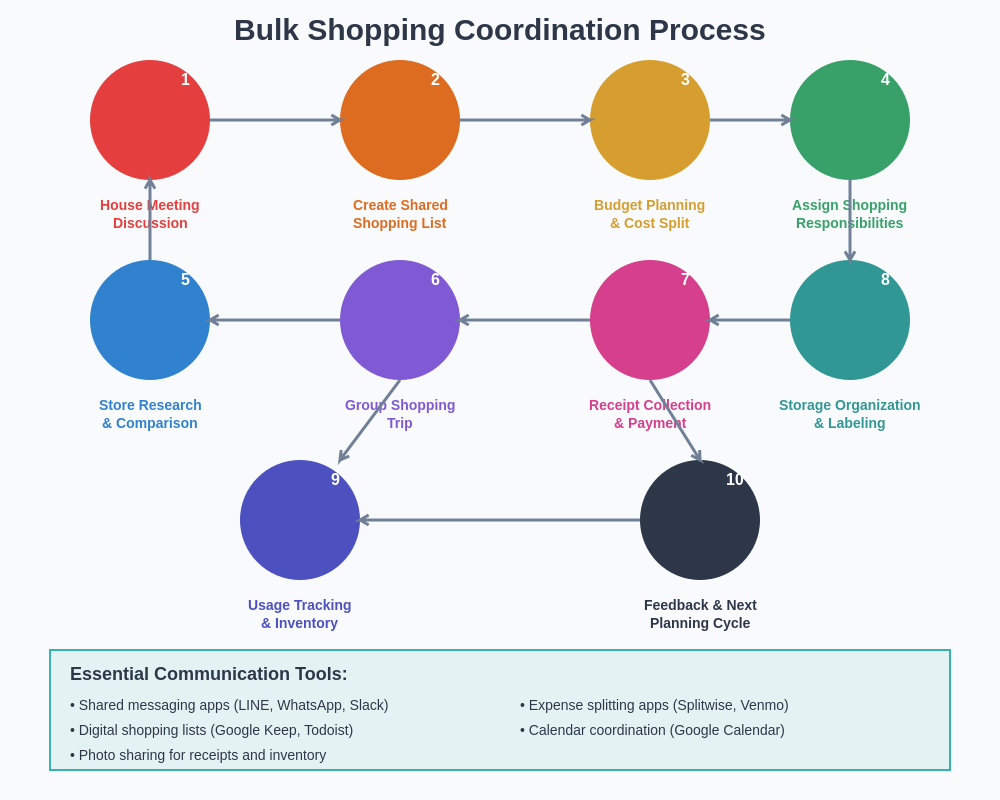
Successful bulk shopping requires establishing clear communication channels and decision-making processes that accommodate different schedules, preferences, and financial capabilities among residents. Shared shopping lists become complicated as they must balance individual needs with group efficiency while maintaining fairness and transparency in cost allocation.
Digital platforms and mobile applications often become essential tools for coordinating shopping lists, tracking contributions, and managing payment settlements between residents. These technological solutions help overcome scheduling conflicts and ensure that all interested residents can participate in bulk purchasing decisions regardless of their availability for in-person planning discussions.
The communication systems must also address varying comfort levels with financial commitments, dietary restrictions, and brand preferences that can complicate seemingly simple purchasing decisions. Establishing clear protocols for handling disagreements, accommodating special requests, and managing situations where residents cannot contribute to specific purchases helps maintain harmony and fairness in group purchasing arrangements.
Regular house meetings often include dedicated time for reviewing bulk purchasing needs, evaluating previous purchases, and planning upcoming shopping trips that maximize group participation and satisfaction. These discussions help identify patterns in consumption, preferences, and satisfaction levels that inform future purchasing strategies and storage solutions.
Cultural and Dietary Considerations
Bulk shopping in international sharehouse environments introduces complex considerations around cultural food preferences, dietary restrictions, and cooking traditions that significantly impact purchasing decisions and storage arrangements. Dietary restrictions complicate meal planning and extend these complications into bulk purchasing strategies that must accommodate diverse needs while maintaining cost efficiency.
Religious dietary requirements, vegetarian and vegan preferences, and food allergies create constraints that require careful consideration when selecting bulk items for group purchases. Items that seem universally useful, such as cooking oils or seasoning blends, may not be suitable for all residents due to ingredient restrictions or cultural preferences that affect their willingness to participate in group purchases.
The cultural aspects extend beyond dietary restrictions to include different expectations about food quality, brand preferences, and preparation methods that influence satisfaction with bulk purchasing decisions. Residents from different cultural backgrounds may have varying comfort levels with generic brands, different standards for freshness, and distinct preferences for packaging and presentation that affect their enthusiasm for group purchasing arrangements.
Educational opportunities emerge as residents learn about different cultural food traditions, dietary requirements, and cooking methods through collaborative shopping and meal preparation experiences. These cultural exchanges often lead to expanded food horizons and increased understanding of diverse lifestyle choices that enrich the overall sharehouse experience beyond simple cost savings.
Financial Management and Cost Distribution
The financial mechanics of bulk shopping require transparent and fair systems for cost distribution, payment collection, and expense tracking that maintain trust and participation among residents with different income levels and spending priorities. Shared expense apps create new problems while attempting to solve traditional challenges associated with group financial management.
Different payment methods, varying financial capabilities, and diverse attitudes toward money create challenges that require systematic approaches to ensure fairness and transparency in bulk purchasing arrangements. Some residents may prefer to pay immediately, while others may need extended payment terms, and these differences must be accommodated without creating administrative burdens or social tensions.
Tracking systems must account for varying consumption rates, occasional non-participation in specific purchases, and fair allocation of costs when residents join or leave the house mid-cycle. These complications require clear agreements about financial responsibilities and transparent record-keeping that allows all participants to verify their contributions and usage patterns.
The financial benefits of bulk shopping become most apparent when tracking long-term savings compared to individual purchasing patterns. Residents often discover that their monthly household expense savings significantly exceed their expectations, creating additional budget flexibility for other priorities and lifestyle choices.
Quality Control and Brand Consensus
Group purchasing decisions require consensus-building around quality standards, brand preferences, and value propositions that can satisfy diverse expectations while maintaining cost efficiency. Individual preferences for premium brands, organic products, or specific quality characteristics must be balanced against group budget constraints and the practical limitations of coordinated purchasing.
The process of establishing quality standards often involves trial purchases, group evaluations, and ongoing adjustments based on satisfaction levels and consumption patterns. These evaluation processes help groups identify products that offer optimal combinations of quality, cost-effectiveness, and universal acceptability among residents with different standards and expectations.
Brand loyalty and quality expectations vary significantly among residents from different cultural and economic backgrounds, creating opportunities for education and compromise that often lead to discovering new products and brands that offer superior value propositions. These discoveries frequently result in improved satisfaction and cost savings compared to individual purchasing habits.
Seasonal Variations and Planning Strategies
Bulk shopping strategies must adapt to seasonal variations in product availability, pricing fluctuations, and changing household needs that affect purchasing priorities and storage requirements throughout the year. Seasonal shopping affects storage space and requires advance planning to accommodate varying inventory needs and storage capacity limitations.
Winter heating costs, summer cooling expenses, and seasonal dietary preferences create cyclical patterns in bulk purchasing needs that require coordinated planning and flexible storage solutions. These seasonal considerations often influence the timing of major bulk purchases and storage space allocation decisions that affect all residents throughout the year.
Holiday seasons, academic calendars, and cultural celebrations create additional variables that affect resident availability, consumption patterns, and purchasing priorities. Planning systems must accommodate these predictable variations while maintaining flexibility for unexpected changes in household composition and needs.
Long-term planning opportunities emerge when residents coordinate seasonal purchases, take advantage of annual sales cycles, and develop relationships with local suppliers that offer consistent pricing and quality for bulk purchases. These strategic approaches often generate substantial savings compared to reactive purchasing patterns.
Impact on Individual Shopping Habits
Living in sharehouses with coordinated bulk purchasing fundamentally changes individual shopping behaviors, often leading to more conscious consumption patterns and improved financial management skills that extend beyond the shared living experience. The collaborative nature of group purchasing creates accountability and awareness around consumption habits that many residents find beneficial for personal development.
Individual shopping trips increasingly focus on personal items, fresh foods, and specialty products that aren’t suitable for group purchases, while bulk shopping handles the majority of household necessities and non-perishable items. This division creates more intentional and efficient individual shopping experiences that reduce both frequency and total expenses.
The experience of participating in group purchasing often teaches valuable skills in negotiation, compromise, and collaborative decision-making that prove useful in professional and personal contexts beyond sharehouse living. These skills contribute to personal development and improved relationship management capabilities that residents carry forward into future living situations.
Many residents discover that their overall monthly expenses decrease significantly despite initial concerns about coordination complexity and social obligations associated with group purchasing arrangements. These financial benefits often exceed expectations and create positive associations with collaborative consumption that influence future lifestyle choices.
Technology Integration and Digital Solutions
Modern bulk shopping coordination increasingly relies on digital platforms, mobile applications, and online tools that facilitate communication, planning, and payment management among residents with varying schedules and technical comfort levels. These technological solutions help overcome traditional barriers to group coordination while creating new challenges related to digital literacy and platform preferences.
Inventory tracking applications, shared shopping list platforms, and expense splitting tools have become essential infrastructure for successful bulk shopping programs in tech-savvy sharehouses. However, the selection and implementation of these tools require consensus-building and ongoing training to ensure all residents can participate effectively regardless of their technical background.
The integration of online shopping platforms and delivery services creates additional opportunities for bulk purchasing while introducing new considerations around package receipt, storage coordination, and quality verification that affect the overall success of group purchasing arrangements. These digital solutions often provide access to bulk pricing and specialty products that may not be available through traditional retail channels.
Long-term Sustainability and Community Building
Successful bulk shopping programs contribute to stronger community bonds and shared responsibility patterns that enhance the overall sharehouse experience beyond simple cost savings and practical benefits. The collaborative nature of coordinated purchasing creates regular opportunities for interaction, communication, and mutual support that strengthen relationships among residents.
The sustainability of bulk shopping arrangements depends on maintaining enthusiasm, fairness, and participation levels over time as residents change, preferences evolve, and external circumstances affect household dynamics. Successful programs develop adaptive mechanisms that accommodate these changes while preserving the core benefits and community aspects that make bulk shopping valuable.
Long-term residents often report that participation in bulk shopping programs taught them valuable lessons about cooperation, compromise, and resource management that improved their overall life skills and relationship capabilities. These personal development benefits frequently exceed the financial advantages and create lasting positive associations with collaborative living arrangements.
The environmental benefits of reduced packaging waste, fewer shopping trips, and more efficient resource utilization contribute to sustainability goals while creating shared values around responsible consumption that strengthen community identity and purpose among participating residents.
The transformation of shopping habits through sharehouse living represents a significant lifestyle adjustment that offers substantial benefits while requiring new skills and perspectives on consumption, cooperation, and community responsibility. Understanding these dynamics helps residents maximize the advantages while minimizing potential challenges associated with coordinated bulk purchasing in shared living environments.
Disclaimer
This article provides general information about bulk shopping practices in shared living situations and does not constitute financial or legal advice. Shopping arrangements, cost savings, and coordination strategies may vary significantly depending on local market conditions, household composition, and individual circumstances. Readers should establish clear agreements and communication systems that work for their specific situation and consult appropriate professionals when needed.