The intersection of professional obligations and communal living creates unique challenges for sharehouse residents whose careers demand frequent business travel. Modern professionals in Tokyo’s competitive business environment often find themselves navigating complex relationships between career advancement opportunities and the deep community connections that make sharehouse living so rewarding. Understanding how business travel affects long-term community building becomes essential for both traveling professionals and their housemates who seek to maintain stable, meaningful relationships despite irregular presence and shifting dynamics.
The challenge extends beyond simple absence management to encompass fundamental questions about community investment, relationship maintenance, and the psychological impact of divided attention between professional growth and personal connections. How to find the perfect sharehouse in Tokyo becomes more complex when considering how travel commitments will affect community integration and long-term satisfaction with shared living arrangements.
The Modern Business Travel Reality in Tokyo
Tokyo’s position as a major international business hub creates numerous opportunities for professionals to engage in domestic and international business travel, with industries ranging from technology and finance to manufacturing and consulting requiring regular movement between cities and countries. The frequency and duration of these trips vary significantly, from weekly domestic flights to month-long international assignments that can fundamentally alter how individuals participate in their home communities.
The corporate culture in Japan often emphasizes dedication and availability, leading to business travel schedules that may offer little advance notice or flexibility for personal planning. Living with Japanese roommates in Tokyo sharehouses provides insights into cultural expectations that can influence how travel commitments are perceived and accommodated within international sharehouse communities.
Modern remote work capabilities have created hybrid situations where business travel may be supplemented by extended periods of remote work from various locations, creating even more complex patterns of presence and absence that challenge traditional community building approaches. The integration of digital communication tools has changed expectations about maintaining contact during travel, but these technological solutions cannot fully replace physical presence in shared living spaces.
Impact on Relationship Formation and Maintenance
Business travel creates significant obstacles to the natural relationship formation processes that typically occur in sharehouse environments through shared daily experiences, spontaneous conversations, and gradual trust building. The unpredictable nature of travel schedules makes it difficult to establish consistent interaction patterns that form the foundation of meaningful friendships and community bonds.
Regular absence from important house events, celebrations, and problem-solving discussions can create feelings of disconnection and exclusion that may persist even when travelers return home. Making friends through Tokyo sharehouse communities highlights the importance of consistent presence and participation in building lasting relationships that withstand the challenges of busy professional lives.
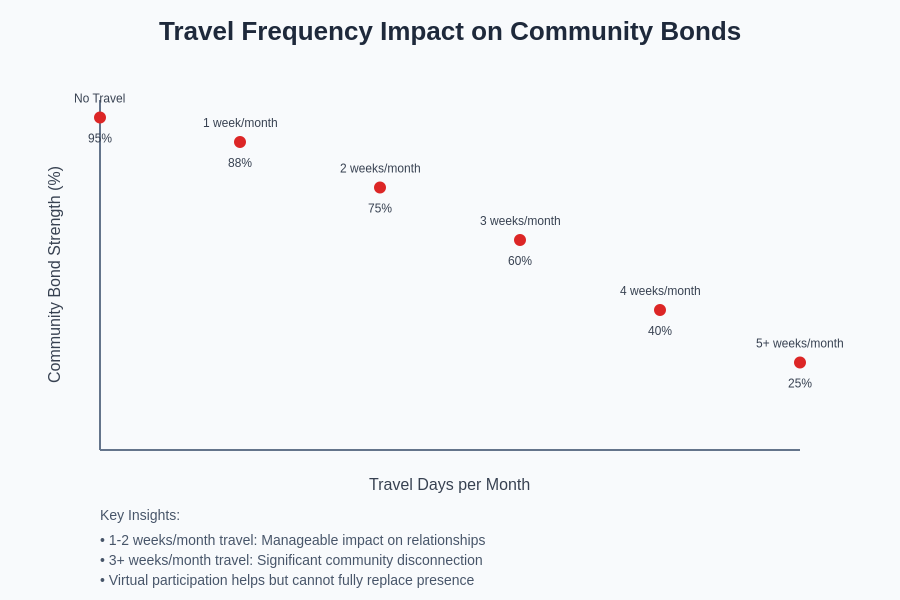
The emotional labor required to maintain relationships across irregular schedules falls heavily on both traveling individuals and their stationary housemates, creating potential resentment and misunderstandings when expectations about communication and participation differ significantly. Some residents may interpret frequent absence as lack of commitment to the community, while travelers may feel excluded from decisions and social dynamics that evolve during their absence.
Long-term relationship maintenance requires deliberate effort and creative solutions when traditional face-to-face interaction time becomes limited and unpredictable. The depth of connections that can be achieved under these circumstances may be fundamentally different from relationships formed through consistent daily contact and shared experiences.
Community Dynamics and Social Hierarchies
Frequent business travel can disrupt established social hierarchies and communication patterns within sharehouse communities, particularly when traveling individuals hold leadership roles or serve as mediators in house conflicts. How to handle roommate conflicts without moving out becomes more challenging when key community members are regularly unavailable for immediate problem resolution and relationship maintenance.
The financial implications of business travel, including expense accounts, upgraded accommodations, and international dining allowances, can create visible economic disparities that affect social dynamics and create subtle tensions around lifestyle differences and spending habits. These disparities may be particularly pronounced in sharehouses that attract residents from diverse professional backgrounds with varying career trajectories and earning potential.
Group decision-making processes become complicated when frequent travelers miss important house meetings, policy discussions, and consensus-building activities that shape community rules and social norms. Their delayed input or absence from voting can create frustration among other residents who must make decisions affecting everyone without full community participation.
The perception of commitment and investment in community life may vary significantly between traveling professionals and their more stationary housemates, leading to different expectations about participation levels, responsibility sharing, and long-term planning for house activities and improvements.
Financial and Practical Considerations
Business travel creates complex financial dynamics that extend beyond individual budgets to affect shared expenses, resource allocation, and community financial planning. How much Tokyo sharehouses really cost per month includes considerations for how irregular presence affects utility usage, food sharing arrangements, and collective purchases that form part of communal living economics.
Utility bill fluctuations caused by frequent absence may create disputes about fair cost allocation, particularly for heating, cooling, and internet services that maintain baseline costs regardless of individual usage patterns. Some sharehouses develop pro-rated systems for frequent travelers, while others maintain equal splitting policies that can create perceived inequities.
Shared grocery purchases and meal planning become complicated when travelers frequently miss planned group meals or consume shared resources irregularly, potentially leading to waste and frustration among residents who prefer predictable consumption patterns. Understanding utility bills in Japanese sharehouses provides context for how these shared expenses are typically managed across different housing arrangements.
Package delivery management becomes a community responsibility when traveling residents receive business-related shipments during their absence, requiring coordination and storage solutions that may burden other residents with additional responsibilities they did not anticipate when choosing shared living arrangements.
Technology’s Role in Maintaining Connection
Digital communication platforms have become essential tools for business travelers seeking to maintain community connections, but their effectiveness varies significantly depending on time zones, work schedules, and the quality of internet access during travel. Video calls during house meetings, meal times, and social gatherings can provide some sense of participation, but they cannot fully replicate the spontaneous interactions that build strong community bonds.
Social media and messaging apps enable ongoing communication about daily events and house updates, but the asynchronous nature of much digital communication can create delays in problem-solving and decision-making that affect community responsiveness and cohesion. The expectation to remain constantly connected during business travel can also create additional stress for traveling professionals who must balance work obligations with community maintenance responsibilities.
Shared digital calendars and planning tools help housemates coordinate around travel schedules and maintain awareness of availability for shared activities and responsibilities, but they require consistent updating and engagement from all participants to remain effective community management tools.
The digital divide between technologically savvy residents and those who prefer face-to-face communication can be exacerbated when business travel necessitates increased reliance on virtual interaction methods that may not suit all community members’ preferences and comfort levels.
Career Development vs Community Investment
The tension between career advancement opportunities that require business travel and deep community investment creates difficult choices for professionals who value both personal growth and meaningful relationships. Best Tokyo neighborhoods for sharehouse living becomes secondary to career considerations when travel requirements limit the benefits of premium locations and community amenities.
Professional networking and skill development opportunities available through business travel may provide long-term career benefits that ultimately improve financial stability and life satisfaction, but they come at the immediate cost of reduced community presence and relationship investment. The timeline for realizing career benefits often extends beyond typical sharehouse residency periods, making it difficult to evaluate the trade-offs objectively.
Some professionals find that business travel provides valuable perspective and experiences that enhance their contributions to community life when they are present, bringing diverse cultural insights and professional knowledge that enriches house discussions and activities. Others discover that frequent travel reduces their capacity for meaningful community participation regardless of their intentions and commitment levels.
The impact on long-term life planning and relationship goals varies significantly among individuals, with some finding that business travel delays their ability to form lasting friendships and romantic relationships, while others appreciate the independence and flexibility it provides during transitional life periods.
Strategies for Successful Integration
Successful integration of business travel with sharehouse community building requires proactive communication, realistic expectation setting, and creative solutions that accommodate both professional obligations and relationship maintenance needs. Japanese sharehouse rules every foreigner should know includes considerations for how cultural expectations about commitment and participation may be adapted for traveling professionals.
Advance communication about travel schedules, expected absence duration, and availability for house responsibilities helps other residents plan around absences and reduces frustration from unmet expectations. Regular check-ins during travel, participation in virtual house meetings, and proactive contribution to decision-making processes demonstrate ongoing commitment to community life despite physical absence.
Compensatory behaviors such as taking on additional responsibilities when present, organizing special events around travel schedules, and bringing back cultural experiences or gifts from business trips can help maintain positive relationships and show appreciation for community support during absences.
Some traveling professionals find success in choosing sharehouses with other professionals who understand career demands, while others prefer mixed communities that provide different perspectives and lifestyle balance models that help them evaluate their own priorities and choices.
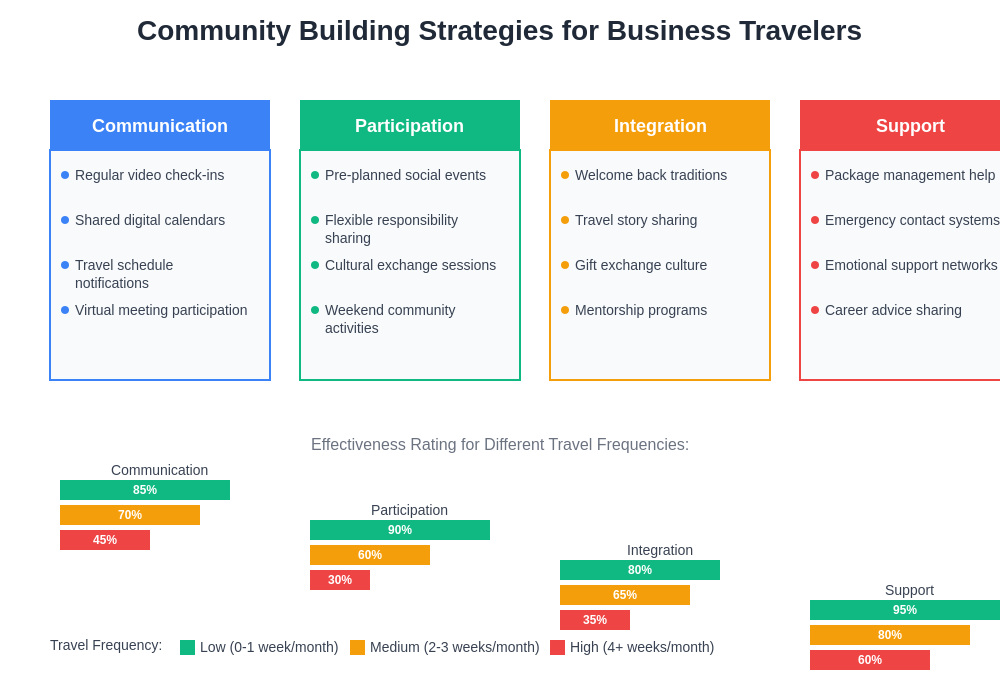
The effectiveness of different community building strategies varies significantly based on travel frequency, with communication and support systems becoming increasingly critical as absence periods lengthen and become more frequent.
Long-Term Community Evolution
Business travel patterns within sharehouse communities create natural cycles of renewal and change that can either strengthen or weaken long-term community stability depending on how they are managed and integrated into house culture. Real stories from Tokyo sharehouse residents includes experiences from both frequent travelers and their housemates that illustrate various approaches to managing these dynamics.
Communities that successfully adapt to include frequent travelers often develop more flexible social structures, improved communication systems, and stronger bonds among core residents who maintain consistency during others’ absences. These adaptations can create more resilient communities that better handle various types of disruption and change.
The mentor-mentee relationships that can develop between experienced travelers and newer residents provide valuable career guidance and cultural exchange opportunities that enhance community value beyond simple accommodation sharing. These relationships may persist even as individuals move between different sharehouses or transition to independent living arrangements.
Seasonal patterns in business travel create predictable rhythms that experienced communities can anticipate and plan around, developing traditions and activities that accommodate varying participation levels while maintaining community continuity and identity.
Mental Health and Social Well-being Implications
The psychological impact of balancing business travel with community participation affects both traveling individuals and their housemates in ways that may not be immediately apparent but can significantly influence long-term satisfaction and well-being. Frequent travelers may experience isolation and disconnection despite maintaining professional success, while stationary residents may feel abandoned or undervalued when community dynamics shift around others’ schedules.
The stress of maintaining multiple social and professional identities across different locations and communities can create mental health challenges that affect individual well-being and community relationships. Dating while living in Tokyo sharehouses becomes more complex when business travel limits availability for relationship development and maintenance.
Support systems within sharehouse communities can provide valuable emotional resources for managing travel stress and maintaining mental health, but they require intentional development and mutual understanding of the unique challenges faced by frequent travelers and their communities.
The long-term implications for personal identity and life satisfaction depend heavily on individual personality traits, career goals, and relationship priorities that may evolve as professionals gain experience with both business travel and community living arrangements.
Building Sustainable Communities
Creating sustainable sharehouse communities that can accommodate business travel requires intentional design of social structures, communication systems, and shared expectations that support both consistency and flexibility. Living costs in Tokyo sharehouses explained includes considerations for how community sustainability affects long-term housing costs and satisfaction.
Successful communities often develop explicit policies about travel communication, responsibility sharing during absences, and integration activities for returning travelers that help maintain community coherence despite irregular participation patterns. These policies work best when they emerge from community discussion rather than top-down management decisions.
The role of house managers or community coordinators becomes more important in communities with frequent travelers, as they provide continuity and conflict resolution capabilities that help maintain stability during periods of high turnover or irregular presence.
Long-term sustainability requires balance between accommodating individual career needs and maintaining community identity and culture that makes shared living worthwhile for all residents regardless of their travel obligations or preferences.
Business travel represents both a significant challenge and a potential opportunity for sharehouse communities that approach it thoughtfully and proactively. The most successful arrangements emerge when both traveling professionals and their housemates recognize the unique dynamics created by irregular presence and work together to develop solutions that honor both career advancement and community building goals. While perfect balance may not always be achievable, communities that embrace flexibility, communication, and mutual support can create lasting value for all residents while accommodating the diverse professional paths that define modern urban living in Tokyo.
Disclaimer
This article is for informational purposes only and does not constitute professional advice regarding career decisions or housing arrangements. Individual experiences with business travel and community living may vary significantly based on personal circumstances, career requirements, and community dynamics. Readers should consider their own priorities and consult with relevant professionals when making decisions about housing and career commitments.