Car sharing among sharehouse residents represents one of the most practical and economically advantageous arrangements that emerge naturally from communal living situations in Tokyo. The high costs associated with vehicle ownership in Japan, combined with limited parking availability and expensive insurance requirements, create compelling incentives for sharehouses to develop sophisticated car sharing systems that benefit all participating residents while fostering stronger community bonds and collaborative problem-solving skills.
The evolution of car sharing arrangements within sharehouses reflects broader trends toward collaborative consumption and resource optimization that characterize modern urban living. These systems range from informal arrangements between close friends to highly structured programs with detailed contracts, scheduling applications, and comprehensive cost-sharing formulas that ensure fairness and transparency among all participants while maintaining the flexibility that makes sharehouse living attractive to international residents.
Understanding the Financial Benefits and Cost Structure
The economic advantages of car sharing in sharehouses extend far beyond simple cost division, creating substantial savings that can significantly impact monthly budgets for participating residents. Living costs in Tokyo sharehouses explained demonstrates how transportation expenses often represent major budget categories that car sharing can dramatically reduce through efficient resource utilization and shared financial responsibility.
Vehicle ownership costs in Tokyo include monthly parking fees that can range from 20,000 to 50,000 yen per month depending on location, comprehensive insurance policies, regular maintenance expenses, periodic inspections required by Japanese law, and depreciation costs that accumulate regardless of actual usage frequency. Car sharing distributes these fixed costs among multiple users, often reducing individual transportation expenses by 60-80% compared to solo ownership while maintaining access to private vehicle transportation when needed.
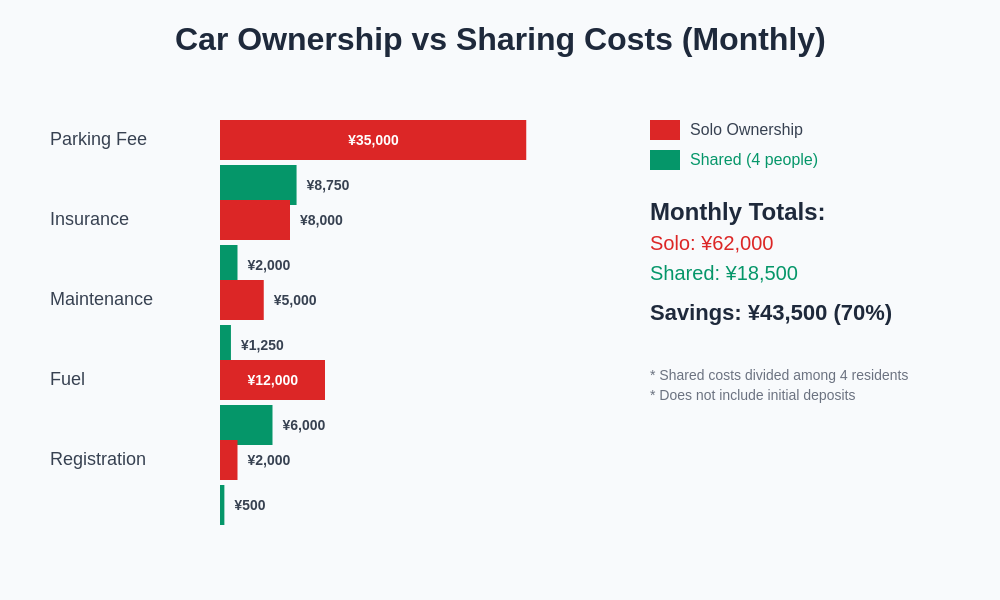
The variable costs associated with fuel consumption, highway tolls, and occasional repairs become more manageable when shared among multiple residents, while the psychological burden of major automotive expenses diminishes through collective responsibility and mutual support systems. How to budget realistically for sharehouse living includes transportation cost considerations that car sharing arrangements can significantly optimize for budget-conscious international residents.
Establishing Effective Scheduling and Booking Systems
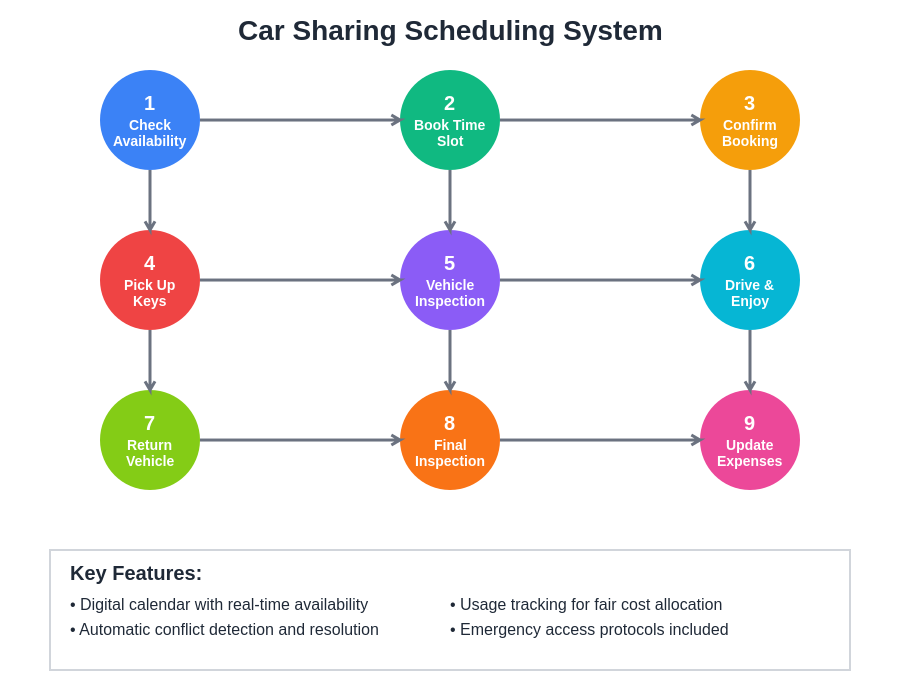
Successful car sharing among sharehouse residents requires robust scheduling mechanisms that prevent conflicts, ensure fair access distribution, and maintain transparency in vehicle availability and usage patterns. Modern digital solutions including shared calendar applications, specialized car sharing platforms, and house-specific booking systems have revolutionized how residents coordinate vehicle access while maintaining detailed usage records for cost-sharing calculations.
The most effective scheduling systems incorporate advance booking capabilities, emergency access protocols, and flexible time slot arrangements that accommodate varying work schedules, weekend activities, and spontaneous transportation needs. Priority systems often develop naturally based on usage frequency, financial contribution levels, and driving experience, though successful arrangements typically emphasize rotating access and democratic decision-making processes that prevent monopolization by individual residents.
Digital platforms such as shared Google calendars, dedicated car sharing applications, or house-specific booking systems provide real-time availability information, automatic conflict detection, and historical usage data that supports fair cost allocation and dispute resolution. Making friends through Tokyo sharehouse communities highlights how collaborative systems like car sharing strengthen social bonds and create positive interaction opportunities among residents with diverse backgrounds and lifestyles.
Emergency access protocols ensure that urgent transportation needs can be accommodated through established procedures that balance individual emergencies with collective convenience and previously confirmed reservations. These systems often include backup transportation alternatives, emergency contact procedures, and clear guidelines for modifying existing bookings when genuine emergencies arise.
Navigating Legal Requirements and Insurance Considerations
Car sharing arrangements in sharehouses must comply with Japanese vehicle registration laws, insurance requirements, and driving license regulations that can be complex for international residents unfamiliar with local automotive legal frameworks. What documents you need for Tokyo sharehouse applications provides context for documentation requirements that extend to vehicle sharing arrangements and legal compliance considerations.
Insurance coverage represents the most critical legal consideration for sharehouse car sharing, requiring comprehensive policies that protect all authorized drivers, cover potential damage scenarios, and provide adequate liability protection for accidents involving shared vehicles. Japanese car insurance typically requires named driver additions for each person who will operate the vehicle, necessitating careful policy management and potentially increased premium costs that must be factored into shared expense calculations.
International driving licenses, Japanese driving license conversions, and varying driving experience levels among residents create additional complexity that must be addressed through clear eligibility criteria and safety protocols. Some sharehouses establish minimum driving experience requirements, mandatory safety orientations, or graduated access systems that ensure all vehicle operators possess adequate skills and legal authorization to drive in Japan.
Liability distribution mechanisms protect individual residents from bearing full financial responsibility for accidents or damage that occur during their assigned usage periods, while establishing clear protocols for insurance claims, damage reporting, and cost responsibility that maintain fairness and transparency among all participants in the car sharing arrangement.
Developing Fair Usage Policies and Community Guidelines
Effective car sharing systems require comprehensive usage policies that address scheduling fairness, vehicle maintenance responsibilities, fuel management, cleanliness standards, and behavior expectations that maintain vehicle condition and ensure positive experiences for all residents. Japanese sharehouse rules every foreigner should know provides cultural context for developing house rules that complement car sharing guidelines and maintain community harmony.
Mileage limitations, time restrictions, and geographical boundaries help prevent vehicle overuse while ensuring equitable access distribution among participating residents. Many successful arrangements implement weekly or monthly usage quotas, advance booking time limits, and fair rotation systems that prevent monopolization while accommodating varying transportation needs and usage patterns among different residents.
Vehicle maintenance responsibilities typically rotate among users or follow contribution-based systems where residents share inspection scheduling, routine maintenance coordination, and minor repair management. Clear protocols for handling mechanical issues, damage reporting, and emergency repairs ensure that problems receive prompt attention while distributing the administrative burden of vehicle ownership among multiple responsible parties.
Cleanliness standards and vehicle condition expectations maintain the shared resource in good condition while respecting the diverse cultural backgrounds and personal standards of international residents. Detailed guidelines regarding interior cleaning, fuel level requirements, parking procedures, and personal item policies prevent common sources of friction while establishing clear accountability measures for vehicle care and respect.
Managing Costs and Financial Transparency
Transparent cost-sharing mechanisms form the foundation of successful car sharing arrangements, requiring clear formulas for dividing fixed costs, variable expenses, and unexpected repair costs among participating residents. How to spot financial red flags in sharehouse contracts offers insights into financial transparency principles that apply equally to informal car sharing agreements and formal housing contracts.
Fixed cost distribution typically involves equal monthly contributions from all authorized users regardless of actual usage levels, covering insurance premiums, parking fees, registration costs, and planned maintenance expenses. This approach provides predictable monthly expenses for participants while ensuring that vehicle access remains available even during periods of lower individual usage.
Variable cost allocation based on actual usage patterns, mileage tracking, or time-based calculations ensures that heavy users contribute proportionally more toward fuel costs, wear-and-tear expenses, and usage-dependent maintenance needs. Digital tracking systems, fuel receipt management, and automated calculation tools help maintain accurate records while minimizing administrative burden and potential disputes among residents.
Emergency fund contributions prepare the car sharing group for unexpected expenses such as major repairs, accident deductibles, or replacement costs that exceed normal budgeting parameters. These collective savings accounts provide financial security while preventing individual residents from bearing disproportionate costs during unfortunate circumstances that affect the shared vehicle.
Addressing Common Challenges and Conflict Resolution
Car sharing arrangements inevitably encounter challenges including scheduling conflicts, maintenance disagreements, cost disputes, and behavioral issues that require established resolution mechanisms and proactive communication strategies. How to handle roommate conflicts without moving out provides conflict resolution frameworks that apply effectively to car sharing disputes and community disagreements.
Scheduling conflicts during peak usage periods such as weekends, holidays, or special events require fair resolution systems that balance individual needs with community cooperation. Many successful arrangements develop priority systems, alternative transportation subsidies, or flexible time-sharing approaches that accommodate competing demands while maintaining positive relationships among residents.
Vehicle damage incidents create potentially contentious situations that benefit from clear protocols regarding responsibility assessment, insurance claim procedures, and cost allocation among involved parties. Comprehensive documentation systems, damage reporting procedures, and neutral arbitration mechanisms help resolve disputes fairly while maintaining trust and cooperation among car sharing participants.
Usage pattern conflicts arise when residents have different expectations regarding vehicle availability, trip duration limits, or destination restrictions. Regular community meetings, feedback systems, and policy adjustment mechanisms ensure that car sharing arrangements evolve to meet changing needs while maintaining fairness and community satisfaction among all participants.
Integrating Car Sharing with Public Transportation
Strategic integration of car sharing with Tokyo’s extensive public transportation network maximizes transportation flexibility while optimizing costs and maintaining environmental consciousness. How commute times impact your quality of life explores how transportation choices affect daily experiences and long-term satisfaction in Tokyo living situations.
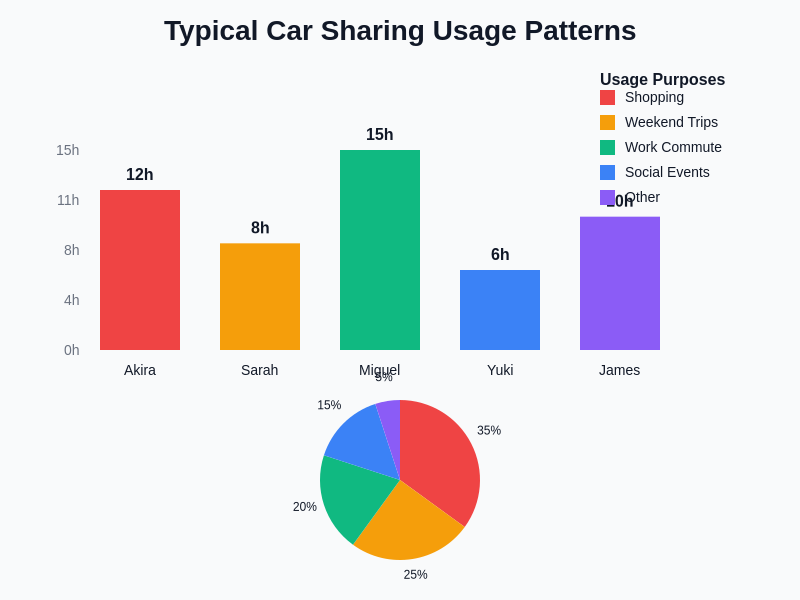
Complementary usage patterns emerge naturally as residents use public transportation for routine commuting while reserving shared vehicles for specific purposes such as weekend excursions, shopping trips requiring cargo capacity, or destinations poorly served by trains and buses. This hybrid approach reduces vehicle usage costs while maintaining access to private transportation when public options prove inadequate or inconvenient.
Cost comparison analysis helps residents make informed decisions about when shared vehicle usage provides better value than public transportation alternatives, considering factors such as trip distance, passenger numbers, luggage requirements, and time constraints that influence optimal transportation mode selection for specific situations.
How transportation costs impact entertainment budgets demonstrates how effective car sharing arrangements can free up financial resources for recreational activities and social experiences that enhance overall quality of life for international residents living in Tokyo sharehouses.
Technology Solutions and Digital Tools
Modern car sharing arrangements benefit significantly from technological solutions that streamline booking processes, track usage patterns, manage financial calculations, and facilitate communication among participating residents. Smartphone applications, cloud-based systems, and specialized platforms designed for vehicle sharing provide sophisticated tools that enhance efficiency while reducing administrative burden and potential conflicts.
Automated booking systems prevent double-booking conflicts while providing real-time availability information and usage history that supports fair scheduling and cost allocation decisions. GPS tracking capabilities, fuel monitoring systems, and maintenance reminder features help optimize vehicle management while providing detailed data for expense sharing and usage pattern analysis.
Digital payment platforms, expense tracking applications, and automated cost calculation tools streamline financial management while maintaining transparency and accuracy in shared expense distribution. These systems reduce manual calculation errors while providing clear audit trails that support dispute resolution and financial accountability among car sharing participants.
Communication platforms integrated with booking systems facilitate coordination among residents while providing centralized information sharing for maintenance updates, schedule changes, and community announcements related to the shared vehicle. These tools enhance community cooperation while reducing misunderstandings and communication gaps that can undermine car sharing effectiveness.
Safety Protocols and Risk Management
Comprehensive safety protocols protect both individual residents and the broader sharehouse community from risks associated with vehicle sharing, including accident procedures, emergency response systems, and preventive safety measures that reduce the likelihood of incidents and their potential consequences. How emergency medical situations are handled provides context for emergency preparedness that extends to vehicle-related incidents and safety considerations.
Driver qualification verification ensures that all authorized vehicle users possess valid licensing, adequate driving experience, and familiarity with Japanese traffic laws and cultural driving practices. Regular safety briefings, driving skill assessments, and cultural orientation sessions help international residents adapt to local driving conditions while maintaining safety standards that protect all community members.
Emergency response procedures outline specific steps for handling accidents, mechanical breakdowns, and other vehicle-related emergencies that may occur during shared usage periods. These protocols include emergency contact information, insurance claim procedures, alternative transportation arrangements, and communication systems that ensure rapid response and appropriate support for affected residents.
Vehicle maintenance and safety inspection schedules ensure that shared vehicles remain in optimal condition while identifying potential safety issues before they develop into serious problems. Regular maintenance coordination, safety equipment verification, and mechanical condition monitoring protect all users while maintaining the vehicle’s reliability and performance characteristics.
Long-term Sustainability and Community Benefits
Successful car sharing arrangements contribute to long-term community sustainability through resource optimization, environmental benefits, and strengthened social connections that enhance overall sharehouse living experiences. How sharehouse living prepares you for future challenges explores how collaborative systems like car sharing develop valuable life skills and community building capabilities that benefit residents beyond their immediate housing situations.
Environmental impact reduction through shared vehicle usage decreases per-capita carbon emissions, reduces urban parking demand, and promotes sustainable transportation practices that align with broader environmental consciousness and social responsibility values. These benefits appeal particularly to international residents who prioritize environmental stewardship and sustainable living practices during their time in Japan.
Community building effects extend beyond transportation convenience to encompass enhanced cooperation skills, cross-cultural communication development, and collaborative problem-solving experiences that strengthen relationships among residents with diverse backgrounds and perspectives. Car sharing arrangements often become foundations for broader community initiatives and lasting friendships that enrich the international living experience.
Economic benefits compound over time as residents develop financial management skills, collaborative decision-making abilities, and resource optimization strategies that prove valuable in future living situations and professional contexts. The experience of managing shared resources and navigating complex community agreements provides practical skills that enhance personal development and career preparation for international residents.
The evolution of car sharing systems within sharehouses reflects broader trends toward collaborative consumption, resource sharing, and community-oriented living that characterize modern urban environments. These arrangements demonstrate how creative solutions to common challenges can enhance both individual experiences and community cohesion while providing practical benefits that improve quality of life for international residents navigating the complexities of living in Tokyo.
Disclaimer
This article is for informational purposes only and does not constitute legal, financial, or insurance advice. Car sharing arrangements involve complex legal and financial considerations that vary based on specific circumstances, local regulations, and insurance requirements. Readers should consult with appropriate professionals including legal advisors, insurance agents, and automotive experts before entering into car sharing agreements. The effectiveness of car sharing systems may vary depending on house dynamics, resident commitment levels, and local transportation alternatives.