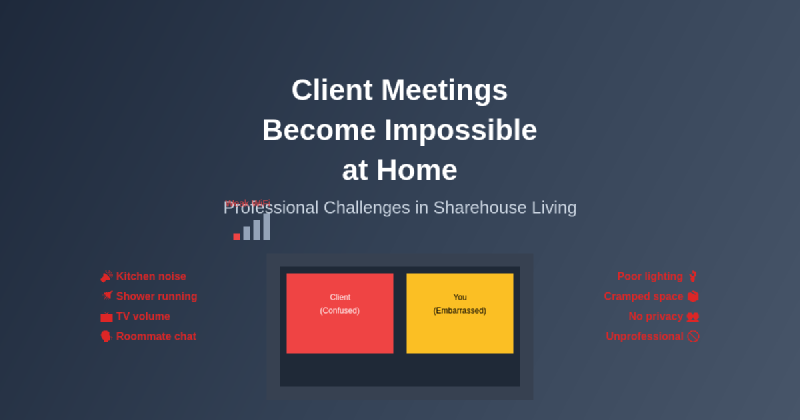
The devastating reality of attempting professional client meetings from Tokyo sharehouse environments reveals the fundamental incompatibility between shared living spaces and serious business requirements that demand privacy, control, and professional presentation standards that simply cannot be achieved in multi-resident housing situations. International professionals who initially viewed sharehouses as cost-effective solutions for Tokyo living quickly discover that their career advancement and client relationships suffer irreparable damage when business interactions become impossible to conduct from their supposed home base.
The cascading professional consequences extend far beyond simple inconvenience, creating career limitations that force residents to choose between affordable housing and professional credibility in ways that ultimately undermine the financial benefits that originally motivated their sharehouse selection. Understanding why sharehouses fundamentally fail to support professional client interactions requires examining the complex interplay of space limitations, noise control challenges, privacy concerns, and cultural expectations that create impossible barriers for serious business relationships.
Space Limitations and Physical Constraints
Private rooms in Tokyo sharehouses typically measure between six to twelve square meters, creating physical environments that appear cramped and unprofessional during video conferences while lacking sufficient space for the equipment, documentation, and staging areas necessary for effective client presentations and business discussions. How remote work equipment affects space usage demonstrates the spatial challenges involved, but the reality proves even more constraining when attempting to create professional presentation environments within residential room configurations.
The furniture provided in sharehouse rooms prioritizes sleeping and basic storage over professional workspace requirements, creating visual backgrounds that communicate student housing or temporary accommodation rather than established business operations capable of handling significant client relationships and projects. Standard room furnishing includes basic beds, small desks, and minimal storage solutions that create cluttered, unprofessional appearances during video calls while failing to provide adequate workspace for document management and presentation materials.
Lighting conditions in sharehouse rooms typically rely on overhead residential fixtures that create unflattering shadows and inadequate illumination for professional video presentations, while window placement often creates backlighting problems or privacy concerns that compromise visual presentation quality during client interactions. The inability to control ambient lighting conditions makes it impossible to maintain consistent professional presentation standards across different meeting times and weather conditions.
Camera positioning options become severely limited in small rooms where furniture placement cannot be adjusted to create optimal viewing angles for professional presentations, often forcing residents to position cameras at awkward angles that emphasize room limitations while creating distracting visual elements that undermine professional credibility during important client discussions.
Noise Control and Acoustic Challenges
Sound isolation in converted sharehouse buildings proves inadequate for professional communication requirements, with thin walls and shared utility systems creating constant background noise from neighboring residents, building systems, and street activity that disrupts client calls and compromises the professional atmosphere necessary for serious business discussions. How noise pollution affects sleep quality addresses general noise issues, but professional communication demands create even more stringent acoustic requirements that sharehouses cannot meet.
Kitchen activity from other residents creates particularly disruptive noise patterns during typical business hours when cooking preparation, appliance usage, and social conversations generate audio interference that makes professional phone calls impossible while simultaneously broadcasting residential living situations to clients who expect commercial office environments. The unpredictable timing of kitchen noise makes it impossible to schedule reliable quiet periods for important client communications.
Bathroom and utility noise from shared facilities creates embarrassing audio interruptions during client meetings, with toilet flushing, shower operation, and plumbing sounds creating professional credibility damage that can permanently affect client relationships and business prospects. The shared nature of these facilities means that residents cannot control or predict when disruptive sounds will occur during critical business communications.
Common area social activities generate conversational noise, television audio, and recreational sounds that penetrate room walls and create unprofessional background audio during client calls, while residents cannot request quiet periods without creating interpersonal conflicts that affect their overall living environment and community relationships. The democratic nature of shared living means that individual professional needs often conflict with community activities and social expectations.
Neighbor interactions in hallways, stairwells, and entryways create additional noise sources that can disrupt client meetings with door slamming, conversation, and foot traffic sounds that communicate residential rather than professional environments to clients who may question the legitimacy and stability of business operations conducted from shared housing facilities.
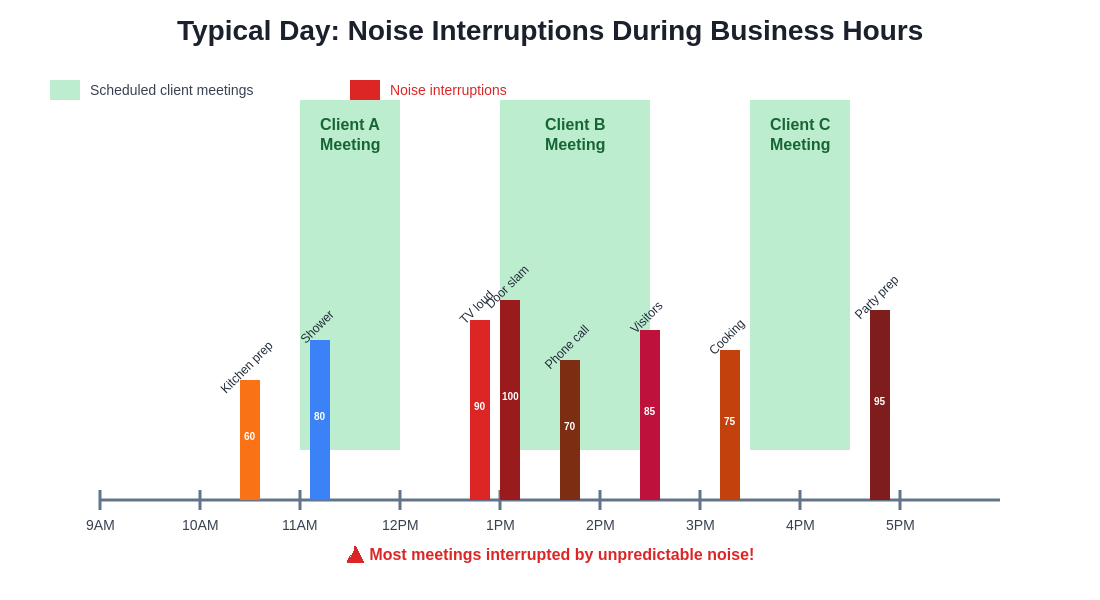
The unpredictable nature of sharehouse noise creates impossible conditions for scheduling reliable client communications, as residents cannot control when disruptive activities will occur during critical business interactions.
Privacy Concerns and Confidentiality Issues
Client confidentiality requirements for sensitive business discussions become impossible to maintain in shared living environments where conversations can be overheard by multiple residents who may inadvertently access proprietary information, trade secrets, or confidential client data that professional ethics and legal requirements demand be protected through secure communication environments. The presence of multiple unknown residents creates inherent security risks that violate professional confidentiality standards expected in legitimate business relationships.
Document security becomes compromised in sharehouse environments where shared common areas, delivery systems, and resident access create opportunities for confidential client materials to be accessed, misplaced, or compromised by individuals who have no business relationship or confidentiality obligations regarding sensitive client information. The inability to control access to professional materials creates liability issues that can expose clients to security breaches and professional malpractice claims.
Internet network security in sharehouses typically involves shared wireless systems where multiple users create potential security vulnerabilities that can compromise confidential client communications, file transfers, and sensitive business data that require secure, controlled network environments to meet professional security standards and client expectations for data protection. How shared streaming accounts work in practice illustrates network sharing complexities that extend to professional security concerns.
Calendar privacy becomes impossible when residents can observe professional schedules, client names, and meeting patterns that should remain confidential to protect client privacy and maintain professional discretion regarding business relationships and project details that clients expect to remain secure from unauthorized observation or access.
Professional Image and Credibility Damage
Address perception problems arise when clients research sharehouse addresses and discover shared living arrangements that may raise questions about professional stability, business legitimacy, and financial capability that can undermine client confidence and affect their willingness to engage in significant business relationships or high-value projects requiring established professional credentials.
Business registration complications occur when attempting to use sharehouse addresses for professional services that require stable business locations, creating legal and administrative challenges for establishing legitimate business operations while potentially violating sharehouse lease agreements that prohibit commercial activities or business operations within residential premises.
Mail and package delivery issues in sharehouses create professional communication problems when important client documents, contracts, or business materials cannot be securely received or may be accessed by other residents, creating potential confidentiality breaches and delivery reliability issues that affect business operations and client service quality.
Professional networking becomes compromised when colleagues, clients, or business partners cannot be invited to the residence for meetings, social events, or professional gatherings due to shared living arrangements that create inappropriate or unprofessional environments for business relationship development and maintenance.
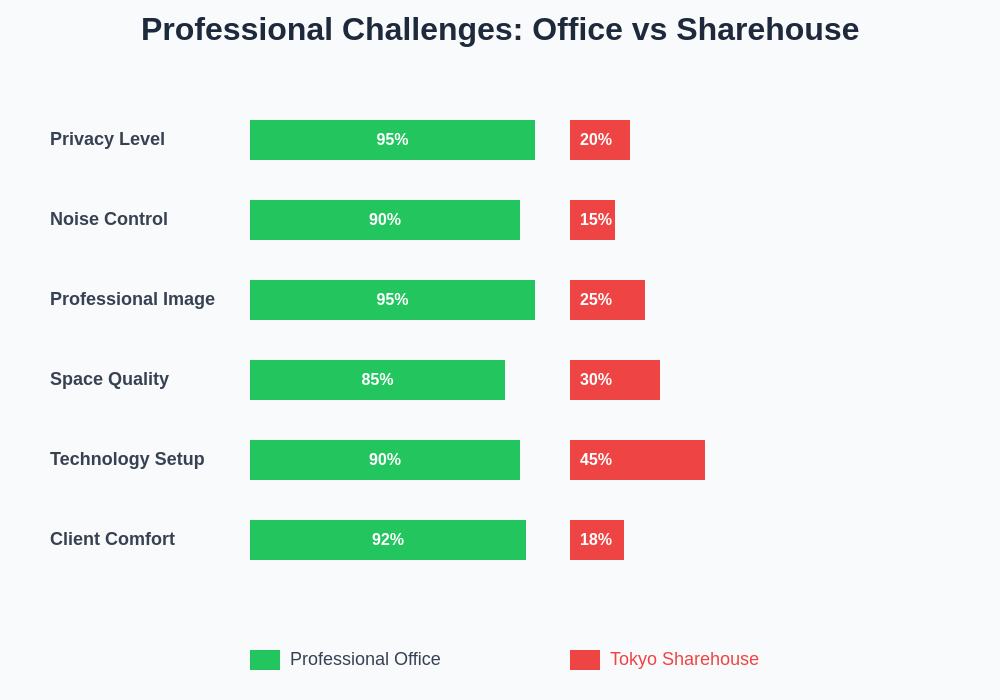
Technology Infrastructure Limitations
Internet bandwidth limitations in sharehouses where multiple residents simultaneously use shared connections for streaming, gaming, and personal internet activities create unreliable connectivity during critical client presentations, file transfers, and video conferences that require consistent high-speed connections for professional quality communication and business operations.
Equipment security becomes problematic in shared living environments where valuable professional equipment including computers, cameras, audio systems, and presentation materials face theft risks from multiple residents and their guests who have access to common areas and may have opportunities to access private rooms during resident absences or security lapses.
Power supply limitations in older sharehouse buildings may prove inadequate for professional equipment requirements, creating reliability issues during important client meetings when power demands from multiple professional setups exceed building electrical capacity or create circuit overloads that disrupt business operations during critical communication periods.
Technical support access becomes complicated when professional equipment problems occur during client meetings, as residents cannot easily access technical assistance or replacement equipment without leaving their rooms and potentially missing important business communications or creating unprofessional delays during client interactions.
Cultural and Social Complications
Japanese business culture expectations regarding professional presentation and meeting environments often conflict with sharehouse living realities, creating cultural credibility gaps that can affect business relationships with local clients who expect traditional professional office environments and may view sharehouse operations as lacking proper business credentials or cultural understanding.
Housemate behavior unpredictability creates ongoing anxiety about potential interruptions, noise, or inappropriate activities during client meetings, forcing residents to constantly manage uncertainty about their living environment’s impact on professional interactions while unable to control or predict other residents’ activities during critical business periods.
Social obligation conflicts arise when housemates expect participation in community activities, social events, or household responsibilities during times when professional commitments require availability for client communications, creating interpersonal tensions that affect both living environment harmony and professional scheduling flexibility.
Guest policy restrictions in many sharehouses prevent residents from inviting clients, colleagues, or business partners to their residence for meetings, presentations, or professional social events, limiting networking opportunities and creating professional relationship development challenges that can affect career advancement and business growth.
Financial Impact and Career Consequences
Lost business opportunities result when clients choose competitors who can provide professional meeting environments, creating direct financial losses that may exceed the housing cost savings initially gained through sharehouse selection while limiting long-term career growth and professional development opportunities that require credible business presentation capabilities.
Professional development limitations occur when career advancement requires client relationship building, presentation skills demonstration, and business credibility establishment that become impossible within sharehouse living constraints, creating long-term career damage that far exceeds short-term housing cost benefits.
Equipment investment requirements force residents to spend substantial amounts on professional presentation tools, noise cancellation technology, and workspace upgrades that may exceed apartment rental cost differences while still failing to achieve professional standards necessary for serious client relationships and business growth.
Alternative workspace costs accumulate when residents must rent co-working spaces, meeting rooms, or professional facilities for client interactions, creating additional monthly expenses that eliminate sharehouse cost advantages while adding complexity to professional scheduling and business operations.
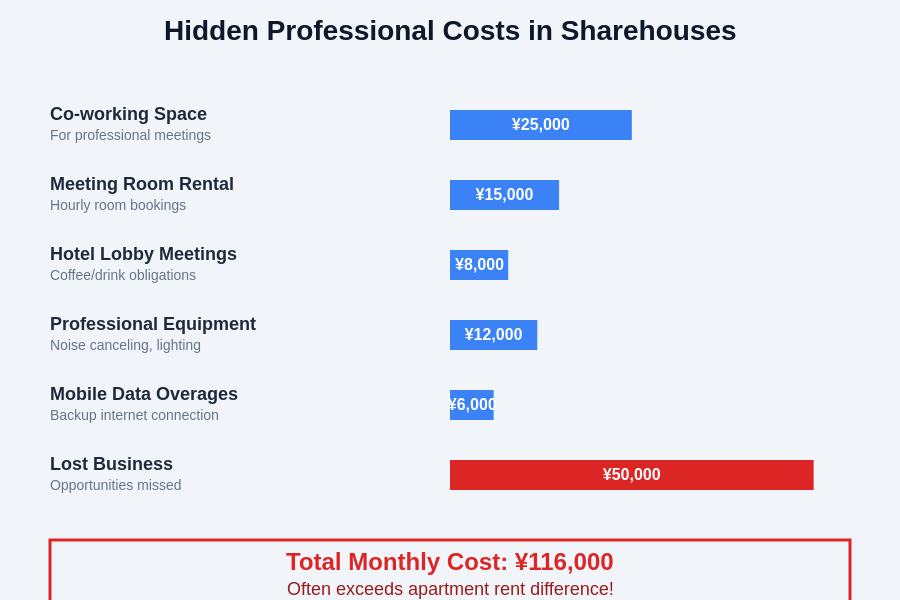
The cumulative cost of maintaining professional credibility while living in sharehouses often exceeds the rental savings initially gained through shared living arrangements.
Adaptation Strategies and Workarounds
Co-working space utilization becomes essential for residents who need professional meeting environments, requiring additional monthly expenses for membership fees, hourly meeting room rentals, and workspace access that provide appropriate environments for client interactions while creating commuting and scheduling complications that affect daily productivity and business operations.
Hotel lobby meetings represent desperate attempts to create professional interaction environments using public spaces that may appear unprofessional or unstable to clients while creating environmental uncertainty and potential interruptions that can affect meeting quality and business relationship development.
Cafe and restaurant meetings provide alternative venues for client interactions but create ongoing expense obligations, environmental noise challenges, and privacy limitations that may not meet confidentiality requirements for sensitive business discussions while appearing less professional than dedicated office environments.
How video call backgrounds affect professional image provides technical solutions for improving visual presentation, but these digital workarounds cannot address fundamental acoustic, privacy, and space limitations that affect overall professional credibility and client relationship development.
Long-term Professional Consequences
Career trajectory limitations become apparent when professional advancement requires established business operations, client relationship capabilities, and credible professional presentation that sharehouse living fundamentally undermines, creating long-term earning potential reduction that far exceeds short-term housing cost savings achieved through shared living arrangements.
Client relationship damage from unprofessional meeting experiences can create lasting reputation problems that affect future business development, referral opportunities, and professional network expansion in ways that compound over time and create career limitations extending far beyond the sharehouse residence period.
Business development constraints result when inability to conduct professional client meetings limits service offerings, project scope, and business growth opportunities that require face-to-face relationship building and professional presentation capabilities that sharehouses cannot support adequately.
Professional network isolation occurs when colleagues and business associates cannot be invited to residence-based professional events, creating networking limitations that affect career development, business relationship building, and industry participation in ways that reduce long-term professional success and earning potential.
The fundamental incompatibility between sharehouse living and professional client interaction requirements creates career development obstacles that force residents to choose between affordable housing and professional advancement in ways that ultimately undermine the financial benefits initially sought through shared living arrangements. Understanding these limitations enables informed decision-making about housing choices that align with professional goals and career development requirements rather than creating insurmountable barriers to business success and professional credibility.
Disclaimer
This article is for informational purposes only and does not constitute professional career or business advice. The challenges described may vary based on specific sharehouses, professional requirements, and individual circumstances. Readers should evaluate their specific professional needs and consider appropriate housing solutions that support their career goals and business requirements.