The brutal reality of Tokyo’s commuting culture creates cascading effects on work performance that extend far beyond simple travel time calculations, fundamentally altering career trajectories for international professionals who underestimate the comprehensive impact of daily transportation stress on their productivity, creativity, and professional relationships. Long commutes from affordable sharehouses to central business districts create patterns of chronic fatigue, reduced cognitive performance, and social isolation that compound over months and years to significantly diminish career advancement opportunities and overall professional success in Japan’s competitive work environment.
The hidden costs of extended commuting reach into every aspect of professional life, affecting meeting participation quality, networking opportunity access, overtime capacity, and the energy reserves necessary for career-building activities that occur outside regular work hours. Understanding these interconnected effects requires examining how transportation decisions made for housing affordability create professional limitations that often exceed the financial benefits of reduced rental costs, particularly for international workers whose career development depends heavily on building relationships and demonstrating exceptional commitment within Japanese corporate culture.
The Cognitive Drain of Daily Transportation Stress
Extended commuting in Tokyo’s notoriously crowded and complex transit system creates measurable reductions in cognitive performance that affect work quality throughout the day, with research demonstrating that commutes exceeding 90 minutes each way result in decreased problem-solving abilities, reduced creative thinking capacity, and impaired decision-making skills that persist for hours after arrival at the workplace. How work location should influence sharehouse choice becomes crucial when considering these cognitive impacts on professional success.
The mental energy required to navigate Tokyo’s intricate rail network, manage crowd dynamics, and maintain alertness during peak rush hour conditions depletes psychological resources that would otherwise be available for high-level work tasks, creative problem-solving, and strategic thinking that distinguish exceptional performers from average employees in competitive professional environments. The constant vigilance required during crowded commutes creates chronic stress responses that elevate cortisol levels and reduce the mental clarity necessary for complex analytical tasks and innovative thinking.
Physical discomfort from prolonged standing, cramped conditions, and irregular train movements during lengthy commutes creates physiological stress that manifests as reduced concentration spans, increased irritability, and decreased tolerance for workplace challenges that require patience and diplomatic responses. The cumulative effect of daily physical strain affects posture, energy levels, and overall physical presence in professional settings where image and vitality contribute significantly to career advancement opportunities.
Sleep quality degradation resulting from early morning departures necessary for long commutes creates cascading effects on cognitive performance, emotional regulation, and immune system function that reduce overall work capacity and increase susceptibility to illness-related absences that can negatively impact professional reputation and career progression opportunities.
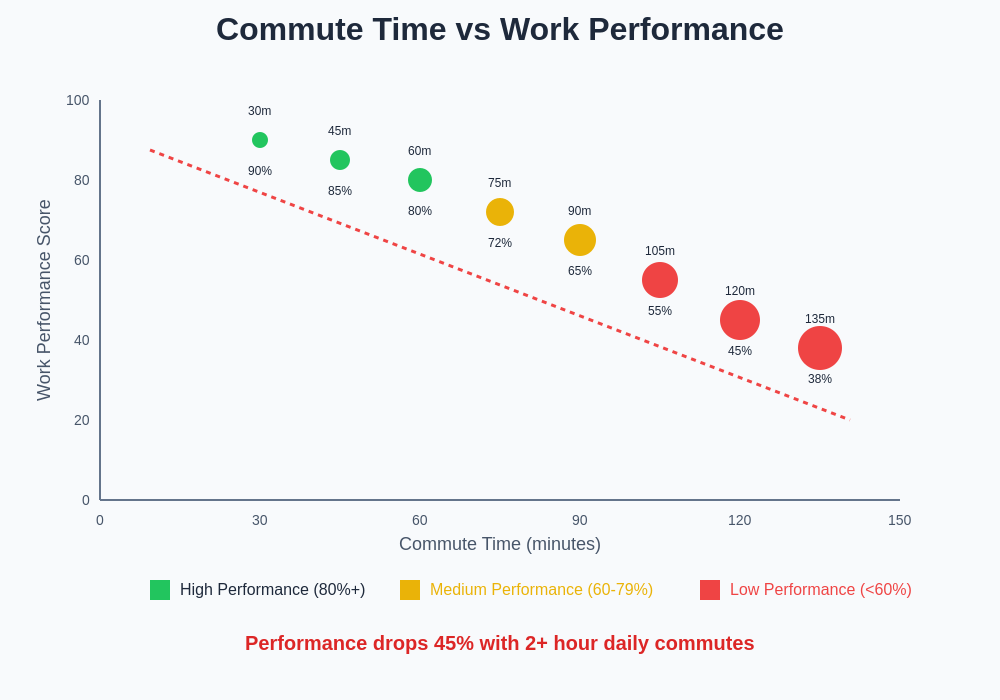
The data clearly demonstrates the inverse relationship between commute duration and work performance, with dramatic productivity drops occurring when daily commute times exceed 90 minutes each way.
Professional Networking and Relationship Building Challenges
After-work networking events, professional development sessions, and informal colleague interactions that form the foundation of career advancement in Japanese business culture become significantly more difficult to participate in when long commutes create time pressures and energy constraints that limit availability for relationship-building activities essential for professional success. Making friends through Tokyo sharehouse communities demonstrates the importance of community connections, but professional networking requires different strategies and time investments.
The inability to participate in spontaneous after-work activities, including nomikai (drinking parties), late-night project sessions, and informal mentorship opportunities, creates professional isolation that limits exposure to career-advancing information, relationship development with senior colleagues, and participation in decision-making processes that occur outside formal meeting structures. Japanese corporate culture’s emphasis on relationship building through shared experiences after work hours puts commuters at significant disadvantages for advancement opportunities that depend on personal connections and demonstrated commitment beyond basic job requirements.
International professionals face additional challenges because their limited time availability for relationship building combines with cultural and language barriers to create compound disadvantages in professional networking that can severely limit career advancement prospects in organizations where personal relationships often determine promotion opportunities and project assignments. The energy depletion from long commutes reduces capacity for the emotional and social intelligence required for effective cross-cultural relationship building in professional contexts.
Client relationship management becomes more challenging when long commutes limit flexibility for early morning meetings, late evening events, or emergency responses that demonstrate dedication and availability that clients expect from professional service providers. The reduced availability for client-focused activities can directly impact business development opportunities and professional reputation within industries where responsiveness and accessibility determine competitive advantages.
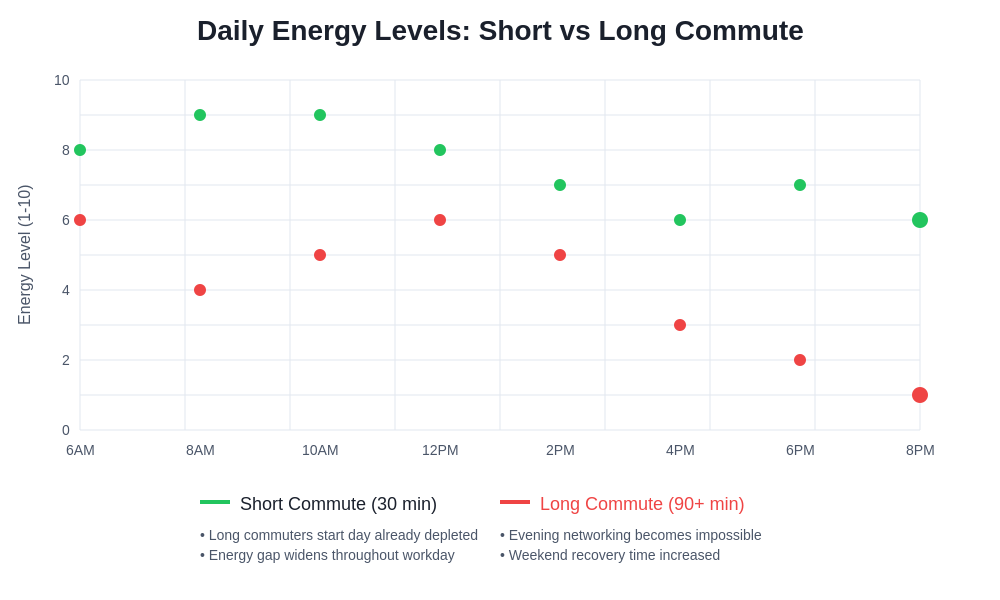
The stark difference in energy patterns between short and long commuters reveals why professional networking and relationship building become increasingly difficult as commute times extend.
Meeting Performance and Professional Presence
Morning meetings suffer significantly when long commutes create arrival stress, physical exhaustion, and mental fog that reduce participation quality, creative contribution, and overall professional presence during crucial decision-making discussions where first impressions and active engagement determine perceived competence and leadership potential. The rushed arrival after stressful commutes often results in disheveled appearance, scattered thinking, and reduced confidence that affects how colleagues and supervisors perceive professional capabilities and promotion readiness.
Late-day meeting performance deteriorates when accumulated fatigue from commuting stress compounds with work-related exhaustion to create noticeable reductions in alertness, verbal articulation, and strategic thinking that can negatively impact professional reputation and advancement opportunities during critical presentations or strategy sessions that occur later in the workday. The inability to maintain consistent high performance throughout extended work days affects perceived reliability and leadership capacity.
Video conference participation quality suffers when commute-related stress affects voice quality, facial expressions, and overall energy levels that translate poorly through digital communication channels, potentially impacting relationships with international clients, remote team members, and senior management who evaluate professional capabilities through virtual interactions that may be influenced by transportation-related fatigue factors.
The mental preparation time necessary for important meetings gets compressed when long commutes consume morning hours that could otherwise be used for strategic thinking, presentation review, and psychological preparation that contribute to exceptional meeting performance and professional advancement through demonstrated expertise and leadership during crucial business discussions.
Overtime Capacity and Career Advancement Impact
Extended work hours that demonstrate commitment and dedication within Japanese corporate culture become significantly more challenging when long commutes create time constraints that limit overtime capacity, weekend work availability, and participation in special projects that require flexible scheduling and extended time commitments that often determine promotion eligibility and career advancement opportunities. How transportation costs impact entertainment budgets reveals broader financial implications that compound professional limitations.
Project deadline management becomes more stressful when commute time cannot be reduced or eliminated during critical work periods, forcing professionals to choose between inadequate work completion and personal exhaustion that can lead to burnout, health problems, and reduced long-term career sustainability that affects both immediate performance and future advancement prospects.
International assignment opportunities and business travel capacity may be limited when long commutes create scheduling complications, arrival reliability concerns, and energy management challenges that make professionals less attractive candidates for high-visibility assignments that require flexibility, reliability, and exceptional performance under challenging conditions.
Professional development activities, including evening classes, certification programs, and skill-building workshops, become difficult to pursue when commute times limit available hours for continuing education that maintains competitive advantages in rapidly evolving professional fields where continuous learning determines career advancement and job security prospects.
Health and Wellness Impact on Professional Performance
Chronic stress from daily commuting creates measurable impacts on immune system function, increasing susceptibility to illnesses that result in work absences, reduced productivity during illness recovery periods, and overall health degradation that affects long-term career sustainability and professional advancement in demanding work environments that require consistent high performance and reliable attendance patterns.
Physical fitness maintenance becomes challenging when long commutes consume time that could be used for exercise, proper meal preparation, and wellness activities that support the energy levels, mental clarity, and physical presence necessary for exceptional professional performance and leadership development that contributes to career advancement in competitive business environments.
Mental health impacts from commuting stress, including increased anxiety, depression risk, and reduced life satisfaction, create cascading effects on work motivation, creativity, and interpersonal relationships that can negatively affect professional reputation, team dynamics, and advancement opportunities within organizations that value emotional intelligence and positive workplace contributions.
Sleep schedule disruption from early morning commute requirements creates chronic fatigue that reduces cognitive performance, emotional regulation, and physical energy that directly impact work quality, professional relationships, and career advancement opportunities in demanding professional environments where consistent high performance distinguishes successful professionals from average performers.
Financial Productivity and Career Investment Trade-offs
Transportation costs for long commutes create budget constraints that limit investment in professional development activities, networking events, and career-building expenses that contribute to advancement opportunities, creating situations where housing cost savings get offset by reduced capacity for career investment that can limit long-term earning potential and professional growth prospects.
Time value calculations reveal that extended commuting often creates negative economic returns when the additional hours spent in transportation could be used for skill development, freelance work, professional networking, or other income-generating activities that provide greater long-term financial benefits than the rental cost savings achieved through distant sharehouse location choices.
Professional wardrobe and appearance maintenance becomes more challenging when commute conditions create clothing wear, appearance deterioration, and increased cleaning costs that affect professional image and may require additional investment in clothing replacement and appearance maintenance that reduces the financial benefits of affordable housing choices in distant locations.
Career opportunity access limitations resulting from commute constraints may reduce access to job opportunities, professional connections, and advancement prospects that provide higher long-term earning potential than the short-term savings achieved through affordable housing in locations that limit professional development and career advancement opportunities.
Industry-Specific Professional Impact Variations
Technology and creative industries that value innovation, collaboration, and rapid response to changing market conditions may be particularly negatively affected by long commutes that reduce energy for creative thinking, limit availability for collaborative sessions, and decrease capacity for the rapid adaptation and learning that distinguishes successful professionals in fast-paced innovative environments.
Financial services and consulting industries that require high-level analytical thinking, client responsiveness, and extended work hours may find commute-related performance impacts particularly detrimental to career advancement prospects, as these fields often demand exceptional energy levels, availability, and cognitive performance that can be significantly compromised by transportation-related stress and fatigue.
International business roles that require cultural sensitivity, language skills, and relationship building may be especially challenging for professionals whose energy and social capacity are depleted by long commutes, as success in cross-cultural business environments requires exceptional emotional intelligence and social energy that may be reduced by transportation-related exhaustion.
Sales and business development positions that depend on energy, enthusiasm, and relationship building may suffer significantly from commute-related fatigue that affects the personal presence, communication effectiveness, and networking capacity necessary for success in relationship-driven professional roles that require consistent high-energy performance and availability.
Strategic Career Planning and Transportation Decisions
Long-term career planning requires considering how transportation decisions affect professional development trajectories, advancement timelines, and overall career satisfaction in ways that extend far beyond immediate housing cost calculations to encompass the comprehensive impact of commuting on professional success and life quality over extended periods.
Industry cluster considerations become important when evaluating sharehouse locations, as proximity to professional networks, industry events, and career opportunities may provide long-term benefits that exceed short-term housing cost savings, particularly for international professionals who need to build professional relationships and industry connections in competitive Tokyo business environments.
Flexibility planning for career changes, industry transitions, or professional development opportunities requires considering how housing location decisions affect adaptability and opportunity access that may become crucial during career transitions or advancement opportunities that require scheduling flexibility and professional availability.
Risk assessment for professional development should include evaluation of how commute stress affects long-term career sustainability, health impacts, and overall professional satisfaction in ways that may influence career longevity and advancement prospects beyond immediate performance considerations.
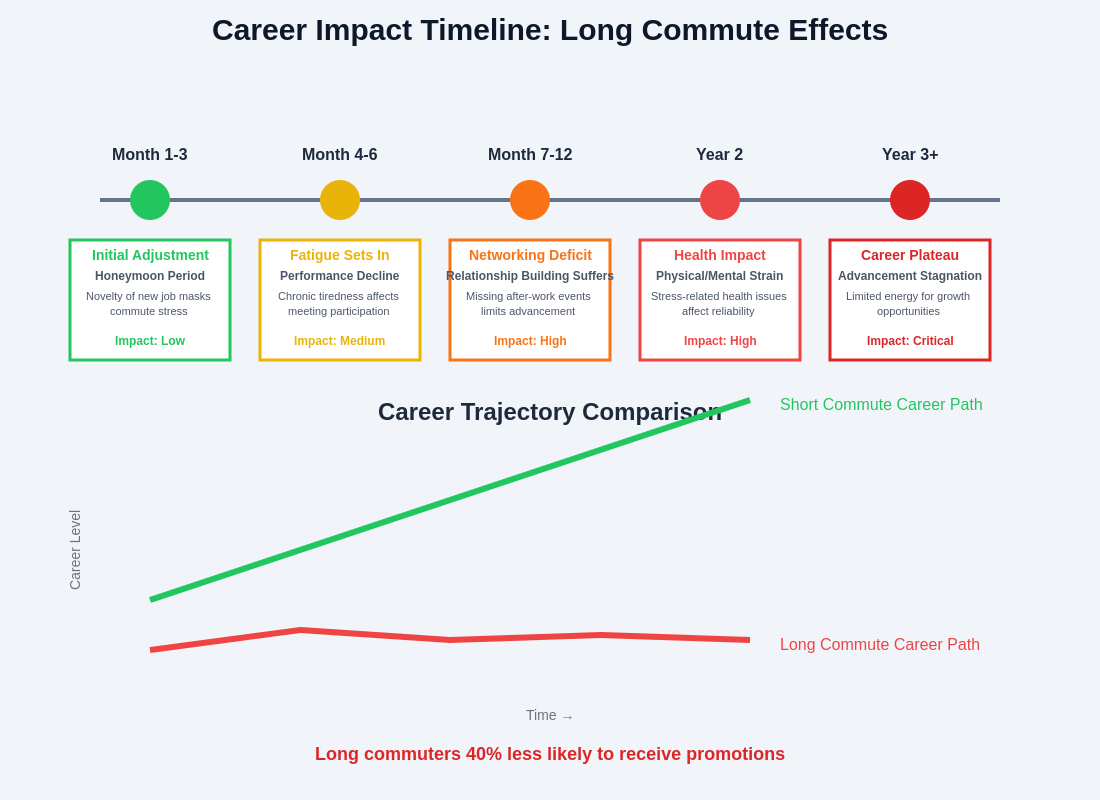
This timeline illustrates how commute-related performance issues compound over time, leading to significant career trajectory differences between short and long commuters over multiple years.
Mitigation Strategies for Unavoidable Long Commutes
Productivity optimization during commute periods can partially offset performance impacts through strategic use of travel time for professional development, skill building, and work preparation activities that maintain competitive advantages despite transportation time constraints, though physical and environmental limitations of crowded trains limit the effectiveness of mobile productivity strategies.
Energy management techniques, including strategic scheduling of demanding tasks during peak energy periods, can help maximize professional performance despite commute-related fatigue, requiring careful planning and self-awareness to optimize work scheduling around transportation-related energy fluctuations and cognitive performance patterns.
Professional communication strategies that acknowledge scheduling constraints while maintaining professional relationships require transparency about availability limitations combined with exceptional performance during available hours to demonstrate commitment despite practical constraints that affect meeting participation and networking availability.
Health optimization through improved sleep hygiene, nutrition management, and stress reduction techniques can partially mitigate commute impacts on professional performance, though these strategies require additional time and energy investment that may further compress available hours for career development and professional relationship building.
The comprehensive impact of commute times on work performance extends far beyond simple time calculations to encompass cognitive performance, professional relationships, career advancement opportunities, and long-term professional development in ways that often exceed the financial benefits of distant affordable housing. International professionals in Tokyo must carefully evaluate these trade-offs when making housing decisions that will fundamentally shape their career trajectories and professional success in Japan’s competitive business environment.
Disclaimer
This article is for informational purposes only and does not constitute professional career or transportation advice. Individual experiences with commuting and work performance may vary significantly based on personal factors, industry requirements, and specific circumstances. Readers should evaluate their own situation and consult with relevant professionals when making housing and career decisions that affect commuting patterns and work performance.