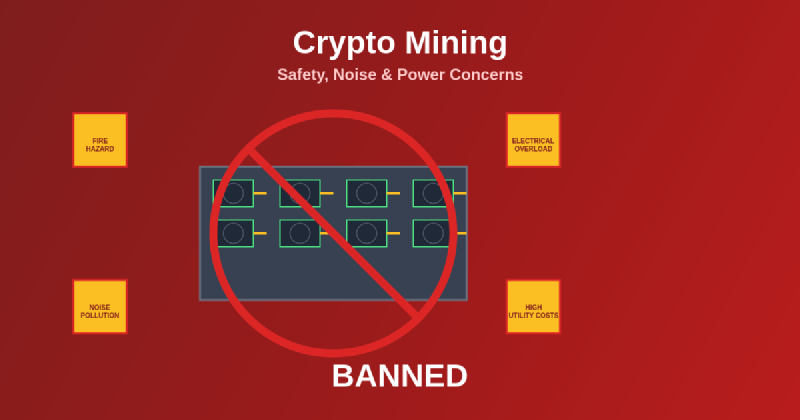
Cryptocurrency mining operations are explicitly prohibited in most Japanese sharehouses due to the extraordinary electrical power consumption, fire safety hazards, excessive heat generation, and noise pollution that mining equipment creates in residential environments designed for shared living rather than industrial-scale computational activities. These comprehensive bans reflect practical safety concerns, legal liability issues, utility cost implications, and community living standards that make cryptocurrency mining fundamentally incompatible with sharehouse operations and resident welfare.
The proliferation of cryptocurrency mining activities in the early 2010s and 2020s led to numerous incidents involving electrical fires, utility bill disputes, noise complaints, and property damage that prompted sharehouse operators to implement strict mining prohibitions as standard lease provisions. Understanding these restrictions and their underlying rationales helps residents make informed decisions about technology usage while avoiding lease violations that could result in immediate termination and legal consequences.
Electrical Power Consumption and Infrastructure Strain
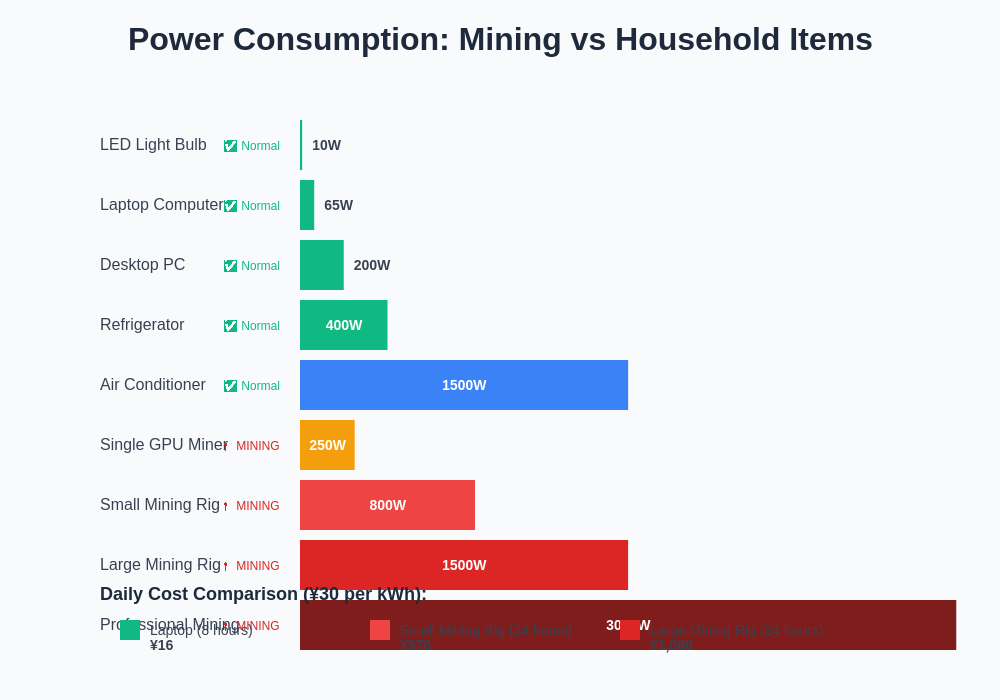
Cryptocurrency mining equipment consumes enormous amounts of electrical power that can easily exceed the electrical capacity of residential buildings, with professional mining rigs drawing between fifteen hundred to three thousand watts continuously, equivalent to running multiple high-powered appliances simultaneously for twenty-four hours daily throughout the mining operation period.
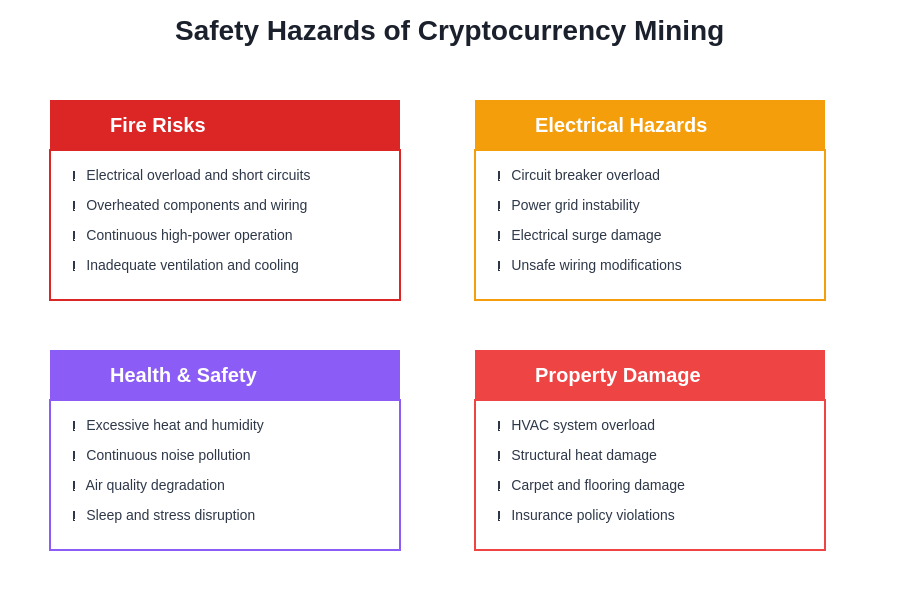
Electrical circuit overload represents a serious safety hazard when mining equipment draws more current than residential wiring systems can safely handle, potentially causing circuit breaker trips, electrical fires, or damage to building electrical infrastructure that affects all residents and creates liability issues for property managers who must ensure building safety and code compliance.
Shared electrical systems in sharehouses are designed for typical residential usage patterns including lighting, electronics, cooking appliances, and climate control rather than industrial-level power consumption, with mining operations potentially destabilizing electrical distribution and affecting other residents’ ability to use normal household appliances without experiencing power interruptions or electrical problems.
Power grid impact becomes significant when multiple properties in residential areas operate mining equipment simultaneously, potentially causing neighborhood-wide electrical issues that attract attention from utility companies and regulatory authorities who monitor for unusual residential power consumption patterns that may indicate commercial or industrial activities in residential zones.
Fire Safety and Insurance Liability Concerns
Fire risk escalation occurs dramatically with cryptocurrency mining operations due to the combination of high electrical loads, continuous equipment operation, heat generation, and potential electrical faults that create multiple ignition sources in residential environments where fire safety systems may not be designed for industrial-level electrical equipment and heat generation.
Insurance policy violations become inevitable when cryptocurrency mining activities exceed residential property insurance coverage limitations, potentially voiding property insurance and leaving property managers, residents, and property owners without coverage for fire damage, electrical damage, or liability claims arising from mining-related incidents affecting the property or neighboring buildings.
Building code compliance issues arise when mining operations exceed permitted electrical loads, ventilation requirements, or safety standards for residential properties, potentially resulting in code violations, fines, and legal requirements to remove mining equipment and restore buildings to compliant residential configurations at significant expense and legal liability.
Emergency response complications occur when fire departments or emergency services encounter unknown mining equipment during emergency situations, potentially creating additional hazards for first responders and complicating emergency procedures that could affect response effectiveness and safety for all building occupants during critical emergency situations.
Heat Generation and Ventilation Problems
Thermal management challenges become severe with mining equipment that generates substantial heat requiring specialized cooling systems that residential buildings typically lack, with mining operations potentially raising room temperatures to unsafe levels that affect habitability, comfort, and safety for residents while potentially damaging building systems and personal property.
HVAC system overload occurs when existing air conditioning and ventilation systems attempt to compensate for excessive heat generation from mining equipment, leading to increased utility costs, system failures, and inadequate climate control that affects all residents while potentially causing expensive repairs to shared building systems.
Humidity and condensation problems develop when temperature differentials between mining equipment heat and air conditioning create moisture issues that can cause mold growth, property damage, and health hazards affecting resident welfare and property condition while creating ongoing maintenance and liability issues for property managers.
Why device limits cause internet connection issues becomes compounded when mining operations add additional heat-generating equipment that requires cooling systems that further strain electrical capacity and create cumulative infrastructure stress affecting all building systems.
Noise Pollution and Community Disruption
Continuous noise generation from mining equipment including cooling fans, power supplies, and operational sounds creates persistent noise pollution that violates residential noise standards and disrupts community living environments where residents expect reasonable quiet for sleep, work, study, and personal activities essential for quality of life and community harmony.
Fan noise amplification occurs when multiple mining units operate simultaneously, creating cumulative noise levels that exceed residential standards and may violate local noise ordinances while making shared living spaces uninhabitable for residents who cannot escape continuous mechanical noise during rest periods and daily activities.
Vibration transmission through building structures can spread mining equipment noise and vibration to adjacent rooms and floors, affecting residents throughout the building and potentially causing structural stress or damage while creating widespread disruption that affects community welfare and property value.
Sound isolation requirements for mining operations would necessitate expensive soundproofing modifications to residential buildings that are impractical and potentially damaging to property while failing to address other safety and infrastructure concerns that make mining incompatible with residential environments.
Utility Cost Impact and Billing Disputes
Electricity bill escalation becomes dramatic when mining operations increase monthly utility costs by hundreds or thousands of dollars above normal residential usage, creating financial strain on shared utility arrangements and potentially exceeding utility budget assumptions that affect all residents through increased living costs or billing disputes.
Cost allocation challenges arise when individual residents operate mining equipment that affects shared utility bills, creating complex billing disputes and fairness issues when mining operations consume disproportionate utility resources while all residents share the increased costs through standard utility sharing arrangements common in sharehouses.
Utility service disruption may occur when unusual power consumption patterns trigger utility company investigations or service restrictions, potentially affecting electrical service reliability for all residents while creating administrative complications and potential service interruptions that disrupt normal residential activities and community operations.
Living costs in Tokyo sharehouses explained must account for utility sharing arrangements that become problematic when individual residents engage in activities that dramatically increase shared costs without proportional benefit or compensation for other residents affected by increased utility expenses.
Legal and Regulatory Compliance Issues
Residential zoning violations occur when cryptocurrency mining operations constitute commercial or industrial activities in properties zoned for residential use, potentially resulting in zoning violations, fines, and legal requirements to cease operations while creating liability for property owners and managers who must ensure compliance with zoning regulations.
Business license requirements may apply to cryptocurrency mining operations depending on scale and profitability, with residential properties typically prohibited from hosting business activities that require commercial licenses, permits, or regulatory compliance that conflicts with residential property usage restrictions and zoning designations.
Tax implications for mining operations include potential business income reporting requirements and tax obligations that may affect both individual miners and property owners who allow mining activities, creating complex legal and financial obligations that extend beyond simple residential rental arrangements and personal property usage.
Regulatory monitoring by government agencies concerned with money laundering, tax evasion, and illegal financial activities may focus attention on properties hosting mining operations, potentially creating unwanted regulatory scrutiny and legal complications for property managers and residents who prefer to maintain privacy and avoid government attention.
Property Damage and Maintenance Issues
Equipment installation damage occurs when mining setups require modifications to electrical systems, ventilation, or structural elements that can damage residential properties and violate lease agreements prohibiting tenant modifications to building infrastructure without permission and professional installation that meets building codes and safety standards.
Carpet and flooring damage results from heavy mining equipment, increased foot traffic, spilled cooling liquids, and temperature extremes that can permanently damage residential flooring materials and require expensive replacement at tenant expense while potentially affecting security deposits and lease compliance.
Wall and ceiling damage may occur from mounting equipment, running additional electrical circuits, installing ventilation systems, or heat damage that affects paint, drywall, and structural elements requiring professional repair and restoration that exceeds normal residential wear and tear expectations.
Long-term property value impact includes potential decreased property desirability, increased insurance costs, and ongoing maintenance requirements that affect property investment value and rental attractiveness for future residents who expect standard residential conditions rather than industrial equipment residue and modifications.
Enforcement Mechanisms and Violation Consequences
Lease agreement provisions typically include specific clauses prohibiting cryptocurrency mining with clear violation consequences including immediate lease termination, financial penalties, and potential legal action for damages caused by mining operations that violate lease terms and create safety hazards or property damage affecting other residents.
Regular property inspections enable property managers to detect unauthorized mining operations through visual inspection of equipment, electrical usage monitoring, thermal imaging, or noise level measurements that can identify mining activities even when residents attempt to conceal equipment or operate during specific hours to avoid detection.
Utility monitoring systems can detect unusual electrical consumption patterns that indicate mining operations, with some property managers implementing electrical usage monitoring that triggers investigation when consumption exceeds normal residential patterns or shows characteristics consistent with mining equipment operation.
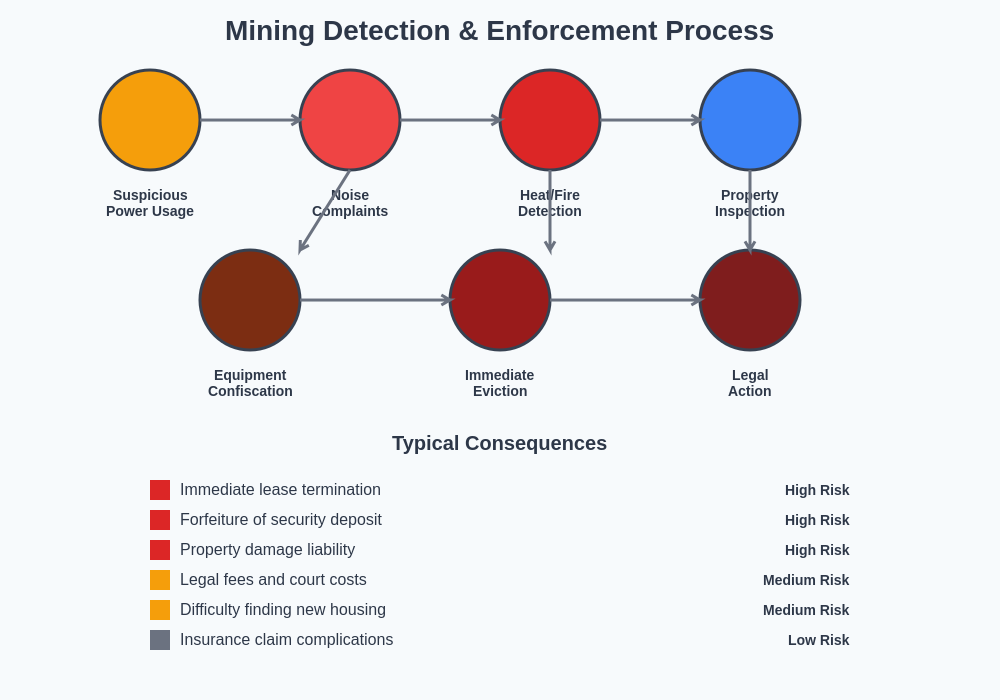
Japanese sharehouse rules every foreigner should know include mining prohibitions that carry serious enforcement consequences including immediate eviction, forfeiture of security deposits, and potential legal liability for damages or safety violations that affect other residents or property systems.
Alternative Investment and Technology Activities
Cryptocurrency trading and investment activities remain generally permissible in sharehouses when conducted through standard computing devices that do not create safety hazards, infrastructure strain, or community disruption, allowing residents to participate in cryptocurrency markets without violating mining prohibitions that specifically target industrial-scale computational activities.
Software development and blockchain programming activities using personal computers for educational or professional purposes typically do not violate mining restrictions provided they do not involve industrial-scale computational operations, specialized mining hardware, or activities that create safety hazards or infrastructure strain affecting other residents.
Research and educational activities related to cryptocurrency technology and blockchain development can generally proceed using standard computing equipment provided they remain within normal residential technology usage parameters and do not escalate to mining operations that trigger safety, infrastructure, or community concerns.
Passive investment strategies including cryptocurrency purchasing, trading, and portfolio management through standard financial platforms and personal computing devices provide alternative approaches to cryptocurrency participation that comply with sharehouse restrictions while enabling residents to engage with cryptocurrency markets through conventional investment activities.
Industry Trends and Future Considerations
Energy efficiency improvements in cryptocurrency mining technology may eventually reduce power consumption and heat generation to levels compatible with residential environments, though current mainstream mining equipment remains incompatible with residential infrastructure and safety requirements that govern sharehouse operations and resident welfare.
Regulatory evolution around cryptocurrency mining may create new compliance requirements, safety standards, or operational restrictions that further justify residential mining prohibitions while potentially creating legal frameworks that distinguish between different scales and types of mining activities based on safety and infrastructure considerations.
Alternative cryptocurrency technologies including proof-of-stake systems and energy-efficient blockchain protocols may reduce the infrastructure requirements for cryptocurrency participation, potentially enabling residential participation in cryptocurrency networks without the industrial-scale computational requirements that make traditional mining incompatible with shared living environments.
Property management industry trends toward smart building technology and energy monitoring may enhance the ability to detect and prevent unauthorized mining operations while also providing better tools for managing residential electrical systems and ensuring compliance with safety standards and lease agreements that protect community welfare.
Community Alternatives and Shared Solutions
Cryptocurrency investment clubs within sharehouse communities can provide collaborative approaches to cryptocurrency participation that focus on education, shared research, and group investment strategies rather than individual mining operations that create infrastructure and safety concerns affecting all residents while still enabling community engagement with cryptocurrency markets.
Educational workshops and discussion groups about cryptocurrency technology can satisfy resident interest in blockchain and cryptocurrency topics through knowledge sharing and collaborative learning that does not require industrial equipment or activities that violate sharehouse policies while building community knowledge and engagement around emerging technologies.
External mining participation through cloud mining services, mining pools, or cryptocurrency investment funds enables residents to participate in cryptocurrency mining profits without operating equipment in sharehouses, providing alternative approaches that comply with residential restrictions while still enabling financial participation in mining activities.
How to find the perfect sharehouse in Tokyo should include consideration of technology usage policies and community attitudes toward emerging technologies that may affect compatibility between resident interests and sharehouse operational requirements that prioritize safety, community welfare, and legal compliance.
The prohibition of cryptocurrency mining in sharehouses reflects legitimate safety, infrastructure, and community concerns that protect resident welfare and property values while maintaining residential environments suitable for shared living. Understanding these restrictions and their underlying rationales enables residents to make informed decisions about technology usage and investment activities that comply with sharehouse policies while pursuing personal interests in cryptocurrency and blockchain technology through alternative approaches that do not compromise community safety and residential quality.
Disclaimer
This article provides general information about cryptocurrency mining restrictions in sharehouses for educational purposes and does not constitute legal, financial, or investment advice. Mining regulations, sharehouse policies, and legal requirements vary significantly by location, property, and individual circumstances. Residents interested in cryptocurrency activities should review specific lease agreements, consult with property managers about technology usage policies, and seek appropriate legal and financial advice regarding cryptocurrency investments and compliance requirements. The information provided reflects general trends and may not apply to all sharehouses or situations.