The transformation of urban mobility through delivery services has fundamentally altered how sharehouse residents in Tokyo approach their daily transportation needs, creating unprecedented opportunities for cost reduction and lifestyle optimization. This shift represents more than mere convenience; it signals a complete reimagining of personal mobility patterns that challenges traditional assumptions about vehicle ownership, public transportation dependency, and the very nature of urban movement in one of the world’s most complex metropolitan areas.
Modern sharehouse residents increasingly find themselves navigating a landscape where on-demand delivery services provide viable alternatives to personal transportation for an expanding range of daily activities. The integration of these services into daily routines has created new possibilities for residents to optimize their living costs while simultaneously reducing their environmental footprint and simplifying their urban lifestyle. Understanding how transportation costs impact entertainment budgets becomes crucial for residents seeking to maximize their savings through strategic delivery service utilization.
The Economics of Delivery vs Transportation
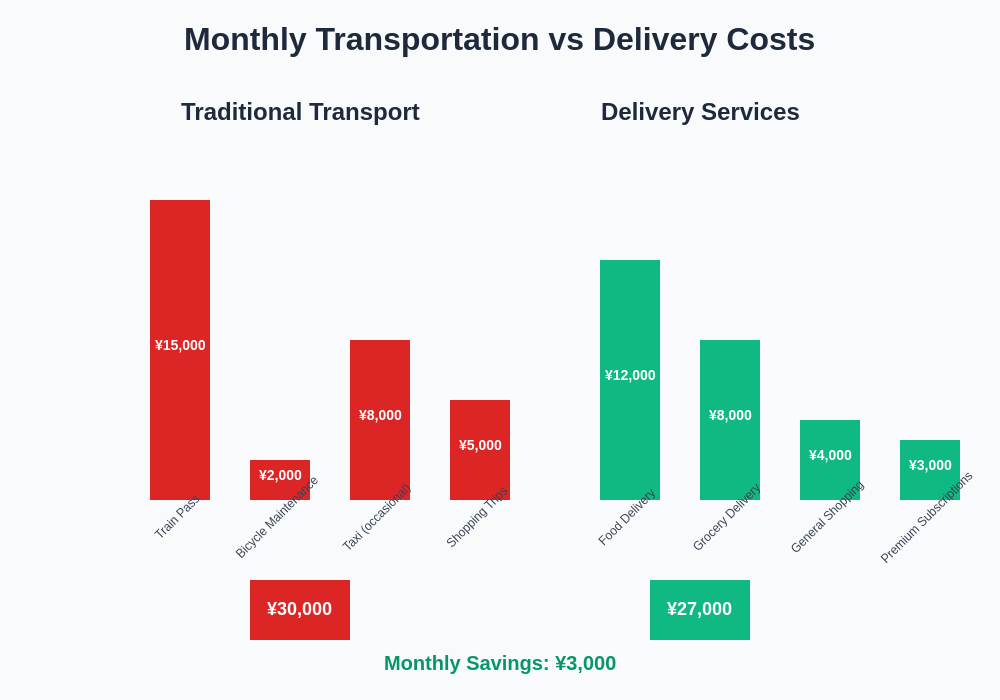
The financial mathematics of delivery services versus personal transportation reveals compelling advantages for sharehouse residents who approach this comparison with systematic analysis and strategic planning. Traditional transportation costs in Tokyo encompass monthly train passes, bicycle maintenance, occasional taxi usage, and the hidden expenses associated with travel time and scheduling constraints that often remain unaccounted in basic cost calculations.
Delivery services present a fundamentally different cost structure that transforms fixed transportation expenses into variable costs directly tied to actual usage patterns and specific needs. How transportation accessibility affects housing choices provides insights into how delivery availability can influence neighborhood selection and housing decisions for cost-conscious residents.
The emergence of subscription-based delivery services has created new economic models that offer flat-rate unlimited delivery for monthly fees that often cost less than a single week of train commuting. These services enable residents to access goods and services across the entire metropolitan area without geographic constraints, effectively expanding their accessible urban environment while reducing per-transaction costs through economies of scale.
The time-value calculation becomes particularly compelling when considering that delivery services eliminate commute time for shopping, errands, and service appointments, freeing residents to pursue income-generating activities, skill development, or leisure pursuits that may provide greater personal and financial returns than the time previously spent in transit.
Food Delivery Revolution in Sharehouse Living
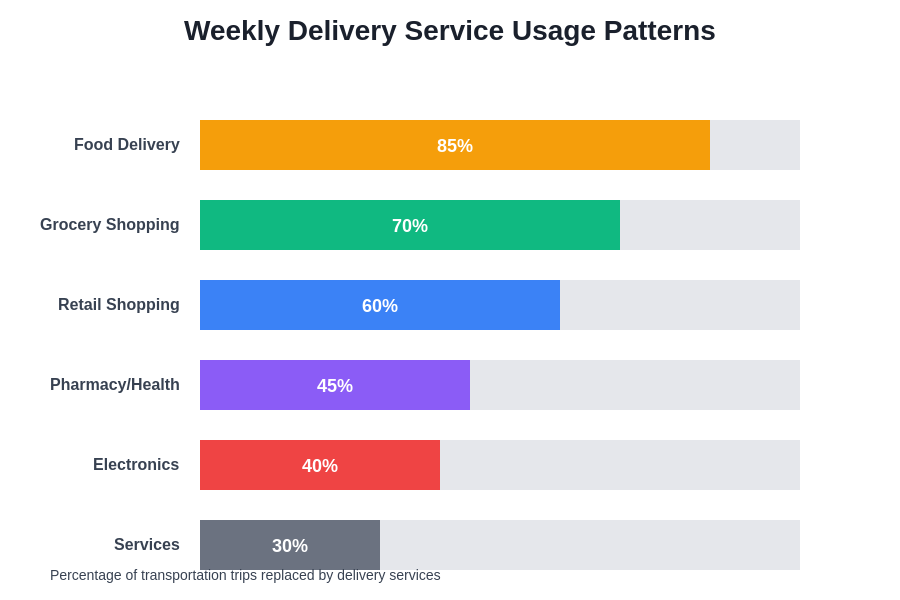
Food delivery services have arguably created the most dramatic transformation in personal transportation patterns, with many sharehouse residents reporting significant reductions in grocery shopping trips and restaurant visits that previously required substantial travel time and expense. How food delivery apps change sharehouse dynamics explores the broader implications of this shift on community interactions and household management.
The sophistication of modern food delivery platforms enables residents to access cuisine and ingredients from across Tokyo’s diverse culinary landscape without the geographical limitations that traditionally constrained dining options to immediately accessible neighborhoods. This democratization of food access has particularly benefited residents in suburban sharehouses who previously faced limited local dining options or expensive transportation costs to reach desired restaurants.
Bulk grocery delivery services have revolutionized household provisioning strategies, enabling residents to order heavy items, bulk quantities, and specialized products that would be impractical to transport via public transit or bicycle. How group buying power reduces individual costs demonstrates how sharehouses can leverage delivery services for coordinated purchasing that maximizes both cost savings and convenience.
The integration of delivery services with sharehouse kitchen dynamics has created new possibilities for meal planning and food sharing that reduce individual cooking responsibilities while maintaining access to high-quality nutrition. Residents report increased experimentation with international cuisines and specialty ingredients that delivery services make accessible without requiring knowledge of specific suppliers or specialized transportation arrangements.
Shopping and Retail Transformation
The expansion of delivery services beyond food into general retail has fundamentally altered shopping patterns for sharehouse residents, reducing the need for dedicated shopping expeditions that previously required significant time investments and transportation planning. How online shopping deliveries overwhelm entryways addresses the infrastructure challenges that accompany this convenience revolution.
Same-day and next-day delivery options for everything from clothing to electronics have eliminated the urgency that traditionally drove immediate shopping trips, allowing residents to make more deliberate purchasing decisions while reducing impulse transportation expenses. The ability to comparison shop across multiple vendors without geographical constraints has improved purchasing power while reducing travel costs associated with visiting multiple physical locations.
Specialized delivery services for heavy items, furniture, and appliances have particular relevance for sharehouse residents who frequently move between properties and lack personal vehicles for transporting large purchases. These services often cost less than vehicle rental or taxi services while providing professional handling and assembly services that add value beyond simple transportation.
The emergence of try-before-you-buy services and liberal return policies through delivery platforms has reduced the financial risk of remote purchasing while eliminating the transportation costs associated with product evaluation and returns. This development particularly benefits international residents who may be unfamiliar with local products and previously required multiple shopping trips to identify suitable options.
Healthcare and Professional Services
Healthcare delivery services represent a rapidly expanding sector that addresses transportation barriers that previously prevented residents from accessing routine medical care, prescription medications, and wellness services. How medical emergencies expose system weaknesses highlights how delivery services can supplement traditional healthcare access in emergency and routine care situations.
Telemedicine platforms combined with prescription delivery services have created comprehensive healthcare solutions that eliminate travel requirements for routine consultations, prescription refills, and follow-up appointments. This development particularly benefits residents with mobility limitations, busy schedules, or those living in areas with limited healthcare access.
Professional services including legal consultations, tax preparation, and business services increasingly offer remote delivery models that eliminate transportation requirements while often providing cost savings compared to traditional office-based services. The integration of digital document handling with physical delivery when necessary creates seamless service experiences that surpass traditional models in both convenience and cost-effectiveness.
Beauty and wellness services have adapted delivery models that bring treatments directly to sharehouses, creating opportunities for group bookings that reduce individual costs while eliminating travel time and expense. These services often provide superior value compared to salon visits when transportation costs and time investments are considered in total cost calculations.
Environmental and Social Implications
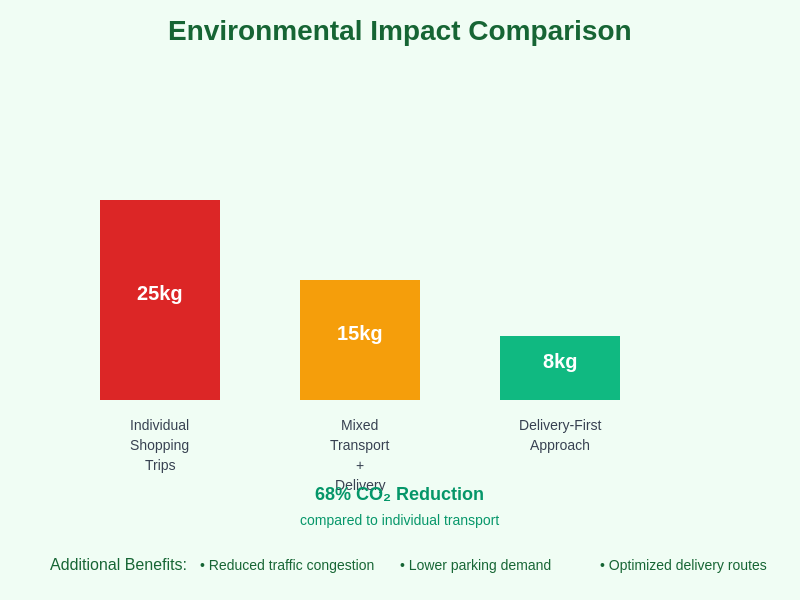
The environmental impact of delivery services versus personal transportation presents complex calculations that extend beyond simple carbon footprint comparisons to encompass broader urban sustainability considerations. How sustainable transportation options remain limited examines the environmental trade-offs inherent in different mobility choices.
Delivery consolidation through shared routes and professional logistics optimization often achieves superior environmental efficiency compared to individual transportation for shopping and errands, particularly in dense urban environments where delivery vehicles can serve multiple customers in single trips. The reduction in private vehicle dependency and parking demand contributes to broader urban sustainability goals while reducing infrastructure pressure.
The social implications of reduced personal transportation include both positive community effects through increased time availability for local interactions and potential negative impacts from reduced exploration of diverse neighborhoods and cultural experiences. How transportation strikes disrupt daily life illustrates the vulnerability that can accompany over-dependence on any single transportation or delivery system.
Community delivery coordination within sharehouses creates new opportunities for resident interaction and cooperation while maximizing delivery efficiency and cost-effectiveness. These collaborative approaches often strengthen house communities while achieving superior economic and environmental outcomes compared to individual delivery usage.
Technology Integration and Platform Optimization
The sophisticated technology infrastructure underlying modern delivery services enables optimization strategies that maximize value while minimizing costs for informed users who understand platform mechanics and promotional structures. How transportation apps change navigation habits explores how digital platforms are reshaping urban mobility patterns.
Multi-platform strategies that leverage competitive pricing, promotional offerings, and platform-specific advantages can significantly reduce delivery costs while maintaining service quality and reliability. Understanding delivery time optimization, batch ordering strategies, and subscription service mathematics enables residents to achieve maximum value from delivery service utilization.
Integration with smart home technology and sharehouse management systems creates seamless delivery experiences that minimize disruption while maximizing security and convenience. Automated delivery scheduling, package tracking integration, and resident notification systems reduce the administrative overhead associated with delivery management.
The development of AI-powered delivery optimization and predictive ordering systems promises further transformation of transportation replacement strategies, with potential for automated household provisioning that eliminates even the decision-making overhead currently required for delivery service utilization.
Challenges and Limitations
Despite the compelling advantages of delivery services, several significant limitations and challenges require careful consideration for residents developing comprehensive transportation replacement strategies. How package deliveries complicate business operations addresses practical complications that can arise from heavy delivery dependence.
Geographic limitations and service availability variations across Tokyo create unequal access to delivery options, with some suburban sharehouse locations facing limited service options or higher delivery fees that may offset cost advantages. Time-sensitive needs and emergency situations may still require traditional transportation solutions that residents must maintain as backup options.
Quality control and product verification challenges inherent in remote purchasing can result in higher return rates and replacement costs that erode the economic advantages of delivery services. Language barriers and cultural differences in product descriptions may exacerbate these challenges for international residents unfamiliar with local products and standards.
Delivery reliability and timing uncertainties can create scheduling complications and missed delivery situations that require backup planning and alternative solutions. The dependency on delivery services for essential needs creates vulnerability during service disruptions, extreme weather, or system failures that may leave residents without necessary resources.
Integration with Sharehouse Lifestyle
The successful integration of delivery services into sharehouse living requires consideration of community dynamics, shared space management, and coordinated planning that maximizes benefits while minimizing conflicts and complications. How shared expense apps create new problems examines how digital solutions can both solve and create challenges in shared living environments.
Package management systems and delivery coordination protocols become essential for houses with multiple residents utilizing various delivery services, requiring clear policies for package acceptance, storage, and security that protect all residents while maintaining delivery accessibility. Communication systems for delivery scheduling and resident notification prevent missed deliveries while respecting privacy and autonomy.
Cost-sharing strategies for group deliveries and shared subscriptions can multiply the economic advantages of delivery services while building house community through cooperative planning and resource sharing. These collaborative approaches often achieve superior outcomes compared to individual delivery usage while strengthening resident relationships.
The balance between delivery convenience and community interaction requires intentional planning to prevent isolation and maintain the social benefits that attract many residents to sharehouse living. Coordinated activities and shared experiences that delivery services enable can enhance rather than replace community building when approached strategically.
Future Transportation Evolution
The continued evolution of delivery services and their integration with emerging transportation technologies promises further transformation of urban mobility patterns and sharehouse living experiences. How digital nomads change sharehouse dynamics explores how changing work patterns intersect with evolving transportation and delivery options.
Autonomous delivery systems, drone technology, and integrated urban logistics networks will likely expand delivery capabilities while reducing costs and increasing reliability, making delivery-based transportation replacement even more attractive for urban residents. The integration of delivery services with public transportation systems may create hybrid mobility solutions that combine the advantages of both approaches.
The development of comprehensive urban service ecosystems that integrate delivery, transportation, housing, and lifestyle services promises seamless urban living experiences that transcend current boundaries between different service categories. These integrated platforms may fundamentally reshape urban housing markets and residential location decisions as delivery accessibility becomes a primary factor in housing desirability.
The transformation of urban transportation through delivery services represents a fundamental shift in how residents conceptualize mobility, access, and urban living that extends far beyond simple cost calculations to encompass lifestyle optimization, environmental responsibility, and community building. For sharehouse residents willing to embrace this transformation thoughtfully and strategically, delivery services offer compelling opportunities to reduce costs, increase convenience, and enhance quality of life while contributing to more sustainable urban mobility patterns.
Understanding the nuances of delivery service utilization, maintaining backup transportation options, and integrating delivery strategies with community living requirements enables residents to capture the maximum benefits of this transportation revolution while avoiding potential pitfalls and limitations that can accompany over-dependence on any single mobility solution.
Disclaimer
This article is for informational purposes only and does not constitute professional financial or transportation advice. Delivery service availability, pricing, and reliability may vary by location and provider. Readers should evaluate their individual circumstances and maintain appropriate backup transportation options. The effectiveness of delivery services as transportation replacement may vary depending on personal needs, location, and lifestyle requirements.