The diverse educational backgrounds of international residents in Tokyo sharehouses create a complex web of expectations, behaviors, and social dynamics that profoundly influence daily interactions and community harmony. Students and professionals arriving from different educational systems carry deeply ingrained assumptions about hierarchy, collaboration, competition, and social responsibility that often clash in unexpected ways within shared living environments. Understanding these educational influences becomes crucial for navigating the intricate social landscape of multicultural sharehouses and building meaningful cross-cultural relationships.
The impact of educational conditioning extends far beyond academic performance, shaping fundamental attitudes toward authority, peer relationships, personal responsibility, and conflict resolution that manifest in countless daily interactions within sharehouse communities. Student sharehouses near top Tokyo universities often become microcosms where these educational differences create both enriching cultural exchanges and challenging interpersonal conflicts that require careful navigation and mutual understanding.
The Foundation of Educational Conditioning
Educational systems worldwide operate on fundamentally different philosophical foundations that shape students’ psychological development, social expectations, and behavioral patterns from early childhood through university graduation. These deeply embedded conditioning patterns influence everything from communication styles and leadership approaches to attitudes toward rules, authority, and personal accountability in ways that become particularly apparent in close-quarters living situations.
Western educational systems, particularly those in North America and parts of Europe, often emphasize individual achievement, critical thinking, and questioning authority, creating residents who expect open dialogue, democratic decision-making processes, and personal autonomy in house management. How to handle roommate conflicts without moving out becomes particularly relevant when these individualistic approaches clash with more hierarchical or consensus-based cultural expectations.
Asian educational systems typically prioritize group harmony, respect for seniority, and maintaining face, resulting in residents who may avoid direct confrontation, defer to older or more experienced housemates, and prefer indirect communication methods that can be misinterpreted by those from more direct cultural backgrounds. The resulting communication gaps often create misunderstandings that escalate into significant house conflicts if not properly addressed through cultural awareness and adaptation strategies.
Hierarchical Expectations and Authority Dynamics
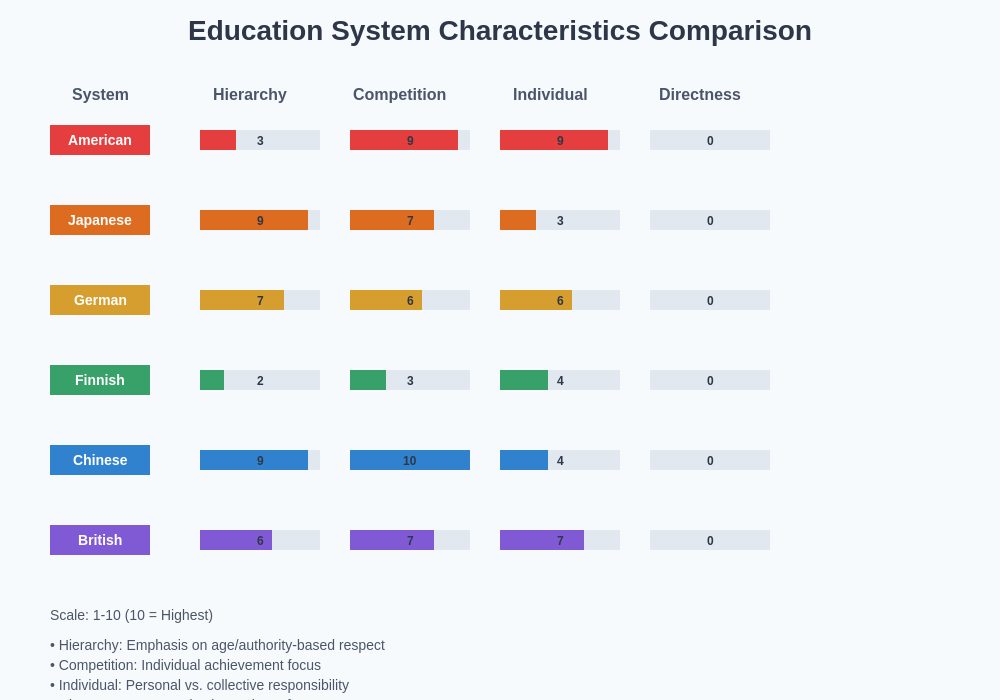
The concept of hierarchy varies dramatically across educational systems, creating profound differences in how residents perceive and interact with authority structures within sharehouse communities. Students from highly stratified educational environments often bring complex expectations about age-based respect, academic achievement recognition, and decision-making processes that can create confusion and resentment when not properly understood or accommodated by housemates from different backgrounds.
German and Japanese educational systems, despite their cultural differences, both emphasize structured hierarchies and clear authority chains, producing residents who may expect formal house meeting procedures, designated leadership roles, and systematic approaches to problem-solving. Japanese sharehouse rules every foreigner should know highlights how these expectations align with or conflict with traditional Japanese social structures within sharehouse environments.
Scandinavian educational systems promote egalitarian principles and flat organizational structures, creating residents who may resist formal hierarchy establishment and prefer collaborative consensus-building approaches that can frustrate housemates accustomed to clear leadership structures. These philosophical differences often surface during house meetings, cleaning schedule organization, and conflict resolution processes where different expectations about authority and decision-making create persistent tensions.
The intersection of academic achievement hierarchies with age-based respect systems creates particularly complex dynamics when high-achieving younger students interact with older residents from cultures that prioritize seniority over academic accomplishment. Understanding and negotiating these competing hierarchy systems requires sophisticated cultural intelligence and communication skills that many residents must develop through trial and error.
Competitive versus Collaborative Mindsets
Educational systems worldwide fall along a spectrum from highly competitive individual achievement models to collaborative group success frameworks, with these orientations significantly influencing sharehouse dynamics around resource sharing, academic support, and social competition. Residents carrying competitive mindsets may struggle with shared resource allocation, study space usage, and even social relationship dynamics in ways that create underlying tensions within house communities.
American educational systems often emphasize individual competition and personal achievement, creating residents who may approach sharehouse living with entrepreneurial mindsets, personal space protection attitudes, and achievement-oriented social interactions that can appear selfish or aggressive to housemates from more collaborative educational backgrounds. Living with Japanese roommates in Tokyo sharehouses explores how these competitive approaches interact with Japanese collaborative educational values.
Finnish and Dutch educational systems prioritize collaborative learning and collective problem-solving, producing residents who naturally seek group solutions, shared responsibility systems, and consensus-based decision-making approaches that may frustrate housemates accustomed to quick individual decisions and personal autonomy. These collaborative orientations often create more harmonious house environments but can also lead to decision paralysis and frustration when urgent situations require rapid responses.
The academic achievement culture variations create additional layers of complexity when residents from high-pressure educational environments interact with those from more relaxed, exploration-focused systems. Understanding these different approaches to success, failure, and academic pressure helps explain many of the social dynamics and stress responses that emerge during exam periods and academic deadline seasons.
Communication Patterns and Conflict Resolution
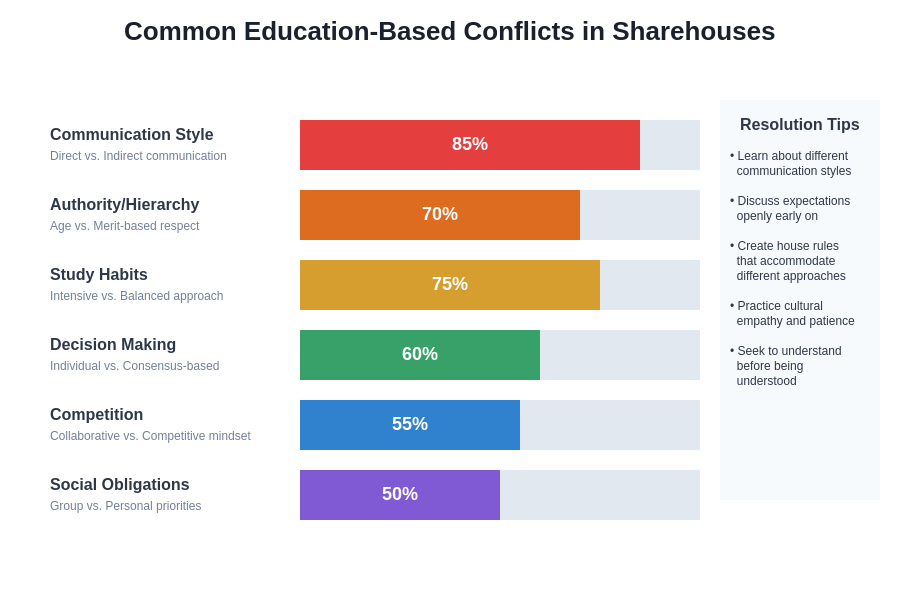
Educational systems profoundly shape communication styles, conflict resolution approaches, and emotional expression patterns that become critically important in sharehouse environments where cultural misunderstandings can quickly escalate into serious interpersonal conflicts. The directness versus indirectness spectrum of communication styles often creates the most immediate and noticeable cultural clashes within international sharehouse communities.
British and Australian educational systems emphasize polite indirectness and diplomatic communication, creating residents who may struggle to clearly express needs, complaints, or boundaries in ways that residents from more direct cultures can understand and respond to appropriately. How cultural communication styles create misunderstandings provides insights into navigating these communication challenges effectively.
Israeli and American educational environments often encourage direct confrontation and explicit communication, producing residents who may appear aggressive or insensitive to housemates from cultures that value diplomatic approaches and face-saving communication strategies. These directness differences frequently create escalating conflicts when well-intentioned direct communication is perceived as personal attacks or cultural insensitivity.
The emotional expression training embedded within different educational systems also influences how residents handle stress, disappointment, and interpersonal conflicts within sharehouse environments. Understanding these emotional expression patterns helps explain seemingly irrational reactions and provides frameworks for developing more effective cross-cultural communication strategies.
Academic Pressure and Stress Management
Different educational systems create vastly different relationships with academic pressure, stress management, and work-life balance that significantly impact sharehouse living dynamics during academic seasons. The intensity variations between educational backgrounds often create misunderstandings about study habits, social availability, and house responsibility participation that require careful navigation and mutual accommodation.
South Korean and Chinese educational systems create residents accustomed to extreme academic pressure, long study hours, and social sacrifice for educational achievement, resulting in housemates who may appear antisocial, competitive, or inconsiderate when they are simply following deeply ingrained academic survival strategies. How academic pressure varies by nationality explores these cultural differences in detail.
Canadian and Australian educational approaches emphasize work-life balance and holistic development, creating residents who may struggle to understand or accommodate the extreme study behaviors of housemates from high-pressure educational backgrounds. These different approaches to academic prioritization often create conflicts around noise levels, social participation expectations, and house responsibility sharing during critical academic periods.
The stress management techniques taught within different educational systems also influence how residents cope with academic challenges, financial pressures, and cultural adaptation difficulties that inevitably arise during sharehouse living experiences. Recognizing these different coping strategies helps housemates provide appropriate support and avoid inadvertently increasing stress through cultural misunderstandings.
Social Hierarchy and Age Relationships
Educational systems establish complex relationships between age, academic achievement, and social status that profoundly influence how residents interact within sharehouse communities. These hierarchy expectations often create invisible social tensions when residents from different educational backgrounds apply incompatible status systems to the same living situations and interpersonal relationships.
Confucian-influenced educational systems create strong age-based respect hierarchies where younger residents defer to older housemates regardless of academic achievement, experience, or expertise levels. How age differences impact sharehouse compatibility examines how these traditional respect systems interact with more egalitarian cultural approaches within international sharehouse communities.
Western educational systems often prioritize merit-based status and expertise recognition over age-based hierarchy, creating residents who may inadvertently offend older housemates by offering advice, challenging decisions, or assuming leadership roles based on knowledge rather than seniority. Understanding these different status systems becomes crucial for maintaining harmonious relationships and avoiding cultural conflicts.
The intersection of academic achievement hierarchies with cultural age respect creates particularly complex dynamics when academically successful younger residents interact with older housemates from cultures that prioritize life experience over educational credentials. Navigating these competing status systems requires sophisticated cultural awareness and diplomatic communication skills.
Group Decision-Making and Consensus Building
The democratic versus authoritarian spectrum of educational systems creates fundamentally different expectations about group decision-making processes, consensus building, and individual input valuation that significantly impact sharehouse governance and daily operational decisions. These differences often create frustration and conflict when residents apply incompatible decision-making frameworks to shared living situations.
Scandinavian educational systems emphasize democratic participation and consensus building, creating residents who expect extensive discussion, inclusive input gathering, and unanimous agreement before implementing house decisions or policy changes. How conflict resolution styles differ by culture provides frameworks for understanding these different decision-making approaches.
Authoritarian educational backgrounds may produce residents who prefer clear leadership designation, efficient decision implementation, and minimal discussion processes that can frustrate housemates accustomed to participatory democracy and inclusive decision-making. These efficiency versus inclusivity tensions often surface during house meetings, policy discussions, and crisis response situations.
The time orientation differences embedded within educational systems also influence expectations about decision-making speed, implementation timelines, and change adaptation processes that affect everything from cleaning schedule modifications to social event planning within sharehouse communities.
Individual versus Collective Responsibility
Educational systems worldwide vary dramatically in their emphasis on individual accountability versus collective responsibility, creating profound differences in how residents approach shared living obligations, community maintenance, and mutual support within sharehouse environments. These responsibility frameworks often determine success or failure in multicultural living situations.
American educational systems typically emphasize individual accountability and personal responsibility, creating residents who may focus primarily on fulfilling their own obligations while expecting others to manage their responsibilities independently. How cleaning responsibilities create house drama explores how these individual responsibility approaches can create conflicts in shared living environments.
Japanese educational systems promote collective responsibility and group accountability, producing residents who naturally monitor group welfare, share burdens, and maintain community harmony through personal sacrifice when necessary. Understanding and balancing these different responsibility approaches becomes crucial for creating sustainable sharehouse communities that accommodate diverse cultural expectations.
The shame versus guilt orientation differences embedded within educational systems also influence how residents respond to personal failures, community disappointments, and interpersonal conflicts within sharehouse environments. Recognizing these different accountability frameworks helps explain emotional reactions and provides strategies for addressing conflicts constructively.
Academic Achievement and Social Status
Different educational systems create varying relationships between academic performance and social recognition that influence how residents interact within sharehouse communities. These achievement-status connections often create invisible social hierarchies and competition dynamics that can undermine community harmony if not properly understood and managed.
French educational systems create strong academic elite cultures where intellectual achievement determines social status and respect levels, potentially creating residents who unconsciously establish academic hierarchies within sharehouse communities. Why academic achievements create social pressure examines how these academic status systems affect daily interactions and social relationships.
Brazilian educational approaches often emphasize social integration and relationship building over pure academic achievement, creating residents who may prioritize community harmony and social connections over individual academic success. These different value systems can create misunderstandings about priorities, commitment levels, and success definitions within shared living environments.
Understanding these achievement-status relationships helps explain many of the subtle social dynamics, competition patterns, and recognition expectations that emerge within international sharehouse communities during academic seasons and achievement recognition periods.
Long-term Adaptation and Cultural Learning
The educational conditioning that residents bring to sharehouse experiences represents both challenges and opportunities for personal growth, cultural understanding, and adaptive skill development. Successfully navigating these educational differences often requires conscious effort to understand, accommodate, and learn from alternative approaches to learning, social interaction, and community participation.
Residents who actively engage with different educational philosophies and behavioral patterns often develop enhanced cultural intelligence, communication skills, and adaptive capabilities that serve them well in international careers and relationships. How cultural adaptation happens gradually explores the process of integrating different educational approaches into more flexible and effective personal systems.
The metacognitive awareness that develops through exposure to different educational approaches often enhances critical thinking, problem-solving, and social intelligence in ways that purely monocultural educational experiences cannot provide. Understanding and appreciating these learning opportunities helps transform potentially frustrating cultural differences into valuable personal development experiences.
Building bridges between different educational philosophies requires patience, empathy, and commitment to mutual understanding that can create stronger, more resilient sharehouse communities capable of supporting diverse learning styles, communication approaches, and social interaction preferences.
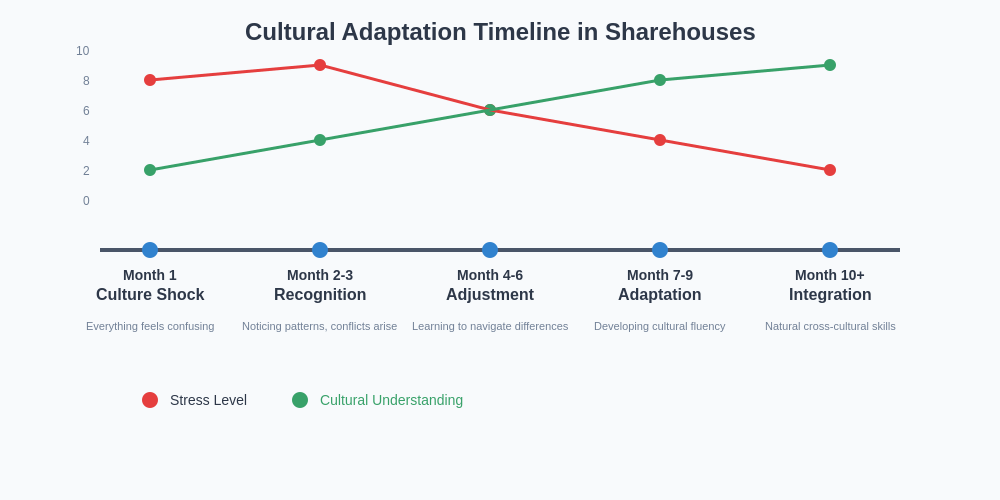
The journey of understanding and adapting to different educational expectations within sharehouse environments represents a microcosm of the broader challenges and opportunities present in our increasingly interconnected global society. By developing awareness of these educational influences and building skills for cross-cultural navigation, residents can transform potential conflicts into opportunities for growth, learning, and meaningful international friendships that extend far beyond their sharehouse experiences.
Disclaimer
This article is for informational purposes only and does not constitute professional psychological or educational advice. Educational system characteristics described represent general patterns and may not apply to all individuals from particular countries or educational backgrounds. The effectiveness of adaptation strategies may vary depending on individual personalities, specific circumstances, and cultural contexts. Readers should approach cross-cultural interactions with openness, respect, and willingness to learn from individual differences rather than relying solely on cultural generalizations.