The convergence of diverse learning styles within Tokyo sharehouses creates a complex tapestry of academic approaches that can either foster remarkable educational synergy or generate significant friction among residents pursuing various forms of study and professional development. Understanding these fundamental differences in how individuals process information, retain knowledge, and approach learning challenges becomes crucial for maintaining harmonious living environments while supporting everyone’s educational goals and career advancement aspirations.
The academic diversity found in modern Tokyo sharehouses reflects the city’s status as an international education hub, where language learners, university students, professional certification candidates, and career changers often find themselves sharing living spaces while pursuing dramatically different educational objectives that require incompatible study methodologies and environmental conditions.
Understanding the Spectrum of Learning Preferences
Individual learning preferences manifest in countless variations that extend far beyond traditional categorizations, encompassing sensory processing differences, attention span variations, social interaction needs, and environmental requirements that fundamentally shape how residents approach their educational responsibilities and daily study routines. Student sharehouses near top Tokyo universities often house students with dramatically different academic backgrounds and learning approaches.
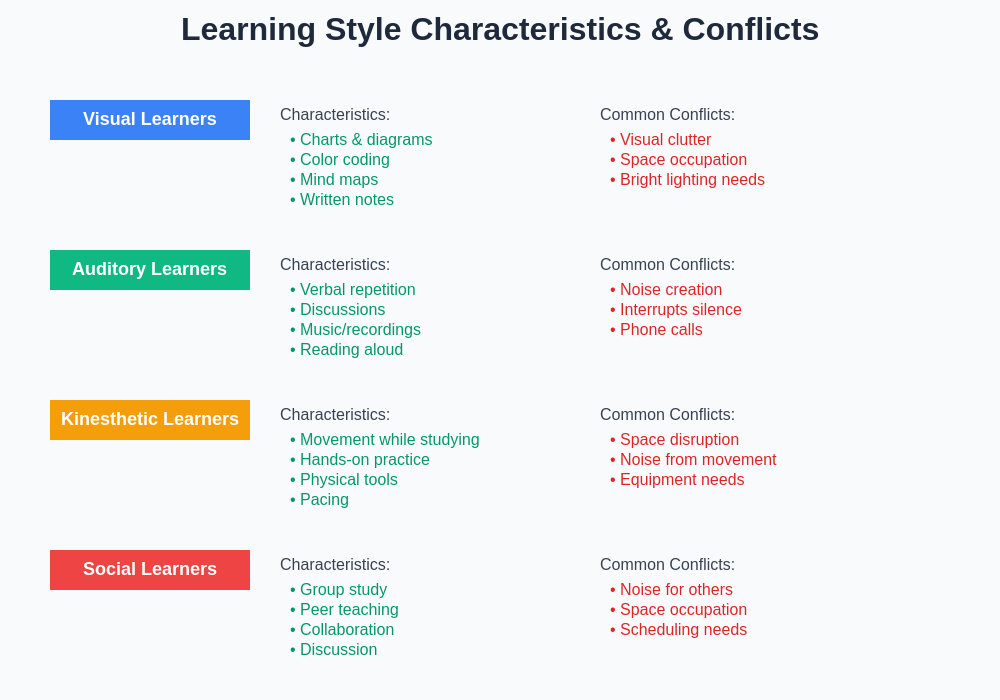
Visual learners typically require extensive use of diagrams, charts, color-coding systems, and spatial organization techniques that can transform shared spaces into elaborate information displays covering walls, whiteboards, and every available surface with mind maps, flowcharts, and visual study aids that may overwhelm residents who prefer minimalist environments or find visual clutter distracting to their own concentration efforts.
Auditory learners frequently engage in verbal repetition, discussion-based study sessions, recorded lecture reviews, and spoken explanations that can create noise conflicts with residents who require absolute silence for concentration, particularly during critical exam preparation periods when stress levels are elevated and tolerance for disruption reaches its lowest point throughout the academic calendar.
Kinesthetic learners often need physical movement, hands-on activities, and dynamic study environments that involve pacing, gesture-based memorization, and interactive learning tools that can appear disruptive to residents who prefer static, controlled study conditions and may interpret physical movement as inconsiderate behavior rather than necessary learning accommodation.
Cultural Influences on Educational Approaches
Cultural backgrounds significantly influence learning style preferences and academic expectations, creating situations where residents from different educational systems may have fundamentally incompatible approaches to study schedules, group work expectations, and appropriate academic behavior within shared living environments. How cultural differences affect friendship building becomes particularly relevant when academic stress amplifies existing cultural misunderstandings.
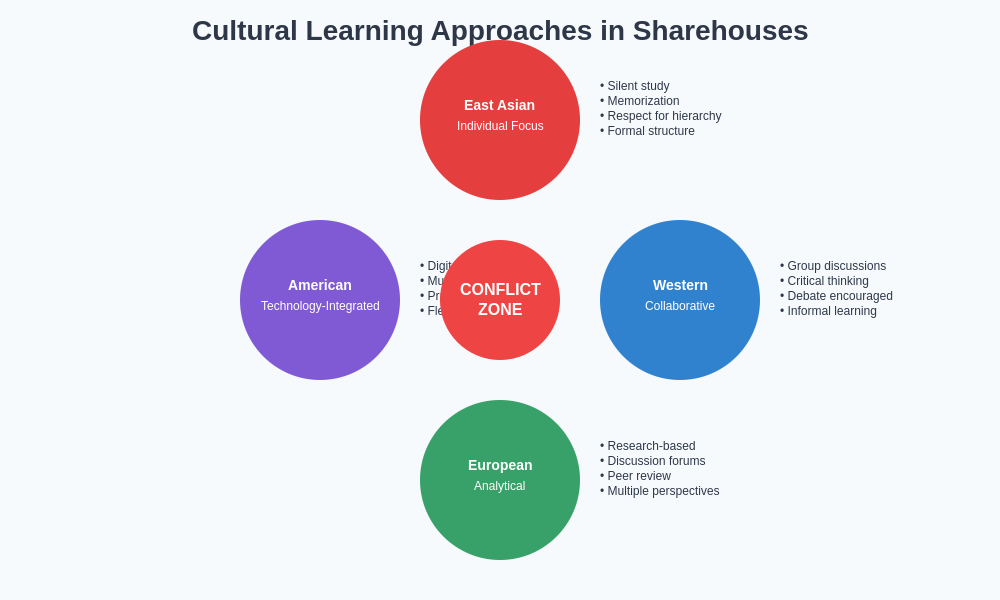
East Asian educational traditions often emphasize individual study, memorization-based learning, and quiet concentration periods that can conflict with Western collaborative learning approaches, discussion-based study methods, and more relaxed attitudes toward noise levels during academic activities, creating tension when residents attempt to accommodate different cultural expectations simultaneously.
European educational systems frequently encourage debate, critical analysis, and group discussion formats that may seem disruptive or disrespectful to residents from cultures that value hierarchical learning structures, teacher reverence, and individual reflection as primary learning mechanisms, leading to misunderstandings about appropriate academic discourse and study group dynamics.
American learning cultures often incorporate technology integration, multitasking capabilities, and informal study environments that can clash with traditional approaches favoring single-task focus, handwritten materials, and formal study rituals that require specific environmental conditions and behavioral protocols that may be incompatible with modern digital learning methods.
Schedule Conflicts and Time Management Clashes
Different learning styles often require incompatible time allocations and scheduling approaches that can create significant conflicts over shared space usage, quiet hours enforcement, and resource allocation throughout daily and weekly academic cycles. How exam periods create stress for everyone demonstrates how these scheduling conflicts intensify during high-pressure academic periods.
Morning learners who achieve peak cognitive performance during early hours may require access to common areas, kitchen facilities, and quiet spaces during times when night-owl residents are still sleeping or prefer evening study sessions, creating ongoing negotiations about appropriate noise levels, lighting usage, and space availability that affect everyone’s academic productivity and sleep quality.
Intensive study periods that require extended occupation of shared spaces can conflict with residents who prefer shorter, more frequent study sessions or need regular access to common areas for meals, relaxation, or their own academic activities, leading to territorial disputes and resource competition that can escalate into serious interpersonal conflicts affecting overall house harmony.
Deadline-driven learners who work in concentrated bursts before assignment due dates may suddenly require quiet environments or extensive space usage that disrupts established routines and interferes with residents who maintain consistent daily study schedules, creating unpredictable environmental changes that affect everyone’s ability to maintain their preferred learning conditions.
Technology Integration and Digital Divide Issues
Modern learning increasingly relies on digital tools, online platforms, and technological resources that create new categories of conflicts related to internet bandwidth, device usage, and shared technology access that can exacerbate existing learning style differences while introducing additional complications related to technological literacy and digital learning preferences.
High-bandwidth learners who require streaming video lectures, online collaboration tools, and cloud-based resources may consume internet capacity that affects other residents’ ability to access digital learning materials, particularly during peak usage periods when multiple residents attempt simultaneous online activities that strain shared network infrastructure and create performance issues for everyone.
Device-dependent learners who rely on multiple screens, specialized software, or specific hardware configurations may require extensive setup time and space allocation in common areas that prevents other residents from accessing shared technology resources or studying in preferred locations, leading to scheduling conflicts and resource competition that affects academic productivity.
Traditional learning approaches that emphasize physical books, handwritten notes, and analog study methods can conflict with digital learning environments that involve screen brightness, keyboard noise, notification sounds, and electronic device usage that creates environmental distractions for residents who require low-technology study conditions for optimal concentration and retention.
Social Learning versus Individual Study Preferences
The fundamental divide between collaborative learners who thrive in group settings and solitary learners who require isolation for optimal academic performance creates ongoing challenges in shared living environments where residents must balance social interaction needs with individual study requirements. Making friends through Tokyo sharehouse communities becomes complicated when social and academic needs conflict.
Group study enthusiasts who learn through discussion, peer teaching, and collaborative problem-solving may regularly organize study sessions, form study groups, and engage in academic conversations that can disturb residents who require quiet, individual study environments and view social learning activities as disruptive distractions rather than beneficial educational opportunities.
Solitary learners who achieve optimal performance through individual reflection, independent research, and uninterrupted concentration may become frustrated with social learning activities, group discussions, and collaborative study sessions that interrupt their preferred study environments and force them to seek alternative study locations outside the sharehouse.
Peer learning dependencies that require regular interaction with other residents for study support, language practice, or academic assistance can create pressure on residents who prefer to provide or receive help on their own schedules rather than being available for spontaneous academic support requests that interrupt their planned study activities.
Language Learning and Communication Barriers
Language acquisition represents a particularly complex category of learning that intersects with all other academic activities while creating unique challenges related to practice opportunities, error correction, and cultural communication patterns that can affect every aspect of sharehouse academic life. Language barriers prevent deep friendships often manifests in academic contexts as well.
Conversational practice needs that require speaking aloud, pronunciation repetition, and dialogue simulation can conflict with residents who require quiet study environments, particularly when language learning activities involve loud repetition, recorded material playback, or video call practice sessions with tutors or conversation partners in different time zones.
Grammar-focused learners who rely on written exercises, textbook study, and structured learning approaches may find their methods incompatible with communicative language learners who prefer immersive conversation practice, informal dialogue, and spontaneous language use that can interrupt quiet study periods and create noise conflicts.
Cultural learning components that involve music, videos, cultural content, and multimedia resources can create conflicts over shared entertainment systems, internet bandwidth usage, and common area occupation that affects other residents’ ability to pursue their own academic activities in preferred environments and conditions.
Academic Pressure and Stress Response Variations
Different learning styles often correspond with varying stress responses and pressure management techniques that can create conflicts when residents experience academic pressure in incompatible ways that affect the overall house environment and everyone’s ability to manage their own educational stress effectively. How academic pressure varies by nationality influences how these stress responses manifest in shared living situations.
High-pressure learners who thrive under deadline stress and prefer intensive, concentrated study periods may create urgent, crisis-like atmospheres that increase anxiety for residents who prefer steady, consistent study approaches and find sudden environmental changes disruptive to their academic performance and emotional well-being.
Stress-sensitive learners who require calm, predictable environments for optimal academic performance may become overwhelmed by the intense study atmosphere created by high-pressure residents, leading to decreased academic performance and increased interpersonal tension as different stress management approaches conflict within shared living spaces.
Collaborative stress management that involves group study sessions, peer support, and shared academic challenges can conflict with individual stress management approaches that require isolation, personal space, and independence during difficult academic periods, creating situations where residents cannot access their preferred coping mechanisms.
Resource Competition and Space Allocation
Shared living environments inherently involve competition for limited resources that becomes particularly intense when different learning styles require incompatible use of common spaces, utilities, and shared amenities during overlapping time periods that cannot accommodate everyone’s optimal learning conditions simultaneously. How to handle roommate conflicts without moving out becomes essential when academic needs create ongoing resource conflicts.
Prime study locations within sharehouses often become contested territory when multiple residents require quiet, well-lit spaces with adequate seating, surface area, and environmental control for optimal learning conditions, leading to informal reservation systems, territorial behaviors, and scheduling conflicts that can escalate into serious interpersonal disputes.
Utility usage patterns related to lighting preferences, temperature control, and electricity consumption can create conflicts when different learning styles require incompatible environmental conditions during overlapping study periods, particularly when energy costs are shared among residents who have different tolerance levels for utility expenses.
Storage requirements for academic materials, textbooks, supplies, and equipment can overwhelm limited sharehouse storage capacity when residents pursue different types of education that require varying amounts of physical materials and specialized equipment that cannot be easily shared or stored efficiently in communal areas.
Resolution Strategies and Compromise Solutions
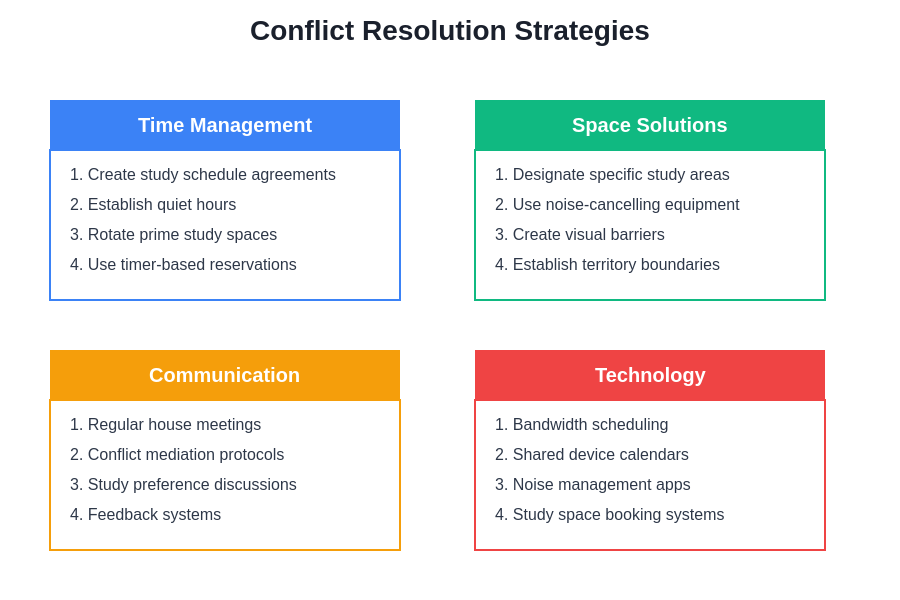
Successful navigation of learning style conflicts requires proactive communication, flexible scheduling systems, and creative compromise solutions that acknowledge the validity of different educational approaches while establishing boundaries and protocols that protect everyone’s academic success and personal well-being within shared living environments.
Designated study spaces and time-sharing agreements can help minimize conflicts by providing predictable access to optimal learning environments while ensuring that all residents have opportunities to pursue their academic goals without interfering with others’ educational activities, though implementation requires ongoing negotiation and adjustment as academic schedules change.
Noise management protocols that establish clear guidelines for acceptable sound levels during different time periods can help balance the needs of auditory learners who require verbal practice with residents who need quiet environments, though enforcement requires consistent cooperation and mutual respect among all residents.
Technology sharing agreements and internet usage protocols can help manage bandwidth competition and device access while ensuring that all residents can pursue digital learning activities without creating performance issues or access conflicts that affect academic productivity and deadline management.
Long-term Impact on Academic Success
The resolution or escalation of learning style conflicts can significantly impact residents’ academic performance, stress levels, and overall educational outcomes, making effective conflict management essential for both individual success and community harmony within sharehouse environments where educational goals intersect with daily living requirements.
Unresolved learning style conflicts can lead to decreased academic performance, increased stress levels, and eventual housing changes that disrupt both educational continuity and social relationships, making proactive conflict prevention and resolution strategies essential for long-term sharehouse stability and resident satisfaction.
Successful adaptation to diverse learning environments can enhance flexibility, cultural competency, and collaborative skills that benefit residents’ future academic and professional endeavors, making learning style diversity a potential asset rather than solely a source of conflict when managed effectively through communication and compromise.
The ability to navigate learning style differences while maintaining academic performance and positive relationships demonstrates valuable life skills that extend beyond sharehouse living into future educational, professional, and personal contexts where similar diversity and conflict resolution challenges will inevitably arise throughout residents’ continued development and career advancement.
Understanding how different learning styles clash in shared living environments provides essential insights for creating harmonious academic communities where diverse educational approaches can coexist productively while supporting everyone’s academic success and personal growth within the unique context of international student life in Tokyo.
Disclaimer
This article is for informational purposes only and does not constitute professional educational or psychological advice. Learning style preferences and academic approaches vary significantly among individuals, and specific conflicts may require personalized solutions. The effectiveness of suggested strategies may vary depending on individual circumstances, cultural backgrounds, and specific sharehouse dynamics. Readers should consider their own educational needs and consult with relevant professionals when addressing persistent academic conflicts.