The emergence of digital nomadism has fundamentally transformed the landscape of sharehouse living in Tokyo, introducing new dynamics that reshape community interactions, technological requirements, and cultural experiences within shared living spaces. As remote work becomes increasingly normalized and international travel restrictions ease, digital nomads represent a growing demographic that brings unique perspectives, challenges, and opportunities to traditional sharehouse environments throughout Japan’s capital city.
Understanding how digital nomads influence sharehouse dynamics becomes essential for property managers, long-term residents, and potential newcomers who wish to navigate these evolving community structures successfully. The integration of highly mobile, technology-dependent professionals into established residential communities creates both exciting possibilities for cultural exchange and complex challenges that require thoughtful management and adaptation from all stakeholders involved.
The Digital Nomad Profile in Tokyo Sharehouses
Digital nomads entering Tokyo’s sharehouse market typically represent a distinct demographic characterized by location independence, technology dependence, and flexible lifestyle preferences that differentiate them significantly from traditional long-term residents or conventional international students. Their professional backgrounds often span software development, digital marketing, content creation, online education, and various forms of remote consulting that enable income generation regardless of geographical location.
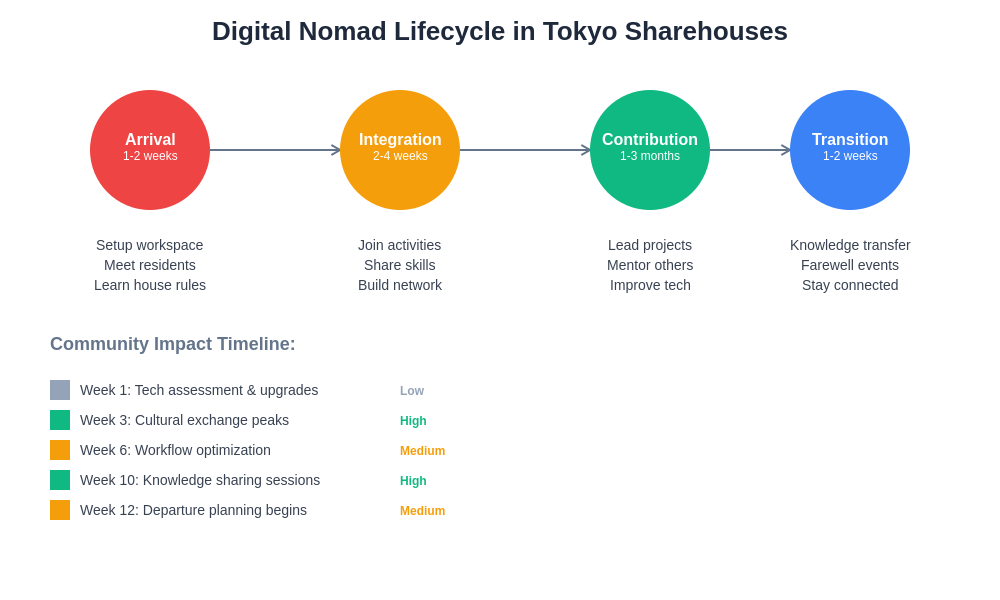
The duration of stay for digital nomads in Tokyo sharehouses varies considerably, ranging from several weeks to multiple months, with some establishing seasonal patterns that bring them back to the same communities repeatedly. This temporal flexibility creates unique dynamics within sharehouses as residents must constantly adapt to changing community compositions and varying levels of investment in long-term relationship building.
Understanding how age differences impact sharehouse compatibility becomes particularly relevant when digital nomads, who often skew toward younger demographics, integrate with more age-diverse traditional residential communities. The professional maturity and international experience that many digital nomads possess can bridge generational gaps while simultaneously introducing new perspectives on work-life integration and global connectivity.
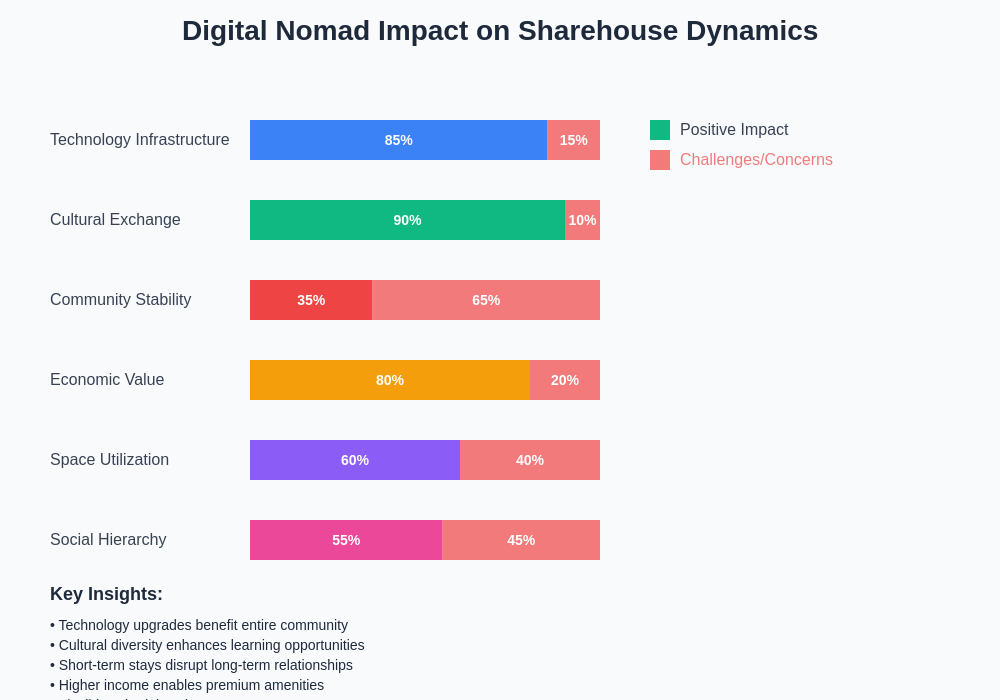
The financial capacity of digital nomads often enables them to access higher-tier sharehouses with premium amenities, potentially altering the socioeconomic dynamics within communities that previously catered to budget-conscious students or entry-level professionals. This shift can create both opportunities for facility upgrades and challenges related to affordability and accessibility for existing resident populations.
Technological Infrastructure and Connectivity Demands
Digital nomads place unprecedented demands on technological infrastructure within sharehouses, requiring robust internet connectivity, reliable power supply, and adequate workspace facilities that can support professional-grade remote work activities throughout extended periods. Understanding utility bills in Japanese sharehouses becomes crucial as increased technology usage can significantly impact electricity consumption and internet bandwidth requirements.
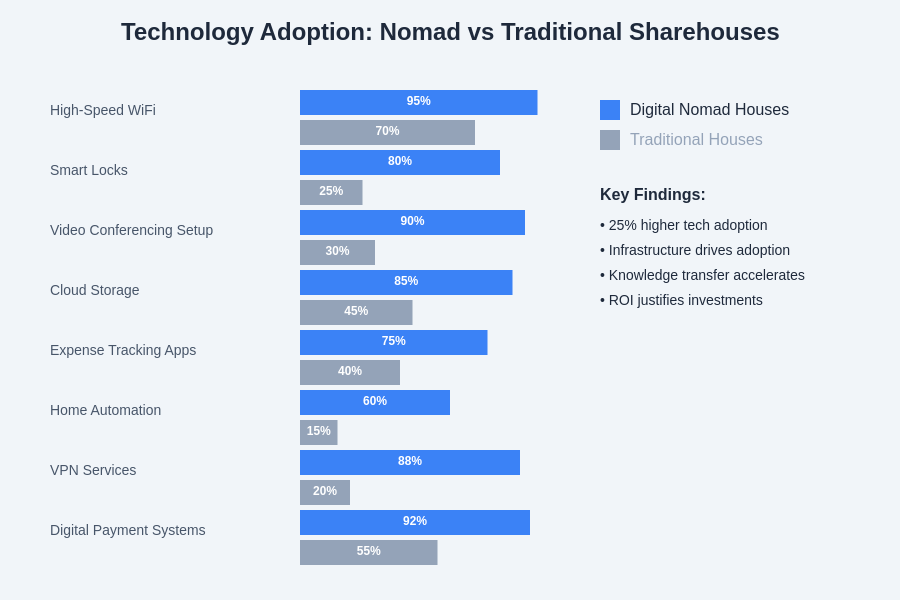
The expectation for high-speed, low-latency internet connections drives sharehouses to upgrade their networking infrastructure, often resulting in improved connectivity for all residents but potentially increasing operational costs that may be passed on through higher monthly fees. Digital nomads frequently require multiple device connections, video conferencing capabilities, and cloud storage access that can strain systems designed for more modest residential internet usage patterns.
Workspace requirements extend beyond simple desk space to include considerations for lighting quality, noise control, ergonomic furniture, and privacy options that enable professional video calls and focused work sessions. The transformation of common areas into informal co-working spaces can enhance community interaction while also creating potential conflicts over space usage, noise levels, and resource availability during peak working hours.
The integration of smart home technologies, improved air conditioning systems, and enhanced security features often accelerates in sharehouses with significant digital nomad populations, as these residents typically have both the technical knowledge and financial incentive to support infrastructure improvements that enhance their productivity and comfort during extended stays.
Cultural Exchange and Community Building
Digital nomads contribute significantly to the cultural diversity and international atmosphere within Tokyo sharehouses, bringing experiences from multiple countries, languages, and professional backgrounds that enrich community interactions and broaden perspectives for all residents. Living with Japanese roommates in Tokyo sharehouses takes on new dimensions when digital nomads serve as cultural bridges between local Japanese residents and other international community members.
The storytelling and experience-sharing culture that digital nomads often cultivate can transform evening conversations and social gatherings into informal educational sessions about global business practices, travel destinations, cultural differences, and professional opportunities that extend beyond traditional sharehouse social interactions. These exchanges frequently inspire other residents to consider international experiences or remote work opportunities.
Language learning dynamics within sharehouses evolve significantly with digital nomad presence, as these residents often possess multilingual capabilities and cross-cultural communication skills that facilitate more inclusive conversations and reduce language barriers between residents from different backgrounds. Making friends through Tokyo sharehouse communities becomes enhanced through the networking connections and global perspectives that digital nomads bring to residential communities.
The temporary nature of digital nomad residency can create both excitement and challenges for community building, as residents must balance investment in relationships with the reality of frequent departures and arrivals. This dynamic encourages more intensive, accelerated friendship formation while also requiring emotional resilience from community members who experience regular turnover in their living environment.
Work-Life Balance and Space Utilization
The blending of work and residential spaces that characterizes digital nomad lifestyles fundamentally alters how sharehouses function as living environments, creating new considerations for noise management, space allocation, and community interaction patterns that affect all residents regardless of their own work arrangements. Traditional boundaries between work hours and personal time become fluid, requiring new forms of etiquette and space-sharing protocols.
Common areas experience increased utilization throughout traditional work hours as digital nomads seek alternatives to their private rooms for variety, collaboration, or improved working conditions. Kitchen politics actually work in Japanese sharehouses becomes more complex when cooking schedules must accommodate residents who may be working irregular hours or maintaining schedules aligned with different time zones.
The presence of professional activities within residential spaces can elevate the overall atmosphere and energy of sharehouses while also creating potential conflicts with residents who prefer clear separation between work and home environments. Digital nomads often model productive work habits and professional development activities that can inspire other residents while also setting new standards for space utilization and community contribution.
Time zone differences create unique rhythms within sharehouses as digital nomads may maintain work schedules that align with clients or employers in different regions, resulting in early morning or late evening professional activities that require consideration from other community members regarding noise levels and shared space usage.
Economic Impact on Sharehouse Operations
Digital nomads typically command higher disposable incomes compared to traditional sharehouse demographics, enabling them to pay premium rates for enhanced amenities, private rooms, and flexible lease terms that can improve the financial sustainability of sharehouse operations while potentially pricing out budget-conscious residents. How much Tokyo sharehouses really cost per month becomes more variable as properties adapt their pricing strategies to accommodate different resident segments.
The willingness of digital nomads to pay for convenience services such as cleaning, laundry, meal preparation, and administrative support creates opportunities for sharehouses to expand their service offerings and generate additional revenue streams that can benefit all residents through improved facilities and enhanced community management.
Short-term and flexible lease arrangements preferred by digital nomads can create revenue optimization opportunities for sharehouse operators while also introducing complexity in community planning, resource allocation, and relationship building among residents who may have varying levels of commitment to the living environment.
The demand for premium locations, modern amenities, and professional-grade facilities from digital nomads can drive gentrification of sharehouse neighborhoods and properties, potentially displacing traditional resident populations while simultaneously improving overall housing quality and community infrastructure in certain areas of Tokyo.
Social Hierarchy and Community Leadership
The professional experience, international exposure, and often advanced age of digital nomads can naturally position them as informal leaders or mentors within sharehouse communities, influencing decision-making processes, conflict resolution approaches, and community activity organization in ways that may not always align with existing social structures or cultural norms.
How age gaps create different social circles becomes particularly relevant as digital nomads may form distinct social groups based on professional interests, travel experiences, or lifestyle preferences that can either enhance community diversity or create fragmentation within the residential environment.
The rotation of digital nomads through sharehouses can disrupt established social hierarchies and relationship patterns, requiring existing residents to continuously adapt to new personalities, communication styles, and community contribution approaches while maintaining stability in their living environment and social connections.
Language proficiency and cross-cultural communication skills often possessed by digital nomads can position them as intermediaries in conflicts or misunderstandings between residents from different backgrounds, potentially reducing tension but also creating dependency relationships that may not be sustainable given their temporary residency status.
Technology Integration and Smart Living
Digital nomads often serve as early adopters and advocates for smart home technologies, productivity tools, and digital solutions that can enhance the efficiency and convenience of sharehouse living for all residents. Their familiarity with various applications, devices, and platforms frequently leads to community-wide adoption of tools for expense sharing, communication, scheduling, and resource management.
The implementation of digital systems for house management, from smart locks and automated billing to shared calendars and communication platforms, often accelerates in sharehouses with significant digital nomad populations who possess both the technical knowledge and motivation to optimize residential systems for enhanced convenience and efficiency.
Home automation technologies, energy management systems, and security enhancements typically receive stronger support and faster adoption in communities with digital nomads who understand the long-term benefits and have experience implementing similar solutions in various living environments throughout their travels.
The troubleshooting and technical support capabilities that many digital nomads possess can reduce reliance on external service providers for technology-related issues while also enabling more sophisticated technological solutions that might otherwise be too complex for traditional residential communities to implement and maintain effectively.
Challenges and Adaptation Strategies
The constant turnover associated with digital nomad residency creates ongoing challenges for community building, institutional memory preservation, and the maintenance of established house rules, traditions, and social norms that provide stability and continuity for long-term residents who form the core of sharehouse communities.
How to handle roommate conflicts without moving out becomes more complex when one party is a short-term digital nomad who may prioritize convenience over relationship repair, potentially leaving unresolved issues for remaining residents to manage long after the nomadic resident has departed.
Cultural sensitivity and adaptation expectations may vary significantly between digital nomads who have extensive international experience and other residents who may be experiencing their first cross-cultural living situation, creating potential misunderstandings about acceptable behavior, communication styles, and community participation expectations.
The professional demands and irregular schedules of digital nomads can create challenges for coordinating house meetings, community activities, and collaborative projects that require sustained participation and commitment from all residents over extended periods.
Future Implications and Evolution
The growing prevalence of digital nomadism and remote work arrangements suggests that sharehouses will need to continue evolving their infrastructure, policies, and community management approaches to accommodate this demographic while maintaining appeal for traditional resident populations who value stability and long-term community building.
Best Tokyo neighborhoods for sharehouse living may shift as digital nomads prioritize different location factors such as co-working space proximity, international business districts, and areas with established expat communities rather than traditional considerations like university access or entry-level employment opportunities.
The success of sharehouses in integrating digital nomads while preserving positive community dynamics will likely depend on developing flexible policies, enhanced communication systems, and adaptive management approaches that can balance the benefits of cultural diversity and economic opportunity with the stability and continuity that make shared living environments successful for all residents.
The influence of digital nomads on sharehouse culture extends beyond their direct participation to include inspiration for other residents to pursue remote work opportunities, international experiences, and location-independent lifestyles that may gradually transform the overall character and demographics of Tokyo’s shared living communities.
Understanding and adapting to the changes that digital nomads bring to sharehouse dynamics requires ongoing flexibility, open communication, and creative problem-solving from all community members. The successful integration of these mobile professionals into established residential communities creates opportunities for enhanced cultural exchange, technological advancement, and global connectivity that can enrich the sharehouse experience for everyone involved while maintaining the core values of community, affordability, and mutual support that make shared living an attractive option in Tokyo’s challenging housing market.
Disclaimer
This article is for informational purposes only and does not constitute professional advice regarding housing decisions or remote work arrangements. The impact of digital nomads on sharehouse dynamics may vary significantly depending on specific communities, management policies, and individual circumstances. Readers should consider their own needs and preferences when evaluating shared living situations and remote work lifestyles.