The intersection of discrimination laws and sharehouse selection in Japan creates a complex legal landscape that significantly impacts the housing experiences of both domestic and international residents. Understanding these legal frameworks becomes essential for anyone navigating Tokyo’s competitive housing market, particularly for foreign nationals who may encounter various forms of discrimination during their search for suitable accommodation. The application of anti-discrimination legislation to private housing arrangements involves nuanced interpretations of existing laws, cultural practices, and evolving social attitudes that continue to shape the sharehouse industry.
Japan’s legal approach to housing discrimination differs substantially from many Western nations, creating unique challenges and protections that prospective sharehouse residents must understand to effectively advocate for their rights and navigate potential barriers. The enforcement mechanisms, reporting procedures, and practical remedies available to discrimination victims require careful examination to provide meaningful guidance for those experiencing unfair treatment during their housing search.
Understanding Japan’s Legal Framework for Housing Discrimination
Japan’s constitutional guarantee of equal treatment under the law provides the foundational principle for addressing housing discrimination, though the practical application of these protections in private housing markets remains complex and often inconsistent. The Japanese Constitution’s Article 14 prohibits discrimination based on race, creed, sex, social status, or family origin, establishing broad principles that theoretically extend to housing selection processes.
The Act on Promotion of Human Rights Education and Human Rights Awareness-Raising supplements constitutional protections by encouraging educational initiatives and awareness campaigns designed to reduce discriminatory practices across various sectors, including housing and accommodation services. However, the voluntary nature of many compliance mechanisms limits the effectiveness of these measures in addressing systemic discrimination within the sharehouse industry.
Understanding why some sharehouses avoid certain nationalities reveals how legal frameworks intersect with cultural practices and business considerations that property managers often cite when implementing selective admission policies. The distinction between legitimate business considerations and unlawful discrimination requires careful legal analysis to determine appropriate responses and remedies.
Local ordinances and prefectural regulations often provide additional layers of protection beyond national legislation, with Tokyo Metropolitan Government implementing specific guidelines for preventing discrimination in housing accommodations. These regional measures typically include reporting mechanisms, mediation services, and educational resources designed to promote fair housing practices among property owners and management companies.
Nationality-Based Discrimination and Legal Protections
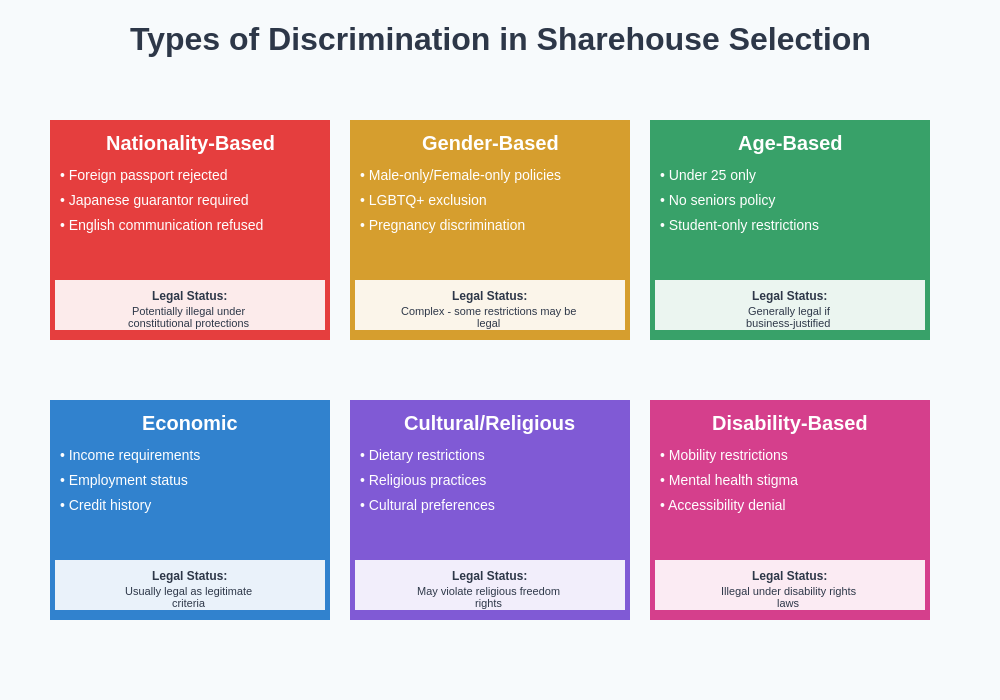
Nationality-based discrimination represents one of the most prevalent and legally complex forms of housing discrimination encountered by international residents seeking sharehouse accommodation in Japan. The intersection of immigration law, private property rights, and anti-discrimination principles creates situations where legal protections may be limited or difficult to enforce through traditional judicial channels.
The legal distinction between citizenship status and nationality often complicates discrimination cases, as property owners may implement policies that appear neutral but disproportionately affect foreign nationals through requirements such as Japanese guarantors, domestic employment verification, or extended residency documentation. Understanding why background checks take longer for foreigners illustrates how seemingly administrative procedures can create discriminatory barriers that may violate fair housing principles.
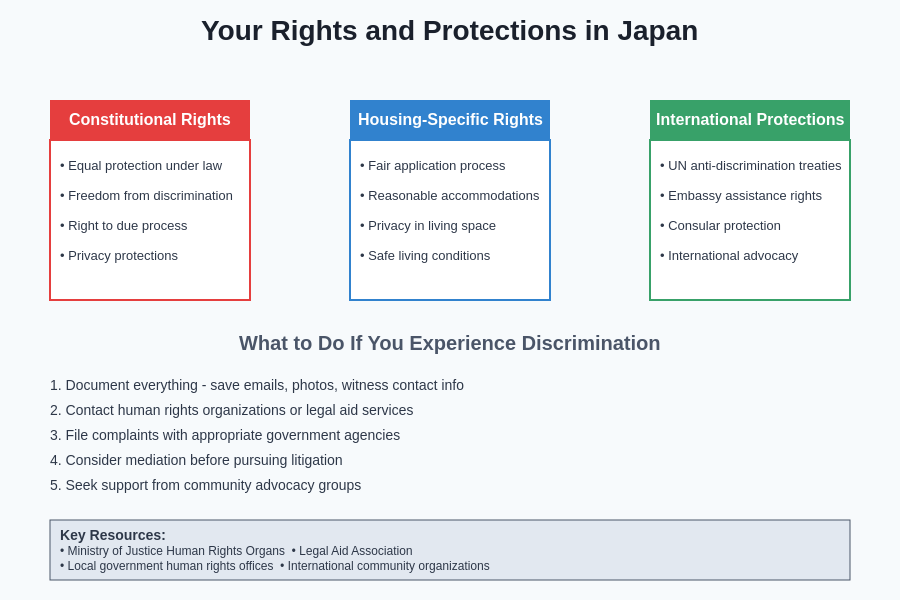
International human rights treaties to which Japan is a signatory, including the International Convention on the Elimination of All Forms of Racial Discrimination, provide additional legal frameworks for addressing nationality-based housing discrimination. These international obligations create binding commitments that domestic courts and administrative agencies must consider when evaluating discrimination complaints and developing enforcement policies.
The practical enforcement of nationality-based discrimination protections often depends on the ability to demonstrate that rejection decisions were based primarily on national origin rather than legitimate business considerations such as language barriers, cultural compatibility concerns, or financial verification challenges. Documenting discriminatory practices requires careful attention to communication patterns, application procedures, and comparative treatment of similarly situated applicants.
Gender-Based Restrictions and Legal Boundaries
Gender-based policies in sharehouse selection occupy a particularly complex position within Japan’s discrimination law framework, as property owners often implement sex-segregated housing arrangements that may serve legitimate safety and privacy interests while potentially limiting housing opportunities based on gender identity and expression. Understanding why gender-specific sharehouses have different rules explores how these policies balance safety considerations with equal access principles.
The legal analysis of gender-based restrictions requires careful consideration of whether such policies serve compelling safety interests that justify potential discrimination or whether they reflect outdated stereotypes and assumptions about gender roles and behaviors. Japanese courts have generally recognized that certain gender-based housing arrangements may be permissible when they serve legitimate safety and privacy interests, but the scope of these exceptions continues to evolve.
Transgender individuals and those with non-binary gender identities face particular challenges within gender-segregated housing systems, as existing legal protections may not adequately address their specific needs and experiences. The absence of comprehensive anti-discrimination legislation covering gender identity and expression creates legal gaps that can leave vulnerable individuals without effective recourse when facing housing discrimination.
Recent legal developments and social awareness campaigns have begun to influence how courts and administrative agencies approach gender-based housing discrimination, with increasing recognition that overly broad gender restrictions may violate equal protection principles even when implemented with legitimate safety concerns in mind.
Age-Based Discrimination and Legal Standards
Age-based discrimination in sharehouse selection presents unique legal challenges that reflect broader societal attitudes about intergenerational living arrangements and age-appropriate housing options. Understanding why age restrictions exist in some sharehouses examines how property owners balance community dynamics with legal requirements for equal treatment regardless of age.
Japanese law generally permits certain age-based restrictions in housing when they serve legitimate business purposes or community safety interests, such as creating age-appropriate living environments or ensuring compatibility among residents with similar life stages and lifestyle preferences. However, the boundaries between permissible age preferences and unlawful age discrimination require careful legal analysis to determine compliance with anti-discrimination principles.
The intersection of age discrimination with other protected characteristics, such as disability status or family composition, can create complex legal scenarios where multiple forms of discrimination may be occurring simultaneously. These intersectional discrimination cases often require sophisticated legal strategies that address the cumulative impact of multiple discriminatory practices rather than treating each form of discrimination in isolation.
Elder housing rights and protections for older adults seeking sharehouse accommodation have received increasing attention as Japan’s aging population creates greater demand for affordable, community-oriented housing options. Legal advocates have begun challenging age-based restrictions that appear to serve no legitimate purpose beyond reflecting negative stereotypes about older adults’ capacity for independent living or community participation.
Documentation and Evidence Requirements for Discrimination Claims
Successfully pursuing legal remedies for housing discrimination requires comprehensive documentation and evidence gathering that can substantiate claims of discriminatory treatment during the sharehouse application process. The burden of proof in discrimination cases typically requires demonstrating that rejection decisions were based on protected characteristics rather than legitimate business considerations or individual qualifications.
Effective documentation strategies include maintaining detailed records of all communications with property owners or management companies, preserving application materials and response letters, and documenting any verbal statements or policies that suggest discriminatory intent or impact. Understanding what documents you need for Tokyo sharehouse applications provides insights into standard application procedures that can help identify deviations that may indicate discriminatory treatment.
Comparative evidence demonstrating differential treatment of similarly situated applicants can provide powerful support for discrimination claims, though obtaining such evidence may require coordination with other prospective tenants or systematic testing of housing providers’ policies and practices. The legal admissibility and weight given to different types of evidence can vary significantly depending on the specific forum and procedural context in which discrimination claims are pursued.
Expert testimony and statistical analysis may be necessary to establish patterns of discriminatory conduct or to demonstrate the discriminatory impact of seemingly neutral policies. Legal representation becomes particularly important in complex discrimination cases where technical legal arguments and sophisticated evidence presentation are required to achieve successful outcomes.
Enforcement Mechanisms and Reporting Procedures
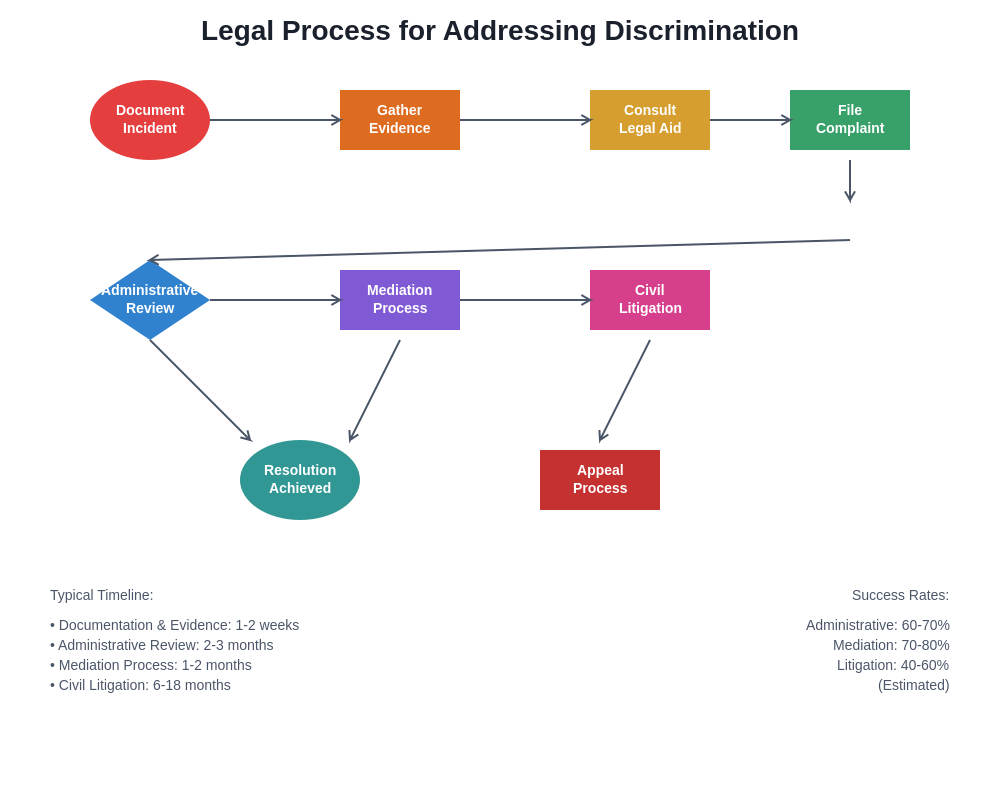
Japan’s enforcement mechanisms for addressing housing discrimination operate through multiple channels, including administrative agencies, human rights organizations, and judicial proceedings that offer different advantages and limitations for discrimination victims seeking redress. Understanding these various pathways enables more strategic decision-making about how to pursue discrimination complaints and maximize the likelihood of achieving meaningful remedies.
The Ministry of Justice’s Human Rights Organs provide accessible reporting mechanisms for discrimination complaints, offering mediation services and educational interventions that can address discriminatory practices without requiring formal legal proceedings. Understanding how legal disputes get resolved in sharehouses explores how these administrative processes complement traditional judicial remedies.
Local government agencies often maintain specialized units for addressing housing discrimination complaints, with some jurisdictions offering investigation services, mediation programs, and enforcement actions that can provide more immediate relief than lengthy court proceedings. The effectiveness of these local mechanisms varies significantly between different municipalities and regions.
Civil litigation remains an important enforcement tool for serious discrimination cases, particularly where monetary damages or injunctive relief may be necessary to address the full scope of discriminatory harm. However, the costs, time requirements, and evidentiary burdens associated with discrimination litigation can create significant barriers for many victims seeking legal redress.
Practical Strategies for Addressing Discrimination
Developing effective strategies for addressing housing discrimination requires understanding both the legal landscape and the practical realities of Japan’s sharehouse market, enabling prospective residents to protect their rights while maintaining realistic expectations about available remedies and enforcement possibilities. Prevention-focused approaches often prove more effective than reactive responses to discriminatory treatment.
Pre-application research and screening can help identify property owners and management companies with histories of discriminatory practices or policies that may indicate problematic attitudes toward protected groups. Understanding how to spot financial red flags in sharehouse contracts provides guidance on identifying potential problems before committing to application processes with potentially discriminatory housing providers.
Strategic application approaches may include assembling comprehensive documentation packages that address common concerns raised by property owners, obtaining character references or professional endorsements that can counter stereotypical assumptions, and identifying intermediaries or advocates who can facilitate productive communications with housing providers.
Building coalitions and support networks with other affected individuals can strengthen advocacy efforts and provide mutual assistance during challenging application processes. Community organizations, legal aid societies, and international resident support groups often provide valuable resources and guidance for those experiencing housing discrimination.
Recent Legal Developments and Evolving Standards
The legal landscape surrounding housing discrimination in Japan continues to evolve through legislative developments, judicial decisions, and changing social attitudes that influence how discrimination laws are interpreted and applied in sharehouse contexts. Staying informed about these developments helps prospective residents understand their current rights and anticipate future changes in legal protections.
Recent court decisions have begun to establish more definitive standards for evaluating housing discrimination claims, particularly in cases involving nationality-based restrictions and gender-based policies that may have discriminatory effects on protected groups. These precedential decisions provide important guidance for future cases and help clarify the boundaries between permissible preferences and unlawful discrimination.
Legislative proposals and policy initiatives at both national and local levels continue to address gaps in existing anti-discrimination protections, with particular attention to emerging issues such as discrimination against LGBTQ+ individuals, religious minorities, and individuals with non-traditional employment arrangements. Understanding how different education systems affect expectations illustrates how evolving social awareness influences housing policies and practices.
International pressure and comparative legal analysis increasingly influence Japanese approaches to housing discrimination, as globalization and international migration create greater awareness of best practices and legal standards in other jurisdictions. These international influences may accelerate the development of more comprehensive anti-discrimination protections in housing markets.
Role of Advocacy Organizations and Support Networks
Advocacy organizations and support networks play crucial roles in addressing housing discrimination by providing direct assistance to victims, conducting policy advocacy, and raising public awareness about discriminatory practices within Japan’s housing markets. Understanding how to find the perfect sharehouse in Tokyo often involves connecting with these support resources during the housing search process.
Legal aid organizations offer direct representation and advice to discrimination victims, helping them navigate complex legal procedures and evaluate available remedies for addressing discriminatory treatment. These organizations often maintain expertise in housing discrimination law and can provide specialized knowledge about effective advocacy strategies and precedential legal developments.
Community-based organizations focusing on immigrant rights, women’s rights, or other specific populations often provide targeted support services that address the unique discrimination challenges faced by their constituencies. These organizations may offer language interpretation services, cultural mediation, and advocacy training that empowers individuals to effectively address discriminatory treatment.
Research and documentation projects conducted by advocacy organizations help establish the scope and patterns of housing discrimination, providing empirical evidence that supports policy advocacy and legal reform efforts. This research often fills important gaps in official data collection and provides valuable insights into discrimination trends and effective intervention strategies.
International Perspectives and Comparative Analysis
Examining international approaches to housing discrimination provides valuable context for understanding both the strengths and limitations of Japan’s current legal framework while identifying potential reforms that could strengthen protections for sharehouse residents. Understanding Tokyo vs Osaka sharehouses for international students reveals how regional differences reflect broader national approaches to housing rights and discrimination prevention.
European Union countries have developed comprehensive anti-discrimination frameworks that provide extensive protections in housing markets, including strong enforcement mechanisms and substantial remedies for discrimination victims. These systems offer models for strengthening legal protections while addressing practical challenges in enforcement and compliance monitoring.
United States fair housing law provides extensive protections against discrimination based on race, color, religion, sex, national origin, familial status, and disability, with robust enforcement mechanisms and significant penalties for violations. The American approach to testing and investigation of discriminatory practices offers potential strategies for improving discrimination detection and enforcement in Japan.
Canadian human rights legislation includes comprehensive housing protections with specialized tribunals and enforcement agencies that provide accessible remedies for discrimination victims. The Canadian model demonstrates how specialized institutions can effectively address housing discrimination while maintaining practical approaches to dispute resolution and community education.
Future Directions and Legal Reform Prospects
The future development of housing discrimination law in Japan will likely be influenced by demographic changes, international pressures, and evolving social attitudes that create momentum for strengthening legal protections and enforcement mechanisms. Understanding why some residents feel constantly judged reflects broader social dynamics that may influence future policy developments.
Demographic pressures created by Japan’s aging population and declining birth rates may necessitate more inclusive housing policies that welcome international residents and diverse family structures, potentially reducing tolerance for discriminatory practices that limit housing opportunities for qualified applicants. Economic considerations may also drive policy reforms as competition for residents increases in many housing markets.
International treaty obligations and diplomatic relationships may create additional pressures for strengthening anti-discrimination protections, particularly as Japan seeks to maintain its international reputation and attract international talent and investment. These external influences may supplement domestic advocacy efforts in promoting legal reforms.
Technological developments and changing social attitudes among younger generations may create new opportunities for addressing discrimination through innovative enforcement mechanisms, community-based solutions, and cultural change initiatives that complement legal protections with social norm modifications.
The evolution of discrimination law in sharehouse selection represents an ongoing process that requires sustained attention from legal advocates, policymakers, and affected communities to ensure that Japan’s housing markets provide fair and equal opportunities for all residents regardless of their background or characteristics. Understanding these legal frameworks empowers individuals to protect their rights while contributing to broader efforts toward creating more inclusive and equitable housing systems.
Disclaimer
This article is for informational purposes only and does not constitute legal advice. Discrimination laws are complex and subject to change, and individual circumstances may affect the application of legal protections. Readers experiencing housing discrimination should consult with qualified legal professionals for specific guidance about their situations. The effectiveness of legal remedies may vary depending on specific facts, available evidence, and the particular legal forum involved.