Domestic violence incidents within sharehouse communities create profound ripple effects that extend far beyond the immediate victims and perpetrators, fundamentally altering the safety, atmosphere, and wellbeing of every resident in shared living environments. The interconnected nature of sharehouse living means that violence between intimate partners or household members inevitably becomes a community-wide crisis that demands understanding, preparation, and collective response from all stakeholders including residents, property managers, and support services.
The unique challenges posed by domestic violence in sharehouses stem from the inability to maintain complete separation between personal relationships and communal living spaces, creating complex dynamics where private conflicts become public safety concerns that affect everyone’s daily life, emotional wellbeing, and sense of security within their home environment.
Understanding the Scope of Impact in Shared Living
Domestic violence incidents in sharehouses create immediate safety concerns that extend throughout the entire property, as the close proximity of residents means that violent altercations, threatening behavior, and emotional abuse cannot be contained to individual rooms or relationships. The physical layout of most sharehouses, with shared common areas, thin walls, and interconnected living spaces, ensures that domestic violence situations become witnessed or overheard by other residents, creating secondary trauma and ongoing anxiety among the broader community.
The psychological impact on non-involved residents often manifests as hypervigilance, sleep disruption, and constant worry about potential escalation or repeat incidents. Understanding how age differences impact sharehouse compatibility becomes particularly relevant as different age groups may respond differently to crisis situations, with younger residents potentially lacking experience in handling such serious situations while older residents may feel increased responsibility for community safety.
Witnessing or hearing domestic violence creates lasting emotional distress among residents who may experience feelings of helplessness, guilt about their inability to intervene effectively, and ongoing fear about their own safety within what should be their secure home environment. The unpredictable nature of domestic violence situations means that residents can never feel completely relaxed or safe, as they must remain constantly alert to potential dangerous situations involving their housemates.
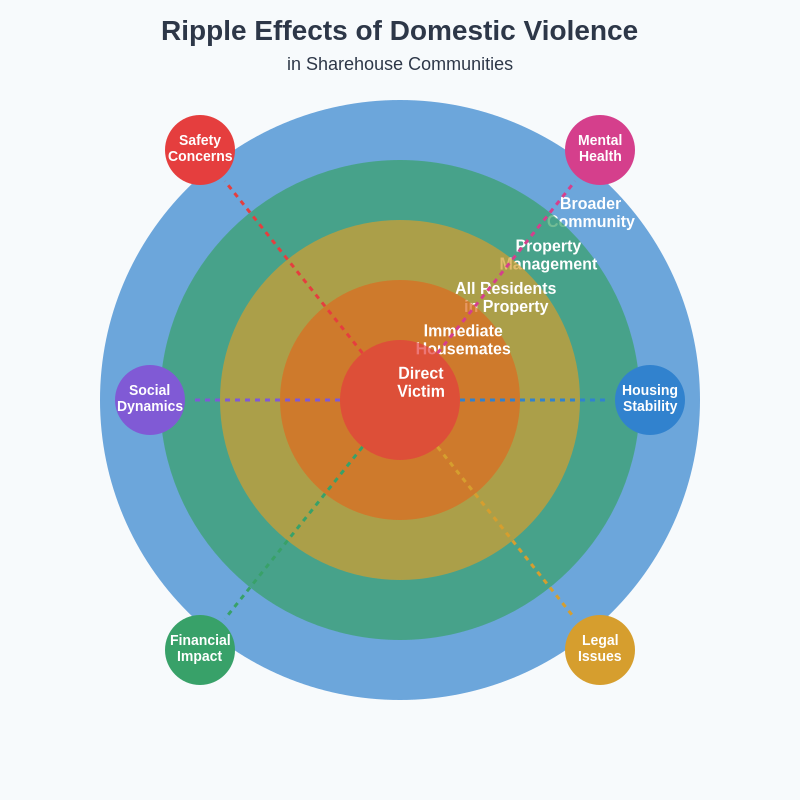
The expanding circles of impact demonstrate how domestic violence creates waves of consequences that reach far beyond the immediate relationship, affecting every level of the sharehouse community from direct witnesses to property management and broader neighborhood safety.
Disruption of Community Dynamics and Relationships
Domestic violence incidents fundamentally disrupt the social fabric of sharehouse communities, creating divisions, taking sides, and destroying the trust and mutual respect that forms the foundation of successful shared living arrangements. How breakups affect entire house dynamics provides context for understanding how relationship conflicts impact communities, but domestic violence represents a far more severe disruption that can permanently damage house relationships and social cohesion.
The presence of domestic violence forces other residents into uncomfortable positions where they must navigate their relationships with both victims and perpetrators, often creating impossible situations where maintaining neutrality becomes ethically challenging while taking sides can lead to further conflict and potential danger. Some residents may feel compelled to provide support and protection to victims, while others may withdraw from the community entirely to avoid involvement in dangerous situations.
Long-term residents who have invested emotionally in their sharehouse community often experience profound disappointment and disillusionment when domestic violence occurs, as it shatters their sense of home and belonging while forcing them to reconsider their living arrangements and future plans. Making friends through Tokyo sharehouse communities becomes significantly more challenging when domestic violence has occurred, as trust levels decrease and residents become more guarded in their interactions.
The aftermath of domestic violence incidents often results in permanent changes to house dynamics, with some residents choosing to move out immediately while others remain but maintain emotional distance from community activities and relationships. These changes can lead to the complete breakdown of previously thriving sharehouse communities, forcing remaining residents to rebuild social connections and safety protocols from scratch.
Impact on Mental Health and Daily Functioning
The psychological toll of living in a sharehouse where domestic violence has occurred extends to every resident, regardless of their direct involvement in the incidents. Exposure to domestic violence, even as a witness or neighbor, creates ongoing stress responses that can manifest as anxiety disorders, depression, and post-traumatic stress symptoms that affect daily functioning, work performance, and overall quality of life.
Sleep disturbances become common among residents who fear nighttime incidents or who have been awakened by violent altercations, leading to chronic fatigue and decreased cognitive function that impacts their ability to perform effectively in work or academic settings. How sleep quality suffers in shared environments becomes particularly relevant as domestic violence adds another layer of sleep disruption beyond typical sharehouse noise concerns.
Many residents develop avoidance behaviors, spending less time in common areas or timing their home activities to minimize potential exposure to conflict situations. This avoidance can lead to social isolation within their own living space, defeating one of the primary benefits of sharehouse living and forcing residents to seek social connection and relaxation outside their home environment.
The constant stress of living with domestic violence situations can exacerbate existing mental health conditions and trigger new ones, particularly among residents who may have their own histories of trauma or abuse. Mental health support varies in sharehouses highlights the inadequate mental health resources available in most shared living situations, leaving residents to cope with trauma exposure without appropriate professional support.
Safety and Security Concerns for All Residents
Domestic violence incidents create immediate and ongoing safety risks that extend throughout the entire sharehouse property, as perpetrators may escalate their behavior, threaten other residents who attempt to help victims, or create dangerous situations during violent episodes that put everyone at risk of physical harm. The shared nature of sharehouse living means that residents cannot simply lock their doors and ignore the situation, as they share common areas, entrances, and often thin walls that provide little protection.
Emergency situations involving domestic violence often require immediate police intervention, which can create chaos and ongoing security concerns for all residents as they may need to evacuate the property, provide statements to authorities, or live with the knowledge that violent individuals have access to their living space. Security cameras affect privacy expectations becomes particularly relevant as residents may desire increased surveillance for safety while simultaneously feeling their privacy is compromised.
The presence of domestic violence creates ongoing vulnerability for all residents, as perpetrators may view other housemates as threats to their control over victims or may redirect their aggression toward residents who attempt to intervene or support victims. This creates an atmosphere where residents must constantly assess potential threats and modify their behavior to avoid triggering violent responses.
Property security measures that seemed adequate for typical sharehouse living may prove insufficient when domestic violence is involved, as perpetrators may have legitimate access to the property while using that access to threaten, stalk, or harm victims and potentially other residents. How stranger access compromises security provides context for understanding how domestic violence can exploit existing security weaknesses in shared living arrangements.
Legal and Administrative Complications
Domestic violence incidents in sharehouses create complex legal and administrative challenges that affect all residents, property managers, and landlords, as they must navigate criminal justice processes, protective orders, and tenant rights while maintaining housing stability for non-involved residents. Legal disputes get resolved in sharehouses provides some context, though domestic violence situations often exceed typical dispute resolution procedures.
Police investigations and court proceedings related to domestic violence cases may require statements or testimony from other residents, forcing them to become involved in legal processes that can be time-consuming, emotionally draining, and potentially dangerous if perpetrators remain in the community. Residents may face subpoenas, depositions, or court appearances that disrupt their work and personal lives while potentially exposing them to retaliation.
Protective orders and restraining orders may affect the entire sharehouse property, potentially restricting perpetrators’ access to their rooms while creating enforcement challenges that fall to property managers and other residents. These legal protections often prove inadequate in shared living situations where perpetrators may have legitimate reasons to be near the property or where enforcement relies on residents’ ability to recognize and report violations.
Property managers and landlords may face liability concerns related to domestic violence incidents, particularly if they failed to respond appropriately to reports of abuse or if they allowed dangerous situations to continue without intervention. Contract terms are more important than advertised prices becomes relevant as lease agreements may not adequately address domestic violence situations or provide clear procedures for protecting all residents.
Financial and Housing Stability Impacts
Domestic violence incidents often result in immediate housing disruption that affects all residents’ financial and housing stability, as victims may need emergency relocation while perpetrators may be removed from the property, creating vacancy and potential financial burdens for remaining residents. Breaking lease early costs more than expected becomes particularly relevant as domestic violence situations may necessitate immediate lease terminations regardless of financial penalties.
Property damage resulting from violent incidents may require expensive repairs that could be passed on to residents through increased fees or security deposits, while the property’s reputation may suffer, making it harder to attract quality tenants and potentially affecting long-term housing stability for current residents. Security deposits don’t cover actual damages highlights how domestic violence-related property damage often exceeds standard deposit amounts.
Insurance complications may arise when domestic violence occurs on the property, as standard renters’ or property insurance may not cover damages or losses related to criminal activities, leaving residents and property owners to absorb significant financial costs. These financial impacts can force remaining residents to relocate even if they prefer to stay, particularly if increased costs make the housing unaffordable.
The economic disruption caused by domestic violence extends beyond immediate housing costs to affect residents’ ability to maintain employment, as the stress, legal proceedings, and safety concerns may impact work performance and attendance. Some residents may need to take time off work to deal with police investigations, court appearances, or their own trauma responses, creating additional financial strain during an already difficult period.
Creating Supportive Community Responses
Effective community response to domestic violence requires proactive education, clear protocols, and coordinated support systems that protect victims while maintaining safety for all residents. Conflict resolution styles differ by culture provides important context for understanding that residents from different cultural backgrounds may have varying approaches to addressing domestic violence, requiring culturally sensitive response strategies.
Training and education programs for residents and property managers can help communities recognize early warning signs of domestic violence, understand appropriate intervention strategies, and know how to access professional support services while maintaining their own safety. This education should include information about local resources, legal protections, and emergency procedures that prioritize safety over other considerations.
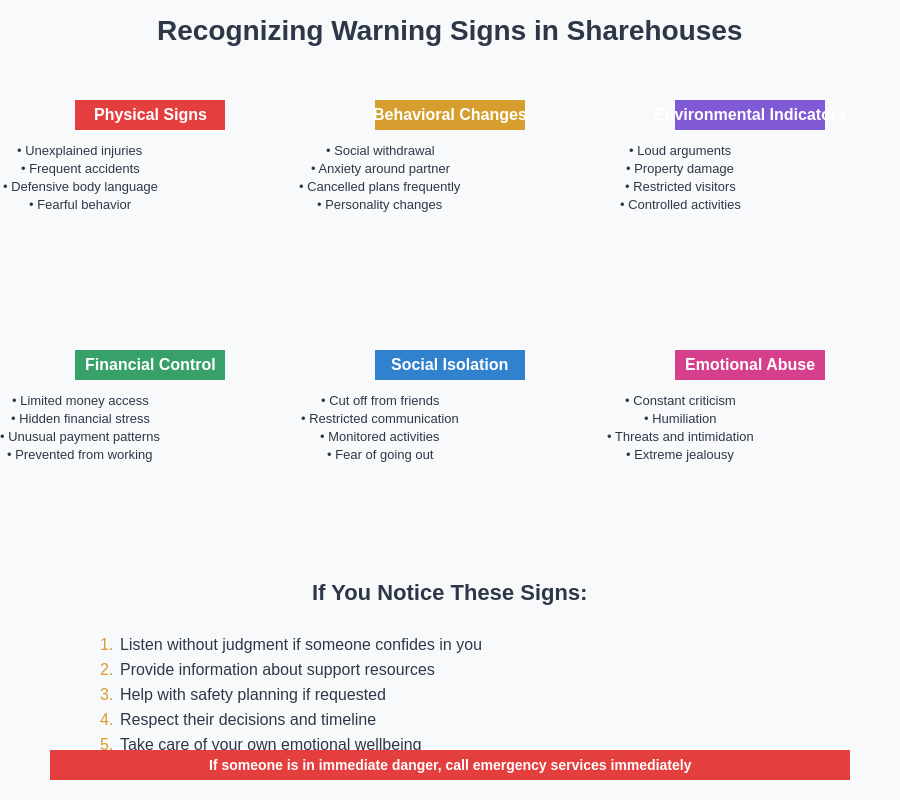
Recognizing warning signs early can help community members provide appropriate support and resources before situations escalate to dangerous levels, though it’s crucial to remember that professional intervention is always necessary for domestic violence situations.
Establishing clear house policies regarding domestic violence, including mandatory reporting procedures, safety protocols, and support resources, helps ensure that all residents understand their rights and responsibilities when faced with these situations. These policies should be developed in consultation with domestic violence experts and legal professionals to ensure they provide maximum protection while remaining practical and enforceable.
Creating partnerships with local domestic violence organizations, law enforcement, and mental health professionals provides sharehouses with access to specialized expertise and resources that most communities cannot provide internally. These partnerships should include regular consultation, emergency response protocols, and ongoing support for affected residents and communities.
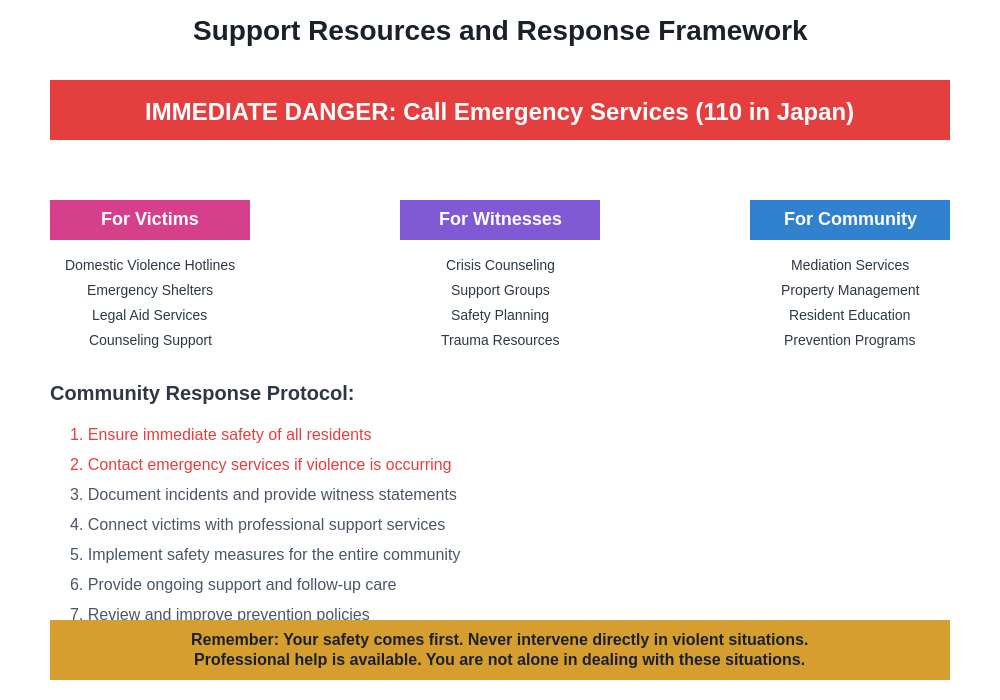
A comprehensive support framework ensures that everyone in the community knows how to access appropriate resources and respond effectively to domestic violence situations while prioritizing safety for all residents.
Long-term Recovery and Prevention Strategies
Recovery from domestic violence incidents requires long-term commitment to rebuilding trust, safety, and community cohesion while implementing prevention strategies that reduce the likelihood of future incidents. How empathy grows through cultural exposure becomes relevant as communities work to rebuild relationships and understanding among residents from diverse backgrounds who may have different perspectives on domestic violence and recovery.
Ongoing mental health support for all affected residents, including those who witnessed incidents or experienced secondary trauma, helps communities address the lasting psychological impacts of domestic violence exposure. This support may include counseling services, support groups, and stress management resources that help residents process their experiences and develop healthy coping strategies.
Property improvements and security enhancements may be necessary to restore residents’ sense of safety and prevent future incidents, including improved lighting, security systems, communication devices, and physical modifications that provide better protection and escape routes. Smart locks change sharehouse security provides examples of technological solutions that may enhance safety in shared living environments.
Prevention strategies should focus on creating community cultures that do not tolerate abuse, provide early intervention for relationship conflicts before they escalate to violence, and maintain connections with professional resources that can provide ongoing support and monitoring. These strategies require long-term commitment and regular evaluation to ensure their effectiveness in protecting all community members.
The ripple effects of domestic violence in sharehouse communities demonstrate the interconnected nature of shared living arrangements and the collective responsibility that all community members share for maintaining safe, supportive environments. Understanding these impacts helps residents, property managers, and support services develop more effective responses that protect victims while addressing the needs of entire communities affected by domestic violence incidents.
Disclaimer
This article is for informational purposes only and does not constitute professional legal, medical, or psychological advice. Domestic violence is a serious crime that requires immediate professional intervention. If you or someone you know is experiencing domestic violence, please contact local emergency services, domestic violence hotlines, or law enforcement immediately. The information provided should not be used as a substitute for professional counseling, legal advice, or emergency services. Resources and legal protections vary by location and individual circumstances.