The pursuit of environmentally conscious shopping habits in Japan creates a significant financial burden that many international residents and sharehouse dwellers discover only after committing to sustainable lifestyle choices. This reality becomes particularly challenging for those living on tight budgets while trying to maintain ethical consumption practices in a country where eco-friendly products command substantial price premiums over conventional alternatives.
The intersection of environmental responsibility and financial constraints forces many sharehouse residents to make difficult choices between their values and their wallets, creating ongoing tension that affects daily purchasing decisions and long-term lifestyle sustainability. Understanding these cost implications helps residents make informed decisions about when and where to prioritize eco-friendly options within realistic budget constraints.
The Premium Price Structure of Sustainable Products
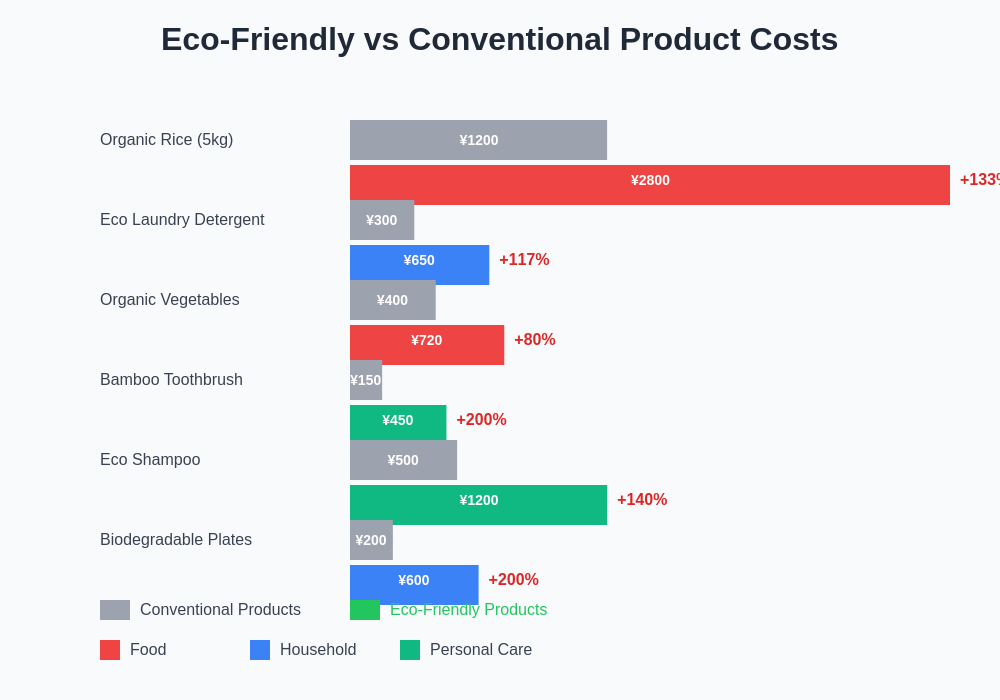
Japanese retail markets consistently demonstrate significant price disparities between conventional and eco-friendly alternatives across virtually every product category, from food and cleaning supplies to personal care items and household goods. These premium pricing structures reflect complex supply chain factors including limited production volumes, specialized certification processes, and import dependencies that collectively drive costs substantially higher than mass-market alternatives.
Organic food products typically cost between thirty to seventy percent more than conventional equivalents, with some specialty items commanding even higher premiums that can double or triple the expense of basic grocery shopping. Living costs in Tokyo sharehouses explained demonstrates how these elevated food costs can dramatically impact monthly budgeting for residents already managing tight financial constraints.
Eco-friendly household cleaning products and personal care items often carry price premiums of forty to one hundred percent over standard alternatives, creating cumulative monthly expenses that can add thousands of yen to routine household purchases. The specialized nature of these products means they’re often available only at premium retailers or through online platforms that add delivery charges to already elevated base prices.
The limited availability of bulk purchasing options for sustainable products further compounds cost issues, as residents cannot leverage group buying strategies that typically help sharehouse communities reduce per-unit expenses for conventional household supplies and consumables.
Import Dependencies and Supply Chain Limitations
Japan’s heavy reliance on imported eco-friendly products creates additional cost layers that domestic consumers ultimately bear through retail pricing structures that reflect currency exchange fluctuations, international shipping expenses, and complex import regulatory requirements that add substantial overhead to final consumer prices.
Many popular sustainable brands originate from European or North American markets where production costs and regulatory environments differ significantly from Japanese standards, requiring extensive adaptation and certification processes that manufacturers pass along to consumers through elevated pricing strategies. These import dependencies mean that eco-friendly product costs can fluctuate dramatically based on international economic conditions completely beyond local market control.
Seasonal availability patterns for imported organic and sustainable products create additional pricing volatility that makes budget planning particularly challenging for sharehouse residents attempting to maintain consistent eco-friendly purchasing habits throughout the year. How to budget realistically for sharehouse living provides strategies for managing these unpredictable cost variations.
Distribution inefficiencies within Japan’s retail network mean that eco-friendly products often travel through multiple intermediaries before reaching consumers, with each step adding markup percentages that compound into substantial final price increases compared to streamlined conventional product distribution channels.
Certification and Regulatory Compliance Costs
The complex web of environmental certifications, organic standards, and sustainability verifications required for eco-friendly products in Japan creates substantial compliance costs that manufacturers invariably transfer to consumers through premium pricing structures that reflect the expense of maintaining multiple certification programs simultaneously.
Japanese organic certification processes involve rigorous testing, documentation, and ongoing monitoring requirements that can cost producers significant amounts annually, expenses that must be recovered through higher retail prices to maintain business viability in competitive markets where conventional alternatives face no such regulatory burdens.
International certification recognition issues often require products to obtain both foreign and Japanese certifications to access local markets, doubling compliance costs and administrative overhead that directly translates into consumer price premiums that can make eco-friendly options prohibitively expensive for budget-conscious residents.
Third-party verification services charge substantial fees for environmental impact assessments, carbon footprint calculations, and sustainability audits that add significant costs to product development and marketing processes, expenses that sustainable brands must recover through higher prices to maintain certification credibility with environmentally conscious consumers.
Limited Production Volumes and Economic Scale Challenges
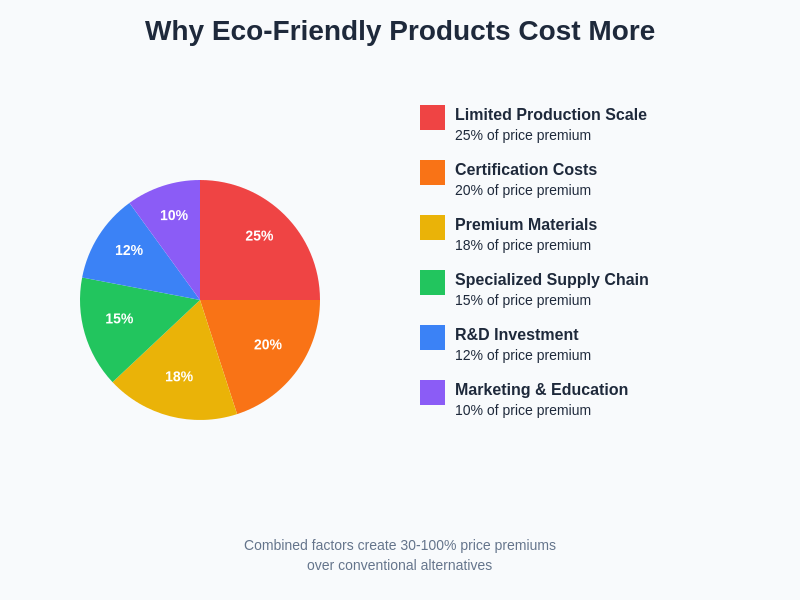
Sustainable product manufacturers typically operate at much smaller production scales compared to conventional mass-market competitors, preventing them from achieving the economies of scale necessary to offer competitive pricing while maintaining quality standards and environmental compliance requirements that define their market positioning.
Specialized equipment requirements for eco-friendly manufacturing processes often involve higher capital investments and operational costs compared to conventional production methods, creating inherent cost disadvantages that must be offset through premium pricing strategies to ensure business sustainability and continued innovation in environmental technology.
Research and development expenses for sustainable alternatives typically represent much higher percentages of overall business costs compared to conventional products that can rely on established manufacturing processes and proven formulations, requiring eco-friendly brands to recover these innovation investments through elevated consumer pricing.
How much Tokyo sharehouses really cost per month reveals how these product premiums can significantly impact the total cost of living for residents attempting to maintain environmentally responsible consumption patterns within shared living environments.
Market fragmentation in the eco-friendly sector means that sustainable brands often compete for small market segments rather than mass audiences, preventing price competition that might otherwise drive costs down through competitive pressures that benefit conventional product categories.
Transportation and Packaging Premium Costs
Eco-friendly products often require specialized transportation methods and premium packaging materials that add substantial costs compared to conventional alternatives that can utilize standard logistics networks and basic packaging solutions designed primarily for cost efficiency rather than environmental impact minimization.
Refrigerated transportation requirements for organic perishables create additional logistics expenses that conventional produce can avoid through standard shipping methods, costs that retailers pass along to consumers through higher prices that can make sustainable food choices financially challenging for budget-conscious sharehouse residents.
Biodegradable and recyclable packaging materials typically cost significantly more than conventional plastic and cardboard alternatives, adding packaging premiums that can represent substantial percentages of total product costs, particularly for smaller items where packaging represents larger proportions of overall expenses.
Minimal packaging volume efficiency for sustainable materials often requires larger shipping volumes compared to conventional alternatives, increasing transportation costs per unit that manufacturers must recover through higher retail prices that compound the existing premium pricing challenges facing eco-conscious consumers.
Carbon-neutral shipping options and sustainable logistics services command premium pricing compared to standard delivery methods, creating additional costs for retailers and consumers who prioritize environmental responsibility throughout their entire supply chain interaction rather than focusing solely on product sustainability.
Retail Channel Limitations and Market Access
Eco-friendly products often face limited retail distribution compared to conventional alternatives, restricting consumer access to specialized stores and premium retailers that charge higher margins due to lower sales volumes and specialized customer service requirements that conventional mass-market retailers can avoid.
Premium retail environments that specialize in sustainable products typically operate with higher overhead costs including specialized staff training, educational marketing materials, and customer service resources that support informed purchasing decisions, expenses that must be recovered through higher product margins compared to conventional retail operations.
Online marketplace fees and specialized e-commerce platform costs for eco-friendly products often exceed those for conventional alternatives due to smaller sales volumes and specialized shipping requirements, creating additional cost layers that impact final consumer pricing through elevated seller fees and operational expenses.
Cheaper sharehouse options in Tokyo suburbs explores how location choices can affect access to affordable eco-friendly shopping options, as premium sustainable retailers concentrate in expensive urban areas rather than budget-friendly suburban locations.
Limited competition among eco-friendly retailers reduces price pressure that might otherwise benefit consumers, allowing specialized stores to maintain higher margins without competitive forces that drive down pricing in conventional retail categories where multiple distribution channels compete aggressively for market share.
Consumer Education and Marketing Cost Recovery
Sustainable product manufacturers invest heavily in consumer education and awareness campaigns necessary to communicate complex environmental benefits and usage instructions that conventional products can avoid through established consumer familiarity and straightforward value propositions that require minimal educational support.
Third-party sustainability research and impact measurement studies require significant investments that eco-friendly brands must undertake to substantiate environmental claims and differentiate products from greenwashing competitors, costs that must be recovered through premium pricing to maintain credibility and continue sustainability innovation.
Specialized marketing channels and environmental advocacy partnerships command higher costs compared to conventional advertising methods, requiring sustainable brands to invest in premium marketing strategies that reach environmentally conscious consumers through specialized media and community engagement programs that conventional brands can avoid.
Consumer certification verification and transparency reporting requirements create ongoing administrative costs that sustainable brands must maintain to preserve consumer trust and market positioning, expenses that conventional alternatives can avoid while maintaining competitive pricing strategies focused purely on functional value rather than environmental impact.
Social responsibility reporting and stakeholder engagement activities require substantial resource investments that eco-friendly companies must undertake to maintain credibility with environmentally conscious consumers and advocacy organizations, costs that must be recovered through product pricing to sustain comprehensive sustainability programs.
Seasonal Availability and Price Volatility
Organic and locally-sourced products face significant seasonal availability constraints that create price volatility patterns far exceeding those of conventional alternatives that rely on global supply chains and preservation technologies to maintain consistent pricing throughout the year regardless of natural production cycles.
Weather dependency for sustainable agriculture creates unpredictable supply fluctuations that can dramatically impact pricing during adverse growing conditions, making budget planning particularly challenging for sharehouse residents attempting to maintain consistent eco-friendly purchasing habits without exceeding monthly expense allocations.
Limited preservation and processing options for organic products create shorter shelf lives and higher waste risks that retailers must account for through elevated pricing strategies designed to cover potential losses from expired inventory that conventional products with extended shelf lives can avoid.
How grocery shopping becomes more strategic explains how residents adapt their purchasing patterns to manage these seasonal price variations while maintaining sustainable consumption goals within realistic budget constraints.
Import timing dependencies for international eco-friendly products create additional price volatility based on shipping schedules and international logistics delays that can cause temporary supply shortages and corresponding price spikes that affect consumer access to preferred sustainable alternatives.
Technology and Innovation Investment Recovery
Cutting-edge environmental technologies incorporated into sustainable products require substantial research and development investments that manufacturers must recover through premium pricing over relatively short time periods before technological advancement makes current innovations obsolete and requires additional investment cycles.
Patent licensing fees for sustainable technology applications add significant costs to eco-friendly product development that conventional alternatives can avoid by utilizing established manufacturing processes and proven formulations that require no specialized licensing arrangements or technology transfer agreements.
Quality control and testing requirements for innovative sustainable materials often exceed those for conventional alternatives due to newer technology applications and less established safety data, creating additional compliance costs that must be recovered through consumer pricing to maintain product safety and regulatory approval.
Manufacturing equipment specialization for sustainable production processes typically requires higher capital investments compared to conventional manufacturing systems that benefit from decades of optimization and standardization that reduce per-unit production costs through proven efficiency improvements and established supplier networks.
Continuous innovation pressure in the sustainability sector requires ongoing research investments to maintain competitive advantages and environmental credibility, creating perpetual cost recovery needs that must be addressed through premium pricing strategies that allow continued innovation funding without compromising business viability.
Group Purchasing Challenges and Limited Bulk Options
Sharehouses attempting to leverage group buying power for eco-friendly products often discover that sustainable suppliers offer limited bulk purchasing options compared to conventional alternatives that benefit from extensive wholesale distribution networks designed to serve large institutional customers through volume discount pricing structures.
Minimum order quantities for eco-friendly products frequently exceed the practical needs of sharehouse communities, creating inventory management challenges and upfront cost burdens that prevent residents from accessing volume discounts that might otherwise help offset premium pricing through bulk purchasing strategies.
Specialized storage requirements for many sustainable products, including organic foods and eco-friendly cleaning supplies, create additional complexity for group purchasing arrangements that must account for proper storage conditions and shorter shelf lives compared to conventional alternatives with more forgiving storage requirements.
How group buying power reduces individual costs explores strategies for overcoming these bulk purchasing limitations while maintaining sustainable consumption goals within shared living environments that must balance individual preferences with collective purchasing efficiency.
Limited supplier willingness to offer volume discounts for small-scale residential purchases means that even coordinated sharehouse buying groups cannot access the pricing advantages available to commercial customers, maintaining retail price premiums that prevent cost-effective sustainable consumption despite organized purchasing efforts.
Long-term Financial Impact and Budget Planning
The cumulative effect of consistent eco-friendly shopping choices can add substantial amounts to monthly living expenses, creating long-term financial pressures that particularly impact international students and entry-level workers living in sharehouses while managing tight budgets and competing financial priorities including education, career development, and social activities.
Compound cost effects from choosing sustainable alternatives across multiple product categories can increase total household expenses by significant percentages compared to conventional shopping patterns, requiring residents to make trade-offs between environmental values and other important financial goals including savings, travel, and professional development investments.
Inflation rates for eco-friendly products often exceed those for conventional alternatives due to supply chain constraints and limited competition, creating accelerating cost pressures that make long-term budget planning particularly challenging for residents committed to maintaining sustainable consumption patterns throughout their sharehouse residency.
How to calculate your true living costs provides frameworks for understanding the full financial impact of eco-friendly shopping choices within comprehensive monthly budgeting that accounts for all lifestyle choices and their cumulative effects on available disposable income.
Opportunity cost considerations become particularly relevant when eco-friendly shopping premiums prevent investments in other important life goals including education, career development, emergency fund building, and social activities that contribute to overall quality of life and long-term success in international living situations.
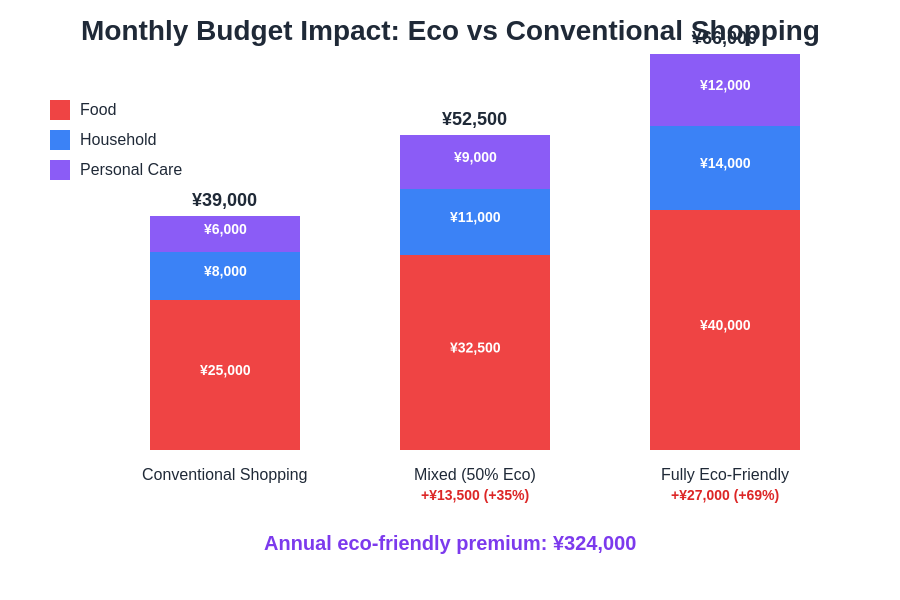
This comprehensive analysis demonstrates how choosing eco-friendly alternatives across all shopping categories can increase monthly expenses by 30-70% compared to conventional shopping patterns, creating substantial long-term financial impacts that require careful consideration and strategic planning.
The intersection of environmental responsibility and financial reality creates ongoing tension for many sharehouse residents who must navigate complex decisions between personal values and practical constraints while building sustainable lifestyles within budget limitations that affect every aspect of daily living in expensive urban environments like Tokyo.
Disclaimer
This article is for informational purposes only and does not constitute financial advice. Eco-friendly product costs and availability vary significantly based on location, season, and individual shopping preferences. Readers should evaluate their own financial situations and priorities when making consumption decisions. Environmental impact and personal values should be balanced against practical financial constraints and individual circumstances.