Emergency medical situations in Japanese sharehouses present unique challenges that require specific knowledge of local healthcare systems, cultural protocols, and communication procedures that can mean the difference between swift resolution and dangerous delays. The complexity of navigating Japan’s medical infrastructure as a foreign resident, combined with language barriers and unfamiliar emergency procedures, creates situations where preparation and understanding become critical for personal safety and community well-being.
The intersection of shared living arrangements and medical emergencies introduces additional layers of complexity involving housemate responsibilities, privacy considerations, and coordination challenges that rarely exist in traditional housing situations. Understanding these dynamics while maintaining preparedness for various medical scenarios ensures that both individual safety and community stability remain protected during crisis situations.
Understanding Japan’s Emergency Medical System
Japan’s emergency medical infrastructure operates through a sophisticated network of hospitals, clinics, and emergency services that function differently from Western healthcare systems in fundamental ways that affect response times, treatment accessibility, and cost structures. The national healthcare system provides comprehensive coverage for residents with proper insurance, but navigating the system during emergencies requires specific knowledge of procedures, terminology, and cultural expectations that can significantly impact treatment outcomes.
Emergency services in Japan respond to calls made to 119 for medical emergencies, with operators who may have limited English capabilities requiring callers to communicate basic information about location, patient condition, and immediate medical needs. English-speaking sharehouses in Tokyo for foreigners often provide translation support during emergencies, but individual preparedness remains essential for situations requiring immediate response.
The categorization of emergency medical facilities ranges from local clinics handling minor issues to major hospitals equipped for trauma and specialized care, with patient routing determined by severity assessments that may not align with international residents’ expectations or preferences. Understanding this triage system helps set appropriate expectations and ensures cooperation with medical professionals during stressful emergency situations.
Sharehouse Emergency Protocols and Responsibilities
Most established sharehouses maintain emergency contact systems and medical information databases that facilitate rapid response during health crises, though the comprehensiveness and accessibility of these systems vary dramatically between operators and individual properties. Japanese sharehouse rules every foreigner should know typically include emergency procedures, but many residents remain unaware of specific protocols until crisis situations arise.
House managers and resident advisors often serve as primary emergency coordinators, maintaining relationships with local medical facilities and translation services that can expedite treatment during urgent situations. However, their availability during off-hours and weekends can create gaps in support that require residents to maintain independent emergency preparedness and communication capabilities.
The responsibility structure during medical emergencies involves both individual obligations and community support systems that balance privacy protection with safety requirements. Residents experiencing medical issues must navigate consent procedures, information sharing protocols, and assistance coordination while potentially dealing with pain, stress, and language barriers that complicate decision-making processes.
Emergency contact information management within sharehouses requires regular updates and accessibility planning that accounts for resident turnover, contact changes, and international family coordination. What documents you need for Tokyo sharehouse applications includes emergency contact requirements, but ongoing maintenance of this information often receives insufficient attention until emergencies occur.
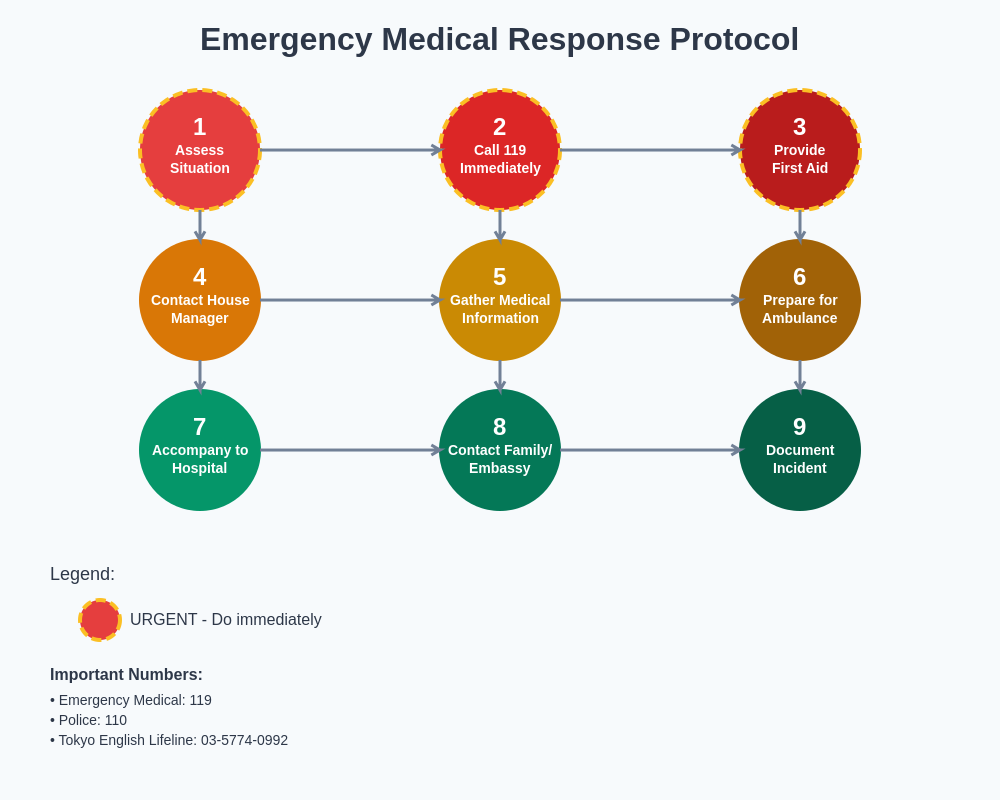
This systematic approach ensures that critical steps are followed during medical emergencies while minimizing confusion and delays that can occur when stressed residents attempt to coordinate crisis response without clear protocols.
Insurance Coverage and Medical Costs
Japan’s National Health Insurance system provides substantial coverage for emergency medical treatment, but understanding coverage limitations, co-payment requirements, and claim procedures becomes crucial during high-stress emergency situations. International residents must maintain current insurance enrollment and understand how their coverage applies to different types of medical facilities and treatment scenarios.
Private health insurance options available to international residents can supplement national coverage, particularly for services like ambulance transportation, private room accommodations, and specialized treatments that may not receive full coverage under standard programs. How much Tokyo sharehouses really cost per month should include emergency medical cost considerations that many residents overlook during budget planning.
Emergency medical costs can escalate rapidly for uninsured treatment, international evacuation scenarios, or specialized care requirements that exceed standard coverage limits. Understanding these potential expenses helps residents make informed decisions about insurance levels and emergency fund requirements that provide financial protection during medical crises.
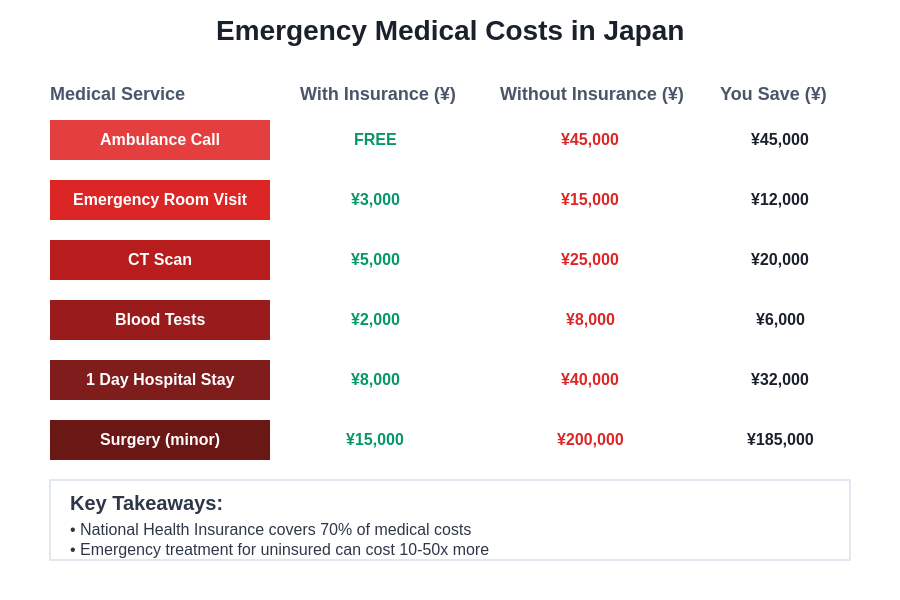
The dramatic cost differences between insured and uninsured emergency medical treatment demonstrate the critical importance of maintaining proper health insurance coverage throughout your stay in Japan.
Prescription medication coverage during emergencies may involve different procedures and cost structures than routine healthcare, particularly for ongoing medications that become unavailable during hospital stays or treatment changes. Maintaining emergency medication supplies and understanding prescription transfer procedures helps ensure continuity of care during medical crises.
Language Barriers and Communication Challenges
Medical emergencies compound existing language barriers with technical terminology, emotional stress, and time pressure that can severely impact communication effectiveness between patients, housemates, and medical professionals. Preparation strategies must address both immediate emergency communication and ongoing treatment discussions that require precise understanding of medical information.
Translation services available during medical emergencies range from hospital-provided interpreters to phone-based translation services, but availability and quality vary significantly between facilities and times of day. Living with Japanese roommates in Tokyo sharehouses can provide natural language support during emergencies, though relying solely on housemate assistance creates dependency that may not always be available.
Pre-prepared medical information cards containing essential health information, medication lists, and emergency contacts in both English and Japanese can dramatically improve communication efficiency during crisis situations. These cards should include allergies, chronic conditions, current medications, and preferred hospital information that enables medical professionals to provide appropriate care quickly.
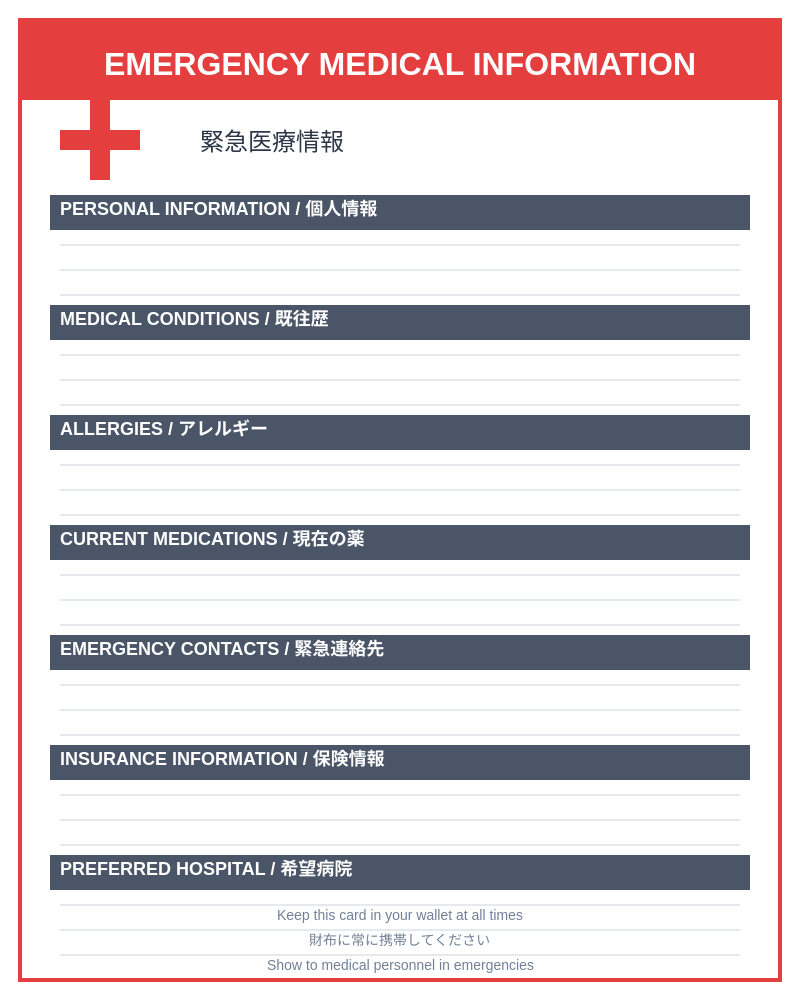
Keeping a completed medical information card in your wallet at all times ensures that critical health information remains accessible even when you cannot communicate verbally during emergency situations.
Technology solutions including translation apps, emergency medical apps, and communication devices can supplement human interpretation, but their effectiveness depends on internet connectivity, battery life, and user familiarity that may be compromised during actual emergencies. Practicing with these tools before emergencies occur improves confidence and effectiveness during actual crisis situations.
Common Medical Emergency Scenarios
Cardiovascular emergencies in sharehouse environments often involve initial response by untrained housemates who must quickly assess situation severity, provide basic first aid, and coordinate professional medical response while managing their own stress and potential language barriers. Understanding basic cardiac emergency signs and response procedures can significantly impact survival outcomes during critical minutes before professional help arrives.
Respiratory emergencies including severe allergic reactions, asthma attacks, and choking incidents require immediate intervention that housemates may need to provide before professional medical services arrive. How air quality problems develop in crowded spaces can contribute to respiratory issues that may escalate into emergency situations requiring prompt recognition and response.
Mental health crises including severe anxiety attacks, depression-related emergencies, and substance-related incidents present unique challenges in shared living environments where privacy concerns balance against safety requirements. These situations often require delicate communication with family members, employers, and medical professionals while maintaining respect for individual autonomy and cultural sensitivity.
Injury-related emergencies from accidents, falls, or violence require immediate assessment of injury severity, bleeding control, and movement restrictions that untrained individuals must manage until professional help arrives. Understanding basic first aid principles and when to avoid moving injured persons can prevent additional complications during emergency response.
Cultural Considerations and Privacy Issues
Japanese cultural approaches to medical privacy and family involvement differ significantly from Western practices, creating potential conflicts during emergency situations involving international residents with different expectations about information sharing and decision-making authority. Understanding these cultural differences helps navigate consent procedures and family notification requirements during medical crises.
The concept of personal space and physical contact during medical emergencies may conflict with cultural norms, particularly in situations requiring intimate care or clothing removal for treatment. Preparing for these cultural adjustments while maintaining dignity and respect helps reduce additional stress during already challenging medical situations.
Gender considerations in medical treatment and emergency response may require special attention in co-ed sharehouses where cultural expectations about opposite-gender assistance conflict with emergency response needs. Dating while living in Tokyo sharehouses relationships can complicate consent and assistance decisions during medical emergencies involving partners.
Religious and dietary restrictions may affect medical treatment options, particularly regarding medications, blood transfusions, and food restrictions during hospital stays. Communicating these requirements clearly during emergency situations ensures that medical care remains consistent with personal beliefs and values.
Prevention and Preparedness Strategies
Regular health monitoring and preventive care help identify potential medical issues before they develop into emergency situations, but many sharehouse residents neglect routine healthcare due to cost concerns, language barriers, or time constraints. How to find perfect sharehouse tokyo should include healthcare accessibility considerations that support ongoing wellness and emergency preparedness.
Emergency supply preparation including first aid kits, essential medications, and emergency food supplies requires coordination in shared living spaces where storage limitations and shared responsibility create unique challenges. Establishing house-wide emergency supply systems ensures availability during crisis situations while avoiding duplication and waste.
First aid training and emergency response education benefit entire sharehouse communities, but organizing and funding such training requires community commitment and coordination that may be difficult to achieve with resident turnover and varying interest levels. Making friends through Tokyo sharehouse communities often includes collaborative safety initiatives that strengthen both emergency preparedness and social bonds.
Regular emergency drill practice helps residents understand evacuation procedures, communication protocols, and assistance coordination that become critical during actual emergencies. These drills should address medical emergency scenarios specifically, not just fire or earthquake preparedness that receives more attention in standard safety training.
Technology and Emergency Communication
Smartphone emergency features including medical ID information, emergency contact systems, and location sharing capabilities can significantly improve emergency response effectiveness, but these features require proper setup and regular maintenance that many residents overlook. Understanding how to activate emergency features during crisis situations when normal phone operation may be impaired becomes essential for effective emergency communication.
Emergency alert systems in Japan provide warnings for natural disasters and public safety threats, but medical emergency communication relies on individual initiative and preparation rather than automated systems. How academic conferences affect travel plans often overlook emergency communication planning during international travel that leaves residents without local support networks.
House communication systems including group messaging, emergency notification boards, and contact trees help coordinate information sharing during medical emergencies, but these systems require active maintenance and participation from all residents. Establishing clear communication protocols before emergencies occur prevents confusion and delays during actual crisis situations.
Telemedicine and remote consultation services provide valuable alternatives for non-emergency medical needs, but understanding their limitations during actual emergencies prevents dangerous delays in seeking appropriate care. These services can provide valuable second opinions and ongoing care coordination during recovery periods following emergency treatment.
Recovery and Follow-up Care
Post-emergency care coordination often presents significant challenges for international residents who may need ongoing treatment, medication management, and follow-up appointments while dealing with language barriers and unfamiliar medical systems. Student sharehouses near top Tokyo universities may provide additional support networks for academic residents, but individual preparation remains essential for comprehensive recovery planning.
Workplace and academic accommodations following medical emergencies require documentation and communication that may be complicated by language barriers and cultural differences in disability accommodation approaches. Understanding rights and procedures for medical leave and accommodation requests helps protect employment and academic standing during recovery periods.
Financial recovery from emergency medical expenses involves insurance claim procedures, payment plan negotiations, and potential family financial assistance that requires clear documentation and communication. How emergency expenses are never budgeted highlights the importance of emergency financial planning that extends beyond immediate medical costs.
Community integration following medical emergencies may require rebuilding relationships and addressing privacy concerns that arise when housemates become involved in personal medical situations. Maintaining positive relationships while establishing appropriate boundaries helps preserve both community harmony and individual autonomy during recovery periods.
The experience of managing medical emergencies in Japanese sharehouses ultimately teaches valuable lessons about preparation, community support, and cultural adaptation that extend far beyond immediate health concerns. Understanding these systems and building appropriate preparation helps ensure that medical crises become manageable challenges rather than catastrophic disruptions to life in Japan.
Disclaimer
This article is for informational purposes only and does not constitute medical advice. Emergency medical situations require immediate professional medical attention. Readers should consult healthcare professionals and local emergency services for specific medical guidance. The information provided reflects general procedures and may not apply to all situations or locations. Individual medical needs and insurance coverage may vary significantly.