Flood risk assessment has become increasingly critical for sharehouse residents in Tokyo as climate change intensifies rainfall patterns and urban flooding incidents across Japan’s metropolitan areas. The intersection of flood vulnerability, insurance coverage, and personal safety creates complex considerations that directly impact both immediate security and long-term financial stability for international residents navigating Japan’s housing market. Understanding these interconnected factors enables informed decision-making about location selection, insurance requirements, and emergency preparedness strategies.
The evolving nature of flood risk in urban Tokyo reflects broader environmental challenges that affect not only individual safety but also property values, insurance premiums, and the overall viability of different neighborhoods for long-term residence. Understanding how natural disaster preparedness varies by building becomes essential for evaluating potential living situations and making informed choices about risk tolerance and protection strategies.
Understanding Tokyo’s Flood Risk Profile
Tokyo’s flood vulnerability stems from multiple interconnected factors including its geographical position, urban development patterns, aging infrastructure, and increasingly unpredictable weather systems that challenge traditional flood management approaches. The city’s location on the Kanto Plain, combined with major river systems including the Sumida, Arakawa, and Tama rivers, creates natural flood pathways that can be overwhelmed during extreme weather events.
Recent climate data indicates significant increases in both the frequency and intensity of heavy rainfall events across the Tokyo metropolitan area, with traditional infrastructure struggling to accommodate these changing precipitation patterns. The concept of “urban heat islands” exacerbates local weather volatility, creating conditions where sudden, intense downpours can overwhelm drainage systems and create flash flooding in areas previously considered low-risk.
Low-lying areas throughout Tokyo face particular vulnerability, including significant portions of popular sharehouse neighborhoods where international residents often seek affordable accommodation options. Understanding why some areas have poor public transit access often correlates with flood-prone locations that were historically avoided for major development projects.
The complexity of urban flood risk assessment requires understanding both historical flood patterns and projected future scenarios based on climate modeling, infrastructure capacity, and ongoing urban development that affects drainage and water absorption capabilities across different districts.
Insurance Coverage Implications and Limitations
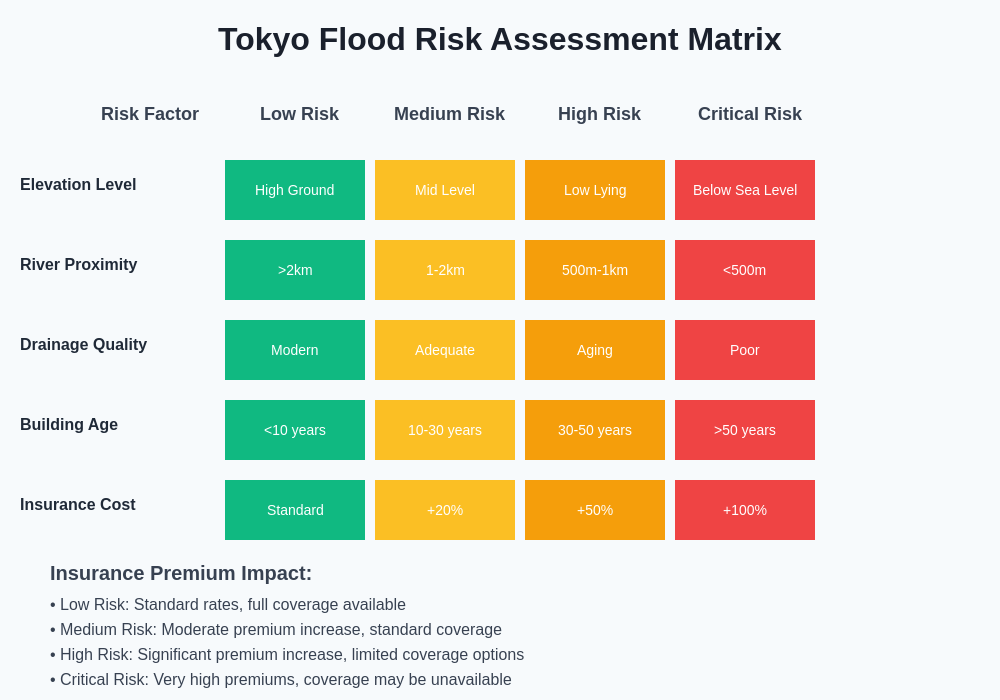
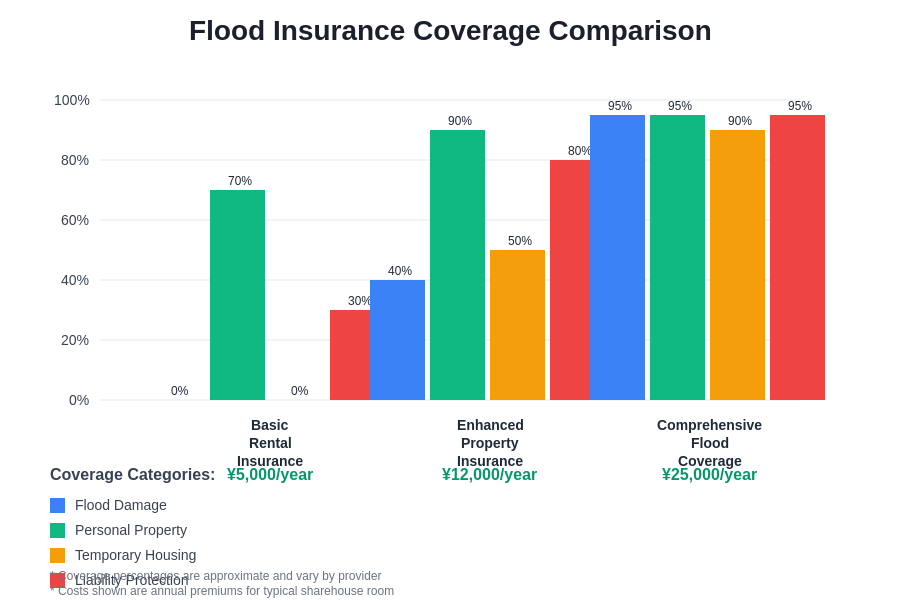
Standard rental insurance policies in Japan typically exclude flood damage coverage, creating significant gaps in financial protection that many international residents fail to recognize until facing actual flooding situations. The distinction between different types of water damage coverage becomes crucial for understanding what protection exists and what additional coverage may be necessary for comprehensive risk management.
Property management companies and sharehouses vary dramatically in their approach to flood insurance requirements and coverage provisions, with some providing comprehensive protection while others leave residents entirely responsible for their personal property and temporary accommodation needs during flood events. Understanding what security deposits actually cover in sharehouses rarely includes flood damage compensation, leaving residents vulnerable to significant unexpected expenses.
The cost implications of flood insurance extend beyond simple premium calculations to include deductible amounts, coverage limits, and exclusions that can substantially impact financial recovery following flood damage. International residents must navigate Japanese insurance terminology and legal requirements while ensuring adequate protection for personal belongings, temporary housing, and potential liability issues.
Insurance companies increasingly use sophisticated flood risk modeling to determine coverage availability and premium pricing, with some high-risk areas facing limited options or prohibitively expensive coverage that affects the overall cost-effectiveness of residence in particular neighborhoods.
Building Safety Standards and Flood Preparedness
Modern building codes in Tokyo incorporate flood resistance requirements, but older sharehouses and converted residential buildings may lack adequate protection against water intrusion, electrical system flooding, and structural damage during significant flood events. The age and construction quality of sharehouse buildings directly correlates with flood resilience and safety during extreme weather conditions.
Evacuation planning and emergency procedures vary significantly between different sharehouse operators and management companies, with some providing comprehensive disaster preparedness information while others offer minimal guidance for flood emergency situations. Understanding why emergency evacuation plans are often unclear highlights common deficiencies in disaster preparedness that can compromise resident safety during flood events.
Electrical systems, heating equipment, and essential utilities face particular vulnerability during flooding, with basement installations and ground-level mechanical systems creating potential safety hazards including electrocution risks, gas leaks, and loss of essential services during emergency situations when alternative arrangements become critical for survival and communication.
The effectiveness of building-level flood protection measures including drainage systems, waterproofing, emergency power supplies, and communication systems often determines whether residents can safely shelter in place or require immediate evacuation during flood emergencies.
Personal Safety Protocols and Emergency Planning
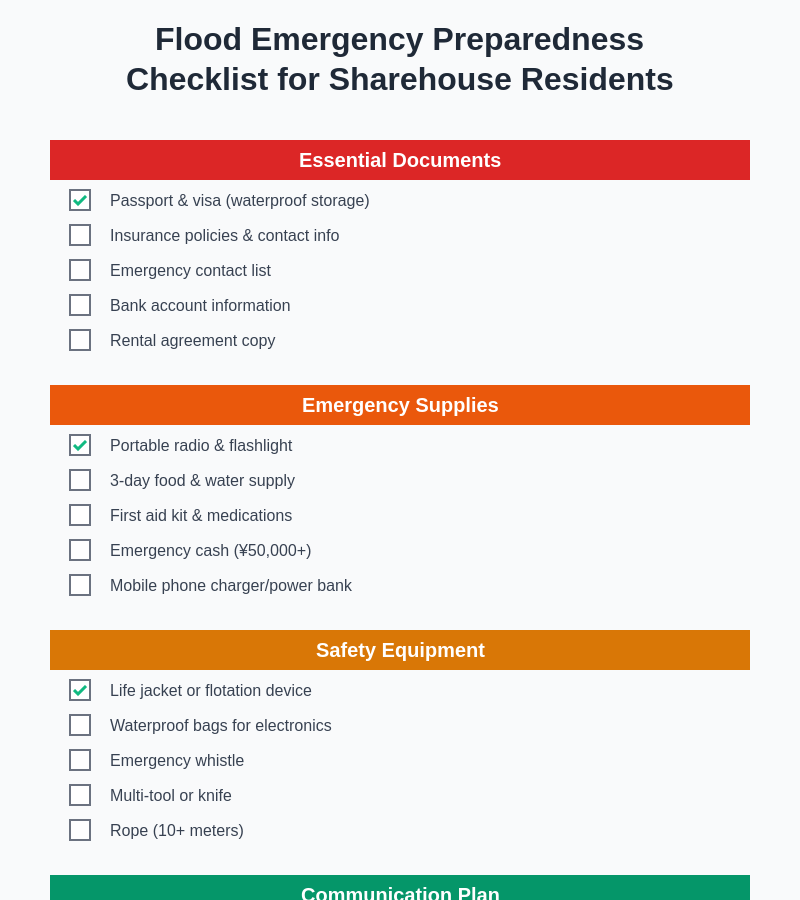
Individual preparedness strategies for flood emergencies require comprehensive planning that addresses immediate safety concerns, communication needs, evacuation procedures, and recovery logistics that extend far beyond the immediate flood event. Understanding how emergency communication plans often fail emphasizes the importance of redundant communication strategies and clear emergency protocols.
Essential emergency supplies for flood preparedness include waterproof storage for important documents, emergency communication devices, portable power sources, emergency food and water supplies, and evacuation equipment that remains accessible during rapidly developing flood situations when immediate action becomes necessary for personal safety.
Navigation during flood emergencies requires understanding alternative transportation routes, evacuation shelter locations, and emergency services contact information specific to your sharehouse location and neighborhood characteristics. Understanding why late-night transportation limits social life becomes critically important during flood emergencies when normal transportation systems may be compromised or entirely unavailable.
Communication protocols with family, employers, and emergency contacts require pre-established procedures that account for potential communication system failures and provide alternative methods for confirming safety and coordinating assistance during extended emergency situations.
Financial Impact Assessment and Planning
The total financial impact of flood damage extends far beyond immediate property loss to include temporary accommodation costs, replacement of personal belongings, potential income loss, and additional living expenses that can accumulate rapidly during extended displacement periods. Understanding how emergency expenses are never budgeted highlights the importance of financial preparedness for disaster-related costs.
Documentation requirements for insurance claims and disaster assistance programs require careful preparation and secure storage of essential records including identification documents, insurance policies, inventory records, and financial information that may be needed for recovery assistance and compensation claims.
Alternative accommodation planning becomes crucial when sharehouses face extended closure or uninhabitable conditions following flood damage, with costs for temporary housing potentially exceeding normal monthly rent while residents maintain obligations to original lease agreements and security deposits.
The long-term financial implications of flood exposure include potential property value impacts, insurance premium increases, and reduced housing options that may force relocation to higher-cost areas with better flood protection and infrastructure resilience.
Neighborhood Risk Assessment Strategies
Effective flood risk evaluation requires examining multiple data sources including historical flood records, topographical surveys, drainage infrastructure assessments, and climate projection models that provide comprehensive understanding of both current and future flood vulnerability for specific locations. Understanding how distance from city center changes living experience often correlates with flood risk levels and infrastructure quality.
Visual inspection techniques during property visits can reveal important indicators of flood vulnerability including water staining, drainage inadequacy, structural modifications for flood protection, and neighborhood infrastructure quality that affects overall flood resilience and recovery capabilities.
Community resources and local government information provide valuable insights into area-specific flood risks, emergency procedures, and available assistance programs that can significantly impact both safety and financial recovery following flood events. Understanding how some areas have higher crime rates sometimes correlates with areas that also face higher flood risks due to socioeconomic factors and infrastructure investment patterns.
Professional risk assessment services and flood modeling tools offer more sophisticated analysis for residents considering long-term commitments to particular neighborhoods or properties, providing detailed projections that inform both immediate safety planning and long-term financial decision-making.
Legal Responsibilities and Tenant Rights
Tenant rights regarding flood damage, insurance requirements, and safety standards are governed by specific Japanese laws that may differ significantly from international expectations and require careful understanding to ensure adequate protection and appropriate responses during emergency situations. Understanding how legal disputes get resolved in sharehouses becomes relevant when flood damage creates conflicts between residents and property management.
Landlord responsibilities for flood protection, emergency preparedness, and damage mitigation vary depending on lease agreements, property types, and local regulations that may not be clearly communicated to international residents unfamiliar with Japanese legal frameworks and tenant protection standards.
Insurance disclosure requirements and safety information obligations for property managers and sharehouse operators may be minimal, placing responsibility on individual residents to investigate flood risks and ensure adequate protection through personal insurance and emergency preparedness measures.
Documentation and reporting requirements following flood damage can be complex and time-sensitive, requiring immediate action to preserve insurance coverage and legal rights while managing the immediate crisis and safety concerns that take priority during emergency situations.
Climate Change Adaptation and Future Planning
Evolving flood risk patterns due to climate change require adaptive planning strategies that account for increasing uncertainty and potentially dramatic changes in flood vulnerability over time, making traditional risk assessment approaches insufficient for long-term planning and decision-making. Understanding how climate change affects building comfort extends beyond comfort to include fundamental safety and habitability concerns.
Infrastructure adaptation projects throughout Tokyo aim to improve flood resilience, but implementation timelines and effectiveness remain uncertain while climate impacts continue accelerating, creating ongoing uncertainty about future safety and insurance availability in currently vulnerable areas.
Personal adaptation strategies require flexibility and ongoing reassessment of risk tolerance, insurance needs, and location preferences as new information becomes available about climate impacts and flood risk evolution throughout the Tokyo metropolitan area.
Investment in flood-resistant personal property, portable emergency equipment, and flexible living arrangements that facilitate rapid relocation may become increasingly important as flood risks evolve and traditional protection strategies prove inadequate for changing environmental conditions.
Recovery and Resilience Building
Post-flood recovery procedures require comprehensive planning that addresses immediate needs, medium-term housing arrangements, and long-term resilience building that reduces vulnerability to future flood events while maintaining quality of life and financial stability. Understanding how to handle roommate conflicts without moving out provides relevant stress management strategies applicable to post-disaster community dynamics.
Community support networks and mutual aid resources can provide crucial assistance during recovery periods, but require advance relationship building and clear understanding of available resources and support mechanisms that activate during emergency situations.
Lessons learned from flood experiences should inform future preparedness improvements, insurance adjustments, and location decisions that build long-term resilience while accounting for the reality that flood risks will likely continue increasing due to climate change and urban development pressures.
The integration of flood risk considerations into broader life planning requires balancing safety concerns with other priorities including career opportunities, social connections, and financial constraints that influence housing decisions and long-term residence strategies in Tokyo’s dynamic urban environment.
Understanding flood risk implications for insurance and safety represents a crucial component of responsible sharehouse living in Tokyo’s changing environmental conditions. Through comprehensive risk assessment, adequate insurance protection, effective emergency preparedness, and adaptive planning strategies, residents can maintain both safety and financial security while enjoying the benefits of shared living in one of the world’s most vibrant cities. The key lies in treating flood risk as an ongoing consideration rather than a one-time evaluation, continuously updating knowledge and preparedness as conditions evolve and new information becomes available.
Disclaimer
This article is for informational purposes only and does not constitute professional insurance, legal, or safety advice. Flood risks, insurance requirements, and safety regulations may change frequently. Readers should consult with qualified professionals including insurance agents, legal advisors, and emergency management experts when making decisions about flood protection and preparedness. Individual circumstances, property conditions, and risk tolerance levels vary significantly, requiring personalized assessment and planning approaches.