The proliferation of food delivery applications has fundamentally transformed how residents of Tokyo sharehouses approach meal planning, social interaction, and community building in ways that extend far beyond simple convenience. These digital platforms have created entirely new patterns of behavior that ripple through every aspect of shared living, from kitchen usage and common area dynamics to friendship formation and financial management within household communities.
The integration of food delivery technology into sharehouse culture represents a microcosm of broader societal changes occurring across urban Japan, where traditional communal eating practices intersect with modern digital convenience culture. Understanding these shifts provides valuable insights into the evolving nature of shared living experiences and the complex ways technology mediates human relationships in contemporary urban environments.
The Evolution of Sharehouse Meal Culture
Traditional sharehouse living in Tokyo historically centered around shared kitchen experiences where residents naturally gathered during meal preparation times, creating organic opportunities for conversation, cultural exchange, and relationship building. The communal kitchen served as the social heart of most sharehouses, where cooking schedules, ingredient sharing, and collaborative meal preparation fostered deep connections between residents from diverse cultural backgrounds.
The introduction of food delivery apps has fundamentally altered these established patterns by providing residents with alternative pathways to satisfy hunger that bypass the communal kitchen entirely. Kitchen politics actually work in Japanese sharehouses demonstrates how traditional kitchen dynamics operated before delivery apps became ubiquitous, highlighting the contrast with current practices.
Modern sharehouses now exhibit dual meal cultures where some residents maintain traditional cooking and sharing practices while others increasingly rely on delivered meals that can be consumed privately in individual rooms. This bifurcation has created new social hierarchies and interaction patterns that significantly impact overall house dynamics and community cohesion.
Social Interaction Patterns and Relationship Formation
Food delivery apps have introduced subtle but profound changes to how sharehouse residents encounter each other throughout daily routines, reducing the frequency of spontaneous interactions that traditionally occurred during cooking and eating periods. The convenience of ordering food directly to individual rooms means residents can easily avoid common areas during traditional meal times, potentially missing valuable opportunities for social connection and cultural exchange.
The timing and frequency of social encounters have shifted dramatically as residents who rely heavily on food delivery often maintain schedules that don’t align with traditional communal meal periods. Making friends through Tokyo sharehouse communities becomes more challenging when primary social interaction opportunities become fragmented across different meal timing preferences and food sourcing strategies.
However, delivery apps have also created new forms of social bonding through group ordering practices where residents coordinate orders to meet minimum delivery requirements or share delivery fees. These collaborative ordering sessions can generate their own social dynamics, though they typically involve less intimate interaction than traditional cooking and eating together experiences.
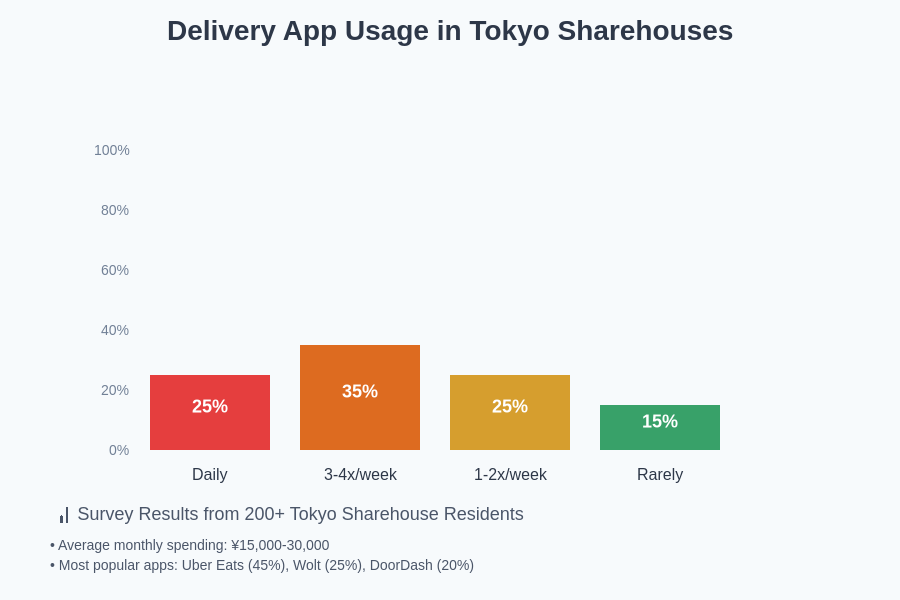
The shift toward individualized eating patterns has particularly impacted cross-cultural relationship building, as shared meals historically provided natural contexts for discussing food traditions, dietary practices, and cultural differences that formed foundations for deeper friendships and mutual understanding.
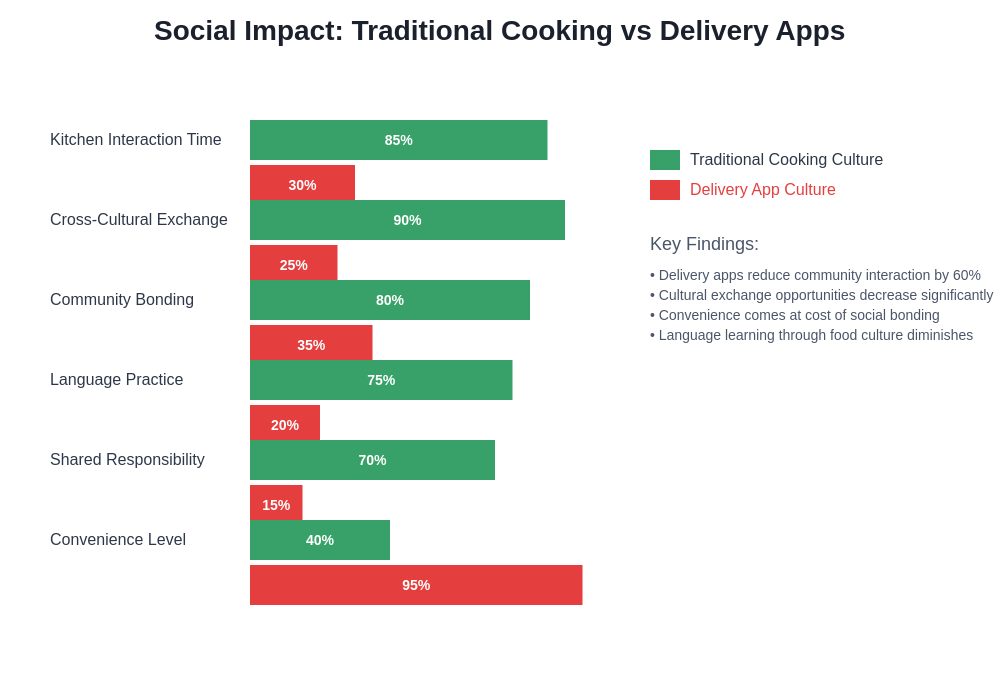
This comprehensive analysis reveals the stark contrast between traditional communal cooking culture and modern delivery app convenience, highlighting significant reductions in community interaction and cultural exchange opportunities.
Economic Implications and Household Budgeting
The convenience premium associated with food delivery services significantly impacts individual and household financial dynamics within sharehouses, where residents often maintain tight budgets that must accommodate Tokyo’s high cost of living. Living costs in Tokyo sharehouses explained reveals how food expenses traditionally represented a major budget category that could be managed through strategic shopping and cooking practices.
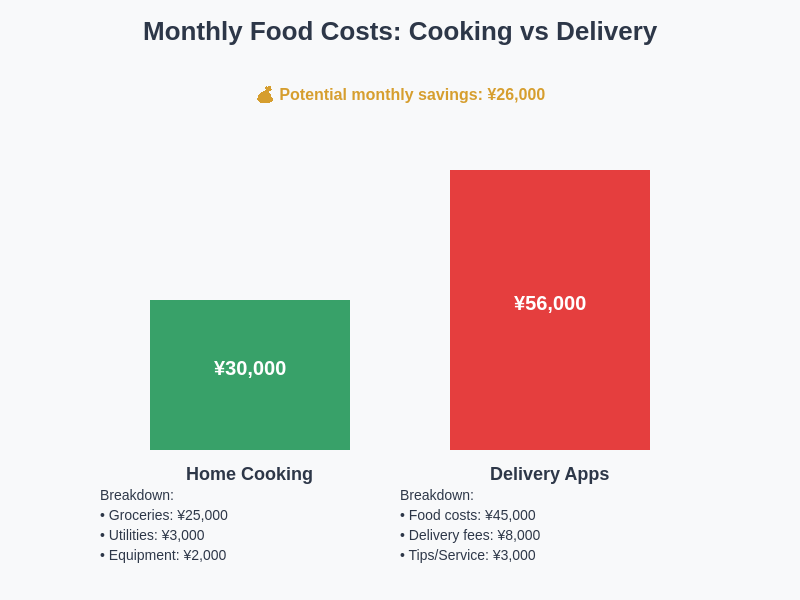
Delivery app usage patterns reveal stark differences in financial management approaches among residents, with some treating delivery as occasional convenience while others rely on it as their primary food source despite the substantial cost premiums involved. These spending disparities can create tension within household communities where financial consciousness varies significantly among residents.
The hidden costs of delivery app dependency extend beyond menu prices to include delivery fees, service charges, tip expectations, and minimum order requirements that can double or triple actual food costs compared to home cooking alternatives. Residents who frequently use delivery apps often find their food budgets expanding beyond sustainable levels without necessarily improving their nutritional intake or meal satisfaction.
Group ordering strategies have emerged as financial mitigation techniques where residents coordinate purchases to achieve free delivery thresholds or bulk order discounts, though these practices require social coordination that can become complicated when preferences, dietary restrictions, or payment methods don’t align among participating residents.
Kitchen Utilization and Shared Space Dynamics
Food delivery proliferation has dramatically reduced kitchen utilization in many Tokyo sharehouses, transforming these spaces from bustling communal hubs into underutilized facilities that primarily serve residents committed to home cooking. How kitchen cleaning schedules break down demonstrates how reduced usage affects maintenance responsibilities and cleanliness standards in unexpected ways.
The decreased kitchen traffic has created both opportunities and challenges for residents who prefer cooking, as they enjoy more space and equipment availability while simultaneously losing the collaborative energy and shared responsibility systems that made kitchen maintenance more manageable and socially integrated.
Common refrigerator and storage dynamics have shifted significantly as residents who rely on delivery apps require less storage space for ingredients and leftovers, while those maintaining cooking practices may find themselves with more available space but reduced motivation to maintain shared organization systems.
Kitchen equipment and appliance usage patterns reflect these changing dynamics, with expensive items like rice cookers, pressure cookers, and specialty appliances seeing reduced utilization that affects their maintenance, shared ownership arrangements, and replacement decisions when they break down or become obsolete.
Cultural Exchange and Culinary Diversity
Traditional sharehouse living provided natural platforms for cultural exchange through food sharing, recipe teaching, and collaborative cooking experiences where residents introduced each other to their home country cuisines and cooking techniques. Living with Japanese roommates in Tokyo sharehouses highlighted how food-based cultural exchange enriched cross-cultural understanding and relationship building.
Food delivery apps have simultaneously expanded and contracted culinary diversity within sharehouses by providing access to restaurant cuisines that residents might not prepare at home while reducing opportunities for authentic cultural food exchange through personal cooking and sharing. The convenience of ordering familiar foods from home countries can reduce motivation to explore local Japanese ingredients and cooking methods.
The authenticity of cultural food experiences has shifted from personal, intimate sharing of family recipes and cooking techniques toward commercial restaurant interpretations that may lack the personal stories, preparation rituals, and cultural context that make food sharing meaningful for relationship building and cultural understanding.
Language learning opportunities traditionally embedded in cooking activities, ingredient shopping, and food-related conversations have diminished as delivery apps often operate in multiple languages and reduce the need for Japanese language skills in food acquisition and meal planning processes.
Health and Nutrition Considerations
The nutritional implications of increased delivery app usage within sharehouse environments extend beyond individual health outcomes to affect community wellness culture and shared responsibility for healthy living practices. Restaurant food typically contains higher sodium, fat, and caloric content compared to home-prepared meals, while offering limited control over ingredient quality, preparation methods, and portion sizes.
Delivery app convenience can exacerbate poor eating habits during stressful periods such as job searching, exam preparation, or relationship difficulties when residents might otherwise rely on housemate support and shared cooking responsibilities to maintain better nutritional practices. How stress management techniques become necessary reveals how community support systems traditionally helped residents maintain healthy lifestyle practices.
The social accountability aspects of shared meal preparation and eating have significant impacts on individual health choices, as cooking together naturally encourages balanced meal planning, portion control, and mindful eating practices that are difficult to maintain when eating alone from delivery containers.
Food safety and hygiene considerations become more complex with delivery apps as residents have less control over food handling, preparation timing, and temperature maintenance during transport, while the convenience factor may encourage ordering from unfamiliar restaurants with unknown safety standards.
Technology Integration and Digital Divide
The seamless integration of food delivery apps into daily sharehouse routines reflects broader patterns of technology adoption that can create divisions between residents based on digital comfort levels, smartphone capabilities, and payment method access. How digital entertainment replaces social interaction explores similar technology-mediated social changes within shared living environments.
Language barriers can significantly impact delivery app accessibility for international residents who may struggle with Japanese-language interfaces, delivery instructions, or customer service interactions when orders encounter problems or require modifications. These challenges can create dependency relationships where tech-savvy residents assist others with ordering, potentially affecting social dynamics and independence levels.
Payment method requirements for delivery apps, including credit card access, digital wallet setup, and bank account integration, can exclude residents who maintain cash-based financial systems or lack access to Japanese banking services, creating participation barriers that affect social inclusion in group ordering activities.
The notification and delivery coordination aspects of app usage require residents to be available for delivery receipt, which can conflict with work schedules, study commitments, or social activities, creating new forms of scheduling pressure and social obligation within household communities.
Environmental Impact and Sustainability Consciousness
Food delivery services generate substantial packaging waste that directly impacts sharehouse waste management systems and environmental consciousness within residential communities. How plastic reduction efforts face cultural barriers demonstrates how environmental concerns intersect with convenience culture in shared living contexts.
The cumulative environmental footprint of frequent delivery app usage includes packaging materials, transportation emissions, and food waste from oversized portions or dissatisfaction with ordered items, challenging residents who prioritize sustainable living practices within their sharehouse communities.
Delivery app convenience can undermine sustainability initiatives that traditionally thrived in sharehouse environments, such as bulk shopping, minimal packaging choices, local market patronage, and zero-waste cooking practices that required coordination and commitment among multiple residents.
The carbon footprint considerations of delivery transportation, particularly for single-meal orders, conflict with environmental values that many international residents bring to their sharehouse experiences, creating tension between personal convenience and collective environmental responsibility.
Delivery Logistics and Building Management
The practical challenges of food delivery receipt in multi-story sharehouse buildings have created new complications for building management, security protocols, and resident coordination systems. How package delivery becomes complicated reveals similar logistical challenges that affect daily sharehouse operations and resident satisfaction.
Delivery driver access to building entrances, room location communication, and timing coordination require systems that many older sharehouses were not designed to accommodate, leading to missed deliveries, security concerns, and resident frustration when delivery protocols fail or conflict with building policies.
The frequency and timing of food deliveries can create noise disturbances, security vulnerabilities, and common area congestion that affect all residents regardless of their personal delivery app usage patterns, making delivery practices a community concern rather than purely individual choice.
Building management policies regarding delivery driver access, buzzer system usage, and common area delivery staging have evolved to accommodate increased delivery traffic while maintaining security and resident privacy, requiring ongoing negotiation between management priorities and resident convenience expectations.
Impact on Traditional Japanese Food Culture
Food delivery app integration into sharehouse life intersects with broader changes in Japanese food culture, where traditional emphasis on seasonal ingredients, home cooking skills, and meal presentation encounters modern convenience culture and international food preferences. How traditional cooking methods clash explores these cultural tensions within shared living environments.
The reduced emphasis on ingredient quality, seasonal awareness, and cooking technique development that often accompanies heavy delivery app usage can limit international residents’ exposure to authentic Japanese food culture and culinary skill development that traditionally enriched their cultural immersion experiences.
Japanese housemates may feel cultural disconnection when delivery app convenience replaces opportunities to share traditional cooking knowledge, seasonal eating practices, and food-related customs that historically served as important cultural exchange mechanisms within international sharehouse communities.
The presentation and eating ritual aspects of Japanese food culture, including proper table setting, serving etiquette, and mindful consumption practices, are often lost in delivery app contexts where food arrives in disposable containers designed for efficiency rather than cultural authenticity or aesthetic appreciation.
Long-term Community Evolution and Social Cohesion
The cumulative effects of food delivery app integration into sharehouse culture extend beyond immediate convenience to fundamentally alter how residential communities form, maintain, and evolve over time. How sharehouse living prepares you for future challenges examines how shared living experiences traditionally contributed to personal development and social skill building.
Communities that maintain strong cooking and shared meal traditions tend to develop deeper interpersonal relationships, more effective conflict resolution capabilities, and stronger mutual support systems compared to houses where delivery app convenience has replaced collaborative food practices with individualized consumption patterns.
The skills traditionally developed through shared cooking experiences, including planning, cooperation, cultural sensitivity, and resource management, may be diminished in delivery app-dependent communities, potentially affecting residents’ preparation for future collaborative living or relationship building opportunities.
Long-term resident retention and satisfaction correlate with community bonding strength, suggesting that houses maintaining traditional shared meal practices may experience greater stability and positive outcomes compared to those where delivery app convenience has fragmented social interaction opportunities and community building activities.
The evolution of sharehouse communities increasingly reflects broader societal tensions between technological convenience and human connection, with food delivery apps serving as a lens through which these larger cultural shifts become visible and measurable within the microcosm of shared living environments.
Understanding and navigating these changes requires conscious intention from both individual residents and house management to preserve valuable aspects of communal living while embracing beneficial technological innovations that enhance rather than replace meaningful social interaction and cultural exchange opportunities within Tokyo’s vibrant sharehouse communities.
Disclaimer
This article is for informational purposes only and reflects observations about changing social dynamics in Tokyo sharehouses. Individual experiences with food delivery apps and their impact on community life may vary significantly based on house culture, resident demographics, and personal preferences. Readers should consider their own values and priorities when making decisions about food sourcing and community participation in shared living environments.