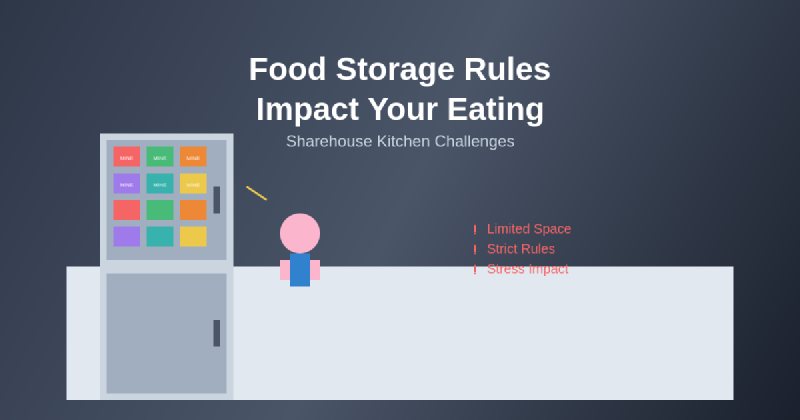
The intricate web of food storage rules in Tokyo sharehouses creates a ripple effect that extends far beyond simple refrigerator organization, fundamentally reshaping how residents approach meal planning, grocery shopping, cooking schedules, and even their relationship with food itself. These seemingly mundane regulations about shelf space allocation, labeling requirements, and expiration date monitoring become powerful forces that influence daily dietary decisions, nutritional intake patterns, and long-term eating habit development in ways that most newcomers never anticipate.
Understanding how food storage constraints affect your eating behaviors becomes essential for maintaining both physical health and financial stability while navigating the complex social dynamics that emerge around shared kitchen resources. The psychological impact of restricted food storage often proves more significant than the physical limitations themselves, creating stress responses that can lead to unhealthy eating patterns, social conflicts, and unexpected changes in dietary preferences that persist long after residents move to more spacious accommodations.
The Psychology of Limited Refrigerator Space
Living with severely restricted refrigerator space fundamentally alters the mental approach to food acquisition and consumption, creating psychological pressures that influence decision-making processes in subtle but profound ways. Understanding how refrigerator space wars are inevitable reveals the underlying tensions that develop around food storage territories and their impact on resident relationships and individual eating behaviors.
The constant awareness of limited storage capacity creates a scarcity mindset that often leads to either compulsive overconsumption of perishable items immediately after shopping or excessive restriction of food purchases that can result in nutritional deficiencies and increased reliance on convenience store foods. This psychological tension between wanting to stock adequate food supplies and respecting space limitations generates ongoing stress that affects meal enjoyment and social eating experiences.
Residents frequently develop territorial behaviors around their designated storage areas, leading to hypervigilance about other residents’ space usage and creating anxiety around food security that can trigger disordered eating patterns. The need to constantly monitor and defend personal food storage space creates mental exhaustion that often results in simplified meal choices and reduced culinary experimentation.
The temporal pressure created by limited storage capacity forces residents to prioritize immediate consumption over balanced meal planning, often resulting in feast-or-famine cycles that disrupt natural hunger cues and metabolic rhythms. This psychological adaptation to scarcity can persist even after moving to accommodations with adequate storage space, creating long-term impacts on eating behaviors and food relationships.
Meal Planning Revolution in Shared Spaces
Traditional meal planning strategies become obsolete in sharehouse environments where storage limitations demand completely restructured approaches to food acquisition, preparation, and consumption scheduling. Learning how meal timing affects kitchen access becomes crucial for developing effective strategies that work within the constraints of shared living spaces.
The necessity of coordinating refrigerator and pantry space with multiple residents forces a shift from weekly meal planning to daily or even meal-by-meal planning strategies that prioritize flexibility and immediate consumption over bulk purchasing and batch cooking. This fundamental change in planning approach often results in increased food costs, reduced nutritional diversity, and higher stress levels around meal preparation.
Successful adaptation requires developing new skills in rapid meal planning, ingredient substitution, and creative utilization of shelf-stable ingredients that can be stored in personal room space rather than shared kitchen areas. Residents often discover unexpected benefits in this forced simplification, including reduced food waste, increased awareness of eating patterns, and improved ability to create satisfying meals with minimal ingredients.
The social coordination required for effective meal planning in shared spaces can lead to innovative collaborative approaches such as ingredient sharing arrangements, coordinated shopping trips, and informal meal exchange systems that create community bonds while addressing individual dietary needs. However, these collaborative solutions require significant investment in communication and relationship building that not all residents are willing or able to maintain.
Shopping Pattern Transformation
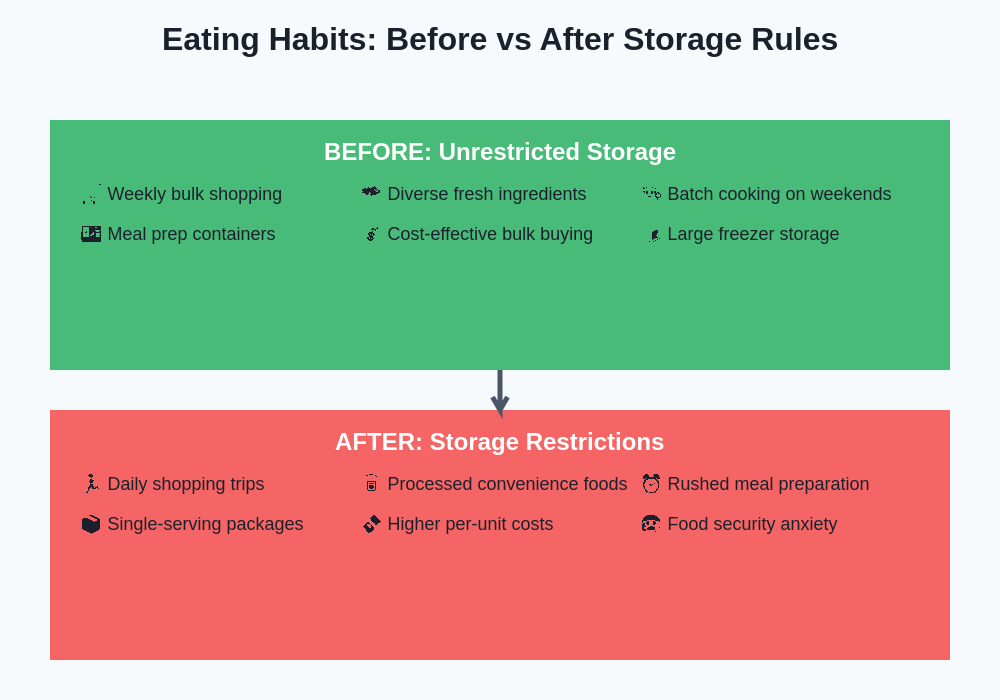
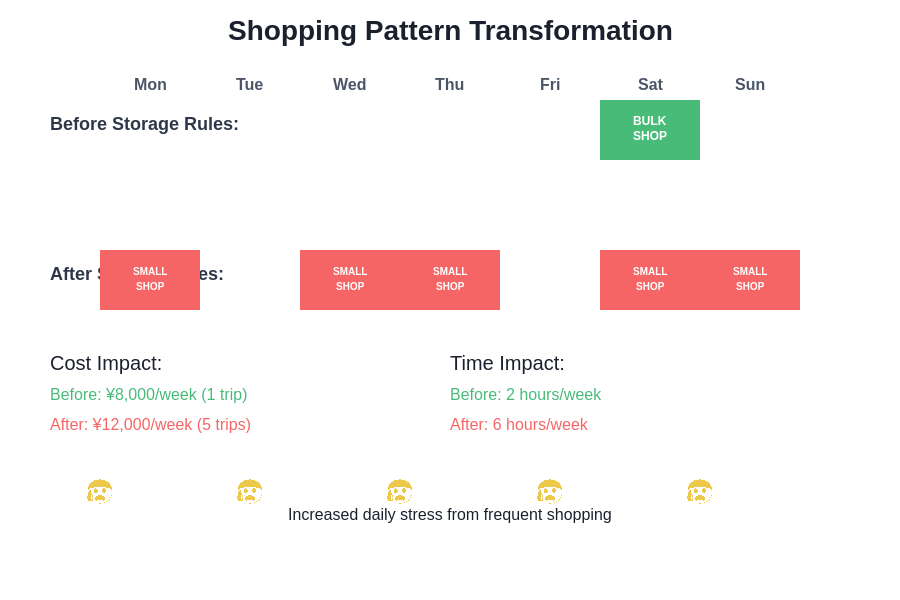
Food storage limitations fundamentally alter shopping behaviors, forcing residents to abandon bulk purchasing strategies in favor of frequent, small-quantity shopping trips that prioritize immediate consumption over cost savings. Understanding how convenience store proximity affects daily costs reveals how storage constraints drive increased reliance on expensive convenience options that impact both budgets and nutritional quality.
The shift from weekly grocery shopping to daily or every-other-day purchasing patterns creates significant lifestyle changes that affect work schedules, social activities, and transportation planning. Residents often find themselves making multiple trips to different stores to find appropriate portion sizes and fresh ingredients that align with their limited storage capacity and immediate consumption needs.
Bulk purchasing of non-perishable items becomes problematic without adequate pantry space, leading to increased per-unit costs and reduced access to healthy staples such as whole grains, legumes, and nuts that typically require larger storage containers. This economic pressure often drives residents toward processed convenience foods that offer portion control and extended shelf life at the expense of nutritional quality and cost effectiveness.
The need for frequent shopping trips can become particularly challenging during extreme weather conditions, illness, or busy work periods, often resulting in increased reliance on delivery services that add significant costs to food budgets. Residents must develop contingency planning strategies that balance storage limitations with the need for food security during periods when shopping becomes difficult or impossible.
Impact on Dietary Diversity and Nutrition
Restricted food storage capacity creates significant barriers to maintaining dietary diversity, as residents struggle to accommodate the variety of fresh ingredients necessary for balanced nutrition within extremely limited refrigerator and pantry space. Exploring how dietary restrictions complicate meal planning highlights additional challenges faced by residents with specific nutritional needs who must navigate storage limitations while maintaining health requirements.
The emphasis on foods with longer shelf life and smaller storage requirements often leads to increased consumption of processed items, canned goods, and packaged foods that may be less nutritionally dense than fresh alternatives. Fresh vegetables and fruits, which require significant refrigerator space and have limited storage life, often become luxury items rather than dietary staples, leading to reduced micronutrient intake and fiber consumption.
Protein sources face particular storage challenges, as fresh meats and fish require immediate consumption or adequate freezer space that may be unavailable or strictly regulated in shared living situations. This constraint often drives residents toward shelf-stable protein sources such as canned fish, dried legumes, or processed meat products that may be higher in sodium and preservatives while providing less complete nutritional profiles.
The inability to store large quantities of cooking ingredients such as fresh herbs, specialty oils, or diverse spices limits culinary creativity and often results in repetitive meal patterns that can lead to food boredom and reduced meal satisfaction. This monotony can trigger compensatory behaviors such as increased snacking on convenient but less nutritious options or frequent restaurant dining that strains budgets and reduces control over nutritional intake.
Cooking Schedule Coordination and Its Effects
The need to coordinate cooking schedules with multiple residents creates temporal constraints that significantly impact meal timing, preparation methods, and eating patterns in ways that extend far beyond simple convenience considerations. Understanding how kitchen politics actually work in Japanese sharehouses provides insights into the complex social dynamics that emerge around shared cooking spaces and their impact on individual eating behaviors.
Limited access to cooking facilities during peak hours often forces residents to eat at non-optimal times that can disrupt circadian rhythms, affect digestion, and create conflicts with work or study schedules. The pressure to complete cooking within restricted time windows frequently leads to simplified meal preparation techniques that may reduce nutritional quality and meal satisfaction.
The stress of competing for cooking space and time often results in residents avoiding meal preparation entirely during busy periods, leading to increased reliance on convenience foods, restaurant meals, or cold preparation methods that may not provide adequate nutrition or satisfaction. This avoidance behavior can create cycles of poor eating habits that become entrenched over time.
Residents often develop elaborate scheduling systems and communication protocols to manage kitchen access, but these systems require constant maintenance and can break down during periods of high stress or increased occupancy. The mental energy required to navigate these coordination challenges can reduce motivation for healthy meal preparation and lead to decision fatigue around food choices.
Food Security and Emergency Preparedness
The inability to maintain adequate food reserves due to storage limitations creates vulnerability during emergencies, illness, or periods of increased work demands that make regular shopping difficult or impossible. Learning about emergency fund requirements becomes relevant as residents must balance financial preparedness with the practical reality of limited food storage capacity.
Natural disasters, transportation strikes, or personal health issues can quickly expose the fragility of food security systems that depend on daily shopping and immediate consumption patterns. Residents with limited storage capacity often lack the ability to maintain emergency food supplies, creating anxiety and potential nutritional stress during challenging periods.
The psychological impact of food insecurity, even when temporary, can create lasting changes in eating behaviors and food relationships that persist long after the immediate crisis has passed. Residents may develop hoarding behaviors around shelf-stable foods or experience increased anxiety around meal planning and food availability that affects their overall well-being.
Building food security within storage constraints requires creative solutions such as developing relationships with neighbors for emergency sharing, maintaining small reserves of shelf-stable essentials in personal room space, or creating informal community support systems that can provide assistance during difficult periods. However, these solutions often require significant social capital and may not be available to all residents.
Cultural Food Adaptation Challenges
Food storage limitations intersect with cultural dietary preferences in complex ways that can create additional stress for international residents trying to maintain connections to their home food traditions while adapting to Japanese sharehouse constraints. Understanding how cultural differences affect friendship building reveals how food practices often serve as important cultural bridges that become complicated by storage limitations.
Traditional cooking methods from many cultures require specialty ingredients, larger quantities of fresh ingredients, or specific storage conditions that may be incompatible with shared living situations. The inability to prepare familiar foods can contribute to homesickness and cultural disconnection that affects overall psychological well-being and adaptation to life in Japan.
Religious or ethical dietary requirements may become more difficult to maintain when storage limitations prevent adequate preparation and when shared cooking spaces may not accommodate specific preparation needs. These challenges can create internal conflicts between maintaining important personal values and adapting to practical living constraints.
The social aspects of food sharing and communal eating that are important in many cultures may be hindered by storage limitations and coordination difficulties, reducing opportunities for cultural exchange and community building that could otherwise enrich the sharehouse experience for all residents.
Economic Impact on Food Budgets
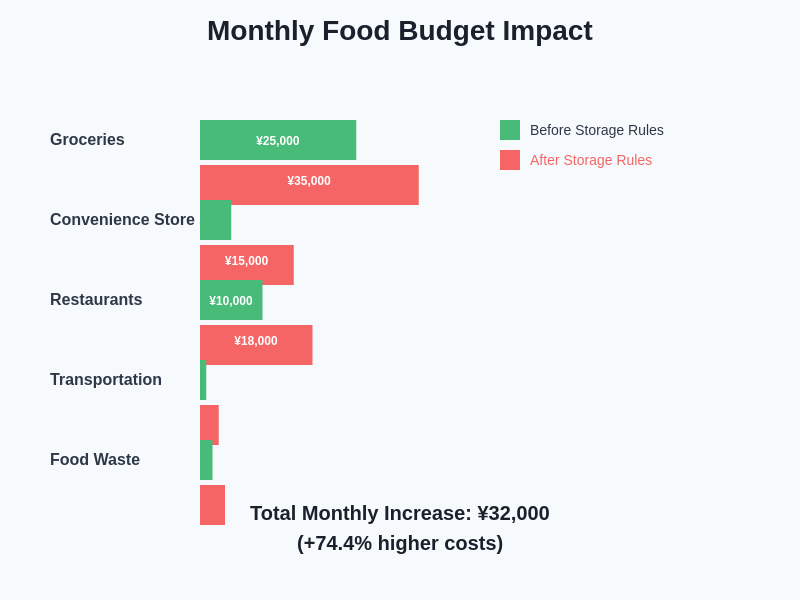
Storage constraints create hidden economic pressures that significantly inflate food costs through multiple mechanisms that residents often fail to anticipate when budgeting for sharehouse living. Understanding how much Tokyo sharehouses really cost per month reveals how food-related expenses can exceed initial estimates due to storage limitations and their effects on shopping and eating patterns.
The inability to take advantage of bulk purchasing discounts, seasonal sales, or warehouse shopping options results in consistently higher per-unit food costs that can add substantial amounts to monthly budgets. Frequent shopping trips also increase transportation costs and time investment that must be factored into the total cost of food acquisition.
Increased reliance on convenience stores and prepared foods due to storage and preparation constraints typically results in significantly higher food costs compared to home cooking with bulk ingredients. The convenience premium paid for small portion sizes and ready-to-eat options can double or triple food expenses compared to traditional cooking approaches.
Food waste often increases in shared living situations due to coordination failures, forgotten items in crowded storage spaces, and the pressure to consume items quickly before they spoil. This waste represents a direct financial loss that compounds the already elevated costs associated with storage-constrained shopping patterns.
Long-term Habit Formation and Health Impacts
The eating patterns developed in response to food storage constraints often become deeply ingrained habits that persist long after residents move to accommodations with adequate storage space, creating lasting impacts on health, nutrition, and food relationships. Exploring how living in sharehouses affects your taxes touches on the financial documentation aspects, but the behavioral changes often have more significant long-term consequences.
Adaptations such as eating immediately upon purchase, avoiding fresh ingredients, or relying heavily on processed foods can become automatic responses that continue even when storage limitations no longer exist. These learned behaviors can contribute to long-term health issues including poor nutrition, digestive problems, and increased risk of diet-related chronic diseases.
The stress responses developed around food scarcity and territorial behaviors in shared spaces can evolve into lasting anxiety around food security and social eating situations. These psychological adaptations may require conscious effort and sometimes professional support to overcome after leaving shared living situations.
Conversely, some residents develop positive long-term habits such as reduced food waste, increased awareness of hunger and satiety cues, and improved ability to create satisfying meals with minimal ingredients. These skills can provide lasting benefits for both health and financial management throughout life.
Strategies for Successful Adaptation
Developing effective strategies for managing food storage constraints requires a comprehensive approach that addresses practical, psychological, and social aspects of shared living situations. Learning how to handle roommate conflicts without moving out provides relevant conflict resolution skills that apply to food-related disputes and coordination challenges.
Successful residents often develop personal storage systems that maximize the utility of limited space through careful organization, appropriate containers, and strategic use of room storage for non-perishable items. These systems require initial investment and ongoing maintenance but can significantly improve both storage capacity and food security.
Building positive relationships with housemates around food sharing, coordination, and mutual support creates social resources that can help overcome individual storage limitations while building community connections. These relationships require investment in communication skills and cultural sensitivity but often provide benefits that extend far beyond food-related issues.
Developing flexibility in meal planning, ingredient substitution, and cooking methods allows residents to adapt to storage constraints while maintaining nutritional quality and meal satisfaction. These skills often require practice and experimentation but can provide lasting benefits for creative cooking and resourcefulness.
The experience of navigating food storage rules in Tokyo sharehouses ultimately serves as a powerful teacher of resource management, social coordination, and adaptability skills that extend far beyond the kitchen. While the constraints can create significant challenges and stress, residents who develop effective coping strategies often discover unexpected benefits in simplified living, increased food awareness, and enhanced appreciation for the social aspects of shared meals and community building around food.
Understanding and preparing for the impact of food storage rules on eating habits enables prospective residents to make informed decisions about sharehouse living while developing realistic expectations and effective strategies for maintaining health, budget, and satisfaction within the unique constraints of shared living spaces in Japan’s dynamic capital city.
Disclaimer
This article is for informational purposes only and does not constitute professional nutritional or health advice. Food storage rules and their enforcement vary significantly between different sharehouses and management companies. Readers should research specific property policies and consult with healthcare professionals regarding dietary concerns. Individual responses to storage constraints may vary, and residents with specific nutritional needs should carefully evaluate whether shared living arrangements can accommodate their requirements.