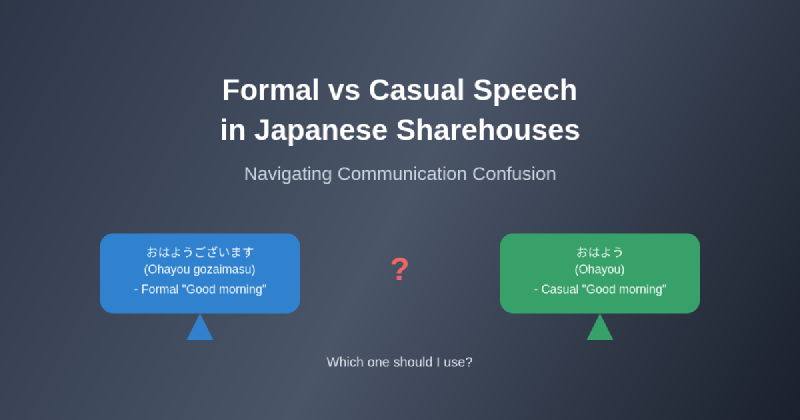
The intricate system of formal and casual speech in Japanese creates one of the most persistent and bewildering challenges for international residents living in Tokyo sharehouses. This linguistic complexity extends far beyond simple vocabulary differences, encompassing subtle social hierarchies, relationship dynamics, and cultural expectations that can transform everyday conversations into potential minefields of misunderstanding and unintended offense.
Understanding the nuanced application of speech levels becomes particularly crucial in the intimate setting of sharehouse living, where residents navigate multiple relationships simultaneously while trying to establish appropriate communication patterns with housemates of varying ages, backgrounds, and social positions. The consequences of speech level confusion extend beyond mere linguistic mistakes, often affecting social integration, friendship formation, and overall community harmony within shared living spaces.
The Foundation of Japanese Speech Level Complexity
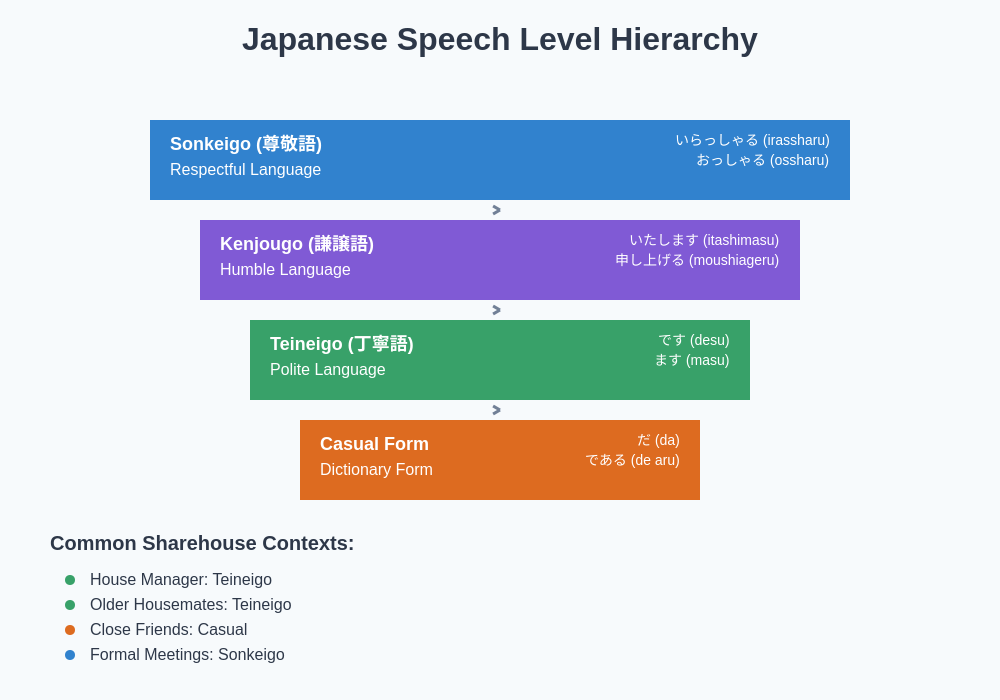
Japanese language structure inherently incorporates hierarchical relationships through its sophisticated system of speech levels, known as keigo, which includes sonkeigo (respectful language), kenjougo (humble language), and teineigo (polite language). Each level serves specific social functions and conveys precise information about the speaker’s relationship with the listener, their mutual social positions, and the formality of the situation at hand.
The challenge for international residents lies not merely in memorizing different verb forms and vocabulary sets, but in developing the cultural intuition necessary to select appropriate speech levels based on constantly shifting social contexts. Language barriers prevent deep friendships when residents struggle to navigate these complex communication expectations that native speakers internalize from childhood.
In sharehouse environments, residents encounter situations that traditional language textbooks rarely address, such as speaking with Japanese roommates who may be older professionally but younger chronologically, or communicating with house managers who maintain informal atmospheres while requiring respectful acknowledgment of their authority. These ambiguous situations create persistent uncertainty about appropriate speech choices and often result in overcorrection toward excessive formality or inappropriate casualness.
Age-Based Hierarchy Confusion in Shared Living
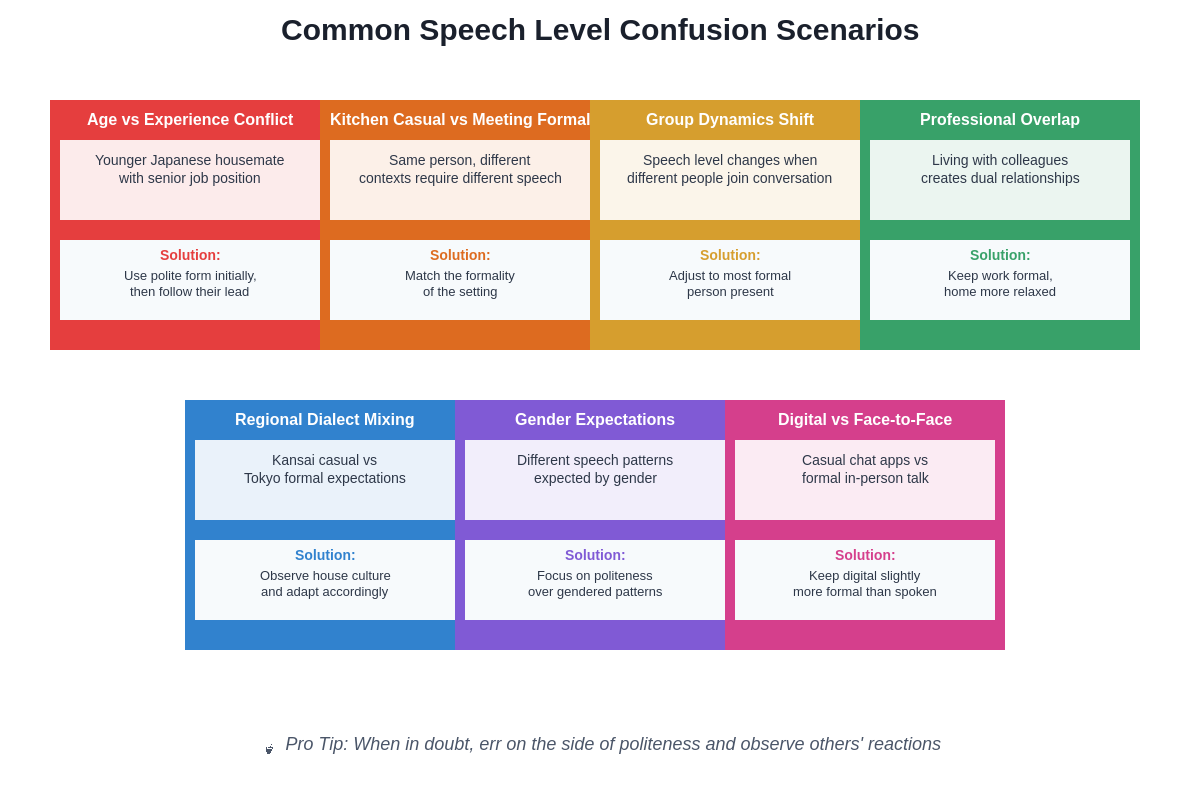
The traditional Japanese concept of senpai-kohai relationships becomes particularly complex in sharehouse settings where chronological age, professional experience, language proficiency, and residence duration create multiple overlapping hierarchies that can contradict each other. International residents often struggle to determine which hierarchy takes precedence when selecting appropriate speech levels for different housemates.
A twenty-five-year-old international graduate student might live with a twenty-three-year-old Japanese working professional, a thirty-year-old international English teacher, and a twenty-seven-year-old Japanese freelancer, creating a web of relationships where traditional age-based speech patterns become inadequate. How age differences impact sharehouse compatibility explores how these dynamics affect daily interactions beyond language considerations.
The situation becomes even more complex when considering that Japanese residents may unconsciously adjust their speech expectations based on perceived language ability, creating asymmetrical communication patterns where native speakers use casual forms while expecting formal responses from international residents. This imbalance can inadvertently reinforce feelings of outsider status and prevent the development of natural, reciprocal friendships within the house community.
Professional hierarchies add another layer of complexity when housemates work in different industries with varying status perceptions, salary levels, or educational requirements. The uncertainty about how to incorporate professional standing into daily speech choices often leads to awkward conversations and missed opportunities for deeper connection through more natural communication patterns.
Situational Context Switching Challenges
The domestic environment of sharehouses requires rapid switching between different speech levels depending on the immediate social context, physical location within the house, and the specific combination of people present during any given interaction. International residents frequently struggle with these contextual transitions, particularly when conversations shift from casual kitchen chat to formal discussions about house rules or financial matters.
Common areas like kitchens and living rooms often maintain relatively casual atmospheres, while interactions in more formal spaces or during house meetings may require elevated speech levels. The challenge intensifies when conversations begin in one context and naturally transition to another, requiring smooth adjustment of speech patterns that many international residents find difficult to execute naturally.
How cultural communication styles create misunderstandings examines how these rapid contextual shifts contribute to broader communication difficulties that affect house harmony and individual social integration. The cognitive load required to constantly monitor and adjust speech levels can exhaust international residents and discourage them from participating fully in house social activities.
Group dynamics further complicate speech level selection when conversations include multiple participants with different relationships to the speaker. A casual conversation with one close housemate may require immediate formality adjustment when another resident joins who expects more respectful speech patterns, creating awkward transitions that can disrupt natural conversation flow.
Professional Relationship Boundaries in Domestic Settings
Tokyo sharehouses often house residents with vastly different professional backgrounds, creating unique situations where workplace hierarchy expectations intersect with domestic intimacy in ways that confuse traditional Japanese communication patterns. International residents frequently encounter scenarios where professional deference conflicts with the casual equality typically expected in shared living environments.
A junior employee living with their senior colleague faces particularly challenging speech decisions, as workplace formality requirements may feel inappropriate in domestic contexts while excessive casualness could damage professional relationships. These residents must navigate dual relationship dynamics that Japanese social norms don’t clearly address, often leading to persistent communication anxiety and relationship strain.
The situation becomes even more complex when professional relationships extend beyond simple hierarchy to include client-service provider dynamics, academic supervision, or business partnerships. How business travel affects long-term community building explores how professional obligations impact residential relationship development.
International residents often overcompensate by maintaining excessive formality in all interactions with professionally connected housemates, inadvertently creating social distance that prevents the development of genuine friendships and mutual support systems that typically characterize successful sharehouse communities.
Gender Dynamics and Speech Pattern Expectations
Japanese speech patterns carry distinct gendered expectations that create additional confusion for international residents who may not recognize subtle differences in vocabulary choices, sentence endings, and intonation patterns that native speakers associate with masculine or feminine communication styles. These gendered speech expectations can lead to unintended social signals and misinterpreted intentions.
Female international residents often struggle with the balance between polite speech and the slightly more assertive communication sometimes necessary for practical household management, while male residents may inadvertently use speech patterns that seem overly casual or insufficiently considerate in domestic contexts where sensitivity and cooperation are highly valued.
Mixed-gender sharehouses present particular challenges when speech level choices intersect with gender expectations, especially during discussions about sensitive topics like cleaning responsibilities, guest policies, or conflict resolution. Dating while living in Tokyo sharehouses addresses how romantic interests further complicate communication dynamics within shared living spaces.
The intersection of professional gender expectations with domestic communication patterns creates additional layers of complexity, particularly for residents working in traditional Japanese companies where workplace speech patterns may feel inappropriate or overly formal in the relaxed atmosphere of shared housing communities.
Regional Dialect Interference and Confusion
Tokyo sharehouses attract residents from across Japan, bringing regional dialects and communication styles that can conflict with standard Tokyo speech patterns and create additional confusion for international residents trying to establish appropriate communication norms. Regional variations in formality levels, honorific usage, and casual speech patterns can make it difficult to develop consistent communication strategies.
Residents from Kansai regions may use different casual speech patterns that international housemates mistake for rudeness or excessive familiarity, while residents from more formal regions may interpret Tokyo casualness as disrespectful or inappropriate. These regional differences compound the existing challenges of speech level selection and can lead to misunderstandings that affect house harmony.
How cultural differences affect friendship building examines how these regional variations contribute to broader cultural adaptation challenges that international residents face when trying to integrate into Japanese social environments.
The mixing of regional dialects with international accents and varying Japanese proficiency levels creates communication environments where standard speech level rules may not apply consistently, requiring flexible adaptation strategies that many international residents find overwhelming and exhausting to maintain long-term.
Language Learning Impact on Social Integration
The constant pressure to navigate complex speech level decisions significantly impacts language learning motivation and social integration progress for international residents. Many residents report feeling discouraged from attempting casual conversations due to fear of choosing inappropriate speech levels, leading to social isolation and missed opportunities for natural language practice.
Over-reliance on formal speech patterns, while safe from a politeness perspective, can prevent international residents from developing the casual communication skills necessary for genuine friendship formation and full social integration within house communities. This formal communication barrier often reinforces perceptions of international residents as perpetual outsiders who cannot fully participate in natural Japanese social dynamics.
How language learning affects career opportunities explores how communication confidence impacts broader life success beyond immediate social integration concerns. The psychological burden of constant speech level monitoring can reduce overall communication willingness and limit personal growth opportunities.
The feedback loop between communication anxiety and reduced practice opportunities creates persistent barriers to natural speech development, often resulting in international residents maintaining artificially formal communication patterns throughout their entire residence period rather than developing the flexibility to adjust appropriately to different social contexts.
Technology and Modern Communication Shifts
Digital communication through messaging apps and social media platforms has introduced new complexities to speech level navigation, as written Japanese requires different formality considerations than spoken communication. International residents often struggle to translate their developing spoken Japanese skills into appropriate written formats for house group chats, announcement messages, and informal digital communications.
The casualness of digital communication can create false confidence in speech level selection, as messaging platforms may encourage informal communication that doesn’t translate appropriately to face-to-face interactions. This digital-physical communication disconnect can lead to awkward transitions when online casual communication patterns clash with expected in-person formality levels.
Modern Japanese communication increasingly incorporates English phrases and casual expressions that may not follow traditional speech level rules, creating additional confusion for international residents trying to understand when casual borrowings are appropriate versus when traditional formal patterns should be maintained.
Economic Stress and Communication Avoidance
The cognitive burden of constant speech level navigation, combined with the economic pressures common to sharehouse living, can lead international residents to minimize communication rather than risk social mistakes. This avoidance strategy, while reducing immediate anxiety, ultimately prevents the regular practice necessary for developing natural speech level intuition.
How salary negotiations factor in housing costs examines how financial stress compounds communication challenges by increasing the stakes of social relationships that might provide support during difficult periods. Communication avoidance can isolate residents during times when community support would be most valuable.
The time and mental energy required for careful speech level consideration can interfere with other important activities like job searching, studying, or maintaining international relationships, creating additional stress that further discourages communication risk-taking and social engagement within the house community.
Long-term Relationship Development Strategies
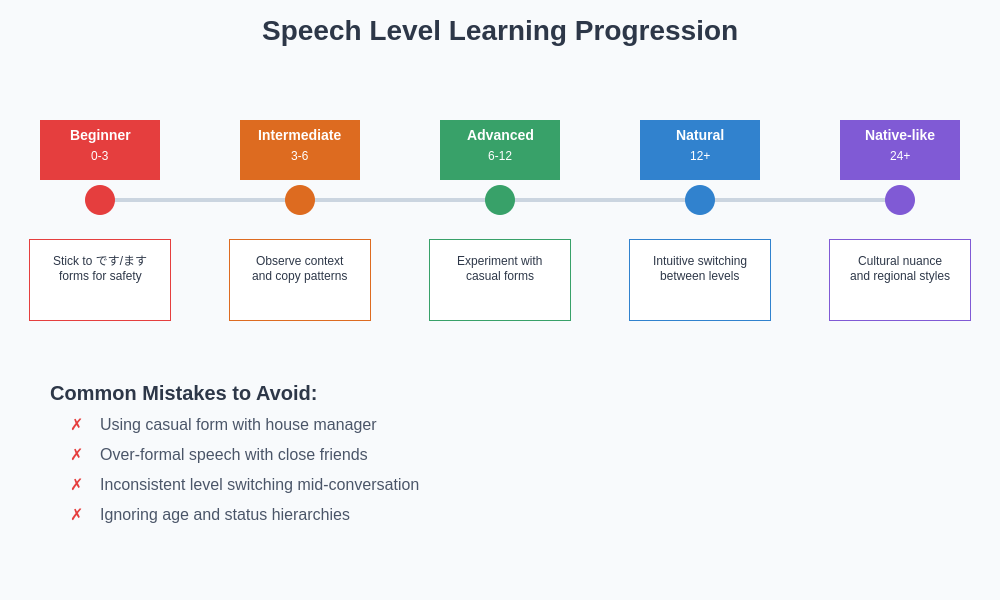
Successful navigation of speech level confusion requires developing long-term strategies that balance respectful communication with authentic relationship building. International residents who achieve successful integration often report finding specific housemates willing to provide gentle correction and guidance rather than avoiding communication entirely.
Building relationships gradually through consistent, slightly formal communication can provide safer foundations for eventual casual communication development. This approach allows international residents to demonstrate respect and consideration while creating space for natural relationship evolution and eventual speech level adjustment.
How to handle roommate conflicts without moving out provides strategies for addressing communication issues directly rather than allowing speech level confusion to create persistent social distance that undermines house community development.
The most successful international residents often develop personalized communication strategies that acknowledge their language learning status while demonstrating genuine effort to respect Japanese social norms. This balanced approach typically results in more forgiving social environments where mistakes are viewed as learning opportunities rather than social failures.
Cultural Bridge-Building Through Communication
Understanding speech level confusion as a shared challenge rather than a personal failure can help international residents approach communication difficulties with greater confidence and persistence. Many Japanese housemates also struggle with appropriate speech level selection in the unique social context of international sharehouses, creating opportunities for mutual learning and cultural exchange.
Viewing communication challenges as opportunities for cultural education rather than barriers to friendship can transform speech level confusion from a source of anxiety into a foundation for deeper cross-cultural understanding. This perspective shift often results in more successful long-term relationships and greater overall satisfaction with sharehouse living experiences.
The intimate setting of shared housing provides unique opportunities for sustained cultural exchange that can benefit all residents through increased international awareness and communication flexibility. International residents who successfully navigate speech level challenges often become valuable cultural bridges who help subsequent residents adapt more quickly to Japanese communication expectations.
Successful sharehouses often develop their own communication cultures that blend respectful Japanese communication norms with international directness and casualness, creating environments where cultural learning happens naturally through daily interaction rather than formal instruction. These hybrid communication environments can provide optimal settings for both language learning and genuine friendship development across cultural boundaries.
Disclaimer
This article is for informational purposes only and does not constitute professional linguistic or cultural advice. Communication patterns vary significantly among individuals and sharehouses, and specific situations may require different approaches than those discussed. Readers should observe their specific living situations and seek guidance from trusted housemates or cultural mentors when uncertain about appropriate communication choices.