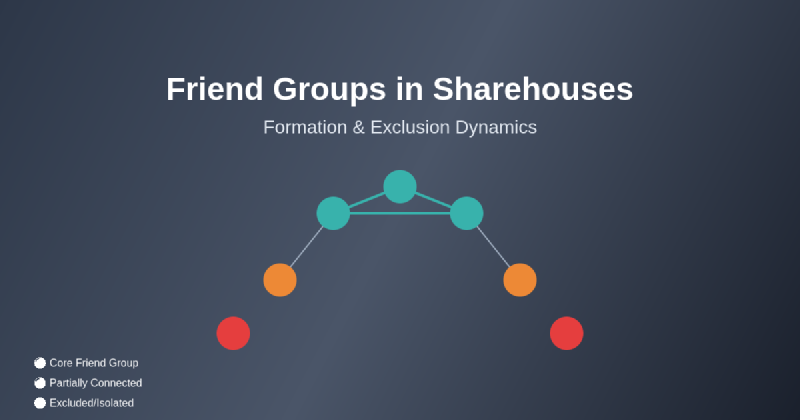
The formation of friend groups within Tokyo sharehouses represents one of the most complex and emotionally charged aspects of shared living experiences, where natural human tendencies toward tribalism intersect with cultural differences, language barriers, and the unique pressures of international living. Understanding these dynamics becomes essential for anyone seeking to build meaningful relationships while navigating the inevitable challenges that arise when diverse individuals attempt to create community within the confined spaces of shared accommodation.
The psychological mechanisms that drive group formation and exclusion operate at both conscious and unconscious levels, creating invisible social boundaries that can dramatically impact individual experiences and overall house harmony. These patterns emerge regardless of good intentions, cultural awareness, or explicit house rules designed to promote inclusivity, making them particularly challenging to address through conventional approaches to community building.
The Psychology Behind Group Formation
Human beings possess innate tendencies toward social clustering that evolved as survival mechanisms throughout millennia of communal living, creating automatic responses to seek similarity, establish hierarchies, and form alliances that provide security and belonging. Within sharehouse environments, these ancient patterns manifest through modern expressions of cultural identity, shared interests, language proficiency, and lifestyle compatibility that often override conscious efforts toward inclusivity.
The initial weeks following move-in represent critical periods when social structures solidify, as residents naturally gravitate toward others who provide comfort, familiarity, and ease of communication. Making friends through Tokyo sharehouse communities becomes particularly challenging during these formative periods when early connections often determine long-term social dynamics and relationship patterns.
Language barriers frequently serve as primary dividers, creating natural gravitational pulls toward others who share native tongues or similar proficiency levels in Japanese or English. These linguistic comfort zones provide emotional relief from the constant mental effort required for cross-cultural communication, inadvertently establishing boundaries that can persist throughout entire residency periods despite attempts at broader community integration.
Cultural background similarities often reinforce language-based groupings, as residents discover shared references, humor styles, social norms, and lifestyle preferences that require minimal explanation or adjustment. These connections feel effortless compared to cross-cultural relationships that demand constant cultural translation and patience for misunderstandings that inevitably arise from different communication styles and social expectations.
Early Formation Patterns and Critical Moments
The first few weeks of sharehouse living establish social frameworks that prove remarkably resistant to change, as initial impressions, chance encounters, and timing coincidences create lasting relationship trajectories that often surprise residents with their persistence and impact. Understanding these patterns helps explain why some residents quickly find their place while others struggle with ongoing feelings of isolation despite living in close proximity to potential friends.
Arrival timing significantly influences group integration possibilities, with residents who arrive during periods of established social stability facing greater challenges than those who move in during natural transition periods when existing groups remain more fluid and open to new members. Living with Japanese roommates in Tokyo sharehouses involves navigating these established dynamics while respecting existing relationships and social hierarchies.
Common activity participation during initial weeks creates bonding opportunities that form foundation relationships, as shared experiences in cooking, cleaning, entertainment, or exploration activities provide natural conversation starters and collaborative memories that strengthen interpersonal connections. Residents who miss these early opportunities often find themselves perpetually playing catch-up in relationship building efforts.
Room location and shared facility usage patterns create organic interaction opportunities that significantly impact relationship development potential, with residents whose daily routines naturally intersect having advantages over those whose schedules or room positions limit spontaneous encounters and casual conversation opportunities that build familiarity and comfort over time.
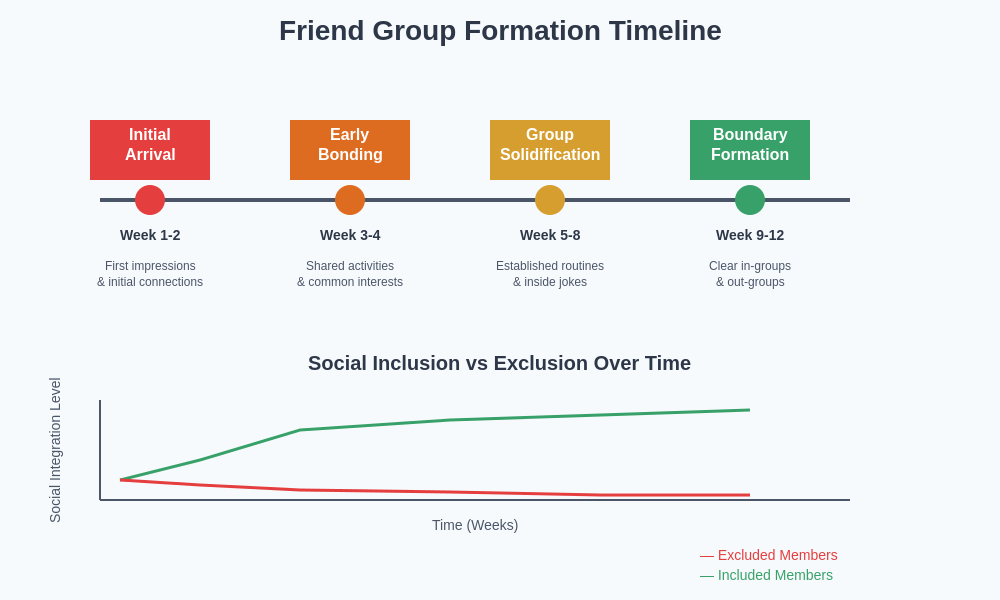
The timeline of friend group formation follows predictable patterns, with the most critical bonding period occurring within the first month of residency when social structures remain fluid and new relationships develop most naturally.
Cultural and Linguistic Barriers
Language proficiency levels create invisible hierarchies within sharehouse communities, where fluent speakers naturally assume leadership roles in group activities, planning discussions, and conflict resolution situations while less proficient residents gradually retreat from participation rather than struggle with communication challenges that can feel embarrassing or exhausting after long work or study days.
Cultural communication styles profoundly impact group dynamics, as direct versus indirect communication preferences, hierarchical versus egalitarian social structures, and individual versus collective decision-making approaches create friction points that residents often attribute to personality conflicts rather than recognizing their cultural origins and developing appropriate adaptation strategies.
How cultural differences affect friendship building becomes particularly complex when residents hold different assumptions about friendship timelines, intimacy boundaries, reciprocity expectations, and social obligation levels that can lead to misinterpretation of intentions and relationship investment levels.
Non-verbal communication patterns vary dramatically across cultures, creating opportunities for misunderstanding that can derail relationship development before verbal communication even begins, as eye contact norms, personal space preferences, touching boundaries, and facial expression interpretations carry different meanings that residents may never explicitly discuss or clarify.
Religious and dietary restrictions sometimes create practical barriers to group participation in shared meals, social drinking, or entertainment activities that form primary bonding experiences for many sharehouse communities, requiring conscious accommodation efforts that don’t always occur naturally within diverse living situations.
The Role of Shared Interests and Activities
Common hobbies and interests create powerful bonding mechanisms that can transcend cultural and linguistic barriers, providing shared languages of passion and enthusiasm that enable deeper connections than surface-level cultural exchange conversations that often characterize early cross-cultural interactions in international living environments.
Professional and academic pursuits often serve as primary organizing principles for friendship formation, as residents in similar career stages or educational programs naturally share concerns, schedules, stress levels, and goal orientations that create understanding and mutual support opportunities unavailable to those in different life phases or career trajectories.
How gaming communities form in tech-savvy houses demonstrates how specific interests can create tight-knit subgroups that unintentionally exclude residents who don’t share those particular passions, even when broader compatibility might exist if alternative connection points were explored and developed.
Entertainment preferences regarding movies, music, social activities, and weekend pursuits significantly influence group formation patterns, as residents who enjoy similar activities naturally spend more time together while those with different preferences may feel excluded from group plans and social events that center around activities they find uninteresting or uncomfortable.
Cooking and dining preferences create daily interaction patterns that either facilitate or hinder relationship development, as residents who share similar dietary habits, meal timing preferences, and kitchen usage styles have more opportunities for casual interaction and collaboration compared to those whose eating patterns rarely intersect with others.
Age and Life Stage Dynamics
Age differences within sharehouse communities create natural clustering patterns that often override other compatibility factors, as residents in similar life stages share concerns about career development, relationship goals, financial pressures, and social priorities that those in different age brackets may find difficult to relate to or prioritize appropriately.
Professional versus student status divisions frequently create parallel social structures within the same sharehouse, as working residents and students maintain different daily schedules, stress levels, financial resources, and social priorities that naturally limit interaction opportunities and shared experience possibilities despite physical proximity and potential personal compatibility.
How age differences impact sharehouse compatibility becomes particularly evident in entertainment choices, bedtime preferences, noise tolerance levels, and weekend activity planning where different life stages create conflicting needs and preferences that require ongoing negotiation and compromise.
Long-term versus short-term residency intentions influence relationship investment levels, as residents planning extended stays naturally seek deeper, more substantial friendships while those with temporary arrangements may consciously or unconsciously limit their emotional investment in relationship building, creating imbalanced friendship dynamics that can frustrate other community members.
Life experience levels create unspoken hierarchies that influence communication patterns and decision-making processes, where residents with extensive international experience or previous sharehouse living may assume advisory roles while newcomers defer to their guidance, sometimes creating mentorship dynamics rather than peer friendship relationships.
Economic Factors and Social Stratification
Financial resources significantly impact social participation opportunities within sharehouse communities, as residents with different budget levels face varying constraints on restaurant dining, entertainment activities, travel opportunities, and social events that form primary group bonding experiences, potentially creating economic stratification that mirrors broader social inequalities.
Employment status and income levels create lifestyle differences that affect daily routines, stress levels, social priorities, and available time for relationship building, with full-time workers, part-time employees, students, and unemployed residents maintaining different schedules and availability patterns that naturally influence friendship formation possibilities.
How student budgets require different strategies affects participation in group activities, shared expenses, and social events that often assume particular income levels or spending comfort zones that may exclude residents operating under different financial constraints or cultural attitudes toward money management.
Brand preferences and consumption patterns sometimes reveal economic differences that create subtle social divisions, as residents who prioritize premium products, frequent dining out, or expensive entertainment may unconsciously form groups based on similar consumption habits while those with more modest spending patterns feel excluded from certain activities.
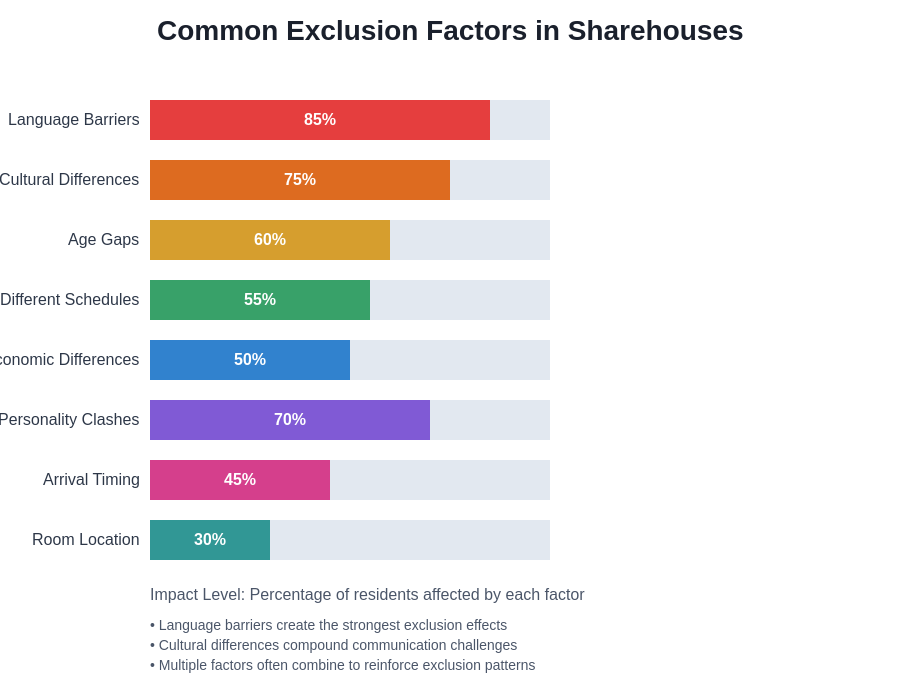
Language barriers consistently emerge as the strongest factor contributing to social exclusion, followed by cultural differences and personality clashes that compound communication challenges and relationship building difficulties.
Work schedule flexibility influences social availability and participation opportunities, with residents who maintain regular business hours having different social rhythm compared to those with shift work, freelance schedules, or academic timetables that may limit their ability to participate in standard group activities and social events.
Personality Types and Social Preferences
Introversion and extraversion differences create natural friendship formation patterns where outgoing residents quickly establish multiple relationships while introverted community members may form fewer but potentially deeper connections, leading to different social participation styles that can be misinterpreted as disinterest rather than recognized as personality-based preferences.
Communication style preferences regarding direct versus indirect expression, conflict avoidance versus confrontation comfort, and emotional sharing boundaries significantly impact relationship development potential, as residents with compatible communication approaches naturally feel more comfortable together while those with different styles may struggle to build rapport.
Social energy levels vary dramatically among residents, with some individuals thriving on frequent group interaction while others require significant alone time to recharge, creating potential mismatches when high-energy social organizers interpret others’ need for solitude as rejection or antisocial behavior rather than recognizing legitimate personality differences.
Why some residents always feel like outsiders often relates to personality mismatches with dominant community culture rather than personal failings or social inadequacies, suggesting the importance of finding communities that align with individual social needs and energy patterns.
Leadership tendencies influence group formation as naturally assertive residents often become informal community organizers while those who prefer following may gravitate toward established leaders, creating hierarchical relationship patterns that don’t necessarily reflect friendship compatibility or mutual interest levels.
The Mechanics of Exclusion
Exclusion within sharehouse communities often occurs through subtle mechanisms rather than overt rejection, making it difficult for affected residents to identify specific causes or develop effective strategies for integration, as the accumulation of small oversights, missed invitations, and conversational redirections creates isolation without clear blame or malicious intent.
Language switching represents one of the most common exclusion mechanisms, where residents unconsciously revert to their native languages during group conversations, immediately creating insider-outsider dynamics that leave non-speakers feeling invisible and irrelevant despite their physical presence in social situations.
Inside jokes and shared references develop naturally within close groups but create barriers for newer residents or those who missed particular experiences, as constant references to events, people, or cultural touchstones unknown to others emphasize social boundaries and reinforce feelings of outsider status.
Activity planning often occurs through informal networks that naturally exclude residents who aren’t part of core communication channels, as spontaneous decisions, group messaging applications, and casual coordination conversations happen within established relationships, leaving others unaware of opportunities to participate.
Social media connections and digital communication patterns extend sharehouse relationships beyond physical spaces but can inadvertently exclude residents who aren’t part of online friend networks, creating parallel social structures that reinforce real-world relationship boundaries through digital confirmation of inclusion and exclusion patterns.
Impact on Individual Well-being
Social exclusion within living environments creates unique psychological stress due to the inability to escape from reminder of social rejection, as excluded residents must continue sharing spaces with friendship groups that don’t include them, creating ongoing emotional challenges that differ significantly from workplace or academic social difficulties that can be left behind at day’s end.
Mental health impacts of sharehouse exclusion often compound over time, as initial disappointment transforms into self-doubt, social anxiety, and potential depression when residents internalize social rejection and begin questioning their likability, cultural competence, or social skills rather than recognizing the complex dynamics at play.
How homesickness hits differently in shared spaces becomes intensified when residents feel isolated within their living communities, as the contrast between expectations of friendship and community with the reality of exclusion can trigger intense longing for familiar social environments and support networks.
Sleep quality and daily stress levels frequently suffer when residents feel socially excluded within their living environments, as the constant awareness of social dynamics and ongoing efforts to understand or improve their social situation create chronic low-level anxiety that affects overall well-being and life satisfaction.
Academic or professional performance may decline when social stress within living environments affects concentration, motivation, and emotional stability, creating cascading effects that extend far beyond the immediate social situation to impact broader life goals and achievement outcomes.
Strategies for Building Inclusive Communities
Conscious community building efforts require ongoing attention and intentional action rather than relying on natural social processes that tend toward exclusion and clustering, as creating truly inclusive environments demands recognition of inherent human tendencies and active counterbalancing through structured approaches to relationship building and social integration.
House meeting structures can provide formal opportunities for community discussion, problem-solving, and social planning that ensure all residents have voice in community decisions and awareness of upcoming activities, though success depends on skillful facilitation that encourages participation rather than creating additional opportunities for exclusion through communication barriers.
Making friends through Tokyo sharehouse communities requires systematic approaches to introduction facilitation, cultural orientation, and ongoing social integration support that many sharehouse operators overlook in favor of focusing primarily on practical accommodation aspects rather than community development.
Rotation systems for shared responsibilities and activity leadership can provide opportunities for different residents to contribute their strengths while ensuring that social organization doesn’t always fall to the same individuals, creating more balanced community participation and preventing the establishment of permanent social hierarchies.
Cultural celebration events and educational activities can transform differences into learning opportunities rather than division sources, as organized exploration of various cultural backgrounds, traditions, and perspectives helps residents appreciate diversity while finding common ground and shared interests that transcend cultural boundaries.
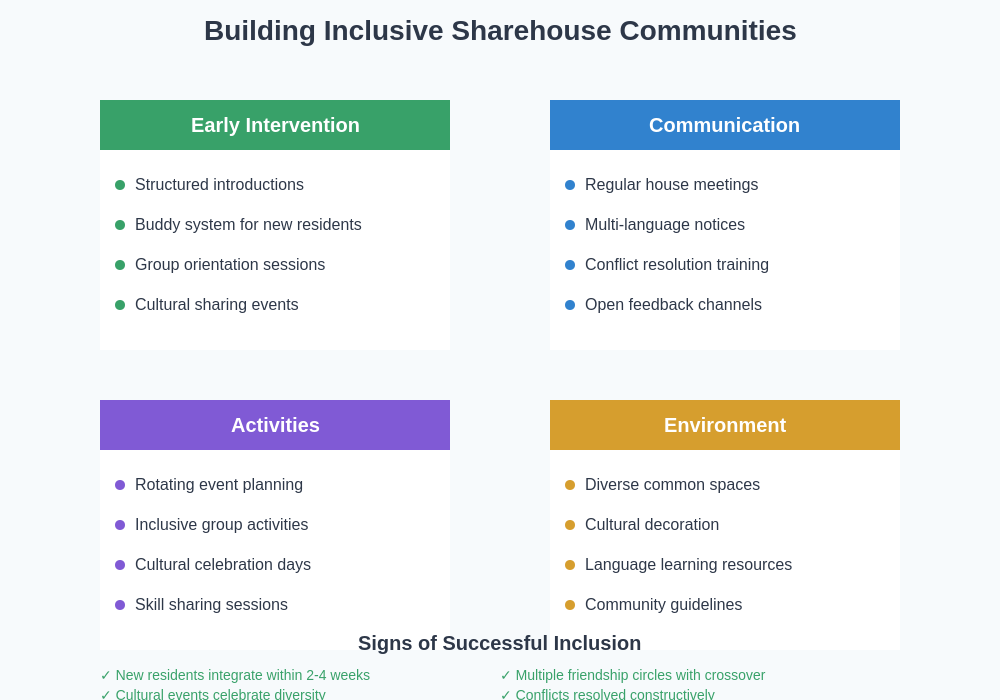
Successful inclusion requires systematic approaches across multiple areas, from early intervention and communication improvements to inclusive activities and environmental modifications that support community building.
Intervention and Mediation Approaches
Early intervention strategies work more effectively than attempting to address exclusion patterns after they become entrenched, as established social dynamics gain momentum and emotional investment that make them increasingly resistant to change over time, suggesting the importance of proactive community building during initial residency periods.
Conflict resolution training for sharehouse operators and resident leaders can provide tools for addressing social dynamics before they escalate into serious problems, though success requires recognition that exclusion often occurs through accumulated small actions rather than dramatic conflicts that are easier to identify and address.
How to handle roommate conflicts without moving out includes addressing social exclusion patterns that may not rise to the level of open conflict but create ongoing tension and dissatisfaction that can be resolved through skilled communication and community building efforts.
Professional mediation services occasionally become necessary when social dynamics create serious community disruption, though most sharehouse situations can be improved through increased awareness, communication skills development, and structured approaches to inclusive community building that address root causes rather than symptoms.
Peer mentorship programs that pair new residents with established community members can help prevent exclusion by providing dedicated relationship building support, though success requires careful mentor selection and ongoing program oversight to ensure that mentorship relationships serve integration goals rather than reinforcing existing social hierarchies.
Long-term Community Health
Sustainable inclusive communities require ongoing maintenance and periodic reassessment of social dynamics, as resident turnover, changing circumstances, and evolving relationships create continuous challenges that demand adaptive responses rather than assuming that initial community building efforts will maintain effectiveness over time.
Leadership transition planning ensures that community building efforts continue despite resident changes, as informal community leaders inevitably move on and require replacement by others who understand the importance of inclusive practices and possess skills necessary for facilitating positive social dynamics among diverse resident populations.
Regular community feedback mechanisms can help identify emerging social problems before they become serious issues, though effectiveness depends on creating safe spaces for honest communication about sensitive social dynamics that residents may feel reluctant to discuss openly without assurance of confidential handling and constructive response.
Documentation of successful community building practices helps preserve institutional knowledge across resident turnover while providing frameworks for addressing common challenges that arise repeatedly in diverse living communities, though implementation requires adaptation to specific community characteristics rather than generic application of standard approaches.
Celebration of community diversity and individual contributions helps maintain positive social dynamics by regularly reinforcing inclusive values and recognizing the unique strengths that different residents bring to community life, creating ongoing motivation for inclusive behavior rather than relying solely on rules or conflict resolution to maintain community health.
The complex dynamics of friend group formation and exclusion within sharehouse communities reflect broader human social patterns while being intensified by the unique challenges of international living, cultural differences, and shared space constraints. Understanding these patterns provides the foundation for developing more conscious approaches to community building that honor both individual needs for belonging and community goals of inclusion and mutual support. Success requires ongoing effort, cultural sensitivity, and recognition that creating truly welcoming communities demands active intervention in natural social processes that tend toward exclusion rather than inclusion.
Disclaimer
This article is for informational purposes only and does not constitute professional psychological or social advice. The dynamics described may vary significantly based on individual circumstances, cultural backgrounds, and specific community characteristics. Readers experiencing serious social difficulties or mental health impacts should consult with qualified professionals. The strategies mentioned may not be effective in all situations and should be adapted to specific community needs and cultural contexts.