The decision between furnished and unfurnished sharehouse rooms in Tokyo represents one of the most significant factors affecting your monthly budget and overall financial planning during your stay in Japan. While the initial appeal of furnished rooms often centers around convenience and reduced upfront costs, the complete financial picture reveals complex trade-offs that can dramatically impact your long-term expenses and lifestyle flexibility throughout your residency period.
Understanding the true cost implications of furnished accommodation extends far beyond simple monthly rent comparisons, encompassing opportunity costs, quality considerations, and hidden expenses that can accumulate significantly over time. The choice between furnished and unfurnished options fundamentally shapes your financial strategy and directly influences your ability to customize your living environment according to personal preferences and evolving needs.
The Economics of Furnished Sharehouse Rooms
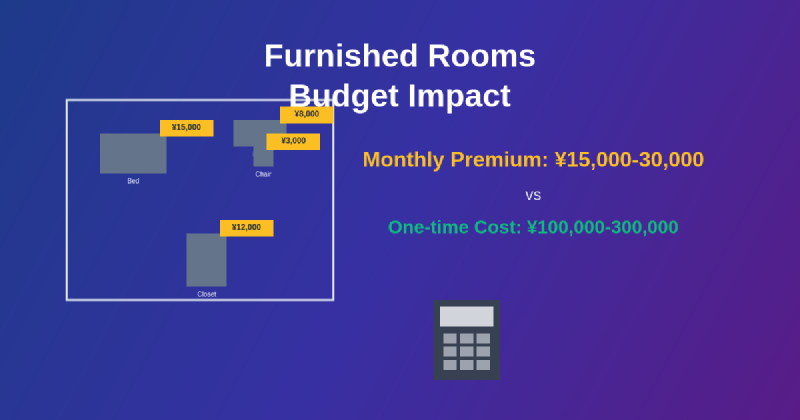
Furnished sharehouse rooms in Tokyo typically command premium pricing that reflects the convenience and immediate availability of essential furniture and appliances. The monthly rent differential between furnished and unfurnished options can range from 10,000 to 30,000 yen per month, depending on the quality of furnishings, room size, and location desirability within the broader Tokyo metropolitan area.
The premium charged for furnished rooms represents the property operator’s investment in furniture procurement, maintenance, replacement costs, and the added value of convenience provided to residents who prefer immediate move-in capability without furniture shopping requirements. Living costs in Tokyo sharehouses explained demonstrates how these additional costs compound over extended residency periods.
Property management companies calculate furnished room pricing based on furniture depreciation schedules, replacement frequency, and market demand from international residents who typically prefer turnkey living solutions. The markup often exceeds the actual furniture value when amortized over typical tenant occupancy periods, creating both advantages and disadvantages depending on individual circumstances and residency duration expectations.
Quality variations in furnished room offerings create additional budget considerations, as lower-priced furnished options may include basic, low-quality furniture that requires frequent replacement or causes comfort issues affecting sleep quality and productivity. Higher-end furnished rooms provide better quality items but command significantly higher monthly premiums that can impact overall affordability for budget-conscious residents.
Analyzing Upfront Cost Differences
The initial financial outlay for furnished versus unfurnished sharehouse rooms presents dramatically different cash flow requirements that can influence your housing decision based on available capital and financial planning preferences. Furnished rooms typically require only standard deposits, key money, and first month’s rent, allowing residents to begin living immediately without substantial furniture investment.
Unfurnished rooms demand significant upfront furniture purchasing, which can range from 100,000 to 300,000 yen for basic essential items including bed, mattress, desk, chair, storage solutions, and basic appliances depending on quality preferences and shopping strategies. What moving out really costs in Tokyo sharehouses provides insights into how these initial investments affect overall housing economics.
The timing of furniture purchases creates additional financial pressure for unfurnished room residents, as immediate needs for sleeping and working arrangements require quick decision-making that may result in suboptimal purchasing choices or higher costs due to time constraints and limited research opportunities.
International residents face particular challenges with unfurnished rooms due to limited local knowledge about furniture retailers, quality assessment difficulties, and delivery logistics that can extend the setup period and create temporary accommodation expenses while waiting for essential items to arrive and be assembled.
Hidden Costs and Long-term Financial Implications
Furnished sharehouse rooms incorporate numerous hidden costs that extend beyond the obvious monthly rent premium, including accelerated wear and tear on provided furniture that may result in replacement charges upon move-out depending on contract terms and damage assessment policies. How to actually get your deposit back explains how furniture condition affects security deposit returns.
Maintenance responsibilities for furnished items typically remain with the property management, but residents may face charges for damages exceeding normal wear and tear, creating ongoing financial risk throughout the tenancy period. The definition of acceptable wear varies significantly between operators and can result in unexpected expenses during move-out inspections.
Quality limitations of provided furniture may necessitate personal purchases of comfort items such as better mattresses, ergonomic chairs, or additional storage solutions, effectively creating hybrid furnished-unfurnished situations that combine monthly premiums with personal investment requirements.
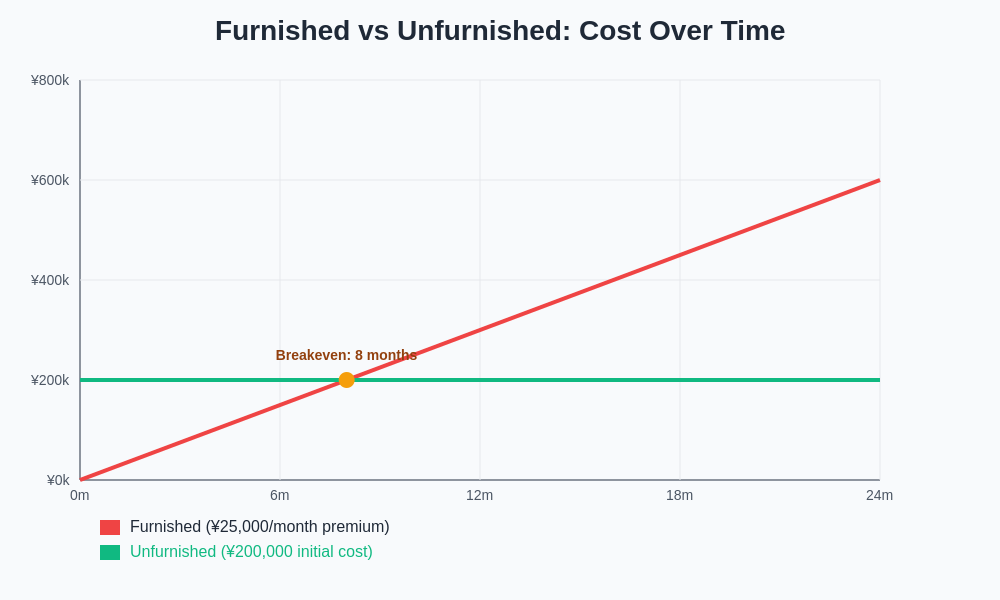
Long-term residents in furnished rooms often discover that the cumulative monthly premiums exceed the cost of purchasing equivalent or superior furniture, particularly for stays extending beyond twelve to eighteen months where the breakeven point makes unfurnished options more economically attractive.
Quality Considerations and Value Assessment
The quality spectrum of furnished sharehouse rooms varies dramatically across Tokyo’s market, with budget options often providing basic, mass-produced furniture that prioritizes cost minimization over comfort, durability, or aesthetic appeal. These quality compromises can affect daily living satisfaction and potentially impact productivity for residents working or studying from their rooms.
Mid-range furnished options typically offer functional furniture that meets basic needs without exceptional quality or design considerations, representing reasonable value for short-term residents but potentially feeling inadequate for longer stays where personal comfort and room aesthetics become more important factors.
Premium furnished sharehouses invest in higher-quality furniture, often featuring coordinated design schemes and durable construction that justifies higher monthly costs through superior comfort and visual appeal. However, these premium options may still limit personalization opportunities that many residents value for creating comfortable living environments.
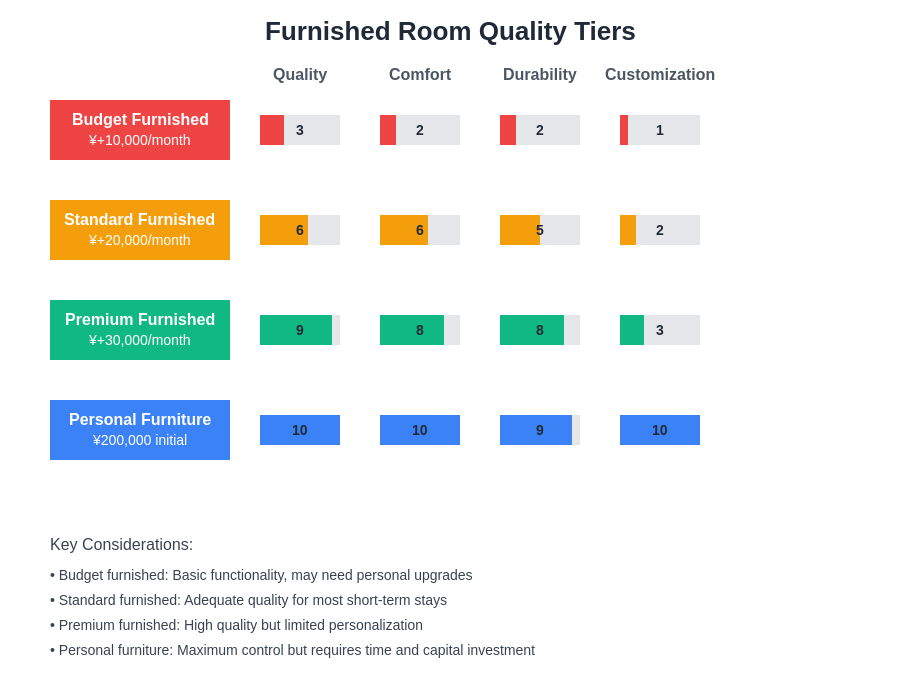
The inability to customize furnished rooms according to personal preferences represents a significant non-financial cost that affects psychological comfort and sense of home ownership, particularly for residents with specific ergonomic needs, aesthetic preferences, or cultural furniture requirements that may not align with standard Japanese furnishing approaches.
Flexibility and Mobility Considerations
Furnished rooms provide exceptional mobility advantages for residents with uncertain stay durations, career flexibility requirements, or those who frequently travel for extended periods. How to find the perfect sharehouse in Tokyo discusses how housing flexibility affects long-term planning strategies.
The ability to relocate quickly between furnished properties enables residents to respond to changing work situations, relationship developments, or housing preferences without the logistical complexity and costs associated with furniture transportation, storage, or disposal that significantly complicate moves from unfurnished accommodations.
International residents with temporary visa status particularly benefit from furnished room flexibility, as uncertain residency duration makes large furniture investments risky and potentially wasteful if early departure becomes necessary due to visa changes, employment situations, or personal circumstances requiring return to home countries.
However, the premium costs associated with maintaining furnished room flexibility can accumulate substantially over time, creating ongoing financial burden that may exceed the value of maintained mobility options, particularly for residents who develop stable living situations and reduced relocation likelihood.
Budget Planning Strategies for Different Scenarios
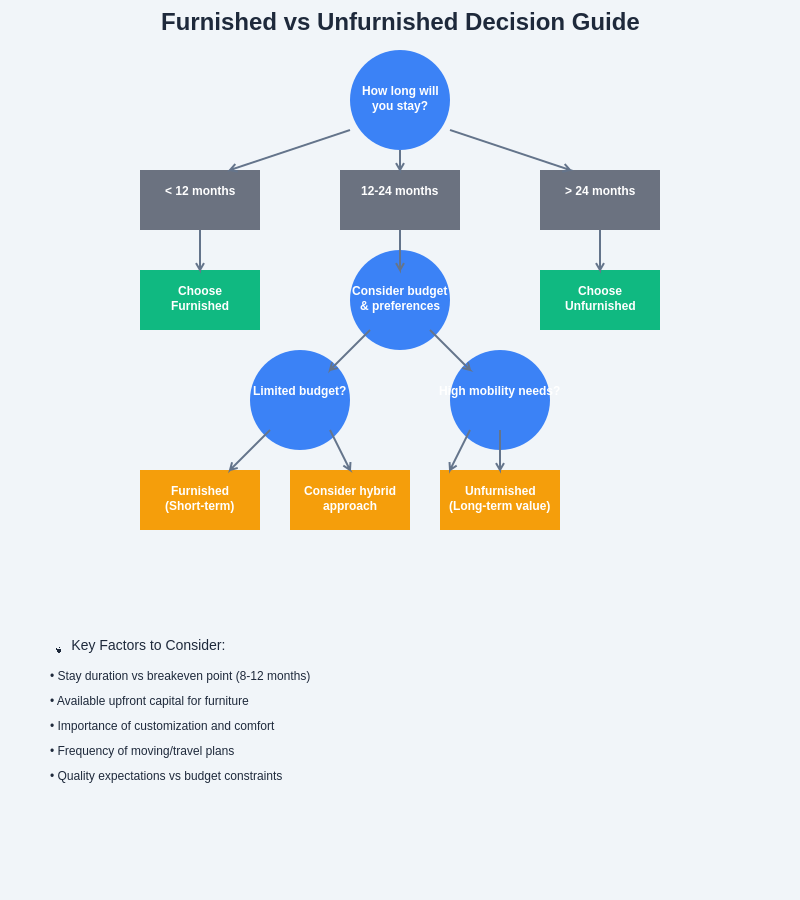
Short-term residents planning stays under twelve months generally find furnished rooms more economically advantageous when considering the total cost of ownership including furniture procurement, potential storage costs during travel, and disposal expenses upon departure. How much Tokyo sharehouses really cost per month provides comprehensive cost analysis frameworks.
Medium-term residents with twelve to twenty-four month stay expectations face the most complex decision-making scenarios, where furnished room premiums begin approaching unfurnished furniture investment costs, requiring careful analysis of personal circumstances, quality requirements, and mobility preferences to determine optimal financial strategies.
Long-term residents planning extended stays exceeding twenty-four months typically benefit from unfurnished room investments, as furniture ownership provides superior quality control, customization opportunities, and long-term cost efficiency despite higher upfront capital requirements and reduced mobility flexibility.
Students and working holiday visa holders often prefer furnished options due to inherent stay duration limitations and budget constraints that make large upfront furniture investments impractical, while permanent residents and long-term work visa holders may benefit from unfurnished room investments that provide better long-term value and customization opportunities.
Negotiation and Alternative Arrangements
Some sharehouse operators offer flexible arrangements that combine elements of furnished and unfurnished options, such as providing essential items like bed and desk while allowing residents to add personal furniture and decorative elements. These hybrid arrangements can provide optimal balance between convenience and customization while moderating monthly premium costs.
Negotiation opportunities may exist for long-term residents willing to commit to extended lease periods in exchange for reduced furnished room premiums or furniture upgrade allowances that improve living quality without proportional cost increases. Japanese sharehouse rules every foreigner should know explains typical negotiation frameworks.
Group arrangements among multiple residents can sometimes enable bulk furniture purchasing for unfurnished properties, reducing individual costs while maintaining quality control and customization opportunities that furnished rooms cannot provide. These collaborative approaches require careful coordination but can deliver significant financial benefits.
Seasonal timing of moves can affect furnished room availability and pricing, with peak periods commanding higher premiums while off-season moves may offer better value or negotiation opportunities as operators seek to maintain occupancy levels during traditionally slower rental periods.
Technology and Modern Amenities Impact
Modern furnished sharehouses increasingly include technology amenities such as high-speed internet equipment, smart home devices, and entertainment systems that add substantial value beyond traditional furniture considerations. These technological inclusions can justify higher monthly premiums for residents who would otherwise need to purchase similar equipment independently.
The rapid evolution of technology creates ongoing upgrade requirements that furnished room operators must manage, potentially affecting long-term pricing stability as newer properties offer superior technological amenities that older furnished properties struggle to match without significant reinvestment and corresponding rent increases.
Personal technology integration with provided furniture and room layouts can create compatibility challenges that require additional purchases or modifications, effectively reducing the convenience benefits that justify furnished room premiums while creating hybrid cost structures that combine monthly premiums with personal technology investments.
Remote work requirements have increased the importance of ergonomic furniture and appropriate workspace setups that many standard furnished rooms do not adequately address, creating need for personal upgrades that diminish the value proposition of furnished accommodations for professional residents working from home.
Environmental and Sustainability Considerations
Furnished rooms contribute to furniture lifecycle efficiency by maximizing utilization across multiple residents, reducing individual environmental impact compared to personal furniture ownership that may see limited use during international residency periods. Why sustainable living practices clash with convenience explores these environmental trade-offs.
However, the quality limitations of many furnished room offerings can result in accelerated replacement cycles that increase overall environmental impact compared to higher-quality personal furniture investments that provide longer service life and better sustainability outcomes over extended periods.
Disposal challenges for personal furniture upon departure from Japan create environmental concerns that furnished rooms eliminate, particularly for international residents without permanent local connections or storage solutions that enable responsible furniture transfer or long-term retention options.
The trend toward circular economy principles in furniture design and sharing arrangements may influence future furnished room offerings, potentially improving quality and environmental sustainability while maintaining cost advantages for short-term residents seeking responsible accommodation options.
Regional Variations and Market Dynamics
Different Tokyo neighborhoods exhibit varying furnished room premiums based on local market conditions, resident demographics, and competition levels between operators serving specific geographic areas. Best Tokyo neighborhoods for sharehouse living explains how location affects furnished room value propositions.
Central Tokyo areas typically command higher furnished room premiums due to elevated real estate costs and higher concentrations of international business professionals willing to pay premium prices for convenience and immediate availability in prime locations near major business districts and entertainment areas.
Suburban areas often provide better furnished room value due to lower underlying real estate costs and different resident demographics that may include longer-term residents who create more stable demand for both furnished and unfurnished options, enabling more competitive pricing structures.
University neighborhoods frequently offer specialized furnished room arrangements designed for student budgets and academic calendar requirements, creating unique pricing models that may include semester-based contracts and group arrangement discounts that differ significantly from standard residential market patterns.
The decision between furnished and unfurnished sharehouse rooms ultimately depends on careful analysis of personal circumstances, financial capacity, stay duration expectations, and lifestyle preferences that vary significantly among individual residents. Understanding the complete cost structure and hidden implications of each option enables informed decision-making that aligns with both immediate needs and long-term financial objectives throughout your Tokyo residency experience.
Disclaimer
This article is for informational purposes only and does not constitute professional financial advice. Furnished room costs and availability in Tokyo vary significantly based on market conditions, specific properties, and individual circumstances. Readers should conduct thorough research and consider their personal financial situation when making housing decisions. The cost comparisons and timeframes mentioned may vary depending on specific properties, locations, and current market conditions.