The enforcement of gender policies in Japanese sharehouses operates within a complex legal framework that balances property owner rights, tenant protections, and anti-discrimination principles established under Japanese housing law. Understanding how these policies are legally implemented and enforced provides crucial insights for both prospective residents and property managers navigating the intricate landscape of shared housing regulations in Japan’s major metropolitan areas.
Gender-specific housing arrangements in sharehouses represent one of the most legally nuanced aspects of Japan’s rental housing market, where traditional property management practices intersect with evolving anti-discrimination legislation and modern co-living arrangements. The enforcement mechanisms for these policies involve multiple regulatory bodies, legal precedents, and administrative procedures that collectively shape how gender-based housing decisions are made and contested within the Japanese legal system.
Legal Foundation of Gender-Based Housing Policies
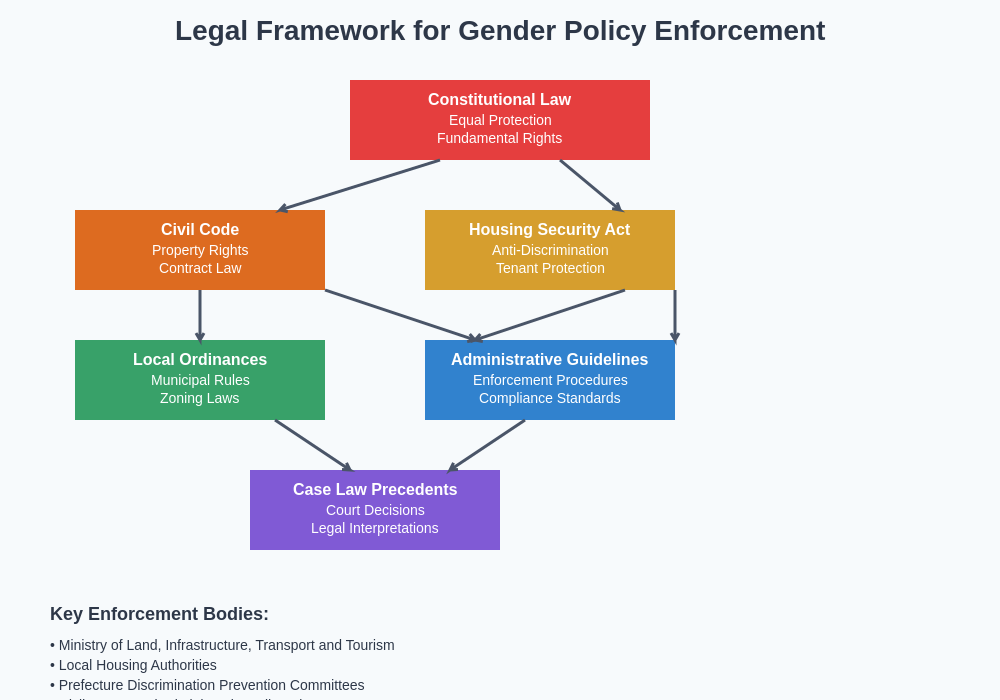
Japanese housing law provides the fundamental legal framework within which gender policies in sharehouses operate, establishing both the permissible boundaries for property owner discretion and the protective rights afforded to prospective tenants. The legal foundation draws from multiple sources including the Civil Code, Housing Security Act, and various anti-discrimination ordinances that have evolved to address modern housing arrangements and social equality concerns.
The distinction between legitimate business practices and discriminatory housing policies centers on the concept of “reasonable business justification” under Japanese law, which allows property owners to implement certain gender-specific policies when they can demonstrate legitimate operational, safety, or community welfare reasons. Understanding why gender-specific sharehouses have different rules provides context for how these justifications are typically applied in practice.
Constitutional principles of equality under Japanese law create tension with property owner rights, requiring courts and regulatory agencies to balance individual property rights against broader social policies promoting equal access to housing opportunities. This balance manifests differently across various types of shared housing arrangements, with different legal standards applying to commercial sharehouses versus informal room-sharing arrangements.
Legal precedents established through court cases and administrative rulings continue to refine the boundaries of acceptable gender-based housing policies, creating an evolving landscape where property managers must carefully navigate between traditional practices and modern legal requirements. The enforcement of these policies often involves multiple stakeholder interactions including local housing authorities, anti-discrimination agencies, and civil rights organizations.
Regulatory Bodies and Enforcement Mechanisms
Multiple government agencies and regulatory bodies participate in the enforcement of gender policies within Japanese sharehouses, each with distinct jurisdictions, enforcement powers, and procedural requirements that collectively create a comprehensive oversight system. The Ministry of Land, Infrastructure, Transport and Tourism serves as the primary federal authority overseeing housing policy implementation, while local municipalities maintain significant autonomy in interpreting and enforcing specific regulations.
Local housing authorities typically handle initial complaints and investigations related to potentially discriminatory housing practices, with enforcement powers ranging from informal mediation services to formal administrative sanctions. Learning about Japanese sharehouse rules every foreigner should know helps residents understand their rights and the proper channels for addressing potential policy violations.
Prefecture-level discrimination prevention committees often serve as appellate bodies for housing discrimination cases, providing specialized expertise in evaluating complex cases where gender policies may conflict with anti-discrimination principles. These committees typically include legal experts, housing industry representatives, and civil rights advocates who collaborate to develop consistent enforcement standards across different jurisdictions.
The integration of enforcement mechanisms across different government levels requires coordination between various agencies, often leading to complex procedural requirements for both complainants seeking redress and property owners defending their policies. Understanding these multi-layered enforcement structures becomes essential for anyone navigating potential disputes or seeking clarification about policy compliance requirements.
Legal Standards for Gender-Specific Housing
Japanese law establishes specific criteria that property owners must meet to legally implement gender-specific housing policies, with courts and administrative bodies applying increasingly sophisticated analysis to distinguish between legitimate business practices and unlawful discrimination. The legal standards focus on demonstrating genuine business necessity, proportionality of restrictions, and availability of alternative housing options for affected individuals.
The concept of “business necessity” requires property owners to provide concrete evidence that gender-specific policies serve legitimate operational purposes such as ensuring resident safety, maintaining community harmony, or addressing specific facility limitations that create genuine gender-based concerns. Courts examine whether proposed gender restrictions represent the least restrictive means of achieving these legitimate business objectives.
Proportionality analysis examines whether gender-specific policies impose excessive burdens on excluded individuals relative to the claimed business benefits, with particular scrutiny applied to blanket gender exclusions that fail to consider individual circumstances or alternative accommodation options. Exploring how male-only houses develop different social dynamics illustrates some justifications commonly offered for gender-specific arrangements.
Legal standards continue evolving through case law development, with recent decisions showing increased scrutiny of traditional gender-based housing policies and greater emphasis on individual assessment rather than categorical exclusions. Property owners must regularly review their policies against current legal standards to ensure continued compliance with evolving anti-discrimination requirements.
Enforcement Procedures and Complaint Processes
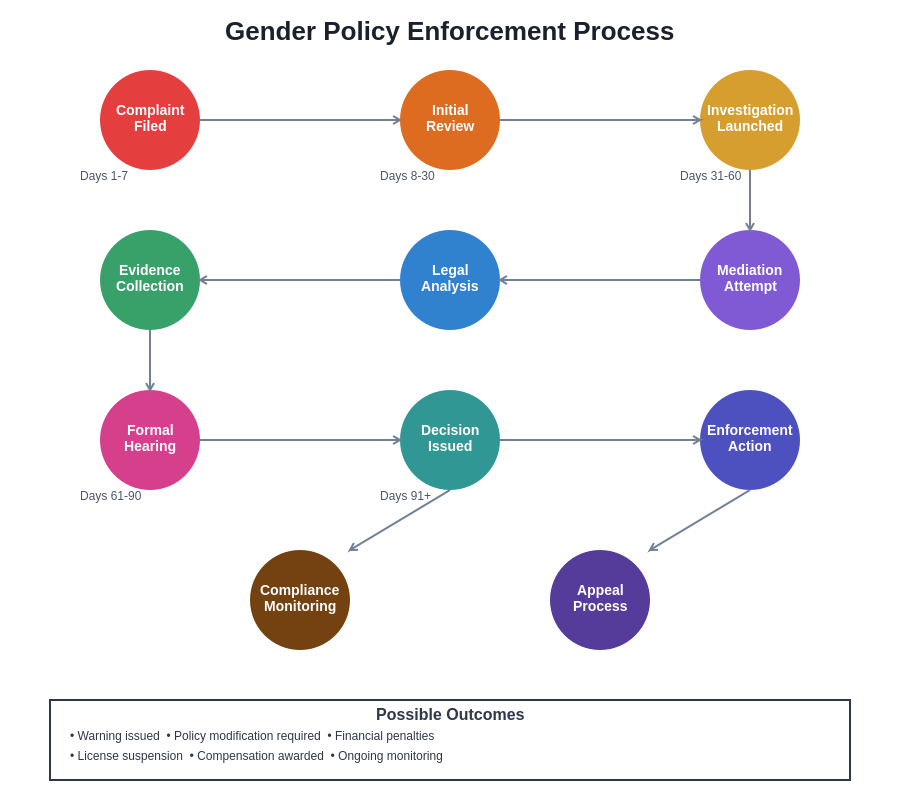
The procedural framework for enforcing gender policy compliance involves multiple pathways for addressing potential violations, ranging from informal mediation services to formal legal proceedings that can result in significant financial penalties and operational restrictions for non-compliant property owners. Understanding these procedures helps both residents and property managers navigate the enforcement system effectively.
Initial complaint procedures typically begin with local housing authority intake processes, where trained investigators gather information about alleged policy violations and attempt to resolve disputes through voluntary compliance measures. Residents seeking guidance on dating while living in Tokyo sharehouses may encounter gender policy issues that require formal complaint resolution.
Formal investigation procedures involve comprehensive review of property policies, resident selection criteria, and documented decision-making processes to determine whether gender-based housing practices comply with applicable legal standards. Investigators examine written policies, interview relevant parties, and review historical data to assess patterns of potentially discriminatory behavior.
Administrative enforcement actions can include mandatory policy modifications, financial penalties, ongoing compliance monitoring, and in severe cases, suspension of operating licenses for properties found to be systematically violating anti-discrimination requirements. The escalation process provides multiple opportunities for voluntary compliance before imposing the most severe sanctions.
Rights and Protections for Prospective Residents
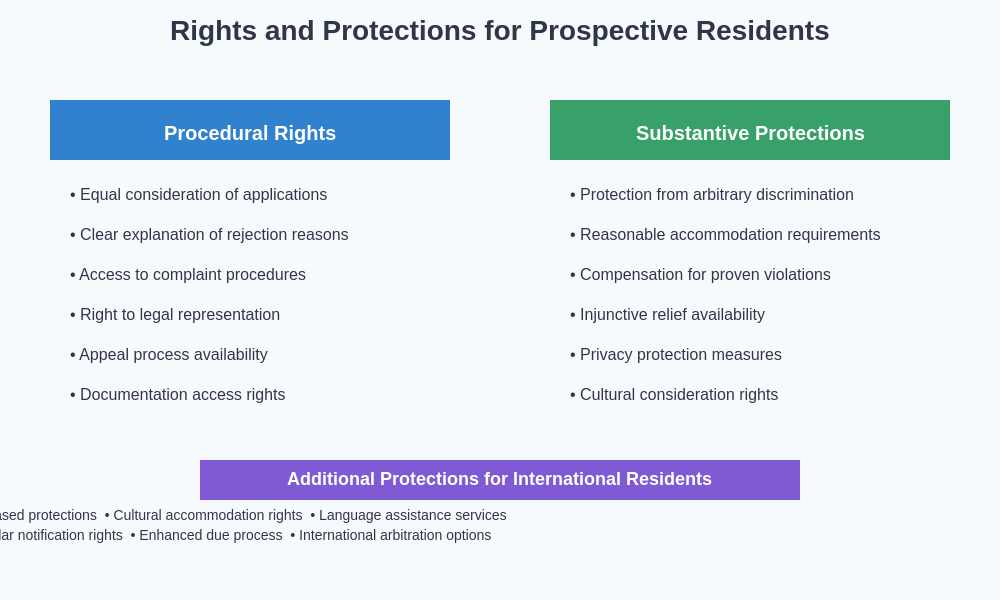
Japanese law provides specific protections for individuals who may be affected by gender-based housing policies, establishing both procedural rights during the application process and substantive protections against unlawful discrimination. These rights create important safeguards while acknowledging legitimate property owner interests in maintaining certain types of gender-specific housing arrangements.
The right to equal consideration requires property owners to evaluate applications based on legitimate housing-related criteria rather than categorical gender-based exclusions, with applicants entitled to explanations of specific reasons for rejection when gender appears to be a determining factor. Transparency requirements mandate clear disclosure of any gender-specific policies before prospective residents invest time and resources in application processes.
Due process protections ensure that individuals subjected to gender-based housing decisions receive fair treatment throughout application and complaint resolution procedures, including rights to present relevant information, challenge adverse decisions, and appeal through appropriate administrative channels. Understanding what documents you need for Tokyo sharehouse applications helps ensure proper procedural compliance.
Legal remedy options for individuals experiencing unlawful gender-based discrimination include compensation for damages, injunctive relief requiring policy modifications, and in some cases, mandatory accommodation in previously restricted housing arrangements. The availability and scope of remedies depend on specific circumstances and the nature of proven violations.
Documentation and Compliance Requirements
Property owners implementing gender-specific policies must maintain comprehensive documentation demonstrating compliance with legal requirements, including written justifications for any gender-based restrictions and evidence supporting claimed business necessities. Documentation requirements serve both compliance monitoring purposes and provide essential evidence in potential enforcement proceedings.
Policy documentation must clearly articulate the specific business justifications for any gender-based housing restrictions, supported by objective evidence such as facility design limitations, documented safety concerns, or demonstrated community welfare needs that create legitimate gender-related considerations. Analyzing how age restrictions exist in some sharehouses shows similar documentation requirements for other demographic policies.
Application and selection documentation requires detailed records of decision-making processes, including specific criteria used for resident selection and documented reasons for any applications rejected on gender-related grounds. This documentation must demonstrate consistent application of stated policies and absence of arbitrary or discriminatory decision-making.
Ongoing compliance monitoring involves regular review of policies and practices to ensure continued alignment with evolving legal standards, including periodic training for staff involved in resident selection and documented procedures for handling gender-policy-related inquiries and complaints.
Penalties and Sanctions for Violations
The penalty structure for violations of gender policy requirements includes both administrative sanctions imposed by regulatory agencies and civil liability arising from successful discrimination claims by affected individuals. Understanding potential penalties helps property owners assess compliance risks and motivates proactive adherence to legal requirements.
Administrative penalties can range from formal warnings and mandatory corrective actions to significant financial fines and suspension of operating licenses for properties with severe or repeated violations. The severity of sanctions typically corresponds to the egregious nature of violations and the property owner’s cooperation with enforcement efforts.
Civil liability exposure includes compensation for damages suffered by individuals subjected to unlawful gender-based discrimination, including economic losses from housing search costs, emotional distress damages, and in some cases, punitive damages designed to deter future violations. Learning about how to spot financial red flags in sharehouse contracts includes understanding potential liability issues.
Reputational consequences often extend beyond formal legal penalties, with discrimination findings affecting property owner credibility, tenant recruitment capabilities, and relationships with regulatory agencies overseeing ongoing operations. These informal consequences can create long-term business impacts that exceed immediate financial penalties.
International Residents and Special Protections
Foreign residents in Japan receive specific protections under both domestic anti-discrimination law and international treaty obligations that Japan has undertaken, creating additional layers of legal protection for international residents who may face combined nationality and gender-based discrimination in housing arrangements.
The intersection of nationality and gender discrimination creates particularly complex legal issues, as property owners cannot use foreign nationality as a pretext for implementing more restrictive gender policies, nor can they apply gender policies more strictly to international applicants than to Japanese residents. English-speaking sharehouses in Tokyo for foreigners often navigate these intersectional discrimination issues.
Treaty obligations under international human rights agreements create additional compliance requirements for Japanese authorities in ensuring equal treatment of foreign residents, including obligations to investigate and remedy discrimination complaints involving international residents seeking housing accommodation.
Cultural accommodation requirements balance respect for diverse cultural backgrounds with uniform application of anti-discrimination principles, ensuring that gender policy enforcement considers legitimate cultural concerns while maintaining consistent legal standards for all residents regardless of nationality or cultural background.
Recent Legal Developments and Trends
Contemporary legal developments in gender policy enforcement reflect evolving social attitudes toward gender equality, changing demographics in shared housing arrangements, and increased awareness of discrimination issues affecting both Japanese and international residents. Recent court decisions and regulatory changes indicate growing scrutiny of traditional gender-based housing practices.
Emerging legal precedents show courts applying more stringent analysis to claimed business justifications for gender-specific policies, with increased emphasis on demonstrating genuine necessity rather than relying on traditional practices or speculative concerns about gender integration in shared housing environments.
Legislative initiatives at both national and local levels aim to strengthen anti-discrimination protections while preserving legitimate property owner interests, including proposals for enhanced complaint resolution procedures and expanded enforcement authority for housing discrimination cases. Understanding how LGBTQ-friendly policies matter beyond acceptance reflects these evolving legal frameworks.
Technological developments in housing platforms and application processes create new enforcement challenges and opportunities, requiring legal frameworks to adapt to digital discrimination issues and ensuring that online housing platforms comply with the same anti-discrimination standards applied to traditional rental arrangements.
Practical Implications for Property Managers
Property managers operating sharehouses with gender-specific policies must navigate complex compliance requirements while maintaining viable business operations, requiring sophisticated understanding of legal boundaries and proactive risk management strategies. Successful compliance involves both understanding current legal requirements and anticipating future regulatory developments.
Risk assessment procedures should regularly evaluate existing gender policies against current legal standards, identifying potential vulnerability areas and implementing corrective measures before enforcement actions become necessary. Professional legal consultation becomes essential for properties with complex gender policy arrangements or those serving diverse international populations.
Staff training requirements ensure that employees involved in resident selection and policy enforcement understand legal boundaries and proper procedures for handling gender-policy-related situations. Training helps prevent situations like those described in how to handle roommate conflicts without moving out from escalating to legal issues.
Documentation systems must capture all relevant information needed to demonstrate compliance with legal requirements while protecting resident privacy and maintaining efficient operational procedures. Effective systems balance comprehensive record-keeping with practical business needs and regulatory compliance requirements.
Future Outlook and Policy Evolution
The future trajectory of gender policy enforcement in Japanese sharehouses will likely reflect broader social changes regarding gender equality, evolving international best practices in anti-discrimination law, and continued integration of Japan’s housing market with global standards for equal treatment in accommodation services.
Anticipated regulatory developments include potential strengthening of anti-discrimination enforcement mechanisms, expanded protected categories beyond traditional gender classifications, and enhanced coordination between different government agencies responsible for housing discrimination oversight. These changes will require ongoing adaptation of property management practices and compliance systems.
International influence from global anti-discrimination trends and Japan’s participation in international housing rights initiatives may drive additional legal reforms aimed at harmonizing Japanese housing discrimination law with international standards while respecting legitimate cultural and business considerations.
The evolving landscape of gender policy enforcement reflects Japan’s ongoing efforts to balance traditional housing practices with modern equality principles, creating opportunities for more inclusive housing arrangements while maintaining viable business models for property owners committed to legal compliance and social responsibility.
Understanding how gender policies are legally enforced in Japanese sharehouses provides essential knowledge for navigating this complex regulatory environment, ensuring compliance with legal requirements, and protecting the rights of all residents regardless of gender identity or background. The continued evolution of these legal frameworks reflects broader social progress toward more inclusive and equitable housing opportunities for all members of Japanese society.
Disclaimer
This article is for informational purposes only and does not constitute legal advice. Gender policy enforcement and housing discrimination law are complex areas subject to frequent changes and varying interpretations. Readers should consult qualified legal professionals for advice regarding specific situations involving gender policies in sharehouses. The effectiveness of enforcement mechanisms may vary depending on jurisdiction, specific circumstances, and individual case factors.