
Gift shopping for housemates in Japanese sharehouses transforms what should be a simple gesture of appreciation into a complex social navigation exercise that combines cultural sensitivity, financial considerations, and interpersonal dynamics. The seemingly straightforward act of selecting presents becomes laden with unspoken expectations, cultural protocols, and the potential for misunderstandings that can significantly impact house harmony and personal relationships within the shared living environment.
The stress associated with gift shopping for housemates extends far beyond typical present-giving scenarios, as residents must navigate Japanese gift-giving customs while balancing diverse cultural backgrounds, varying financial situations, and different relationship depths among house members. Understanding these complexities becomes essential for maintaining positive relationships and avoiding inadvertent social missteps that can create lasting tension within the sharehouse community.
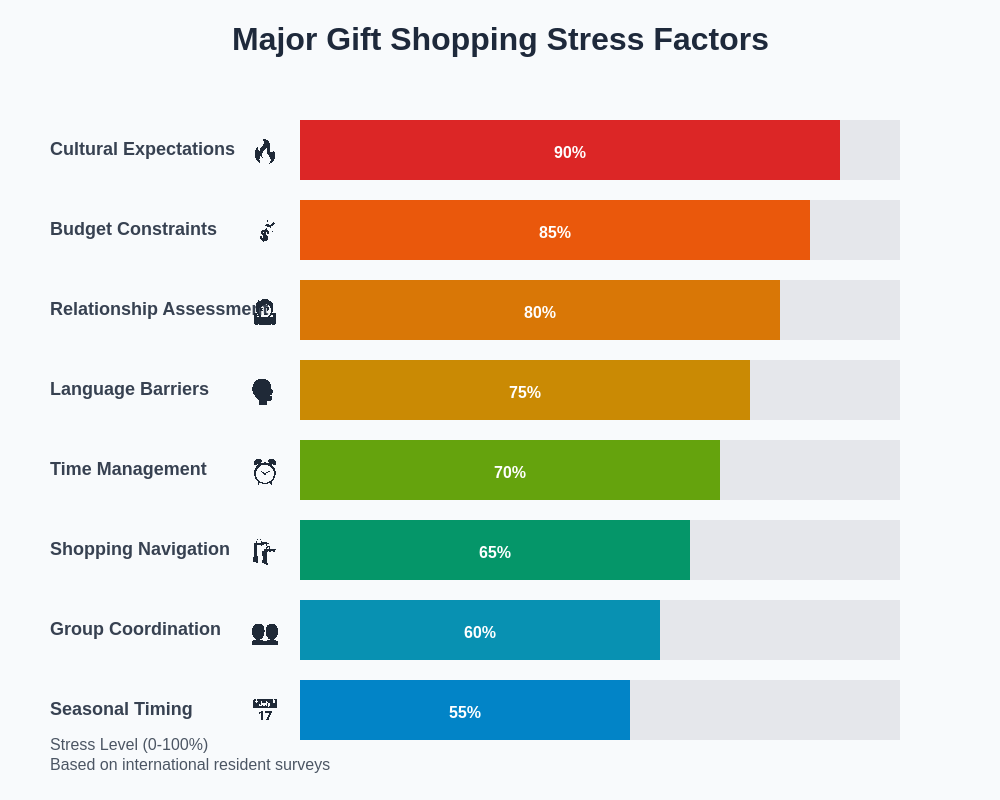
Cultural Expectations and Japanese Gift-Giving Protocols
Japanese gift-giving culture operates under intricate social rules that govern everything from appropriate occasions to proper presentation methods, creating a framework that can overwhelm international residents unfamiliar with these deeply ingrained customs. The concept of reciprocity in Japanese society means that every gift creates an implicit obligation for future exchanges, establishing ongoing social debts that must be carefully managed to maintain harmonious relationships.
Gift giving customs create awkwardness among international residents who struggle to understand when gifts are expected versus appreciated, leading to situations where well-intentioned gestures either fall short of expectations or exceed appropriate boundaries. The seasonal nature of Japanese gift-giving, including oseibo year-end gifts and ochugen mid-year presents, adds temporal complexity that requires advance planning and cultural awareness.
The presentation aspect of Japanese gift-giving carries equal importance to the actual present, with elaborate wrapping, proper bow placement, and ceremonial exchange protocols that can intimidate foreigners accustomed to more casual gift-giving approaches. Department store wrapping services, while solving presentation concerns, add costs and time requirements that compound the already complex decision-making process surrounding appropriate gift selection.
Understanding the distinction between obligation gifts and spontaneous appreciation presents becomes crucial for navigating sharehouse relationships without creating unintended social pressures or mismatched expectations among residents from different cultural backgrounds.
Budget Constraints and Financial Pressure
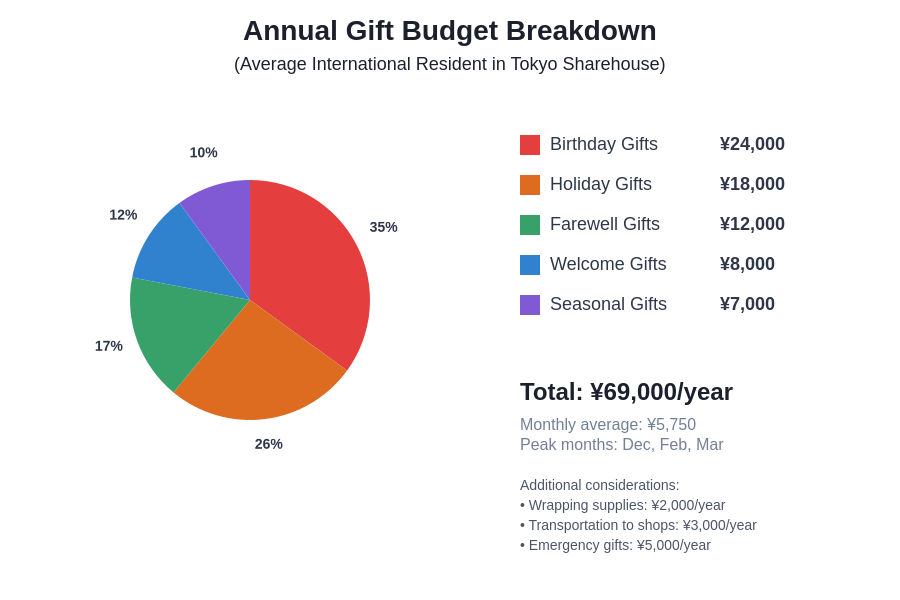
The financial aspect of regular gift-giving within sharehouses creates ongoing budget pressure that many international residents struggle to accommodate alongside existing living expenses and entertainment costs. Living costs in Tokyo sharehouses explained typically focus on rent and utilities but rarely account for the social costs associated with maintaining positive housemate relationships through appropriate gift exchanges.
Birthday celebrations, holiday observances, farewell parties, and cultural festivals throughout the year create multiple gift-giving occasions that can strain budgets already stretched by Tokyo’s high cost of living. The expectation for quality presents, particularly when Japanese cultural standards emphasize thoughtful selection over monetary value, requires time investment for research and shopping that busy international residents often struggle to prioritize.
Group gift coordination attempts to manage individual costs but introduce organizational complexity and potential conflicts when residents have different financial capabilities or cultural attitudes toward collective versus individual gift-giving approaches. The challenge of maintaining contribution equity while respecting varying economic situations requires diplomatic handling that many houses struggle to achieve effectively.
How to budget realistically for sharehouse living becomes more complex when incorporating these social expenses that directly impact community harmony and personal relationships within the shared living environment.
Relationship Depth Assessment and Gift Appropriateness
Determining appropriate gift levels requires careful assessment of relationship depth with each housemate, creating anxiety around over-giving or under-giving that could signal incorrect relationship interpretations or cultural misunderstandings. The spectrum from casual acquaintance to close friend encompasses numerous intermediate relationship levels that each demand different gift-giving approaches and investment levels.
New residents face particular challenges in gauging established relationship dynamics and gift-giving precedents within houses where existing residents have developed unspoken protocols and expectation levels. Making friends through Tokyo sharehouse communities involves understanding these subtle social hierarchies and gift-giving patterns that signal relationship status and community integration levels.
The international nature of most sharehouses creates additional complexity as residents from different cultural backgrounds bring varying gift-giving traditions and expectation levels that must be reconciled within the shared living environment. Some cultures emphasize expensive presents while others focus on handmade items or practical gifts, creating potential for mismatched gestures and misinterpreted intentions.
Professional relationships versus personal friendships require different gift-giving approaches, particularly challenging for residents who share houses with work colleagues or study partners where multiple relationship contexts intersect within the same living environment.
Seasonal and Occasion-Based Complications
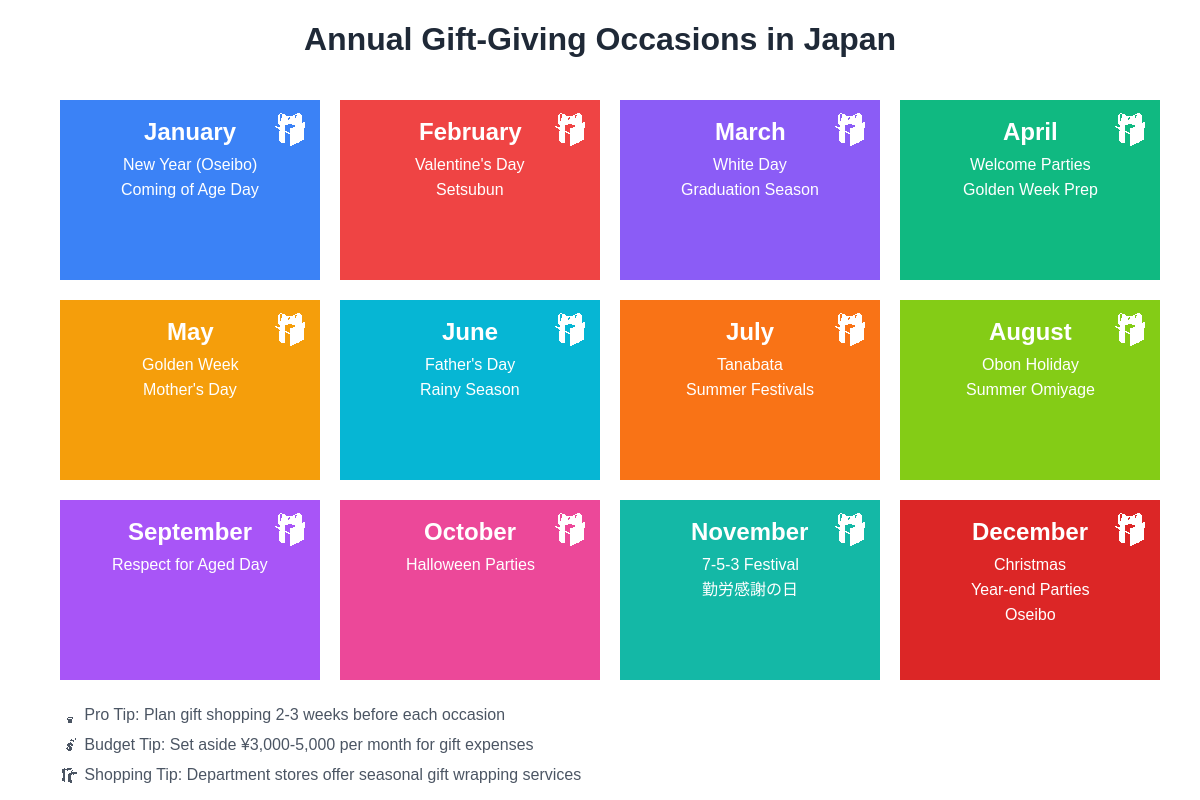
The Japanese calendar includes numerous gift-giving occasions that international residents must learn to navigate, from traditional holidays like New Year and Golden Week to personal celebrations like birthdays and farewell parties. New Year celebrations create noise conflicts while also establishing gift-giving expectations that residents must prepare for in advance.
Valentine’s Day in Japan involves complex gift-giving protocols including obligation chocolate for male colleagues and friends versus romantic chocolate for partners, creating confusion for international women unfamiliar with these distinctions. White Day response gifts add another layer of reciprocal obligation that requires advance planning and cultural understanding to navigate appropriately.
Seasonal transitions bring omiyage souvenir expectations when residents travel, creating ongoing gift-giving obligations tied to personal activities and travel plans. Holiday seasons increase homesickness while simultaneously demanding participation in local gift-giving customs that may conflict with personal cultural traditions or financial constraints.
House-specific celebrations like welcome parties for new residents, farewell gatherings for departing members, and achievement celebrations for academic or professional milestones create additional gift-giving occasions that require community participation and financial contribution.
Cross-Cultural Misunderstandings and Communication Barriers
Language barriers complicate gift shopping as international residents struggle to communicate preferences, understand product descriptions, or navigate customer service interactions in Japanese retail environments. Department store etiquette, gift registries, and seasonal shopping practices require cultural knowledge that extends beyond basic language skills.
Different cultural attitudes toward gift receiving create potential for awkward situations when recipients respond differently than givers expect, leading to misinterpretations about appreciation levels or relationship status. Cultural differences affect friendship building through these misaligned gift-giving expectations and response patterns.
Religious and dietary restrictions add complexity to gift selection, particularly for consumable presents like food items or alcohol that may be inappropriate for certain residents. Understanding these restrictions requires ongoing communication and cultural sensitivity that many residents struggle to maintain consistently.
The concept of face-saving in Japanese culture means that inappropriate gifts can create lasting embarrassment for both giver and recipient, making gift selection a high-stakes activity with potential for significant social consequences within the shared living environment.
Shopping Logistics and Time Management
Tokyo’s complex retail landscape requires cultural navigation skills that international residents often lack, from understanding department store hierarchies to finding appropriate gift sections and communicating with sales staff. Convenience store proximity affects daily costs but convenience stores typically offer limited gift options that may not meet cultural expectations for thoughtful present selection.
Peak shopping seasons create crowded conditions and limited inventory that require advance planning and flexible scheduling to navigate successfully. The time investment required for proper gift shopping, including research, travel, selection, and wrapping, often conflicts with work and study schedules that international residents struggle to balance.
Online shopping options provide convenience but eliminate the personal touch and presentation aspects that Japanese gift-giving culture emphasizes, creating trade-offs between practical efficiency and cultural appropriateness. Delivery timing coordination becomes complex in sharehouses where packages may be received by different residents.
Package deliveries complicate business operations in sharehouses while gift deliveries add scheduling complexity and privacy concerns when surprise elements are involved.
Gender and Age-Based Expectations
Japanese gift-giving culture includes gender-specific expectations that can confuse international residents unfamiliar with these social protocols, particularly regarding appropriate gift types and presentation methods between male and female housemates. Age hierarchy considerations add another layer of complexity as gifts for senior residents may require different approaches than those for peers or younger housemates.
Female residents often face higher gift-giving expectations and more frequent obligation situations, creating disproportionate financial and time pressures compared to male housemates. Gender policies are legally enforced in some contexts but social expectations around gift-giving remain largely unregulated and culturally driven.
Intergenerational sharehouses where significant age differences exist among residents require careful navigation of gift-giving protocols that respect age-based hierarchies while maintaining peer-level friendships. Age differences impact sharehouse compatibility through these complex social dynamics and expectation levels.
Professional versus personal gift-giving boundaries become particularly complex when age and gender differences intersect with work relationships or academic hierarchies within the same sharehouse environment.
Group Coordination and Collective Decision Making
Organizing group gifts requires consensus-building skills and diplomatic coordination that many international residents struggle to manage effectively, particularly when cultural backgrounds create different approaches to collective decision-making and financial contribution. Communication gaps and cultural misunderstandings can derail group gift planning and create tensions around participation levels and contribution equity.
Group buying power reduces individual costs in theory but coordinating group gifts often creates more complexity and stress than individual gift-giving approaches. Scheduling coordination for group shopping trips or collective wrapping sessions requires time management skills that busy residents often cannot accommodate.
Leadership dynamics emerge around gift coordination roles, creating potential for conflicts when residents have different organizational styles or cultural expectations about leadership responsibilities. The volunteer coordination required for successful group gifts often falls disproportionately on specific residents, creating ongoing relationship tensions.
Default participation assumptions versus explicit opt-in approaches create confusion and potential for misunderstandings when residents have different expectations about group gift involvement and contribution levels.
Seasonal Shopping Challenges and Retail Navigation
Peak shopping seasons in Japan create crowded retail environments that can overwhelm international residents unfamiliar with local shopping customs and crowd navigation techniques. Department store protocols, escalator etiquette, and customer service interactions require cultural knowledge that extends beyond basic language skills.
Seasonal gift displays and promotional periods require understanding of Japanese retail calendar patterns to identify appropriate timing for different types of presents. Seasonal demand affects sharehouse prices while also influencing retail availability and pricing for gift items.
Regional shopping districts each offer different product selections and price ranges, requiring geographical knowledge and transportation planning that adds complexity to gift shopping logistics. Understanding which areas specialize in particular types of gifts or cultural items requires local knowledge that many international residents lack.
Tourist-focused retail areas may offer inflated prices or culturally inappropriate selections that seem suitable but fail to meet Japanese gift-giving standards, creating potential for embarrassment or social missteps within the sharehouse community.
Long-term Relationship Impact and Social Consequences
Gift-giving missteps can create lasting relationship damage within sharehouses where residents must continue living together despite social tensions or misunderstandings. The confined nature of shared living amplifies social consequences and makes recovery from gift-giving errors more challenging than in other social contexts.
Precedent-setting effects mean that initial gift-giving approaches establish ongoing expectations and obligation levels that residents must maintain throughout their sharehouse tenure. Building real friendships takes longer than expected partly due to these complex social navigation requirements and potential for cultural missteps.
Reputation development within sharehouse communities can be significantly influenced by gift-giving competence and cultural sensitivity, affecting social integration and relationship development opportunities. Some residents always feel like outsiders partly due to struggles with cultural protocols like appropriate gift-giving practices.
The cumulative stress of ongoing gift-giving obligations can contribute to cultural exhaustion and social withdrawal that ultimately undermines the community-building goals that initially motivated sharehouse living choices for many international residents.
Practical Strategies and Stress Management
Developing systematic approaches to gift-giving can reduce stress and cultural anxiety while ensuring appropriate social participation within sharehouse communities. Creating personal gift-giving budgets and guidelines helps manage financial pressure while maintaining social obligations and relationship investments.
Cultural mentorship from Japanese housemates or experienced international residents can provide valuable guidance for navigating gift-giving protocols and seasonal expectations. Cultural adaptation happens gradually through these learning experiences and relationship-building opportunities.
Advance planning for known gift-giving occasions reduces last-minute pressure and allows for thoughtful selection within appropriate budgets and timeframes. Maintaining gift inventory of appropriate items can streamline the selection process and reduce shopping stress during busy periods.
Communication strategies for discussing gift-giving expectations and budget constraints with housemates can reduce anxiety and create more inclusive approaches that accommodate diverse cultural backgrounds and financial situations within the sharehouse community.
The complexity of gift shopping for housemates in Japanese sharehouses reflects broader challenges of cross-cultural living and the intricate social protocols that govern successful community integration. Understanding these challenges while developing practical management strategies enables international residents to participate meaningfully in sharehouse social life without compromising their financial stability or emotional well-being through excessive stress and cultural anxiety.
Disclaimer
This article is for informational purposes only and reflects general experiences of international residents in Japanese sharehouses. Gift-giving customs and expectations may vary significantly between different sharehouses, regions, and cultural contexts. Readers should use their judgment and communicate directly with housemates about expectations and preferences. Individual experiences may differ based on personal circumstances, cultural background, and specific sharehouse dynamics.