Living in a Tokyo sharehouse fundamentally transforms the simple act of grocery shopping from a routine personal errand into a complex strategic exercise that requires careful planning, diplomatic negotiation, and sophisticated resource management. The transition from independent shopping decisions to collaborative household economics creates unprecedented challenges and opportunities that reshape how residents approach food procurement, storage, and consumption in ways that extend far beyond mere convenience considerations.
The strategic dimension of sharehouse grocery shopping emerges from the intersection of limited storage space, shared resources, cultural dietary differences, and the economic advantages of collective purchasing power. Understanding these dynamics becomes essential for maximizing both financial efficiency and social harmony while navigating the complex landscape of shared living arrangements in one of the world’s most expensive cities.
The Economics of Collective Purchasing Power
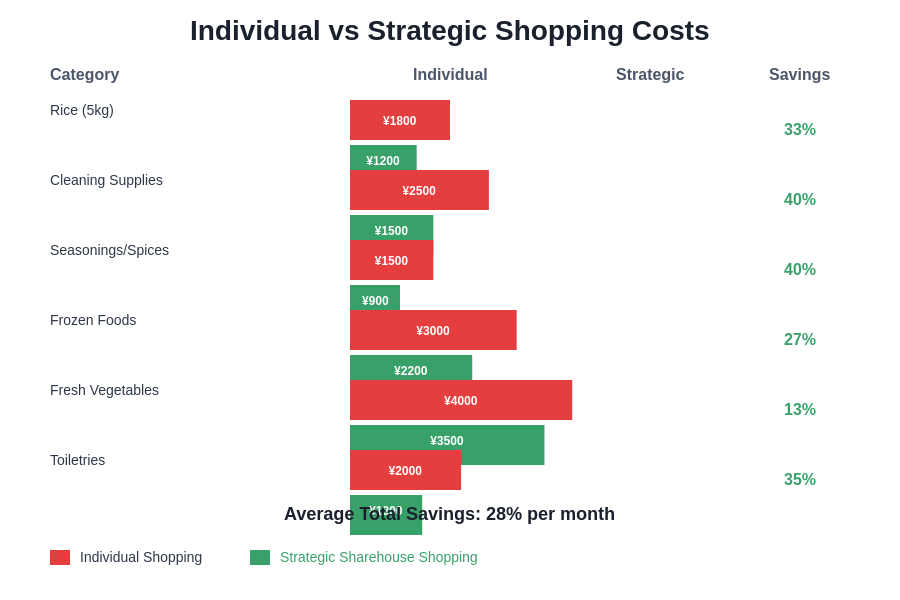
The fundamental shift from individual to group purchasing power represents one of the most significant advantages of strategic sharehouse grocery shopping, enabling residents to access bulk pricing, premium products, and wholesale opportunities that would be financially prohibitive for individual consumers. Group buying power reduces individual costs through economies of scale that can result in savings of twenty to forty percent on regular household expenses when properly coordinated and executed.
Bulk purchasing strategies require sophisticated coordination mechanisms that account for storage limitations, consumption patterns, and product shelf life considerations that vary significantly between different types of food items and household products. Rice, cleaning supplies, and non-perishable staples offer the greatest potential for cost savings through bulk purchasing, while fresh produce and dairy products require more careful coordination to prevent waste and ensure equitable distribution among participating residents.
The development of purchasing consortiums within sharehouse communities creates opportunities for accessing wholesale suppliers, farmer’s markets, and specialty distributors that typically require minimum order quantities beyond individual household needs. These collaborative arrangements often extend beyond simple cost savings to include access to premium organic products, international specialty foods, and seasonal items that enhance the overall quality of life for participating residents.
Seasonal purchasing strategies become particularly important in Japan, where dramatic price fluctuations for certain products create opportunities for significant savings through strategic timing and storage planning. Understanding seasonal availability patterns, traditional purchasing cycles, and cultural food preferences enables sharehouse communities to optimize their collective purchasing power while respecting individual dietary requirements and cultural sensitivities.
Navigating Storage Space Constraints and Optimization
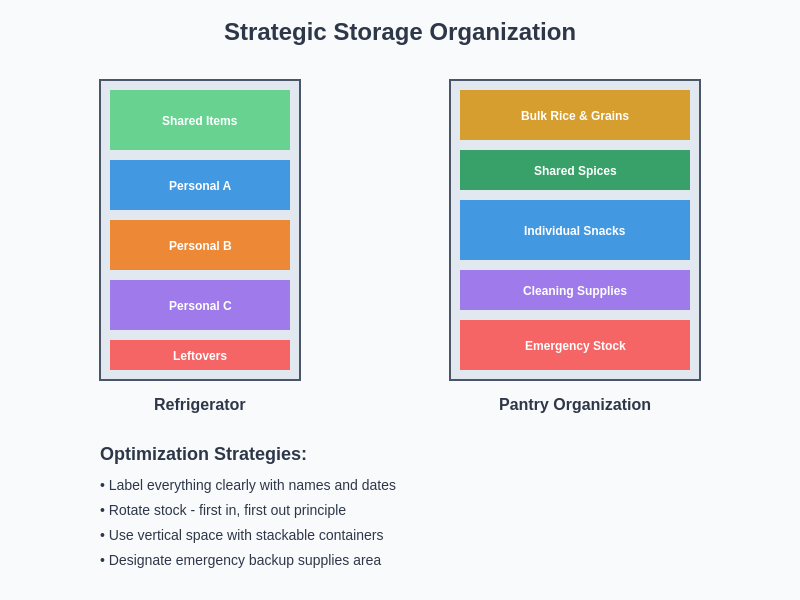
Limited storage space in typical Tokyo sharehouses creates complex logistical challenges that require innovative solutions and careful coordination to maximize utility while minimizing conflicts over precious refrigerator and pantry real estate. Limited storage forces minimalist living through systematic organization approaches that prioritize efficiency, accessibility, and fair distribution of available space among multiple residents with diverse storage needs.
Refrigerator space allocation becomes a daily negotiation process that requires clear protocols, labeling systems, and rotation schedules to ensure equitable access while preventing food spoilage and territorial disputes. The development of systematic storage solutions often includes designated areas for individual items, shared community supplies, and temporary storage for bulk purchases that require distribution among multiple residents over time.
Pantry organization strategies must accommodate diverse dietary requirements, cultural food preferences, and cooking styles while maximizing space efficiency and preventing pest problems that can arise from improper storage of international food products. The implementation of standardized storage containers, clear labeling systems, and regular cleaning schedules becomes essential for maintaining hygiene standards and preventing conflicts over storage space usage.
Creative storage solutions often emerge from the constraints of shared living, including the use of under-bed storage containers for non-perishable items, personal mini-refrigerators for special dietary needs, and vertical storage systems that maximize the utility of limited cabinet space. These innovations require coordination and agreement among residents to ensure compatibility with house rules and fire safety regulations.
Cultural Dietary Differences and Accommodation Strategies
The intersection of diverse cultural backgrounds in international sharehouses creates complex challenges for grocery planning that extend far beyond simple food preferences to encompass religious restrictions, health considerations, and deeply ingrained cultural practices that affect shopping, preparation, and consumption patterns. Cultural differences impact holiday celebrations through specialized ingredient requirements, seasonal purchasing patterns, and communal cooking traditions that require advance planning and coordination.
Dietary restriction accommodation requires sophisticated planning systems that account for allergies, religious requirements, vegan and vegetarian preferences, and medical dietary needs while maintaining cost efficiency and storage organization. The development of shared shopping lists that accommodate multiple dietary requirements often involves complex categorization systems, alternative product research, and coordination with specialty suppliers that carry international ingredients.
Cross-cultural cooking experiences create opportunities for residents to share traditional recipes, cooking techniques, and cultural food traditions while requiring coordination of specialized ingredients, cooking equipment, and preparation schedules. Traditional cooking methods clash when different cultural approaches to food preparation compete for limited kitchen resources and create conflicts over cooking odors, preparation times, and cleanup responsibilities.
The development of cultural food sharing programs within sharehouse communities can transform dietary differences from sources of conflict into opportunities for cultural exchange, education, and community building. These programs often include organized cooking nights, recipe exchanges, and collaborative meal planning that celebrates diversity while managing practical logistics and cost considerations.
Coordination Mechanisms and Communication Systems
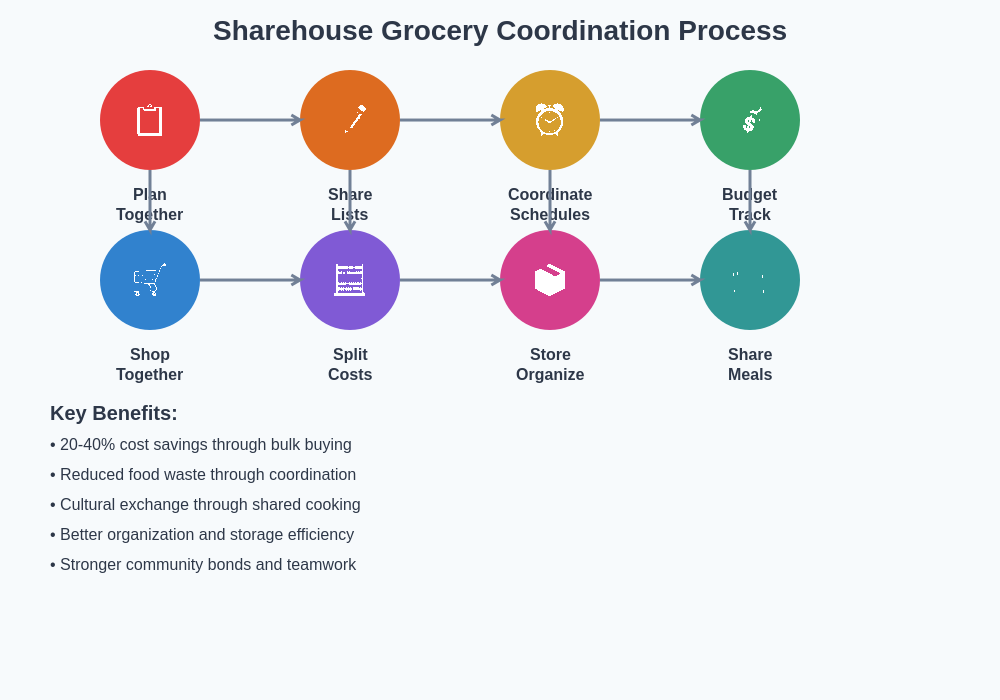
Effective grocery shopping coordination requires sophisticated communication systems that accommodate different schedules, preferences, and technological comfort levels while ensuring transparency, accountability, and fair distribution of responsibilities among all participating residents. Shared shopping lists become complicated through the intersection of individual needs, collective efficiency, and real-time coordination challenges that require robust technological and organizational solutions.
Digital coordination platforms and mobile applications often emerge as essential tools for managing shared shopping lists, tracking expenses, coordinating schedules, and maintaining accountability for purchasing responsibilities. These systems must accommodate residents with varying levels of technological sophistication while providing transparent access to shopping plans, expense tracking, and responsibility distribution.
Shopping schedule coordination becomes increasingly complex as sharehouse communities grow in size and diversity, requiring systematic approaches to prevent duplication, ensure coverage of essential items, and accommodate individual scheduling constraints and preferences. The development of rotation systems, backup arrangements, and emergency procurement protocols helps maintain household supply continuity while distributing responsibilities fairly among all residents.
Communication protocols for grocery shopping often extend beyond simple list management to include price comparison responsibilities, quality assessment criteria, and decision-making processes for handling unexpected situations such as product unavailability, price changes, or special promotional opportunities that require immediate group consultation and approval.
Quality Assessment and Product Selection Strategies
Strategic grocery shopping in sharehouses requires sophisticated quality assessment capabilities that account for diverse quality standards, cultural preferences, and value optimization across multiple product categories while maintaining consistency with established household budgets and consumption patterns. Expensive taste creates budget conflicts when residents have significantly different quality expectations, brand preferences, and willingness to pay premium prices for specific products or characteristics.
Product selection criteria must balance individual preferences with collective value optimization, requiring systematic approaches to evaluating quality, price, and utility across diverse product categories from basic staples to specialty items. The development of standardized quality assessment protocols helps ensure consistency in purchasing decisions while accommodating individual preferences within reasonable cost parameters.
Brand preference negotiation becomes necessary when residents have strong preferences for specific brands, organic products, or premium quality items that exceed established budget parameters. These situations require diplomatic solutions that may include individual supplemental payments, alternative product selections, or rotation systems that accommodate premium preferences on a periodic basis.
Seasonal quality considerations become particularly important in Japan, where product quality, availability, and pricing fluctuate dramatically based on seasonal factors, cultural events, and agricultural cycles. Understanding these patterns enables sharehouse communities to optimize their purchasing timing while taking advantage of peak quality periods and seasonal promotional opportunities.
Budget Management and Expense Allocation Systems
Sophisticated budget management systems become essential for coordinating sharehouse grocery expenses while maintaining transparency, accountability, and fair distribution of costs among residents with varying consumption patterns, dietary requirements, and financial capabilities. Shared expense apps create new problems through technical complications, user adoption challenges, and disputes over expense categorization and allocation methodologies.
Expense tracking mechanisms must accommodate diverse purchasing patterns, individual dietary contributions, and fluctuating participation levels while maintaining accurate records for settlement purposes and budget planning. The implementation of digital expense tracking systems often requires training, standardization, and ongoing maintenance to ensure accuracy and prevent disputes over financial responsibilities.
Cost allocation strategies must address the fundamental challenge of fairly distributing expenses among residents who consume different quantities and types of products while maintaining simplicity and transparency in accounting methods. Common approaches include equal division systems, consumption-based allocation, and hybrid models that combine fixed contributions with variable adjustments based on actual usage patterns.
Budget optimization strategies often emerge from the collective intelligence of sharehouse communities, including seasonal purchasing plans, bulk buying cooperatives, and strategic timing of major purchases to take advantage of promotional cycles and seasonal pricing patterns. These collaborative approaches can result in significant cost savings while improving the overall quality and variety of available household supplies.
Time Optimization and Schedule Coordination
Efficient time management for grocery shopping requires sophisticated coordination of individual schedules, transportation logistics, and store selection strategies that minimize travel time and maximize purchasing efficiency for all participating residents. Commute times impact work performance through the additional time burden of coordinating household shopping responsibilities with work schedules, social commitments, and personal time management priorities.
Shopping frequency optimization becomes crucial for balancing the efficiency of bulk purchasing with storage limitations and product freshness requirements. Weekly shopping cycles often provide optimal balance between cost efficiency and logistical complexity, though specific circumstances may require more frequent trips for fresh products or less frequent trips for non-perishable staples.
Transportation coordination strategies must account for the carrying capacity of different transportation methods, the logistics of bulk purchases, and the geographic distribution of optimal shopping destinations. Delivery services replace personal transportation through online ordering systems that can reduce coordination complexity while potentially increasing costs and reducing quality control opportunities.
Shopping route optimization requires strategic planning of store visits, product availability research, and coordination with other household errands to maximize efficiency while minimizing travel time and transportation costs. The development of systematic shopping routes and backup plans helps ensure consistent supply procurement while accommodating schedule changes and unexpected availability issues.
Technology Integration and Digital Solutions
Modern sharehouse grocery coordination increasingly relies on digital platforms and technological solutions that streamline communication, automate routine tasks, and provide transparency in expense tracking and responsibility distribution. Shared streaming accounts work in practice through similar coordination mechanisms that can be adapted for grocery shopping management, including shared accounts, access controls, and usage tracking systems.
Mobile application integration enables real-time coordination of shopping lists, price comparisons, and availability checking while residents are actively shopping, reducing the likelihood of purchasing errors and enabling dynamic adjustment of shopping plans based on current conditions and promotional opportunities. These systems require standardization of platforms and training to ensure effective adoption by all participating residents.
Automated ordering systems for routine staple items can reduce coordination complexity while ensuring consistent availability of essential household supplies. These systems require careful setup, monitoring, and periodic adjustment to account for changing consumption patterns, seasonal variations, and resident turnover within the sharehouse community.
Digital payment coordination through shared accounts, expense tracking applications, and automated settlement systems can streamline financial management while maintaining transparency and accountability in expense allocation. These systems require careful setup and ongoing maintenance to ensure security, accuracy, and user adoption among all participating residents.
Social Dynamics and Community Building
Strategic grocery shopping in sharehouses creates unique opportunities for community building and social interaction that extend far beyond simple resource optimization to encompass cultural exchange, skill sharing, and collaborative problem-solving experiences. Making friends through Tokyo sharehouse communities often begins with collaborative household activities such as grocery planning, cooking coordination, and shared meal preparation that create natural opportunities for relationship building.
Collaborative cooking projects emerging from strategic grocery planning often become focal points for cultural exchange, skill development, and community celebration that strengthen household bonds while maximizing the utility of bulk purchases and specialty ingredients. These activities require coordination of schedules, equipment access, and cleanup responsibilities while creating opportunities for learning and social interaction.
Conflict resolution skills develop naturally through the negotiation and compromise required for effective grocery coordination, including preference accommodation, budget constraints, and scheduling challenges that require diplomatic solutions and collaborative problem-solving approaches. How to handle roommate conflicts without moving out through constructive communication strategies that address grocery shopping disputes before they escalate into serious relationship problems.
Leadership opportunities emerge naturally within sharehouse grocery coordination systems, as residents with particular skills, knowledge, or interests take on specialized roles in planning, coordination, and optimization of household shopping activities. These roles can contribute to personal development while improving overall household efficiency and satisfaction.
Long-term Impact and Skill Development
The strategic grocery shopping skills developed through sharehouse living often provide lasting benefits that extend far beyond the immediate living situation to encompass improved financial management, cultural awareness, and collaborative problem-solving capabilities that enhance personal and professional development. Living costs in Tokyo sharehouses explained through practical experience that provides valuable education in resource management, cultural sensitivity, and community coordination.
Financial literacy improvements emerge naturally from the complex budget management, expense tracking, and cost optimization activities required for effective sharehouse grocery coordination. These skills often transfer to other areas of personal financial management and provide valuable experience for future independent living situations or household management responsibilities.
Cultural competency development through accommodation of diverse dietary requirements, cooking traditions, and food preferences provides valuable cross-cultural communication skills and cultural sensitivity that enhance personal development and professional capabilities. These experiences often contribute to improved adaptability, empathy, and collaborative problem-solving skills.
Organizational and planning skills developed through grocery coordination activities often prove valuable in professional and personal contexts that require project management, resource optimization, and team coordination capabilities. The systematic approaches to planning, execution, and evaluation developed through sharehouse grocery management provide transferable skills that enhance overall life management capabilities.
The transformation of grocery shopping from routine errand to strategic exercise represents one of the most significant adjustments required for successful sharehouse living, but also one of the most rewarding opportunities for skill development, community building, and cultural exchange. The collaborative approaches, technological solutions, and diplomatic skills developed through this process often provide lasting benefits that extend far beyond the immediate living situation to enhance overall life management capabilities and cultural competency.
Disclaimer
This article is for informational purposes only and does not constitute professional financial or lifestyle advice. Grocery shopping strategies and coordination mechanisms may vary significantly based on specific sharehouse arrangements, cultural contexts, and individual circumstances. Readers should adapt strategies to their specific situations and consult with housemates before implementing significant changes to existing household systems. The effectiveness of coordination strategies may vary depending on group dynamics, cultural differences, and individual cooperation levels.