The concept of group buying power represents one of the most underutilized yet highly effective strategies for reducing living costs in Tokyo sharehouses, offering residents substantial savings opportunities that individual purchasing simply cannot match. Through coordinated collective purchasing efforts, sharehouse communities can access wholesale pricing, bulk discounts, and economies of scale that transform monthly living expenses while fostering stronger community bonds and shared responsibility among residents.
Understanding how to effectively implement and manage group buying initiatives requires careful planning, clear communication protocols, and established systems that ensure fairness while maximizing cost benefits for all participants. The financial impact of well-executed group purchasing can reduce individual monthly expenses by twenty to forty percent across various categories including food, household supplies, utilities optimization, and even shared services that benefit the entire community.
The Economics of Collective Purchasing
Group buying fundamentally leverages the principle that suppliers offer progressively better pricing as order volumes increase, creating opportunities for sharehouses to access wholesale rates typically reserved for businesses or large-scale consumers. Living costs in Tokyo sharehouses explained demonstrates how individual expenses can be optimized through various strategies, with group buying representing one of the most impactful approaches for sustained savings.
The mathematical advantages of collective purchasing become apparent when examining per-unit costs across different order sizes, where bulk purchases often provide thirty to fifty percent savings compared to individual retail purchases. These savings compound over time, creating substantial cumulative benefits that can redirect significant portions of monthly budgets toward other priorities such as travel, education, or emergency savings that enhance overall quality of life.
Wholesale suppliers and distributors actively seek bulk customers, making sharehouses with coordinated purchasing systems attractive clients who receive preferential pricing, priority service, and access to products that may not be available through traditional retail channels. How to budget realistically for sharehouse living provides essential framework for incorporating group buying savings into personal financial planning and long-term budget optimization.
Food and Grocery Coordination Systems
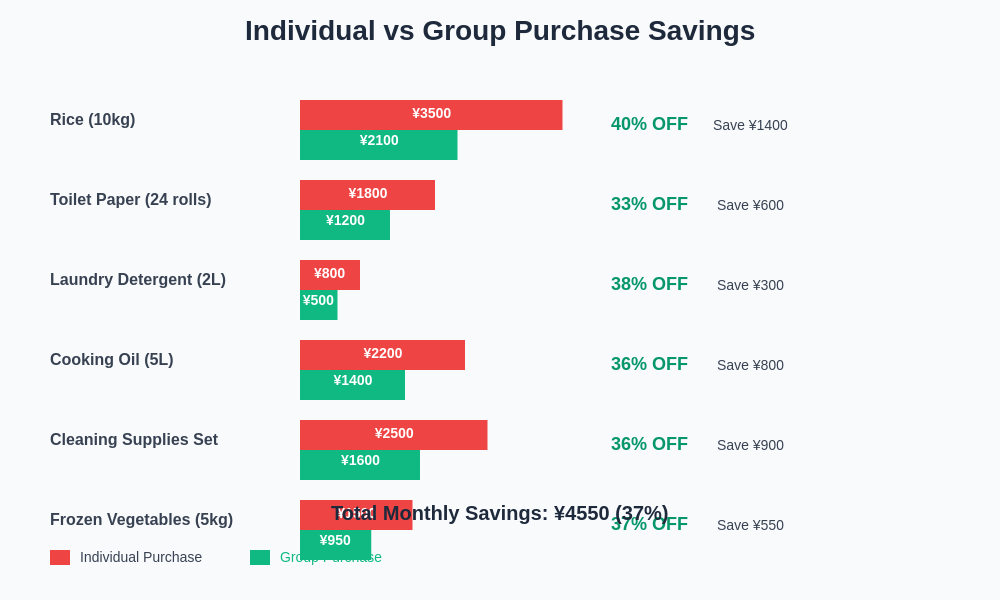
Food purchases represent the largest category for potential group buying savings, with coordinated grocery shopping reducing individual food costs by twenty-five to forty percent while improving meal variety and reducing food waste through better planning and shared consumption patterns. Successful food group buying requires systematic approaches to menu planning, dietary accommodation, and inventory management that satisfy diverse preferences while maintaining cost efficiency.
Weekly or bi-weekly coordinated shopping trips to wholesale markets, bulk retailers, and specialty food suppliers create opportunities for substantial savings on staple ingredients, seasonal produce, and specialty items that individual residents might otherwise avoid due to cost constraints. How grocery shopping becomes more strategic explores optimization techniques that complement group buying initiatives and maximize overall food budget efficiency.
Establishing rotation systems for shopping responsibilities, cost tracking, and meal preparation coordination ensures that group buying benefits are distributed fairly while preventing individual residents from bearing disproportionate time or financial burdens. Digital tools and apps designed for expense sharing and purchase coordination can streamline these processes while maintaining transparency and accountability among all participants.
Specialty dietary requirements including vegetarian, vegan, halal, or allergy-specific needs can be accommodated through targeted group purchases that access specialized suppliers offering better pricing for bulk orders than individual specialty store purchases. How dietary restrictions complicate meal planning addresses common challenges that group buying approaches can help resolve through coordinated specialty purchasing.
Household Supplies and Utilities Optimization
Beyond food purchases, household cleaning supplies, toiletries, and maintenance materials offer excellent opportunities for group buying savings, with bulk purchases of essential items reducing individual costs by thirty to sixty percent while ensuring consistent availability of necessary supplies throughout the sharehouse community.
Commercial-grade cleaning products, bulk toilet paper, laundry supplies, and basic maintenance tools purchased through wholesale channels provide superior value compared to retail purchases while often offering higher quality or more concentrated formulations that extend usage periods. How bulk shopping changes in shared living examines storage and distribution challenges that successful group buying systems must address.
Utility optimization through group negotiations with service providers can reduce internet, electricity, and water costs through volume discounts and service packages designed for multi-resident facilities. Group purchasing of energy-efficient appliances, water-saving devices, and smart home technologies creates upfront cost sharing that generates long-term savings for all residents through reduced monthly utility bills.
Seasonal purchases of heating, cooling, and weather-related supplies benefit significantly from advance group planning that takes advantage of off-season pricing while ensuring adequate supplies for all residents during peak usage periods. How seasonal demand affects sharehouse prices provides context for timing group purchases to maximize seasonal savings opportunities.
Technology and Service Aggregation
Shared technology services including streaming subscriptions, software licenses, and communication tools can be consolidated through group purchasing arrangements that provide premium services at fraction of individual subscription costs while expanding access to resources that enhance daily convenience and entertainment options for all residents.
Internet service upgrades, cloud storage solutions, and productivity software licenses purchased through group accounts offer substantial savings while providing superior service levels compared to individual basic plans. How internet data limits affect your monthly usage highlights connectivity challenges that group purchasing of enhanced services can address effectively.
Professional services such as cleaning, maintenance, tutoring, or fitness instruction can be secured through group contracts that reduce per-person costs while providing higher quality or more frequent services than individual arrangements would permit. Transportation services including car sharing, taxi accounts, and delivery service subscriptions offer economies of scale when coordinated among multiple residents.
Insurance products, financial services, and legal assistance may be available through group purchasing arrangements that provide better coverage or reduced fees compared to individual policies, though these arrangements require careful evaluation to ensure they meet individual needs and regulatory requirements.
Implementation Strategies and Management
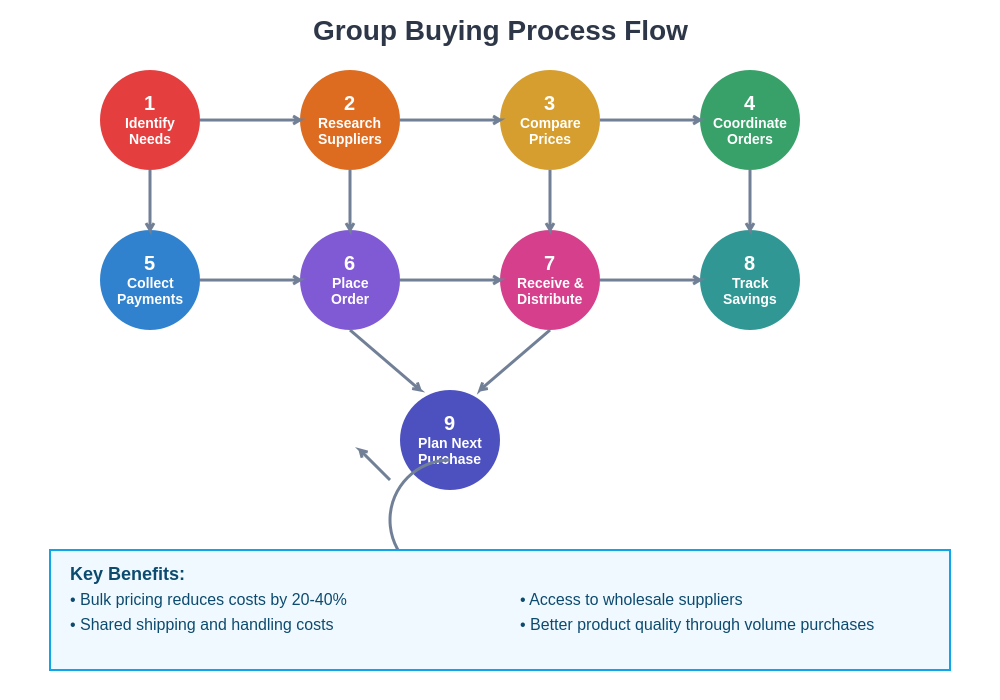
Successful group buying initiatives require clear organizational structures that define roles, responsibilities, and decision-making processes while maintaining flexibility to accommodate changing needs and resident preferences. How to handle roommate conflicts without moving out provides frameworks applicable to managing group buying disagreements and ensuring fair participation.
Establishing rotating leadership roles for different purchasing categories prevents individual burnout while developing multiple residents’ expertise in negotiation, vendor management, and cost optimization techniques. Regular evaluation meetings allow communities to assess group buying effectiveness, adjust strategies, and incorporate new opportunities as they become available.
Financial management systems must track individual contributions, shared expenses, and savings distribution in transparent ways that maintain trust and accountability among all participants. Digital platforms, shared spreadsheets, or specialized apps can facilitate these tracking requirements while providing historical data for continuous improvement efforts.
Communication protocols ensure that all residents receive adequate notice of group purchasing opportunities, can opt in or out of specific purchases, and understand their financial obligations before commitments are made to suppliers or service providers. How conflict resolution styles differ by culture offers insights relevant to managing diverse perspectives in group buying decisions.
Overcoming Common Challenges
Storage limitations represent frequent obstacles to bulk purchasing success, requiring creative solutions including shared storage areas, rotation systems, and partnership arrangements with nearby residents or facilities that can accommodate larger quantities of purchased goods. Careful planning of storage allocation prevents hoarding behaviors while ensuring equitable access to group-purchased items.
Quality control and product selection challenges arise when group buying decisions must accommodate diverse preferences, quality standards, and usage patterns among multiple residents. Establishing clear criteria for product selection, quality standards, and acceptable alternatives helps prevent disagreements while maintaining purchasing efficiency and resident satisfaction.
Payment timing and cash flow management can create difficulties when some residents face temporary financial constraints or payment delays that affect group purchasing schedules. Flexible payment arrangements, advance planning, and emergency fund systems help maintain group buying momentum while accommodating individual financial circumstances.
Vendor relationship management requires diplomatic skills and consistent communication to maintain favorable pricing and service terms over extended periods. How coupon sharing becomes competitive explores competitive dynamics that can undermine group buying effectiveness if not properly managed through collaborative approaches.
Measuring and Optimizing Results
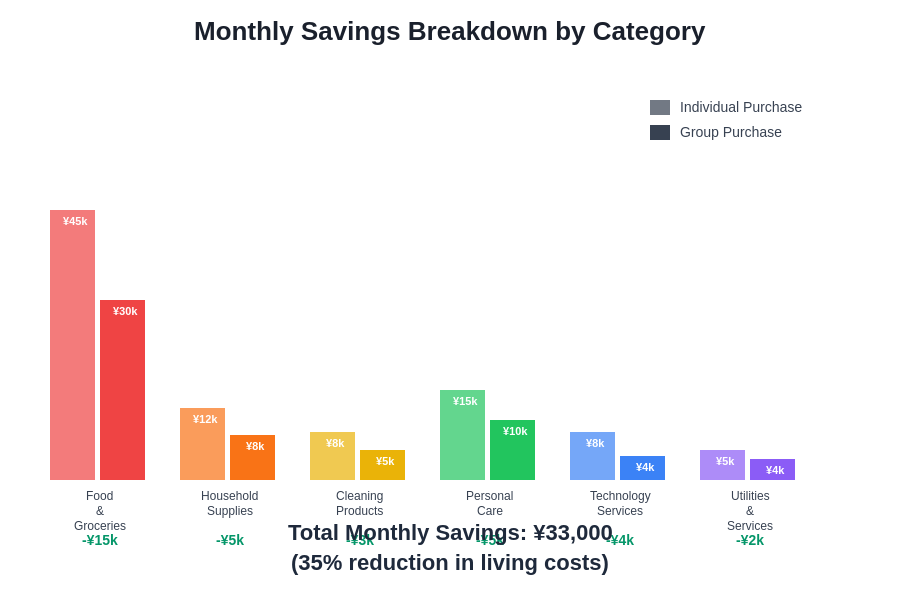
Systematic tracking of group buying savings provides concrete evidence of program effectiveness while identifying opportunities for improvement and expansion into new purchasing categories or vendor relationships. Monthly or quarterly reviews comparing group purchase costs against individual retail prices demonstrate tangible benefits and justify continued participation efforts.
Cost per resident calculations should account for time investment, coordination efforts, and any quality differences between group-purchased and individually-selected items to provide accurate assessments of overall value creation. How to calculate your true living costs provides methodologies applicable to comprehensive group buying analysis.
Benchmarking against other sharehouses or similar communities helps identify best practices, pricing opportunities, and process improvements that can enhance group buying effectiveness. Sharing successful strategies while learning from others’ experiences creates broader benefits that extend beyond individual sharehouse communities.
Expansion opportunities may include partnerships with neighboring sharehouses, coordination with local international communities, or development of relationships with ethnic grocery stores and specialty suppliers that serve diverse sharehouse populations with competitive pricing and unique product selections.
Long-term Financial Impact
The cumulative effect of sustained group buying practices can redirect thousands of yen monthly from basic living expenses toward savings, travel, education, or investment opportunities that significantly enhance residents’ overall financial positions and life experiences. These redirected funds often provide resources for activities and purchases that would otherwise be financially prohibitive on individual budgets.
Group buying skills and relationships developed during sharehouse living create valuable expertise that benefits residents throughout their lives, whether in future shared living situations, family contexts, or professional environments where collective purchasing strategies apply. How sharehouse living prepares you for future challenges explores broader skill development benefits that complement financial advantages.
Network effects from successful group buying programs often extend beyond immediate sharehouse communities, creating connections with suppliers, other residential communities, and local businesses that provide ongoing benefits and opportunities for continued cost optimization and service improvements.
The financial discipline and collaborative skills required for effective group buying contribute to residents’ overall financial literacy and cooperative living abilities, creating lasting personal development benefits that enhance both immediate sharehouse experiences and long-term life success. Understanding how to leverage collective purchasing power represents a valuable life skill applicable to many future situations and financial goals.
Building Sustainable Systems
Long-term success in group buying requires systems that can adapt to changing resident populations, evolving preferences, and shifting market conditions while maintaining core principles of fairness, efficiency, and mutual benefit. Documentation of successful processes, vendor relationships, and lessons learned helps ensure continuity as residents transition and new community members join group buying initiatives.
Training programs for new residents should cover group buying principles, specific procedures, and community expectations to ensure smooth integration and continued program effectiveness. Making friends through Tokyo sharehouse communities demonstrates how shared activities like group buying can strengthen community bonds while achieving practical benefits.
Feedback systems allow continuous improvement while addressing emerging challenges before they undermine group buying effectiveness. Regular surveys, suggestion processes, and open communication channels help maintain resident engagement and program relevance as circumstances change and new opportunities emerge.
The transformative potential of well-executed group buying extends far beyond simple cost reduction, creating stronger communities, developing valuable life skills, and demonstrating the power of cooperative approaches to common challenges. Through thoughtful implementation and sustained commitment, sharehouse residents can achieve remarkable financial benefits while building meaningful relationships and contributing to more sustainable and efficient living practices that benefit everyone involved in these collaborative communities.
Disclaimer
This article is for informational purposes only and does not constitute financial advice. Group buying arrangements should comply with local regulations and tax requirements. Individual results may vary based on specific circumstances, group size, and local market conditions. Readers should carefully evaluate group buying opportunities and establish clear agreements with fellow residents before implementing collective purchasing programs.