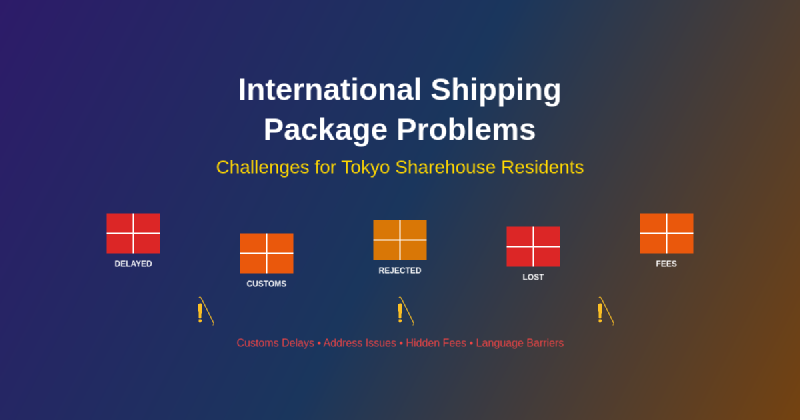
International shipping to Tokyo sharehouses presents a complex web of challenges that can transform the simple act of receiving packages into a frustrating ordeal filled with delays, additional costs, and logistical complications. For international residents living in shared accommodation, the intersection of Japan’s strict customs procedures, complex address systems, and sharehouse-specific delivery limitations creates a perfect storm of package-related problems that can significantly impact daily life and financial budgets.
The reality of international package delivery to sharehouses extends far beyond the advertised shipping times and costs, encompassing hidden fees, documentation requirements, and delivery restrictions that often catch newcomers completely off-guard. Understanding these challenges and developing effective strategies for managing international shipments becomes essential for maintaining connections with home countries while avoiding costly mistakes and delivery failures that can leave important items stranded in customs limbo for weeks or months.
The Complex Web of Japanese Customs Procedures
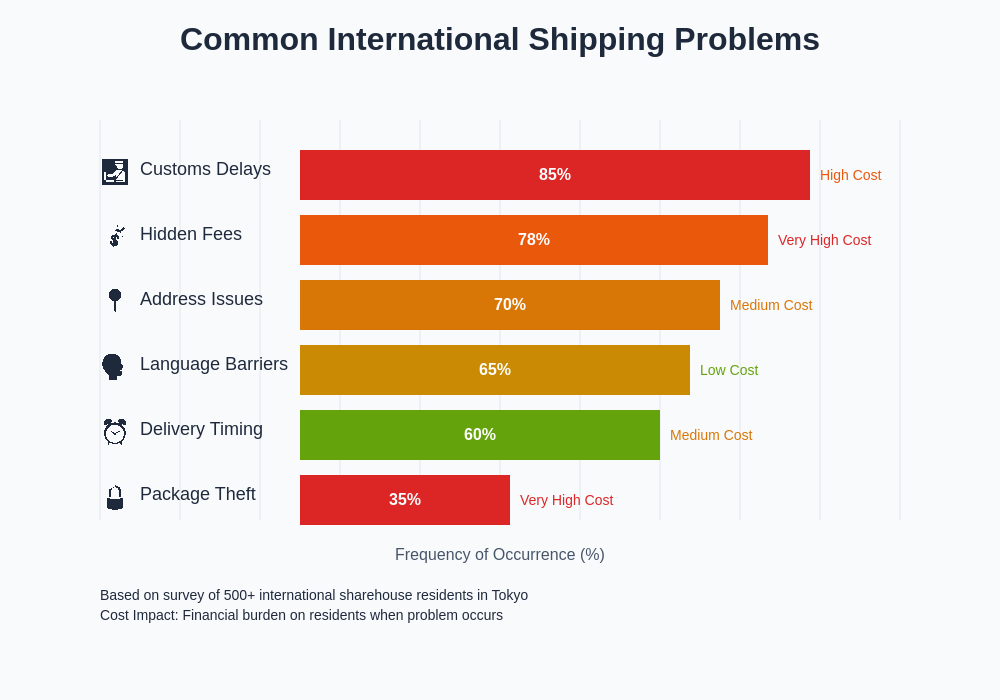
Japan’s customs system operates under stringent regulations designed to protect domestic industries and ensure product safety, but these protective measures create significant barriers for international residents attempting to receive personal items from abroad. The customs clearance process involves multiple layers of inspection, documentation verification, and fee assessment that can delay packages for weeks while generating unexpected costs that often exceed the original shipping charges.
Personal items that seem innocuous in other countries may trigger extensive customs reviews in Japan, including food products, cosmetics, electronics, and even clothing items that require specific safety certifications or ingredient declarations. Living with Japanese roommates in Tokyo sharehouses often involves learning about local regulations through trial and error, with package rejections serving as expensive lessons in Japanese import restrictions.
The documentation requirements for international packages extend beyond simple customs declarations to include detailed ingredient lists for food items, certification documents for electronics, and proof of personal use for certain categories of goods. Many international shipping companies provide inadequate guidance about these requirements, leading to packages being held at customs indefinitely while recipients struggle to provide documentation they were never informed they would need.
Customs fees and handling charges can easily double or triple the total cost of international purchases, with complex calculation methods based on product categories, declared values, and handling requirements that remain opaque to most consumers. The unpredictability of these additional costs makes budgeting for international purchases extremely difficult, particularly for residents operating on tight monthly budgets typical of sharehouse living situations.
Address Complexity and Sharehouse-Specific Challenges
Tokyo’s address system presents unique challenges for international package delivery that become even more complicated when combined with sharehouse living arrangements. The hierarchical addressing structure, which prioritizes districts and blocks over street names, creates confusion for international shipping companies unfamiliar with Japanese geographic conventions, leading to misdelivered or returned packages that never reach their intended recipients.
How to find the perfect sharehouse in Tokyo involves understanding address complications that extend beyond initial housing selection to ongoing delivery challenges throughout your residency period. Sharehouse addresses often lack the standardized format expected by international shipping systems, with building names, room numbers, and resident identification requirements that vary significantly between properties and management companies.
The transient nature of sharehouse populations creates additional complications for package delivery, as delivery companies struggle to maintain accurate resident lists and contact information in environments where occupancy changes frequently. Many sharehouses lack comprehensive package management systems, relying instead on informal arrangements that can result in packages being lost, damaged, or delivered to former residents who have already moved out.
Building access restrictions compound delivery problems, particularly in sharehouses with security systems that prevent delivery personnel from accessing mailbox areas or common spaces where packages might normally be left. The absence of dedicated package receiving staff means that deliveries often depend on the availability of current residents to accept packages on behalf of absent housemates, creating dependencies and potential conflicts when packages go unclaimed.
Timing and Delivery Window Complications
International shipping to Japan operates within delivery time windows that rarely align with the schedules and availability patterns typical of sharehouse residents, who often work irregular hours, attend classes at various times, or travel frequently for business or leisure activities. Student sharehouses near top Tokyo universities face particular challenges during academic periods when residents may be away for extended periods attending classes, internships, or study abroad programs.
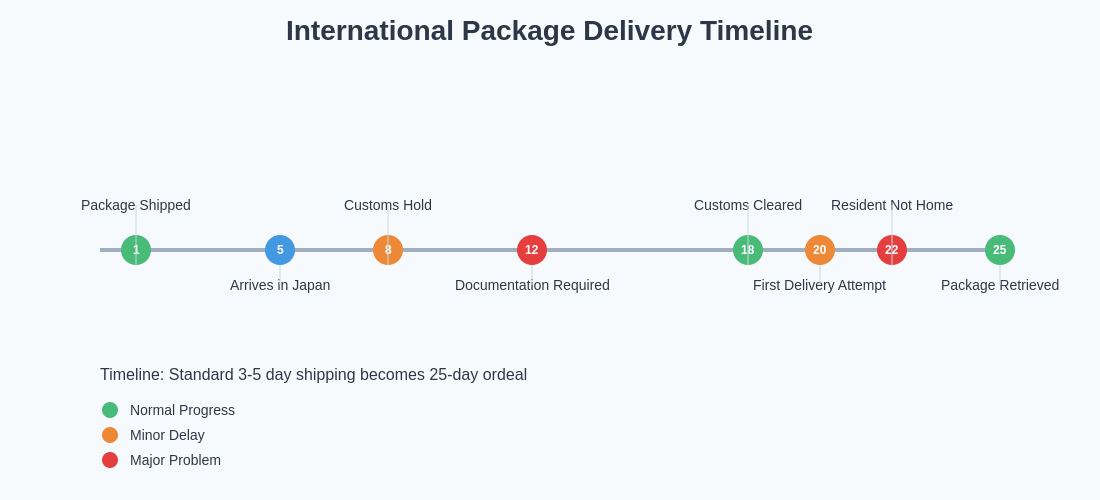
The rigid delivery scheduling systems used by Japanese logistics companies require recipients to be available during specific time windows that may conflict with work schedules, academic commitments, or social obligations that cannot be easily rescheduled. Failed delivery attempts result in packages being held at local distribution centers that may be inconveniently located relative to sharehouse locations, requiring time-consuming trips during limited operating hours to retrieve delayed shipments.
Package redelivery services, while available, often involve complex scheduling processes that require Japanese language skills and familiarity with local logistics systems that many international residents lack. The communication barriers between delivery companies and foreign recipients frequently result in missed connections, extended delays, and additional fees for storage and redelivery attempts that compound the original shipping costs.
Seasonal variations in delivery times become particularly problematic during Japanese holiday periods such as Golden Week, Obon, and New Year celebrations when logistics systems operate on reduced schedules while international shipping continues at normal volumes. These timing mismatches can result in packages arriving during periods when sharehouse residents are traveling or when delivery services are suspended, creating extended delays that can spoil perishable items or delay time-sensitive deliveries.
Financial Impact and Hidden Costs
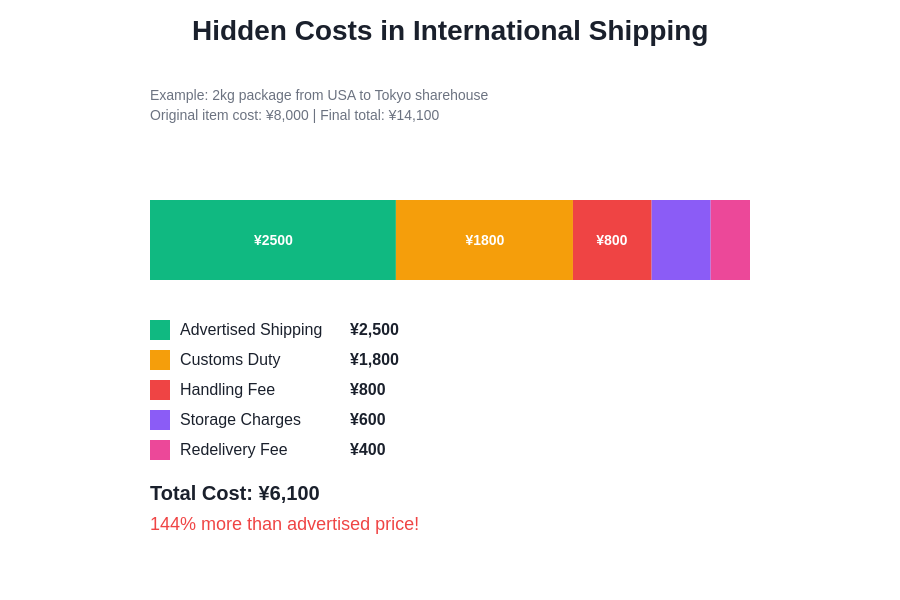
The true cost of international shipping to sharehouses extends far beyond the advertised shipping rates to include customs duties, handling fees, storage charges, and redelivery costs that can easily double or triple the total expense of international purchases. Living costs in Tokyo sharehouses explained should include realistic estimates for package-related expenses that many residents discover only after experiencing their first international shipping disasters.
Currency exchange rates and international payment processing fees add additional layers of cost complexity, particularly when customs duties must be paid in Japanese yen while original purchases were made in foreign currencies. The timing delays between purchase and payment can result in unfavorable exchange rate fluctuations that increase costs beyond original budget projections, creating financial surprises that strain monthly spending plans.
Storage fees for packages held at customs or distribution centers accumulate daily and can quickly exceed the value of shipped items, particularly for lower-cost purchases that seemed economical at the time of ordering but become expensive mistakes when all associated costs are calculated. Many international residents discover too late that certain categories of items are simply not cost-effective to ship to Japan due to the combination of shipping costs, customs duties, and handling fees.
Insurance and damage claims for international shipments involve complex procedures that often require documentation and communication in Japanese, making it difficult for foreign residents to recover losses when packages are damaged, lost, or stolen during the delivery process. The lengthy claims processes can tie up significant amounts of money for months while residents wait for resolution of shipping problems that may ultimately be denied due to documentation issues or policy exclusions.
Communication Barriers and Language Complications
Package delivery problems are exacerbated by communication barriers that prevent effective coordination between international residents, delivery companies, and customs officials who primarily operate in Japanese language systems. English-speaking sharehouses in Tokyo for foreigners may provide some assistance with package-related communications, but most delivery and customs interactions require direct communication between recipients and Japanese-speaking officials.
Delivery notifications, customs forms, and problem resolution communications arrive exclusively in Japanese, leaving many international residents dependent on translation apps, bilingual friends, or professional translation services to understand important information about their packages. The time delays involved in translation and response can result in missed deadlines for customs clearance, failed delivery appointments, and additional storage fees that accumulate while residents struggle to understand and respond to official communications.
Customer service for international shipping problems typically requires phone-based communication in Japanese during business hours that may conflict with work or study schedules, making it difficult for foreign residents to resolve delivery issues promptly. The cultural expectations for formal business communication in Japanese can intimidate international residents who lack confidence in their language skills, leading to avoidance of necessary follow-up that allows problems to escalate and costs to accumulate.
Documentation requirements for customs clearance often involve specific Japanese terminology and formatting conventions that are unfamiliar to international residents, resulting in incorrectly completed forms that delay clearance and require resubmission. The learning curve for understanding Japanese shipping and customs procedures represents a significant investment of time and effort that many residents underestimate when planning international purchases.
Sharehouse Management and Resident Coordination Issues
The management of international packages within sharehouse environments creates coordination challenges that affect entire communities of residents who must navigate shared responsibilities for package acceptance, storage, and distribution. Making friends through Tokyo sharehouse communities can be complicated when package-related disputes arise over storage space, delivery responsibilities, and liability for lost or damaged shipments.
Sharehouse common areas become cluttered with packages awaiting pickup by residents who may be traveling or unavailable for extended periods, creating storage problems and potential security risks that affect all residents. The informal nature of package management in many sharehouses means that responsibility for accepting and safeguarding deliveries often falls unevenly on residents who happen to be present during delivery attempts, creating resentment and social tensions within the community.
Liability questions arise when packages are damaged, lost, or stolen from common areas, with unclear policies about who bears responsibility for securing and protecting shipments that may contain valuable or personal items. The transient nature of sharehouse populations means that residents who accept packages on behalf of others may move out before the intended recipients return, creating complicated situations where packages disappear along with former residents.
Package notification systems in sharehouses often rely on informal communication methods such as messaging apps or handwritten notes that may fail to reach intended recipients, particularly when residents change phone numbers, leave messaging groups, or simply overlook notifications among other daily communications. The lack of formal package tracking and notification systems creates gaps where important deliveries can be lost or forgotten until storage fees and return shipping costs make recovery impractical.
Security and Theft Concerns
International packages containing valuable electronics, branded goods, or personal items become targets for theft both during delivery and while stored in sharehouse common areas that may lack adequate security measures. How to spot financial red flags in sharehouse contracts should include evaluation of package security arrangements and liability policies that protect residents from theft-related losses.
Delivery companies often leave packages in unsecured locations when residents are unavailable, creating opportunities for theft by opportunistic individuals who may target sharehouse buildings known to receive frequent international deliveries. The high-value nature of many international shipments, combined with inadequate security in common areas, makes sharehouses attractive targets for package thieves who understand the delivery patterns and security vulnerabilities of shared housing arrangements.
The anonymity possible in sharehouse environments means that package theft can occur from within the resident community, with perpetrators potentially having legitimate access to common areas and knowledge of delivery schedules. Internal theft creates particularly difficult situations where residents must balance community harmony with personal security concerns while dealing with limited recourse for recovering stolen items.
Insurance coverage for package theft varies significantly between shipping companies and may exclude losses that occur after delivery confirmation, leaving residents vulnerable to significant financial losses when valuable shipments are stolen from sharehouse premises. The burden of proof for theft claims often requires police reports and documentation that can be challenging to obtain when theft occurs from common areas where multiple residents have access.
Alternative Solutions and Workaround Strategies
Experienced international residents develop alternative shipping strategies that bypass many sharehouse-specific delivery problems while maintaining access to products and services from their home countries. Package forwarding services that provide temporary holding and consolidation can reduce shipping costs and delivery complications, though they introduce additional fees and processing delays that must be factored into purchasing decisions.
Workplace delivery options may provide more reliable package acceptance and security compared to sharehouse addresses, though policies regarding personal packages vary between employers and may not be suitable for large or frequent shipments. Business district sharehouses near Tokyo Station residents often have better access to workplace delivery alternatives due to proximity to major business centers with established package handling facilities.
Local pickup services and delivery lockers provide alternatives to residential delivery that eliminate many timing and security complications, though availability varies by location and may not accommodate oversized or special handling packages that are common in international shipments. The convenience store pickup networks available throughout Tokyo offer reliable alternatives for smaller packages, though size and value restrictions limit their usefulness for many international shipping needs.
Building relationships with local shipping and customs professionals can provide valuable guidance and assistance for navigating complex delivery situations, though finding English-speaking services may require research and potentially higher costs. Japanese sharehouse rules every foreigner should know should include guidance on developing local support networks that can assist with shipping and customs problems.
Long-term Strategies and Adaptation
Successful management of international shipping challenges requires developing long-term strategies that balance the desire to maintain connections with home countries against the practical realities of package delivery complications and costs. Why some residents never travel far from home often reflects the cumulative frustration with shipping problems that make maintaining international relationships through care packages and personal shipments impractical.
Gradual adaptation to local alternatives for products and services typically available through international shipping can reduce dependency on problematic delivery systems while supporting integration into Japanese consumer markets. The learning process involves discovering local equivalents for familiar products, though quality, price, and availability differences may require significant adjustments to purchasing habits and lifestyle expectations.
Seasonal planning for international shipments can help minimize problems by avoiding peak shipping periods, holiday delays, and customs bottlenecks that predictably occur during certain times of the year. How academic conferences affect travel plans demonstrates how forward planning can prevent shipping complications that arise when residents are unavailable during critical delivery periods.
The development of local support networks that include bilingual friends, helpful neighbors, and reliable service providers creates resources for addressing shipping problems when they inevitably arise. Building these relationships requires time and cultural sensitivity, but provides valuable assistance for navigating complex situations that may be difficult to resolve independently.
The experience of managing international shipping challenges in Tokyo sharehouses serves as a microcosm of the broader adaptation process required for successful long-term residence in Japan, involving patience, flexibility, and gradual development of local knowledge and relationships that make complex systems more manageable over time.
Disclaimer
This article is for informational purposes only and does not constitute professional shipping or legal advice. International shipping regulations, customs procedures, and delivery policies change frequently and may vary depending on specific circumstances, shipping companies, and product categories. Readers should consult with appropriate professionals and verify current regulations before making international shipping decisions. Individual experiences with package delivery may vary significantly based on location, timing, and specific sharehouse arrangements.