The kitchen represents the heart of any sharehouse, but in Japanese sharehouses, this shared space operates according to intricate social hierarchies, unwritten cultural codes, and complex interpersonal dynamics that can make or break your entire living experience. Understanding how kitchen politics actually function in these environments goes far beyond simple cleanliness expectations and enters the realm of cultural navigation, social positioning, and diplomatic relationship management that requires both sensitivity and strategic thinking.
The reality of kitchen politics in Japanese sharehouses often catches international residents completely off guard, as the surface-level politeness and apparent harmony mask sophisticated systems of social control, resource allocation, and hierarchy establishment that influence everything from cooking schedules to refrigerator space distribution. Mastering these dynamics becomes essential for maintaining peaceful coexistence and avoiding the subtle but persistent conflicts that can transform daily meal preparation into a source of ongoing stress and social isolation.
The Invisible Hierarchy Structure
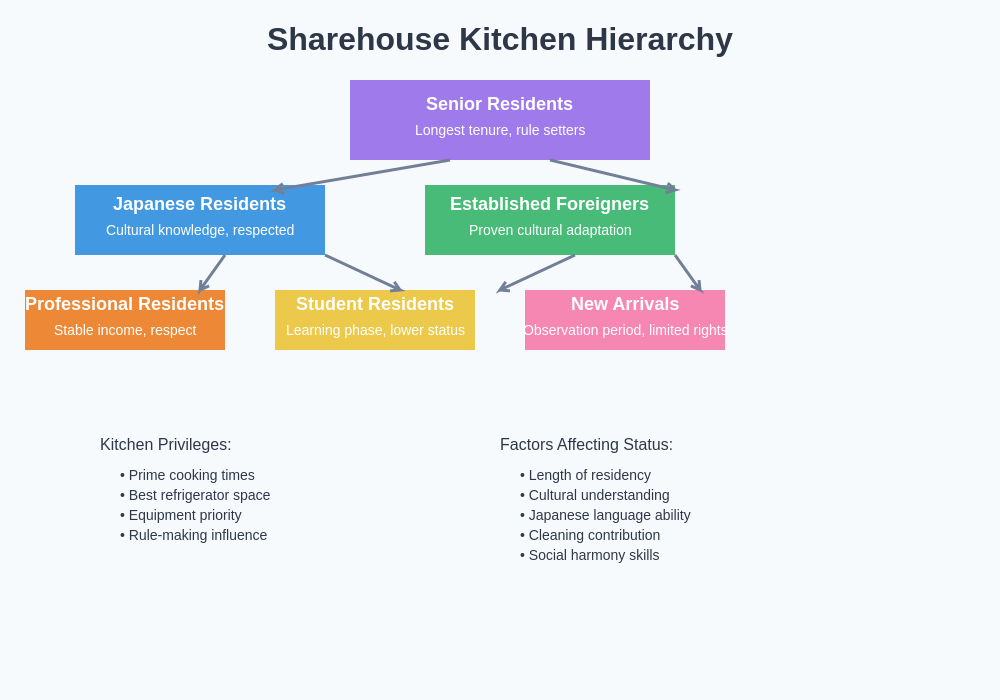
Japanese sharehouse kitchens operate under complex social hierarchies that remain largely invisible to newcomers but profoundly influence daily interactions and resource access. These hierarchies develop through combinations of residency duration, cultural background, age, gender, professional status, and most importantly, demonstration of proper Japanese kitchen etiquette and cultural understanding. Understanding how age differences impact sharehouse compatibility provides insight into one crucial factor that shapes these social arrangements.
The longest-term residents typically assume unofficial leadership roles in kitchen management, establishing unspoken rules about equipment usage, cleaning schedules, and cooking time allocation that newer residents must learn through observation and occasional gentle correction. Japanese residents often hold elevated positions in these hierarchies due to their inherent understanding of cultural expectations, while international residents must prove their cultural competency and respect for Japanese customs to gain acceptance and kitchen privileges.
Gender dynamics also play significant roles in kitchen hierarchies, with traditional Japanese cultural expectations sometimes creating different standards and responsibilities for male and female residents. Living with Japanese roommates in Tokyo sharehouses explores how these cultural dynamics manifest in daily interactions and shared space management.
Professional status and perceived stability can influence kitchen hierarchy positioning, as residents with stable employment or advanced education may receive more respect and accommodation in scheduling conflicts or equipment preferences. Understanding and navigating these hierarchies requires careful observation, respectful behavior, and gradual relationship building rather than attempting to challenge or ignore these established social structures.
Territorial Boundaries and Space Allocation
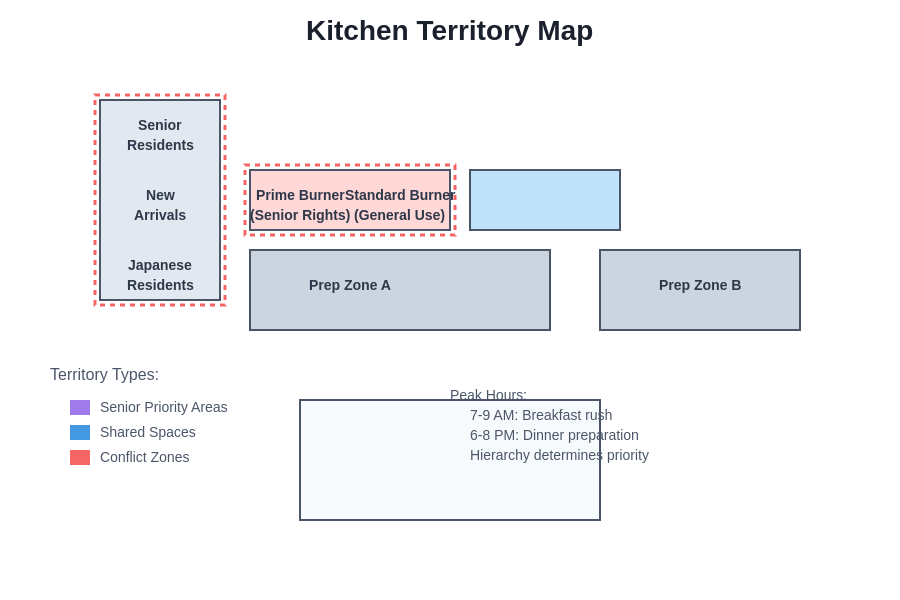
Kitchen territoriality in Japanese sharehouses extends far beyond simple storage assignments and encompasses complex systems of temporal, spatial, and equipment-based boundaries that residents must navigate with diplomatic precision. Refrigerator space allocation follows unwritten protocols based on residency duration, dietary requirements, and social standing within the house hierarchy, with prime locations reserved for senior residents and specific cultural foods receiving special accommodation considerations.
Cooking surface territories emerge during peak usage times, with established residents maintaining informal claims to preferred cooking stations, specific burners, or particular counter areas that newcomers must learn to respect and work around. How cooking odors create cultural conflicts addresses one significant source of territorial disputes that can escalate into serious interpersonal conflicts if not handled with cultural sensitivity.
Storage space politics involve complex negotiations around cabinet assignments, dish storage rights, and cooking equipment access that require understanding of both practical logistics and social protocols. Personal cooking equipment often becomes sources of territorial tension when boundaries around borrowing, cleaning responsibilities, and replacement obligations remain unclear or culturally misunderstood.
Temporal territories develop around cooking schedules, with certain residents establishing informal ownership over specific cooking times that align with their work schedules, cultural meal preferences, or social activities. How meal timing affects kitchen access explores how these timing conflicts impact daily routines and social relationships within sharehouse communities.
Cultural Etiquette and Unwritten Rules
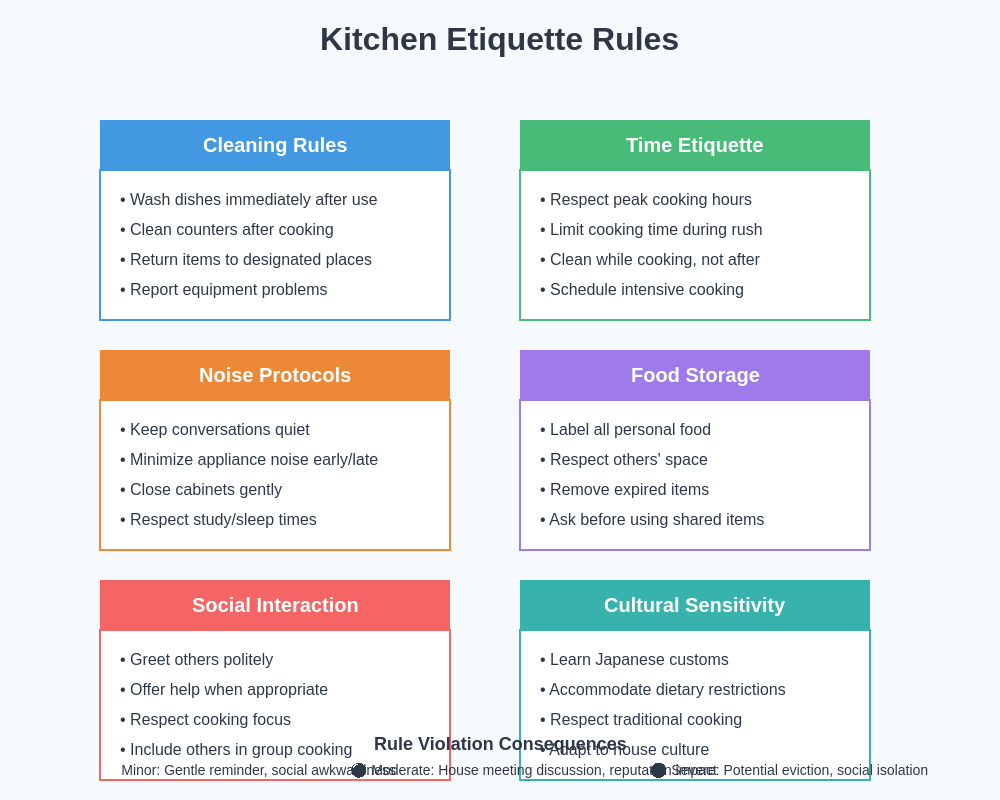
The maze of cultural etiquette governing Japanese sharehouse kitchens encompasses detailed protocols for equipment handling, cleaning procedures, noise levels, and social interactions that reflect broader Japanese cultural values around group harmony, respect, and consideration for others. These unwritten rules often prove more important than official house regulations in determining social acceptance and daily kitchen access.
Cleaning etiquette extends far beyond basic hygiene requirements and includes specific protocols for washing dishes immediately after use, proper drying procedures, equipment sanitization, and counter surface maintenance that demonstrate respect for shared spaces and consideration for other residents. How cleaning responsibilities create house drama examines how these expectations can become sources of significant interpersonal conflict when cultural standards differ.
Noise consideration protocols require understanding of appropriate volume levels for cooking activities, conversations, and appliance usage during different times of day, with particular sensitivity required during early morning and late evening hours when other residents may be sleeping or studying. Equipment handling etiquette involves proper care procedures, immediate cleaning requirements, and careful replacement protocols for shared cooking tools and appliances.
Social interaction protocols in kitchen spaces require balancing friendliness with respect for others’ cooking focus, understanding when conversation is welcome versus intrusive, and navigating language barriers with patience and cultural sensitivity. Japanese sharehouse rules every foreigner should know provides essential cultural context for understanding these complex social expectations.
Food Storage and Refrigerator Politics
Refrigerator politics in Japanese sharehouses represent some of the most contentious and diplomatically challenging aspects of kitchen management, involving complex negotiations around space allocation, food labeling, expiration monitoring, and cultural dietary accommodation that require ongoing attention and relationship management. The limited refrigerator space typical in Japanese housing creates intense competition for storage areas that must be managed through careful social navigation and respect for established protocols.
Food labeling systems vary dramatically between sharehouses but typically involve complex protocols for marking ownership, purchase dates, and intended usage timelines that help prevent accidental consumption while maintaining social harmony around shared storage spaces. How food storage rules impact your eating habits explores how these systems affect daily meal planning and dietary choices for international residents.
Cultural dietary accommodations require understanding and respect for different food storage requirements, with particular consideration needed for halal, kosher, vegetarian, and traditional Japanese dietary restrictions that may require separate storage areas or special handling procedures. How dietary restrictions complicate meal planning addresses the complex negotiations required to accommodate diverse dietary needs within limited kitchen storage.
Expiration monitoring becomes a shared responsibility that requires diplomatic approaches to addressing expired items belonging to other residents, with cultural sensitivity needed when discussing food waste or storage hygiene issues that could create interpersonal tensions. How expiration date monitoring becomes necessary examines the practical and social challenges of maintaining food safety in shared storage environments.
Cooking Schedule Conflicts and Time Management
The coordination of cooking schedules in Japanese sharehouses requires sophisticated time management and social negotiation skills that account for work schedules, cultural meal timing preferences, kitchen capacity limitations, and social hierarchy considerations that influence priority access during peak cooking hours. Rush hour conflicts during morning and evening meal preparation times create daily diplomatic challenges that require flexible planning and considerate timing adjustments.
Work schedule accommodations involve understanding and respecting different professional rhythms, with early morning cooking needs for traditional Japanese breakfast preparation potentially conflicting with late evening cooking preferences of international residents following different cultural meal timing patterns. How commute times impact your quality of life explores how work-related timing constraints affect kitchen usage patterns and scheduling negotiations.
Cultural meal timing differences require diplomatic accommodation of various eating schedules, with traditional Japanese meal times potentially conflicting with international dining preferences, religious meal timing requirements, or dietary schedule needs that create complex scheduling coordination challenges. Weekend cooking patterns often differ significantly from weekday routines, creating additional coordination requirements for meal preparation timing and kitchen resource allocation.
Social dining considerations involve understanding when shared meals are appropriate versus when individual cooking should be prioritized, with cultural sensitivity needed around invitation protocols, dietary sharing customs, and group cooking coordination that can enhance community building when handled appropriately but create tensions when mismanaged.
Equipment Sharing and Maintenance Responsibilities
Shared cooking equipment management in Japanese sharehouses involves complex protocols around borrowing permissions, proper usage procedures, immediate cleaning requirements, and collective maintenance responsibilities that require ongoing communication and cultural sensitivity to prevent conflicts and ensure equipment longevity. Personal versus shared equipment boundaries often create confusion for international residents unfamiliar with Japanese sharing customs and cleanliness expectations.
Cleaning protocols for shared equipment extend beyond basic washing to include detailed sanitization procedures, proper storage arrangements, and immediate maintenance attention that demonstrates respect for shared resources and consideration for other residents’ cooking needs. How kitchen equipment quality varies drastically addresses the challenges of maintaining equipment quality when multiple residents with different cultural backgrounds share cooking tools.
Replacement responsibilities for damaged or worn equipment require diplomatic negotiations around cost sharing, quality standards, and purchasing decisions that account for different budget constraints and usage preferences among residents. Specialty equipment ownership often creates boundary challenges when personal cooking tools become desirable for shared use, requiring clear protocols for borrowing permissions and usage limitations.
Maintenance scheduling for appliances and shared equipment involves collective decision-making around repair priorities, cost distribution, and replacement timing that requires ongoing communication and compromise among residents with different standards and preferences for kitchen functionality and cleanliness levels.
Conflict Resolution and Diplomatic Solutions
Kitchen conflicts in Japanese sharehouses require specialized diplomatic approaches that account for cultural communication styles, face-saving considerations, and hierarchy respect while addressing practical issues around cleanliness, scheduling, and resource sharing that affect daily quality of life for all residents. Direct confrontation typically proves counterproductive in Japanese cultural contexts, requiring indirect communication strategies and mediated resolution approaches.
Cultural communication differences can escalate minor kitchen issues into major interpersonal conflicts when misunderstandings about cleaning standards, equipment usage, or scheduling expectations interact with language barriers and different conflict resolution styles. How conflict resolution styles differ by culture provides essential guidance for navigating these challenging interpersonal dynamics.
Mediation strategies often involve senior residents or house managers who can provide cultural translation and diplomatic intervention to resolve disputes while maintaining social harmony and respect for all parties involved. Preventive measures including clear initial orientation, regular house meetings, and proactive communication about expectations can help avoid many common kitchen conflicts before they escalate into serious interpersonal problems.
Long-term relationship building through consistent respectful behavior, cultural learning demonstration, and positive contribution to kitchen community helps establish social credit that facilitates easier conflict resolution when issues inevitably arise in shared living environments.
Seasonal Dynamics and Special Occasions
Seasonal changes significantly impact kitchen politics in Japanese sharehouses through shifting cooking patterns, storage needs, equipment requirements, and social activities that require ongoing adaptation and negotiation among residents with different cultural backgrounds and seasonal preferences. Summer heat limitations affect cooking schedules and equipment usage, while winter comfort food preparation may increase kitchen traffic and storage demands.
Holiday and festival seasons bring unique challenges around cultural celebration accommodations, special food preparation requirements, and guest entertainment protocols that require diplomatic coordination and cultural sensitivity to ensure all residents feel included while respecting different cultural traditions and space limitations. How cultural festivals affect house activities explores these seasonal coordination challenges.
Gift-giving customs around food sharing, holiday celebrations, and cultural exchanges create opportunities for positive relationship building but also potential sources of obligation and social pressure that require careful navigation to maintain positive kitchen dynamics. Seasonal shopping coordination for bulk purchasing, special ingredients, and festival preparations may require collective decision-making and cost-sharing negotiations.
Temperature control considerations during different seasons affect cooking comfort, appliance usage patterns, and food storage requirements that may create new scheduling conflicts or equipment sharing challenges that require diplomatic resolution and flexible accommodation among residents.
Technology and Modern Kitchen Management
Modern technology integration in Japanese sharehouse kitchens introduces new dimensions to traditional kitchen politics through shared digital calendars, appliance scheduling apps, expense tracking systems, and communication platforms that can either facilitate better coordination or create new sources of conflict depending on implementation and cultural adaptation. How smart home features change daily routines examines these technological impacts on shared living dynamics.
Digital communication about kitchen schedules, cleaning responsibilities, and maintenance needs can help bridge language barriers and cultural communication differences while providing transparent documentation of agreements and responsibilities that reduce misunderstandings and conflict escalation. Expense tracking applications for shared purchases, utility costs, and equipment replacement can facilitate fairer cost distribution while reducing financial disputes that often arise in shared living situations.
Appliance modernization decisions require collective input and cost-sharing negotiations that must account for different technology preferences, budget constraints, and usage priorities among residents with varying cultural backgrounds and kitchen technology familiarity. Smart appliance integration may create new learning curves and usage protocols that require patient explanation and cultural accommodation for residents with different technology comfort levels.
Building Positive Kitchen Community
Successful navigation of Japanese sharehouse kitchen politics ultimately requires proactive community building through cultural learning, relationship investment, and positive contribution to shared kitchen experiences that transcend individual convenience to create supportive living environments for all residents. Understanding that kitchen interactions serve as primary social connection points helps frame daily cooking activities as community building opportunities rather than mere functional necessities.
Cultural exchange through cooking demonstrations, recipe sharing, and collaborative meal preparation can transform potential sources of conflict into opportunities for friendship building and cultural learning that enrich the entire sharehouse experience. Making friends through Tokyo sharehouse communities provides strategies for leveraging kitchen interactions for positive relationship development.
Proactive problem-solving through anticipating common issues, volunteering for maintenance responsibilities, and offering assistance during busy cooking periods demonstrates cultural understanding and community commitment that builds social credit and facilitates smoother daily kitchen operations. Regular evaluation of kitchen systems and open communication about improvements helps maintain positive dynamics while adapting to changing resident needs and cultural compositions.
The mastery of kitchen politics in Japanese sharehouses represents a microcosm of successful cross-cultural living that requires patience, cultural sensitivity, diplomatic skills, and genuine commitment to community harmony that extends far beyond individual convenience to create positive shared living experiences for all residents.
Disclaimer
This article is for informational purposes only and reflects general observations about kitchen dynamics in Japanese sharehouses. Individual experiences may vary significantly based on specific house rules, resident personalities, and cultural compositions. Readers should approach their own sharehouse situations with respect, patience, and willingness to learn from direct experience while maintaining open communication with housemates and management.