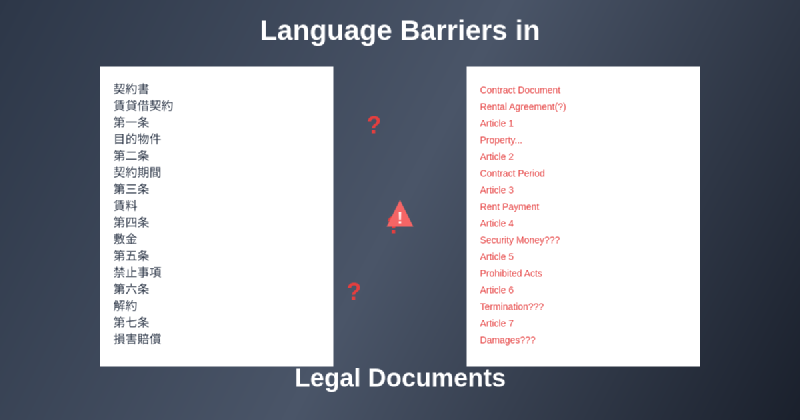
Navigating legal documents in Japan presents formidable challenges for international residents, particularly when securing accommodation in sharehouses where complex contractual agreements determine living conditions, financial obligations, and legal protections. The intricate nature of Japanese legal language, combined with cultural nuances and regulatory frameworks that differ significantly from Western legal systems, creates substantial barriers that can lead to misunderstandings, financial losses, and legal complications that persist throughout residency periods.
The consequences of misinterpreting legal documents extend far beyond simple inconvenience, potentially affecting everything from deposit recovery and lease termination to liability coverage and dispute resolution procedures. Understanding these challenges and developing effective strategies for overcoming language barriers becomes essential for protecting personal interests and ensuring compliance with Japanese legal requirements that govern residential arrangements.
The Complexity of Japanese Legal Language
Japanese legal documents employ specialized terminology and formal language structures that differ dramatically from everyday conversational Japanese, creating significant comprehension challenges even for residents with intermediate language skills. Japanese sharehouse rules every foreigner should know demonstrates how cultural and linguistic misunderstandings can create ongoing conflicts that affect daily living experiences and legal standing.
Legal terminology in Japanese contracts frequently utilizes archaic kanji characters, formal grammatical constructions, and technical vocabulary that may not appear in standard language learning materials or everyday interactions. These linguistic complexities are compounded by the use of honorific language systems and indirect communication styles that can obscure the actual legal obligations and rights being defined within contractual agreements.
The structure of Japanese legal documents often follows traditional formats that prioritize hierarchical relationships and implied understandings rather than explicit clarification of terms and conditions. This approach can leave international residents uncertain about their actual rights, responsibilities, and recourse options when disputes or problems arise during their tenancy periods.
Professional legal translation services can provide accurate interpretations of document contents, but the costs associated with comprehensive translation often exceed budget constraints for many international residents seeking affordable sharehouse accommodation. Additionally, the time required for professional translation can conflict with application deadlines and move-in schedules that characterize Tokyo’s competitive housing market.
Common Translation Pitfalls and Misunderstandings
Automated translation tools and basic language skills frequently fail to capture the nuanced meanings and legal implications embedded within Japanese contractual language, leading to critical misunderstandings about financial obligations, termination procedures, and liability coverage. How to spot financial red flags in sharehouse contracts illustrates how language barriers can prevent residents from identifying problematic clauses that result in unexpected expenses and legal complications.
Direct translation of legal concepts between Japanese and other languages often produces misleading interpretations because legal frameworks and cultural assumptions differ significantly between countries. Terms that appear straightforward in translation may carry specific legal meanings or cultural implications that fundamentally alter the actual obligations and protections being established through contractual agreements.
The tendency to focus on familiar terms while overlooking complex clauses can create false confidence in document comprehension, leading residents to agree to conditions they don’t fully understand. This selective understanding becomes particularly problematic when disputes arise and residents discover that their interpretation of contractual terms differs significantly from the legally enforceable meanings intended by Japanese law.
Cultural differences in communication styles can compound translation difficulties, as Japanese legal documents may rely on implicit understandings and contextual references that are not immediately apparent to international residents. These unstated assumptions about behavior, responsibilities, and social norms can create obligations that are not explicitly written but are nonetheless legally enforceable under Japanese regulatory frameworks.
Financial Implications of Document Misunderstanding
Misinterpreting financial clauses in sharehouse contracts can result in substantial unexpected expenses that significantly impact monthly budgets and long-term financial planning for international residents. Understanding utility bills in Japanese sharehouses reveals how language barriers can prevent proper understanding of billing procedures and cost allocation methods that affect actual living expenses.
Security deposit return procedures often involve complex conditions and requirements that may not be clearly understood through basic translation, potentially resulting in significant financial losses when residents fail to meet unstated obligations or misunderstand damage assessment procedures. The specific language used to describe normal wear versus tenant responsibility can carry legal weight that determines whether deposits are returned or retained by property management companies.
Hidden fees and additional charges may be embedded within legal language that appears routine or standard to Japanese readers but contains significant financial implications that are not apparent through translation. What security deposits actually cover in sharehouses demonstrates how misunderstanding coverage terms can lead to unexpected liability for damages, repairs, and administrative expenses.
Late payment penalties, early termination fees, and violation charges may be defined using language that minimizes their apparent severity while establishing substantial financial consequences for non-compliance. Understanding the actual calculation methods and triggering conditions for these penalties requires careful analysis of legal language that may not be accessible through basic translation tools or limited Japanese language skills.
Liability and Insurance Complications
Liability coverage and insurance requirements in Japanese sharehouse contracts often involve complex legal concepts that are particularly difficult to understand across language barriers, potentially leaving international residents inadequately protected against financial risks and legal claims. The specific language used to define coverage limitations, exclusions, and claims procedures can dramatically affect actual protection levels and out-of-pocket expenses when incidents occur.
Personal liability for damages to common areas, other residents’ property, or building infrastructure may be defined through legal language that establishes broader responsibility than residents expect based on their home country experiences. Why personal liability increases in shared spaces explores how cultural and legal differences can create unexpected financial exposure for international residents.
Insurance claim procedures and documentation requirements may involve specific language and procedural steps that are not apparent through translation, potentially invalidating coverage when residents fail to follow proper protocols during emergency situations. The timing requirements, notification procedures, and evidence collection standards established in legal documents can determine whether insurance protection is actually available when needed.
Third-party liability coverage and limitations may be expressed using technical legal language that obscures the actual scope of protection and potential gaps in coverage that could result in substantial personal financial responsibility. Understanding these limitations becomes crucial for making informed decisions about additional insurance purchases and risk management strategies during sharehouse residency.
Termination and Dispute Resolution Challenges
Lease termination procedures and dispute resolution mechanisms established in Japanese legal documents frequently involve complex requirements and timelines that can be misunderstood through translation, potentially trapping residents in unfavorable living situations or subjecting them to financial penalties. How to actually get your deposit back reveals how language barriers can prevent residents from following proper procedures that protect their financial interests during move-out processes.
Notice requirements for lease termination may involve specific language, timing, and delivery methods that carry legal weight in determining whether termination procedures are valid and enforceable. Misunderstanding these requirements can result in extended financial obligations, forfeited deposits, and legal complications that persist beyond the intended move-out date.
Dispute resolution procedures may establish mandatory mediation, arbitration, or court procedures that favor Japanese language competency and cultural understanding, potentially disadvantaging international residents who lack the linguistic skills necessary for effective self-advocacy. The specific language used to define these procedures can determine available options and procedural rights during conflict situations.
Subpoena and legal notice procedures may require specific language comprehension and response capabilities that international residents cannot provide without professional assistance, potentially resulting in default judgments or unfavorable outcomes in legal proceedings. Understanding the actual legal implications of various dispute resolution options requires linguistic competency that extends beyond basic conversational Japanese skills.
Documentation and Record-Keeping Requirements
Legal documents often establish specific documentation and record-keeping requirements that may not be apparent through translation but carry significant legal importance in protecting resident rights and establishing compliance with contractual obligations. What documents you need for Tokyo sharehouse applications demonstrates how language barriers can prevent proper understanding of ongoing documentation responsibilities throughout residency periods.
Communication requirements with property management companies may involve specific language expectations, formatting standards, and procedural protocols that are embedded within legal language but not explicitly stated as requirements. Failure to meet these unstated communication standards can affect the validity of complaints, requests, and legal notices that residents attempt to provide during their tenancy.
Evidence collection and preservation requirements for damage claims, disputes, and insurance situations may be defined through legal language that establishes specific standards and procedures that international residents cannot follow without proper linguistic understanding. The specific language used to describe acceptable evidence and documentation can determine whether resident claims and defenses are legally valid and enforceable.
Notification procedures for maintenance issues, safety concerns, and emergency situations may involve legal language that establishes specific timing, content, and delivery requirements that affect liability distribution and legal protections. Understanding these requirements becomes essential for maintaining legal protections and avoiding unwanted responsibility for problems that occur during residency periods.
Professional Support and Resource Options
Professional legal translation services provide the most reliable option for understanding complex contractual language, but the associated costs and time requirements may not be practical for many international residents seeking affordable sharehouse accommodation. Living costs in Tokyo sharehouses explained illustrates how additional professional service costs can significantly impact housing affordability for budget-conscious international residents.
Legal consultation services specifically designed for international residents can provide valuable guidance for understanding contractual obligations and rights, but availability and accessibility of these services vary significantly across different areas of Tokyo. The specific expertise required for sharehouse-related legal issues may not be readily available through general legal service providers that focus on other areas of law.
Community support networks and resident advocacy groups can provide practical guidance based on shared experiences with similar legal documents and situations, though the advice provided through these informal channels may not carry legal weight or accuracy guarantees. Making friends through Tokyo sharehouse communities shows how peer support networks can provide valuable practical guidance for navigating complex situations.
Technology solutions including specialized translation applications and legal document analysis tools continue to improve in accuracy and accessibility, but current limitations in handling complex legal language and cultural context prevent complete reliance on automated solutions for critical legal understanding. The evolving nature of these technological resources requires ongoing evaluation of their effectiveness and limitations for specific legal document types.
Preventive Strategies and Best Practices
Developing systematic approaches to document review and comprehension can help minimize the risks associated with language barriers while ensuring adequate understanding of legal obligations and protections. Creating checklists of key legal concepts and terms can help focus attention on critical clauses that carry significant financial or legal implications throughout residency periods.
Establishing relationships with bilingual professionals or trusted community members who can provide document review assistance creates valuable support networks for ongoing legal comprehension needs. How to handle roommate conflicts without moving out demonstrates how proactive relationship building can provide essential support during challenging situations.
Requesting simplified explanations or alternative document formats from property management companies can sometimes provide additional clarity about complex legal requirements, though the availability and accuracy of these accommodations vary significantly between different operators and individual properties. Understanding which requests are reasonable and likely to be accommodated helps residents access additional support when needed.
Building Japanese language skills with specific focus on legal and business terminology provides long-term benefits that extend beyond immediate housing needs to career development and general life navigation in Japan. The investment in language education can provide substantial returns through improved legal comprehension and reduced dependence on external translation services.
Long-term Implications and Skill Development
The experience of navigating complex legal documents in Japanese provides valuable skill development opportunities that benefit international residents throughout their time in Japan and in future international experiences. Understanding how to approach unfamiliar legal frameworks and language barriers becomes transferable knowledge that applies to various life situations and professional development opportunities.
Building confidence in legal document comprehension enables more informed decision-making about housing choices, contract negotiations, and risk management strategies that can significantly improve living experiences and financial outcomes. Real stories from Tokyo sharehouse residents reveals how residents who develop effective strategies for legal comprehension achieve better overall outcomes and satisfaction levels.
Developing networks of professional and community support resources creates lasting value that extends beyond immediate housing needs to career development, emergency assistance, and ongoing life navigation in Japan. These relationships often provide reciprocal benefits as residents develop their own expertise and ability to assist others facing similar challenges.
The skills and knowledge gained through successfully navigating Japanese legal documents contribute to personal confidence and cultural competency that enhance overall international living experiences and professional development opportunities. Understanding legal frameworks and cultural contexts provides foundation knowledge that supports success in various aspects of life and work in Japan.
Understanding and overcoming language barriers in legal documents represents a crucial skill for international residents in Japan, with implications that extend far beyond immediate housing concerns to encompass financial security, legal protection, and personal empowerment. While the challenges are substantial, developing effective strategies and support networks enables residents to navigate these complexities successfully while building valuable skills and relationships that enhance their overall experience living in Japan.
Disclaimer
This article is for informational purposes only and does not constitute professional legal advice. Legal document interpretation requires specialized knowledge and professional expertise that varies based on specific circumstances and applicable laws. Readers should consult qualified legal professionals for advice regarding specific legal documents and situations. The complexity of Japanese legal language and regulatory frameworks makes professional consultation essential for important contractual agreements and legal obligations.