Language exchange programs within Tokyo sharehouses represent one of the most dynamic and effective methods for accelerating language learning while building genuine cross-cultural friendships that extend far beyond traditional classroom environments. These organic learning ecosystems emerge naturally when international residents and Japanese natives share living spaces, creating daily opportunities for meaningful linguistic and cultural exchange that transforms both language skills and personal perspectives in profound ways.
The integration of structured language exchange activities within the informal atmosphere of sharehouse living creates unique advantages that formal language schools cannot replicate. Residents benefit from continuous exposure to natural conversation patterns, cultural nuances, and real-world language applications that accelerate fluency development while simultaneously building lasting personal relationships with people from diverse backgrounds and experiences.
Understanding Sharehouse Language Exchange Dynamics
Language exchange programs in sharehouses operate through both formal structured activities and informal daily interactions that create immersive learning environments superior to traditional classroom settings. Living with Japanese roommates in Tokyo sharehouses provides foundational insights into these cross-cultural living arrangements that facilitate natural language learning opportunities throughout daily routines and social interactions.
The spontaneous nature of sharehouse language exchange allows learners to practice conversational skills in authentic contexts, from discussing household responsibilities and sharing meals to navigating cultural misunderstandings and celebrating traditional holidays together. This constant exposure to natural speech patterns, colloquial expressions, and cultural references accelerates language acquisition far beyond what structured lessons alone can achieve.
Successful sharehouse language exchange programs typically involve residents from multiple countries who bring diverse linguistic backgrounds and cultural perspectives to the living environment. Making friends through Tokyo sharehouse communities explores how these multilingual communities develop organic support systems that encourage language practice and cultural exploration among residents with varying proficiency levels.
The residential setting provides unique advantages for language learning, including access to authentic cultural experiences, exposure to family-style communication patterns, and opportunities to observe and participate in traditional customs and social behaviors that textbooks cannot adequately convey. These experiential learning opportunities create deeper cultural understanding alongside improved language skills.
Formal Language Exchange Structure and Organization
Many sharehouses implement structured language exchange programs that organize regular conversation sessions, study groups, and cultural activities designed to maximize learning opportunities for all residents regardless of their current language proficiency levels. These formal programs often include designated conversation partners, scheduled practice sessions, and organized cultural events that create predictable learning opportunities within the busy schedules of working and studying residents.
Weekly conversation circles represent one of the most popular formal language exchange formats, bringing together residents for guided discussions on topics ranging from current events and cultural differences to personal experiences and future goals. English-speaking sharehouses in Tokyo for foreigners discusses how these structured activities benefit both English learners and Japanese language students living in the same environment.
Language learning partnerships pair residents with complementary language goals, creating accountability relationships that encourage consistent practice and mutual support throughout the learning process. These partnerships often extend beyond formal study sessions to include shared activities like grocery shopping, exploring neighborhoods, and attending cultural events that provide natural contexts for language practice and cultural exchange.
Documentation and progress tracking systems help residents monitor their improvement over time while identifying areas that need additional focus and practice. Some sharehouses maintain language learning libraries, conversation topic databases, and progress tracking tools that support both individual study and group learning activities.
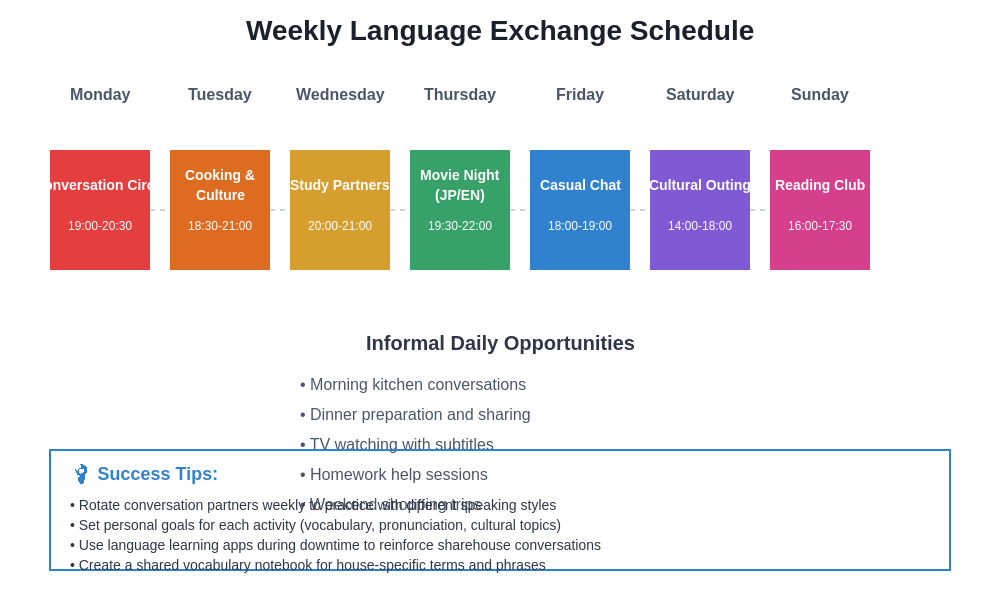
This structured approach ensures consistent learning opportunities while accommodating the diverse schedules and preferences of sharehouse residents.
Informal Learning Through Daily Interactions
The most significant language learning advantages in sharehouses often emerge through unstructured daily interactions that provide continuous exposure to natural conversation patterns and cultural behaviors. How cultural differences affect friendship building examines how these spontaneous exchanges contribute to both language development and cross-cultural understanding among residents.
Meal preparation and sharing creates particularly rich language learning opportunities, as residents collaborate on cooking traditional dishes, discuss ingredients and preparation methods, and share stories about food culture from their home countries. These kitchen conversations often involve practical vocabulary, cultural explanations, and personal narratives that enhance both language skills and cultural appreciation.
Household management discussions provide authentic contexts for practicing formal and informal communication styles, as residents navigate topics like cleaning schedules, utility bills, guest policies, and maintenance issues that require clear communication and cultural sensitivity. Japanese sharehouse rules every foreigner should know highlights how these practical conversations contribute to language learning while building essential life skills.
Entertainment activities such as watching Japanese television programs, playing traditional games, and attending local festivals together provide relaxed environments for language practice while exposing residents to cultural contexts that enhance understanding of social norms, humor, and communication styles that textbooks rarely address adequately.
Technology Integration and Digital Language Tools
Modern sharehouse language exchange programs increasingly incorporate digital tools and applications that enhance learning opportunities and provide structured support for residents with varying schedules and learning preferences. Translation applications, language learning software, and communication platforms create additional resources that complement face-to-face interactions and support continued learning outside of formal exchange sessions.
Shared digital platforms allow residents to post vocabulary questions, share cultural observations, and organize language-focused activities that accommodate different time zones and work schedules. These online resources often include conversation topic suggestions, grammar explanations, and cultural context information that support both preparation for and follow-up after language exchange sessions.
Video calling capabilities enable residents to maintain language practice relationships even when traveling or temporarily absent from the sharehouse, creating continuity in learning partnerships and maintaining social connections that support long-term language development goals. How international experience enhances resume value discusses how these digital language skills contribute to professional development opportunities.
Language learning applications designed specifically for conversation practice provide structured activities that residents can complete together, creating game-like experiences that make language learning more engaging while providing measurable progress indicators that motivate continued participation and improvement.
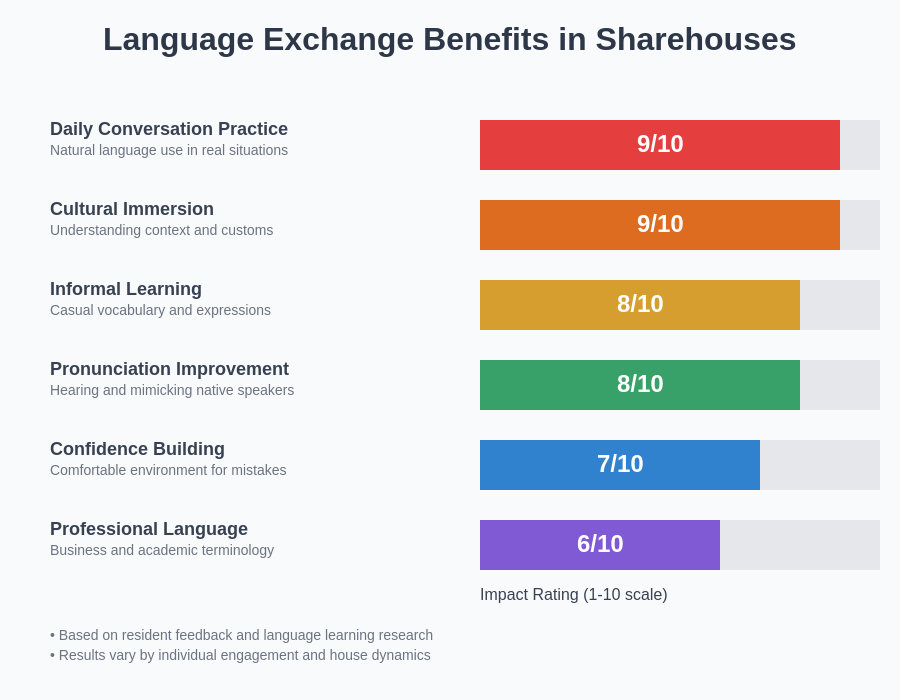
The measurable benefits of sharehouse language exchange demonstrate clear advantages across multiple skill areas, with particularly strong improvements in daily conversation practice and cultural immersion experiences.
Cultural Exchange Beyond Language Learning
Language exchange programs in sharehouses naturally evolve into comprehensive cultural exchange experiences that expose residents to traditions, perspectives, and worldviews that extend far beyond vocabulary and grammar instruction. How cultural festivals affect house activities explores how these cultural celebrations create immersive learning experiences that deepen understanding of social contexts and historical backgrounds.
Traditional holiday celebrations provide particularly rich opportunities for cultural and linguistic learning, as residents share customs, explain traditions, and participate in authentic cultural practices that provide historical and social context for language patterns and cultural behaviors. These experiences often include traditional food preparation, gift-giving customs, and ceremonial activities that create lasting memories and cultural understanding.
Professional and academic discussions allow residents to practice formal language skills while learning about different educational systems, career expectations, and business cultures that provide valuable context for future professional interactions. How academic networking happens in sharehouses examines how these professional exchanges contribute to both language development and career advancement opportunities.
Art, music, and creative activities provide alternative channels for cultural expression and language practice that accommodate different learning styles and personal interests. These creative exchanges often reveal cultural values, aesthetic preferences, and historical influences that enhance understanding of social contexts and communication patterns within different cultural frameworks.
Overcoming Common Language Exchange Challenges
Language exchange programs in sharehouses face predictable challenges that require proactive management and cultural sensitivity to maintain positive learning environments for all residents. How language barriers prevent deep friendships addresses common obstacles and provides strategies for building meaningful relationships despite communication difficulties.
Proficiency level differences among residents can create imbalanced exchange relationships where advanced speakers dominate conversations while beginners struggle to participate meaningfully. Successful programs implement strategies such as conversation time limits, topic rotation systems, and beginner-friendly discussion formats that ensure all participants have opportunities to practice and contribute to group activities.
Cultural misunderstandings often arise when residents interpret communication styles, social behaviors, and language patterns through their own cultural frameworks rather than understanding the intended cultural context. How cultural misunderstandings happen daily provides insights into preventing and resolving these common intercultural communication challenges.
Motivation maintenance represents a significant challenge as the novelty of language exchange activities decreases and residents become comfortable with their current proficiency levels. Successful programs incorporate progress celebrations, goal-setting activities, and external challenges that maintain engagement and encourage continued improvement throughout extended residency periods.
Professional and Academic Language Development
Sharehouses often attract residents pursuing professional careers or academic studies who benefit from language exchange programs that address formal communication skills, industry-specific vocabulary, and academic discourse patterns that support their educational and career objectives. How language learning affects career opportunities explores how these specialized language skills contribute to professional advancement and academic success.
Business language practice sessions focus on formal communication styles, presentation skills, and professional etiquette that prepare residents for workplace interactions and career development opportunities. These specialized exchanges often include role-playing exercises, formal presentation practice, and business document review activities that develop practical professional communication abilities.
Academic language support addresses the specific vocabulary, writing styles, and discussion formats required for university coursework, research activities, and academic conferences. How academic conferences affect travel plans discusses how these academic language skills support educational goals and research collaboration opportunities.
Industry-specific language modules allow residents working in similar fields to practice technical vocabulary, discuss professional challenges, and share industry insights that provide both linguistic and professional development benefits. These specialized exchanges often lead to professional networking opportunities and career advancement through shared knowledge and industry connections.
Long-term Language Learning Outcomes and Success Metrics
Successful sharehouse language exchange programs demonstrate measurable improvements in conversational fluency, cultural competency, and cross-cultural communication skills that extend far beyond traditional language learning metrics. How cultural competency develops faster in sharehouses examines how these comprehensive learning experiences create lasting personal and professional advantages.
Fluency development through sharehouse language exchange typically accelerates beyond classroom learning timelines, with residents reporting significant improvements in natural conversation abilities, cultural understanding, and confidence in professional and social situations. These improvements often translate into enhanced career opportunities, academic performance, and personal relationship quality that justify the investment in sharehouse living arrangements.
Cultural sensitivity and cross-cultural communication skills developed through daily interactions and formal exchange programs create lasting advantages for international career development, multicultural relationship building, and global citizenship that extend far beyond language proficiency measurements. How independence skills develop in shared living explores how these life skills contribute to personal growth and professional success.
Network building through language exchange relationships often results in lasting friendships, professional connections, and cultural ambassadorships that provide ongoing opportunities for continued learning and international collaboration throughout residents’ careers and personal lives.
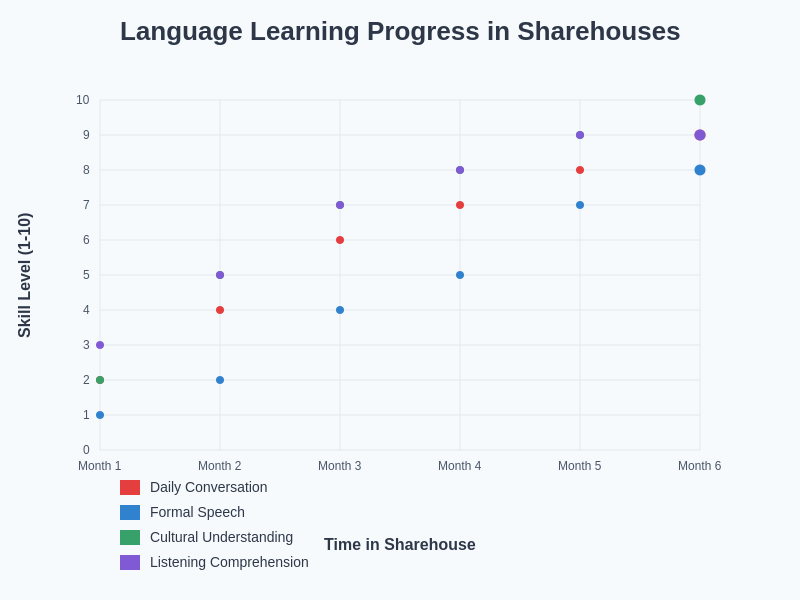
This progression timeline illustrates typical skill development patterns observed in sharehouse language exchange participants over six months of active engagement.
The transformative potential of language exchange programs in sharehouses extends beyond simple vocabulary acquisition to encompass comprehensive cultural education, interpersonal skill development, and global perspective expansion that creates lifelong advantages for participants who fully engage with these unique learning opportunities. The residential context provides authenticity, consistency, and depth that traditional language learning environments cannot replicate, making sharehouse language exchange one of the most effective approaches to achieving meaningful fluency and cultural competency.
Disclaimer
This article is for informational purposes only and does not constitute professional educational advice. Language learning outcomes may vary based on individual effort, language aptitude, and program quality. Readers should research specific sharehouse language exchange programs and consider their personal learning goals when making housing decisions. The effectiveness of language learning strategies mentioned may depend on individual circumstances and cultural backgrounds.