Language school attendance fundamentally transforms the daily rhythms and living patterns of international residents in Tokyo sharehouses, creating structured timeframes that influence everything from morning routines to evening social interactions. The integration of intensive language learning into an already complex living arrangement requires careful navigation of competing priorities, cultural expectations, and personal goals that extend far beyond simple classroom attendance.
The impact of language school schedules extends into every aspect of sharehouse life, affecting meal timing, transportation planning, study space allocation, and social relationship development in ways that many students fail to anticipate before beginning their educational journey. Understanding these interconnected effects enables better preparation and more successful adaptation to the demanding yet rewarding experience of combining intensive language study with shared living arrangements.
Morning Routine Restructuring and Transportation Challenges
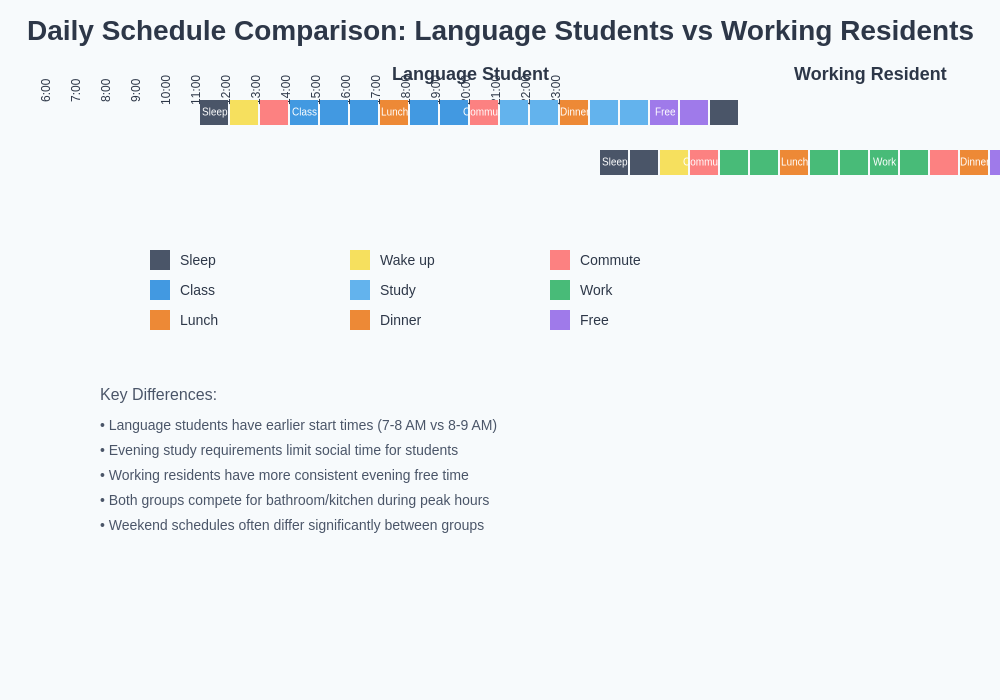
Language school schedules typically begin between 8:30 and 9:00 AM, requiring students to establish rigid morning routines that often conflict with the natural rhythms of sharehouse community life. How commute times impact your quality of life becomes particularly relevant as students must factor transportation time into already compressed morning schedules.
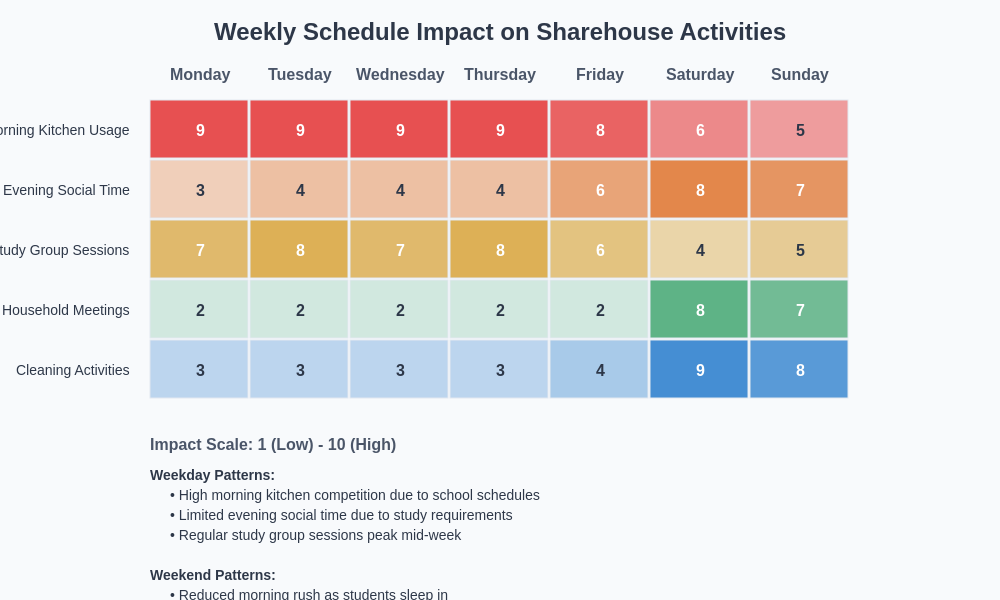
The competition for bathroom access during peak morning hours intensifies significantly when multiple residents attend language schools with similar start times. Why morning bathroom queues are inevitable in sharehouses explains how these scheduling conflicts create stress and require diplomatic solutions among housemates.
Breakfast preparation and consumption must be streamlined to accommodate early departures, often leading students to abandon communal meal experiences in favor of quick individual solutions that reduce opportunities for casual interaction with other residents. The pressure to maintain punctuality while managing personal care, meal preparation, and commute timing creates a cascading effect that influences evening preparation routines and sleep scheduling decisions.
Transportation costs and timing considerations force students to become intimately familiar with train schedules, alternative routes, and contingency planning for service disruptions that could affect attendance records and academic standing. How late night transportation limits social life also applies to morning transportation reliability and its impact on academic consistency.
Afternoon Schedule Variations and Flexibility Challenges
Language schools offer various schedule formats including intensive morning programs, afternoon sessions, and split schedules that create different lifestyle demands and social integration opportunities within sharehouse communities. Full-day intensive programs eliminate most daytime social interaction possibilities, while part-time schedules allow for greater flexibility but require more complex time management strategies.
Afternoon program students often find themselves out of sync with working residents and morning program students, creating isolated pockets of activity that can reduce community cohesion and shared experience opportunities. How shift work schedules affect roommate relations provides insights into managing these temporal disconnects between residents with different daily rhythms.
Lunch timing and location decisions significantly impact both budget management and social relationship development, as students must choose between expensive school cafeteria options, packed lunches requiring morning preparation time, or rushed trips to nearby convenience stores that offer limited nutritional variety and social interaction opportunities.
The unpredictability of assignment deadlines, test schedules, and special events creates irregular demands on evening and weekend time that can conflict with planned sharehouse activities, social commitments, and personal relationship maintenance requirements.
Evening Study Requirements and Space Competition
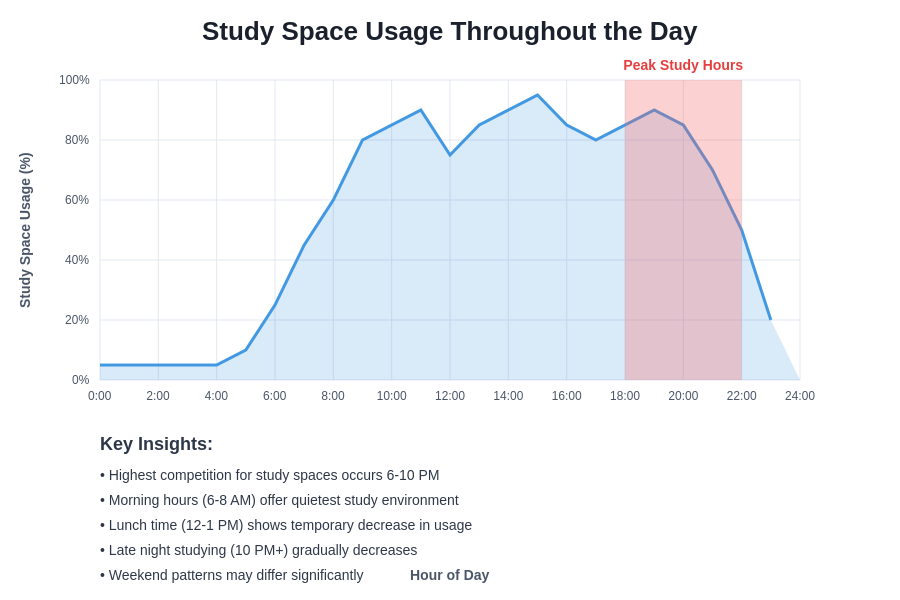
Language school homework and preparation demands typically require 2-3 hours of focused study time each evening, creating competition for quiet spaces within sharehouses that may lack dedicated study areas or soundproofing between common areas and individual rooms. How study materials take over shared spaces becomes a significant concern as students struggle to balance academic needs with community harmony.
The cognitive exhaustion from intensive language learning affects energy levels available for household responsibilities, social interaction, and personal maintenance tasks that are essential for successful sharehouse living. Students often find themselves choosing between academic success and community integration, creating stress and potential isolation within their living environment.
Group study sessions and language exchange partnerships can provide solutions for space limitations while creating positive community interactions, but require coordination and mutual respect for different learning styles and academic requirements. How language exchange programs work in sharehouses offers strategies for leveraging community resources for academic benefit.
Technology requirements for online homework, video lessons, and digital dictionary access can strain shared internet resources during peak usage hours when multiple residents attempt simultaneous high-bandwidth activities for work, entertainment, and academic purposes.
Social Life Adaptation and Community Integration
Language school schedules significantly reduce availability for spontaneous social activities and community events that often serve as primary relationship-building opportunities within sharehouse environments. Making friends through Tokyo sharehouse communities becomes more challenging when academic commitments limit participation in informal gatherings and shared experiences.
Weekend schedules often include additional study requirements, cultural excursions, or intensive review sessions that conflict with traditional social activity timing and prevent full participation in sharehouse community development initiatives. The pressure to maximize learning opportunities can create social isolation that undermines the community benefits that attract many residents to sharehouse living.
Dating and romantic relationship development faces particular challenges when language school schedules limit evening availability and weekend flexibility that are essential for building meaningful personal connections. Dating while living in Tokyo sharehouses must account for academic time constraints that affect relationship progression and social opportunity access.
Cultural adaptation and local community integration require time and energy investments that compete directly with academic success priorities, forcing students to make difficult choices about resource allocation and goal prioritization that can affect both short-term academic outcomes and long-term cultural understanding development.
Financial Planning and Budget Coordination
Language school tuition costs, textbook expenses, and transportation fees create significant monthly financial obligations that affect discretionary spending available for social activities, household contributions, and emergency fund maintenance. Student budgets require different strategies when managing education-related expenses alongside standard living costs.
Meal planning and food budgeting become more complex when irregular schedules prevent participation in group grocery shopping, bulk buying initiatives, and shared meal preparation that typically reduce individual food costs in sharehouse environments. Students often pay premium prices for convenience foods and individual portions that strain limited budgets.
Part-time work opportunities become constrained by class schedules and study requirements, limiting income potential while educational expenses continue to accumulate. How part-time income makes applications harder reflects the ongoing financial pressure that affects housing stability and lifestyle choices throughout the academic period.
Emergency fund depletion becomes a significant risk when unexpected educational expenses coincide with medical costs, transportation emergencies, or sharehouse-related financial obligations that cannot be deferred or reduced without affecting academic standing or housing security.
Technology Integration and Digital Learning Demands
Modern language schools increasingly rely on digital platforms, online assignments, and multimedia resources that require reliable internet access, appropriate devices, and technical skills that may exceed the basic technology infrastructure available in many sharehouses. How device limits cause internet connection issues becomes particularly problematic during peak academic activity periods.
Video conferencing for conversation practice, online testing, and virtual classroom participation require quiet environments and stable connections that may be difficult to guarantee in shared living spaces where other residents have competing technology needs and space usage requirements.
Digital textbook access, online homework submission, and cloud-based collaboration tools create ongoing technology dependencies that affect daily routine planning and require backup solutions for technical failures that could impact academic performance and attendance requirements.
File storage and backup needs for academic materials, recorded practice sessions, and digital portfolios require personal device management and cloud service subscriptions that add to monthly technology costs while demanding regular maintenance and data organization attention.
Health and Wellness Impact Management
The mental and physical stress of intensive language learning combined with sharehouse living challenges requires proactive health management strategies that often receive inadequate attention until problems become severe enough to affect academic performance or living situation stability.
Sleep quality and quantity frequently suffer as students attempt to balance early morning school schedules with evening study requirements and social obligations that are essential for mental health and community integration maintenance. How sleep quality suffers in shared environments compounds these academic-related sleep challenges.
Nutrition often deteriorates when time constraints prevent proper meal planning, grocery shopping, and food preparation while budget limitations force reliance on processed convenience foods that lack adequate nutritional variety and quality for sustained academic performance.
Exercise and physical activity become casualties of compressed schedules and limited energy reserves, creating health risks that can undermine cognitive function and stress management capabilities essential for academic success and positive community relationships.
Long-term Academic and Social Goal Integration
Language proficiency development timelines rarely align perfectly with sharehouse community cycles, visa requirements, or career development opportunities, requiring flexible planning that accommodates unexpected academic progress rates and changing personal priorities throughout the educational experience.
Professional networking opportunities through language schools may conflict with community-building activities within sharehouses, forcing students to choose between academic career development and personal relationship cultivation that both contribute to long-term success in Japan.
Cultural immersion goals that motivate language school attendance can be supported or hindered by sharehouse community dynamics, depending on the nationality mix, activity preferences, and cultural openness of fellow residents who may provide valuable practice opportunities or cultural isolation experiences.
Academic achievement pressure and community harmony maintenance require constant balance and communication skills that develop gradually throughout the language learning experience, with early mistakes and misunderstandings potentially affecting both academic success and housing stability in interconnected ways that require careful navigation and proactive problem-solving approaches.
The experience of managing language school demands within sharehouse living environments ultimately provides valuable life skills in time management, cultural adaptation, and community integration that extend far beyond academic achievement and living arrangement success. Students who successfully navigate these complex interactions often develop enhanced flexibility, communication abilities, and cultural sensitivity that benefit their personal and professional development long after formal language education concludes.
Disclaimer
This article is for informational purposes only and does not constitute professional educational or lifestyle advice. Language school programs and sharehouse environments vary significantly, and individual experiences may differ based on specific circumstances, academic requirements, and personal factors. Readers should research specific programs and housing options carefully and consider their individual needs when making educational and housing decisions.