The transition into sharehouse living in Tokyo inevitably confronts residents with a fundamental reality that reshapes their entire relationship with material possessions and consumption patterns. Limited storage space becomes more than just an inconvenience; it evolves into a powerful teacher that gradually guides individuals toward discovering the profound benefits and unexpected freedom that emerge from embracing minimalist principles in their daily lives.
This transformation from accumulation-based living to intentional minimalism represents one of the most significant lifestyle adjustments that sharehouse residents experience, often becoming a cornerstone philosophy that extends far beyond physical possessions to influence decision-making processes, financial priorities, and personal values. Understanding how storage limitations catalyze this change provides valuable insights into the psychology of consumption and the practical benefits of living with less in modern urban environments.
The Reality of Sharehouse Storage Constraints
Tokyo sharehouses typically allocate between six to twelve square meters of personal space per resident, with storage solutions that reflect Japanese spatial efficiency principles rather than Western accumulation tendencies. Understanding how much Tokyo sharehouses really cost per month reveals that premium pricing often correlates with marginally larger storage options, though even luxury sharehouses maintain relatively compact personal spaces.
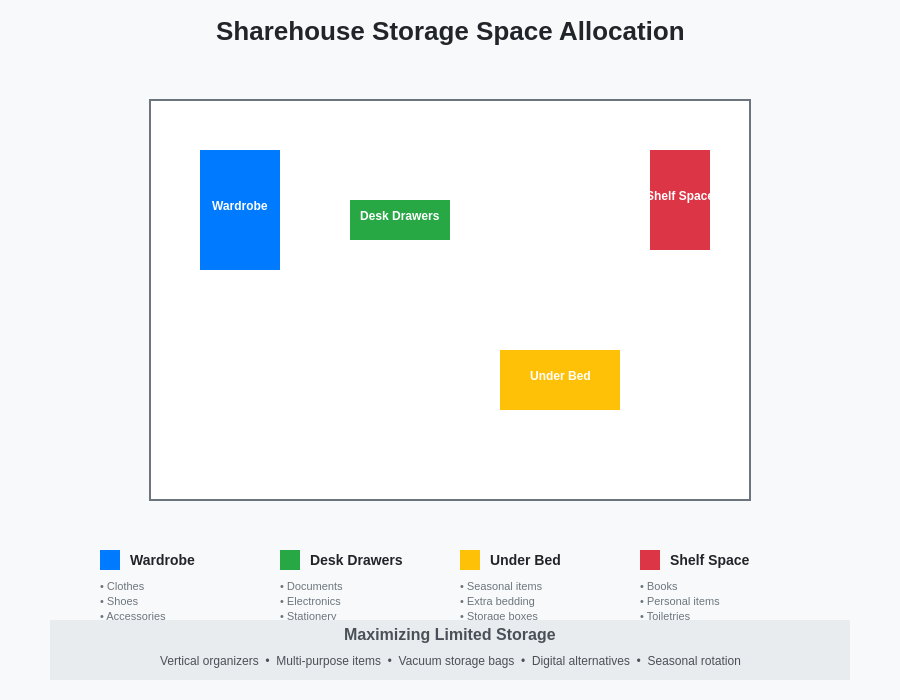
The physical limitations manifest through single wardrobes measuring approximately 60 centimeters wide, desk drawers that accommodate essentials only, and under-bed storage that becomes precious real estate for seasonal items and bulk purchases. These constraints immediately eliminate the possibility of maintaining previous consumption patterns, forcing residents to confront the difference between wants and needs in their material possessions.
Personal storage allocation extends beyond clothing and electronics to encompass books, hobby materials, exercise equipment, and sentimental items that previously occupied entire rooms in traditional housing arrangements. Japanese sharehouse rules every foreigner should know often include specific guidelines about personal item storage in common areas, further emphasizing the importance of maintaining minimal personal footprints.
Psychological Adaptation to Spatial Limitations
The initial psychological response to storage constraints typically involves resistance, frustration, and attempts to maximize available space through creative organization solutions. However, sustained exposure to these limitations gradually shifts mental frameworks from “How can I fit everything?” to “What do I actually need?” This cognitive reframing represents a fundamental change in how individuals evaluate the role of material possessions in their happiness and identity.
The forced decision-making process regarding which items to keep, store, or eliminate develops critical evaluation skills that extend beyond physical possessions to encompass digital clutter, social commitments, and lifestyle choices. How to handle roommate conflicts without moving out often includes strategies for managing personal space boundaries that reinforce minimalist principles.
Emotional attachment to objects undergoes significant transformation as residents discover that memories and experiences remain intact regardless of physical mementos. The gradual release of items previously considered essential often produces surprising feelings of liberation rather than loss, challenging deeply held beliefs about the relationship between possessions and personal security or happiness.
Practical Benefits of Forced Minimalism
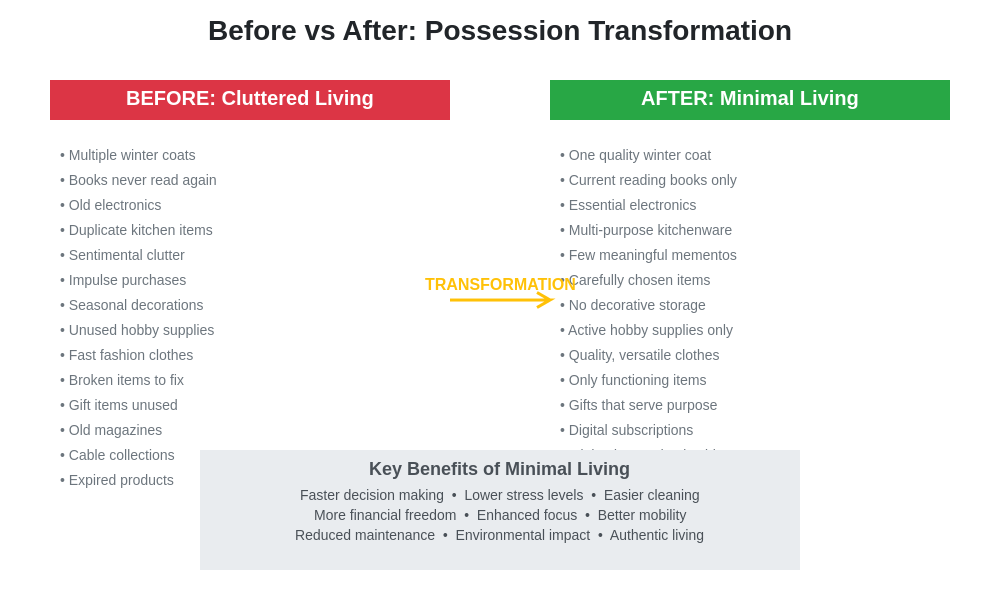
The immediate practical advantages of reduced possessions extend far beyond simple space management to encompass time savings, financial benefits, and reduced decision fatigue that collectively improve daily quality of life. Clothing selection becomes streamlined when wardrobes contain only versatile, high-quality pieces that coordinate effortlessly, eliminating morning decision paralysis and reducing laundry complexity.
Cleaning and maintenance responsibilities decrease dramatically when personal spaces contain fewer objects requiring attention, dusting, or organization. How cleaning responsibilities create house drama becomes less relevant when individual possessions remain minimal and contained within designated spaces.
Financial implications of minimalist living extend beyond reduced purchasing to encompass lower insurance needs, decreased moving costs, and elimination of storage rental fees that many urban residents accept as necessary expenses. Living costs in Tokyo sharehouses explained demonstrates how minimal possession strategies contribute to overall budget optimization.
Transformation of Shopping and Consumption Habits
Storage limitations fundamentally alter shopping behaviors by introducing natural pause points between desire and purchase that allow rational evaluation of necessity, quality, and long-term value. The question “Where will I put this?” becomes as important as “Do I want this?” in purchasing decisions, creating built-in consumer protection against impulse buying and marketing manipulation.
Quality prioritization emerges as residents discover that limited storage space demands durable, versatile items that serve multiple functions rather than specialized single-purpose products. This shift toward quality over quantity often results in higher per-item investments that prove more economical over time through reduced replacement frequency and increased satisfaction with possessions.
How grocery shopping becomes more strategic in sharehouses extends beyond food to encompass all consumer goods, as residents develop skills in bulk buying coordination, shared purchasing arrangements, and efficient consumption planning that minimize individual storage requirements while maximizing household value.
The psychological reward systems associated with shopping undergo significant recalibration as the acquisition of new items becomes more intentional and meaningful. The temporary satisfaction of impulse purchases gives way to deeper appreciation for carefully selected items that align with actual needs and lifestyle requirements.
Digital Minimalism as Natural Extension
The principles of physical minimalism naturally extend into digital spaces as residents discover parallels between cluttered physical environments and overwhelming digital landscapes. Email management, social media consumption, and digital file organization begin reflecting the same intentionality and purposefulness that governs physical possessions.
Subscription services, digital purchases, and online storage solutions undergo similar evaluation processes that prioritize functionality and genuine value over convenience or promotional pricing. The mindfulness developed through physical decluttering enhances awareness of digital clutter’s impact on mental clarity and productivity.
Entertainment consumption patterns shift toward quality over quantity as residents become more selective about books, movies, music, and media that occupy mental and temporal space. How digital entertainment replaces social interaction becomes less relevant when entertainment choices become more intentional and balanced with social activities.
Social and Relationship Impacts
Minimalist living practices influence social relationships by shifting focus from material exchanges to experiential sharing and emotional connections. Gift-giving traditions adapt to emphasize consumable items, experiences, or services rather than physical objects that require storage space, often resulting in more thoughtful and personally meaningful exchanges.
Social activities increasingly center around experiences rather than possessions, with residents developing stronger preferences for restaurants, events, and travel over shopping, collecting, or material-based hobbies. Making friends through Tokyo sharehouse communities benefits from shared values around experiences and minimal living that create natural conversation topics and activity preferences.
The reduced emphasis on material status symbols shifts social dynamics toward personality, skills, experiences, and values as primary relationship foundations. This transformation often leads to deeper, more authentic connections based on genuine compatibility rather than superficial material preferences or lifestyle displays.
Long-term Lifestyle Integration
The habits and perspectives developed through forced minimalism often persist beyond sharehouse living as residents discover the ongoing benefits of intentional consumption and simplified living arrangements. Many graduates of sharehouse living maintain minimal possession strategies even when space constraints no longer exist, indicating fundamental shifts in values and priorities.
Career decisions may reflect new priorities that value time, flexibility, and experiences over salary maximization for material accumulation. How career changes affect sharehouse eligibility becomes less relevant when career satisfaction and work-life balance take precedence over income growth for consumption purposes.
Future housing choices often prioritize quality, location, and community over size and storage capacity as residents discover that happiness correlates more strongly with environmental factors than possession capacity. Best Tokyo neighborhoods for sharehouse living demonstrates how priorities shift toward neighborhood characteristics over apartment features.
Environmental and Sustainability Awareness
Limited storage naturally promotes environmental consciousness as reduced consumption directly translates to decreased environmental impact through lower manufacturing demand, reduced packaging waste, and minimized transportation requirements. This practical environmentalism emerges organically rather than through ideological commitment, making it more sustainable and integrated into daily decision-making.
Resource sharing within sharehouse communities extends minimalist principles beyond individual practices to encompass collective consumption strategies that maximize utility while minimizing per-person environmental impact. How sustainable living practices clash with convenience becomes less problematic when sustainable practices align with space-saving necessities.
The awareness of consumption’s environmental impact often develops gradually through direct experience of waste generation and resource efficiency rather than abstract environmental education, creating lasting behavioral changes based on practical understanding rather than moral obligation.
Challenges and Adaptation Strategies
The transition to minimal living presents legitimate challenges including seasonal clothing storage, hobby equipment management, and sentimental item preservation that require creative solutions and gradual adaptation rather than immediate elimination. Understanding these challenges helps residents develop realistic expectations and sustainable strategies for long-term success.
Social pressure from family and friends who maintain traditional consumption patterns can create emotional stress and practical complications during visits or gift exchanges. Developing communication strategies that explain lifestyle choices without appearing judgmental helps maintain relationships while honoring personal values and practical limitations.
How to find the perfect sharehouse in Tokyo becomes more effective when potential residents understand storage limitations as opportunities for growth rather than restrictions to endure, enabling better property selection and expectation management.
Personal Growth and Self-Discovery
The process of deciding which possessions truly matter reveals personal values, priorities, and identity elements that may have been obscured by accumulated objects and consumption habits. This self-discovery often leads to increased self-awareness and confidence in personal preferences independent of external influences or social expectations.
Decision-making skills develop through regular practice in evaluating necessity, quality, and personal fit rather than relying on marketing messages, social proof, or emotional impulses. These enhanced critical thinking abilities often transfer to other life areas including career choices, relationship decisions, and financial planning.
The psychological freedom that emerges from reduced possession management responsibilities creates mental space for creativity, learning, and personal development that may have been previously occupied by material concerns and organizational tasks.
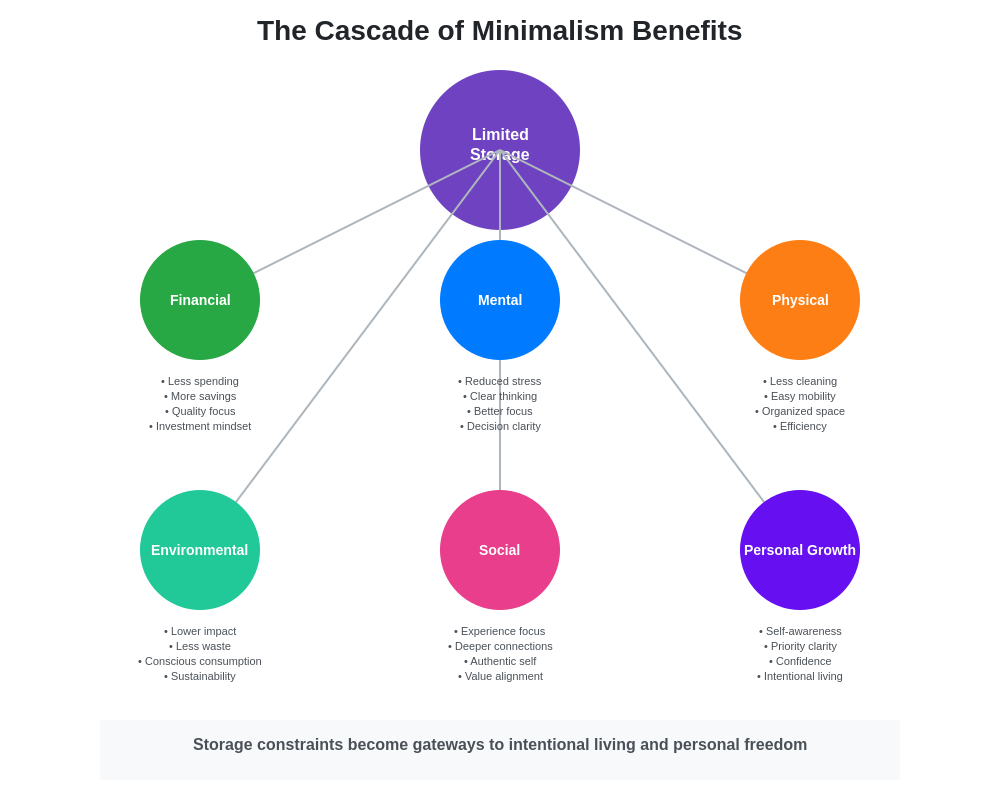
This interconnected web of benefits demonstrates how storage constraints initiate a positive feedback loop that enhances multiple aspects of life simultaneously, creating lasting improvements that extend far beyond the initial spatial limitations.
Financial Liberation Through Minimal Living
The economic benefits of forced minimalism extend far beyond reduced purchasing to encompass fundamental changes in financial priorities and wealth-building strategies. When storage constraints eliminate the option of accumulating material goods, residents often redirect spending toward experiences, education, travel, and investments that provide long-term value rather than temporary satisfaction.
Emergency fund building becomes more feasible when monthly expenses decrease through reduced consumption and possession-related costs such as insurance, maintenance, and replacement purchases. The financial cushion that develops provides greater career flexibility and life choice options that support personal growth and opportunity exploration.
Debt reduction accelerates when spending focuses on necessities and high-value purchases rather than impulse acquisitions and storage-filling items. How to budget realistically for sharehouse living demonstrates how minimal living strategies enhance overall financial health and goal achievement.
The skills developed in evaluating true necessity versus marketed desire create lasting consumer protection that saves significant money throughout life, regardless of future income levels or housing situations. This financial literacy development represents one of the most valuable long-term benefits of experiencing storage-constrained living.
Limited storage in sharehouse living serves as an unexpected gateway to discovering the profound benefits of minimalist principles that extend far beyond space management to encompass financial freedom, environmental consciousness, enhanced relationships, and personal growth. Rather than viewing storage constraints as limitations to endure, residents who embrace these conditions as opportunities for transformation often discover that less truly can be more in creating fulfilling, intentional, and meaningful lives in Tokyo’s dynamic urban environment.
Disclaimer
This article is for informational purposes only and reflects general experiences of sharehouse living. Individual experiences with minimalism and storage solutions may vary based on personal preferences, cultural background, and specific housing situations. Readers should consider their own needs and circumstances when making decisions about possessions and lifestyle changes. The benefits described may not apply to all residents or housing situations.