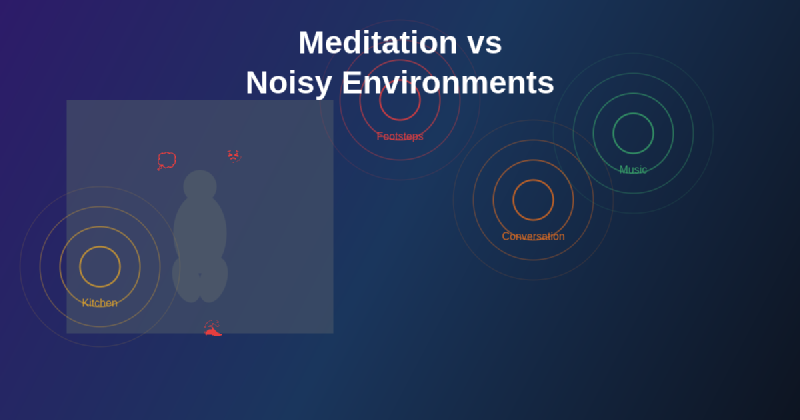
The pursuit of inner peace through meditation faces unprecedented challenges in the modern urban living environment, particularly within the confines of Tokyo sharehouses where multiple residents share common walls, floors, and daily routines. The constant symphony of footsteps overhead, conversations bleeding through thin partitions, kitchen activities extending late into the evening, and the general bustle of communal living creates a complex acoustic landscape that can severely disrupt even the most dedicated meditation practice.
For international residents who have relocated to Tokyo and chosen sharehouse living as their accommodation solution, the challenge of maintaining spiritual practices becomes particularly acute when confronted with the reality of shared living spaces designed for efficiency rather than acoustic privacy. Understanding noise pollution affects sleep quality reveals how environmental sound disruption extends beyond meditation into overall wellness and daily functioning.
The psychological and physiological impacts of attempting meditation in acoustically chaotic environments create a cascading effect that undermines the very benefits that meditation practitioners seek to achieve, including stress reduction, mental clarity, emotional regulation, and spiritual connection. Understanding these challenges and developing adaptive strategies becomes essential for maintaining personal wellness while navigating the realities of communal living arrangements.
The Science of Sound Disruption on Meditative States
Research in neuroscience and acoustic psychology demonstrates that the human brain processes auditory stimuli with remarkable sensitivity, making it inherently challenging to achieve the focused attention states that characterize successful meditation practice. When practitioners attempt to enter meditative consciousness while surrounded by unpredictable and varied sound sources, the brain’s natural alertness mechanisms remain activated, preventing the deep relaxation and awareness that meditation requires.
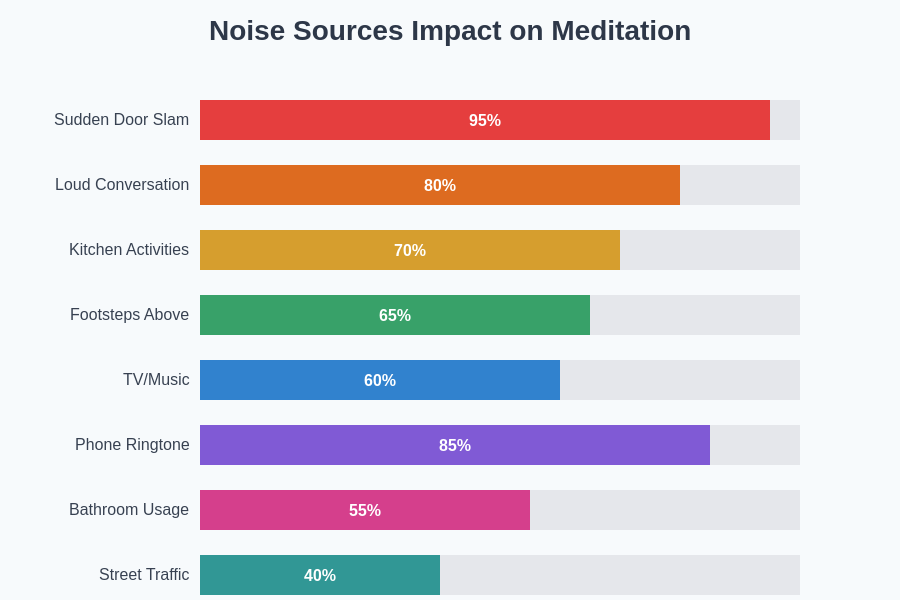
The startle response triggered by sudden noises such as slamming doors, loud conversations, or kitchen equipment creates physiological stress reactions that directly counteract meditation’s calming effects. These involuntary responses flood the nervous system with stress hormones that can take considerable time to subside, effectively resetting any progress toward meditative states and requiring practitioners to begin their practice anew.
Different types of environmental sounds affect meditation practice in varying ways, with intermittent and unpredictable noises proving more disruptive than consistent background sounds. The human auditory system evolved to prioritize irregular sounds as potential threats, making it particularly difficult to ignore the random footsteps, door closings, and conversational fragments that characterize sharehouse living environments.
Frequency ranges and volume levels play crucial roles in determining how significantly environmental sounds impact meditation attempts. Higher frequency sounds such as alarm clocks, microwave beeps, and telephone ringtones tend to pierce through focused attention more effectively than lower frequency rumbles from traffic or building systems, while moderate volume levels often prove more distracting than either very quiet or very loud sounds.
Sharehouse-Specific Acoustic Challenges
Tokyo sharehouses present unique acoustic environments that combine architectural limitations with diverse cultural approaches to noise consideration and personal space boundaries. Living with Japanese roommates in Tokyo sharehouses highlights how different cultural backgrounds influence noise awareness and consideration practices among residents.
The construction methods commonly used in Japanese residential buildings prioritize earthquake resistance and cost efficiency over sound insulation, resulting in structures where normal daily activities in adjacent rooms become clearly audible to neighboring residents. Footsteps from residents above, conversations through walls, and activities in common areas create constant background noise that shifts unpredictably throughout the day and evening hours.
Kitchen activities represent particularly challenging acoustic environments for meditation practitioners, as cooking, cleaning, and food preparation activities generate complex soundscapes combining water running, appliance operation, utensil clattering, and social interaction. Morning bathroom queues are inevitable in sharehouses demonstrates how shared facility usage creates predictable but disruptive noise patterns during typical meditation times.
The international nature of many Tokyo sharehouses introduces additional acoustic complexity through varying cultural norms regarding acceptable noise levels, appropriate quiet hours, and communication styles. Some residents may engage in loud phone conversations with family overseas during what others consider quiet evening hours, while different approaches to music listening, television viewing, and social interaction create ongoing negotiation challenges around acoustic consideration.
Psychological Impact of Failed Meditation Attempts
Repeated unsuccessful meditation attempts due to noise interruption create psychological frustration that compounds the stress that meditation practice aims to alleviate. Practitioners often experience heightened irritability toward noise sources, developing negative associations with housemates and shared living arrangements that can damage community relationships and overall residential satisfaction.
The anticipation of noise disruption can create anxiety that prevents successful meditation even during relatively quiet periods, as practitioners find themselves listening for potential interruptions rather than focusing on their intended meditation object. This hypervigilance defeats the purpose of meditation practice and can lead to abandonment of regular practice routines that previously provided significant mental health benefits.
Self-blame and feelings of inadequacy often emerge when practitioners assume their inability to meditate effectively in noisy environments reflects personal weakness or insufficient dedication rather than recognizing legitimate environmental obstacles. Stress management techniques become necessary when living situations create ongoing challenges to established wellness practices.
The loss of a reliable meditation practice can contribute to increased anxiety, difficulty managing daily stress, and reduced emotional regulation capacity, creating a downward spiral where the absence of meditation makes noise sensitivity worse while noise sensitivity makes meditation more difficult to achieve.
Cultural Differences in Noise Tolerance and Consideration
International sharehouses bring together residents from diverse cultural backgrounds with significantly different approaches to noise creation, tolerance levels, and consideration practices. Understanding these differences becomes crucial for developing realistic expectations and effective communication strategies around acoustic coexistence.
Some cultures prioritize individual expression and personal freedom in ways that may include louder communication styles, music appreciation, and social interaction patterns, while others emphasize collective harmony and noise minimization as expressions of mutual respect. These fundamental differences in values and behavioral norms can create ongoing tension around acoustic boundaries and consideration practices.
Japanese cultural norms generally emphasize noise consideration and collective harmony, but international residents may not share these values or understand their practical application in shared living contexts. Cultural differences affect friendship building explores how varying approaches to shared space usage can impact community relationships.
Religious and spiritual practice requirements also vary significantly across cultures, with some traditions requiring vocal prayer, chanting, or music while others emphasize silence and stillness. These differences can create scheduling conflicts and mutual misunderstanding when multiple residents attempt to maintain their spiritual practices within shared living spaces.
Timing Challenges and Schedule Conflicts
Peak noise periods in sharehouses typically coincide with traditional meditation times, creating fundamental scheduling conflicts for practitioners attempting to maintain regular practice routines. Early morning hours often considered ideal for meditation coincide with bathroom usage queues, breakfast preparation, and departure routines for work or study commitments.
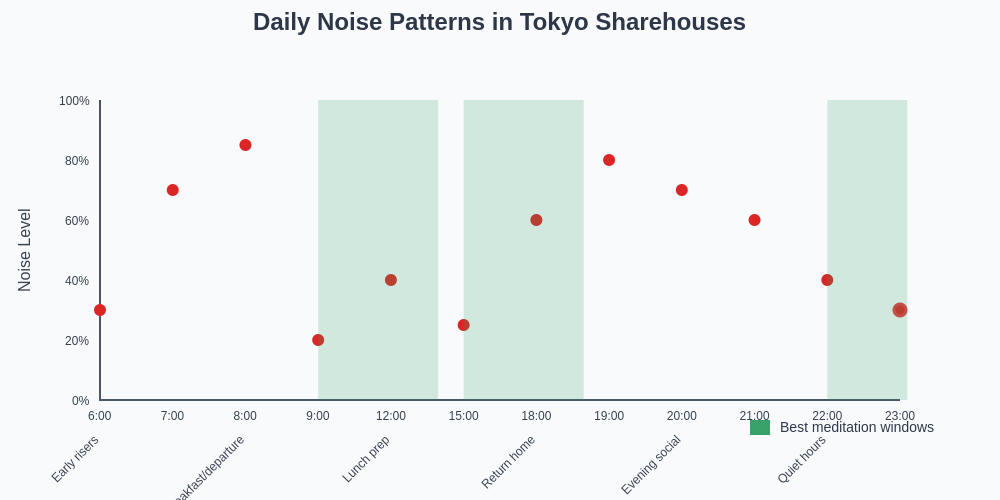
Evening meditation sessions face similar challenges as residents return from daily activities, prepare meals, engage in social interaction, and pursue recreational activities that generate noise. Weekend schedules often intensify these conflicts as residents have more flexibility for social activities, cleaning projects, and leisure pursuits that extend noise generation throughout traditionally quieter periods.
The unpredictability of sharehouse schedules makes it difficult to identify reliable quiet periods for meditation practice, as residents’ work schedules, social commitments, and daily routines vary significantly and change frequently. University schedules affect sharehouse rhythms demonstrates how academic calendars create additional scheduling complexity.
Shift work schedules among residents can mean that someone is always awake and active within the sharehouse, eliminating traditional quiet hours and requiring meditation practitioners to develop noise-tolerant practices or abandon time-specific meditation routines entirely.
Physical Space Limitations and Acoustic Design
The small room sizes typical in Tokyo sharehouses limit options for creating dedicated meditation spaces that might provide some acoustic isolation from common areas and neighboring rooms. Most sharehouse rooms function as combined sleeping, working, and living spaces, making it difficult to establish areas specifically designated for spiritual practice.
Acoustic treatment options such as sound-absorbing materials, white noise machines, or structural modifications are typically prohibited by sharehouse rules or impractical due to space constraints and temporary residency arrangements. Personal space needs vary dramatically explores how room size limitations affect various personal activities and wellness practices.
The proximity of meditation spaces to high-traffic areas such as corridors, stairwells, and common areas means that even minor sounds from building systems, neighboring activities, and general movement become amplified distractions that interfere with concentration and focus.
Furniture arrangements and room layouts often prioritize storage and functionality over acoustic considerations, placing beds and sitting areas against shared walls where sound transmission is most problematic rather than in corners or areas that might provide some natural sound buffering.
Adaptive Strategies and Practical Solutions
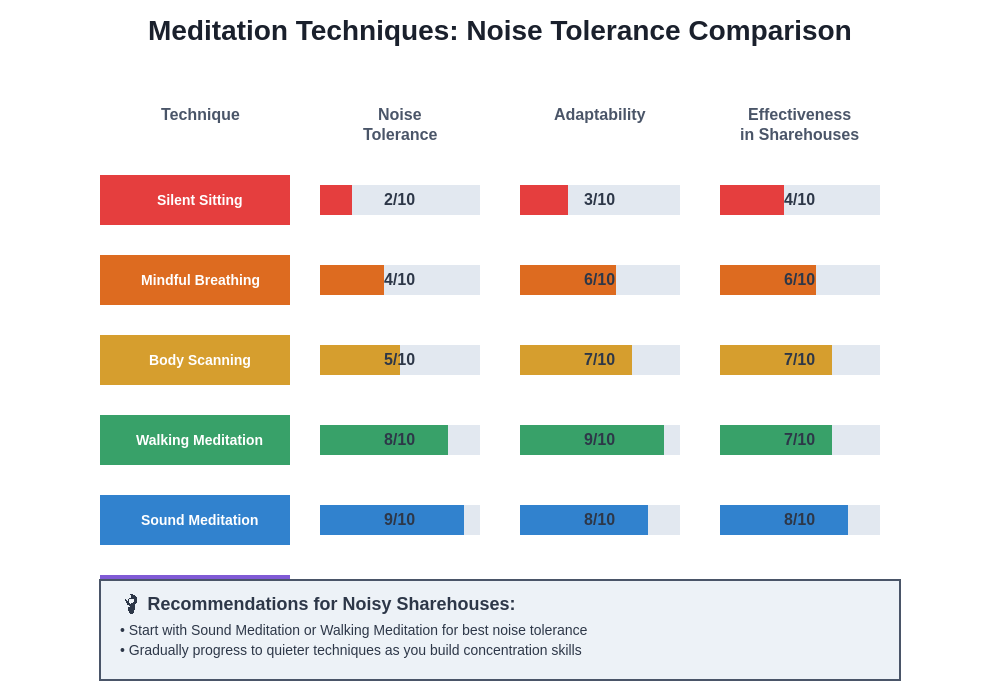
Successful meditation practice in noisy sharehouses requires fundamental adaptations to traditional meditation approaches, emphasizing techniques that work with rather than against environmental acoustic realities. Mindfulness practices that incorporate awareness of surrounding sounds as meditation objects can transform noise from distraction into practice opportunity.
Moving meditation practices such as walking meditation, yoga, or tai chi can provide alternative approaches that remain effective despite acoustic disruptions while offering physical movement benefits that complement spiritual practice goals. These practices often prove more sustainable in shared living environments than seated meditation techniques that require sustained silence and stillness.
Timing flexibility becomes essential for maintaining consistent practice, with successful practitioners often developing multiple short meditation sessions rather than single longer periods, allowing them to take advantage of brief quiet moments rather than waiting for extended silent periods that may never occur.
Technology solutions including noise-canceling headphones, meditation apps with built-in ambient sound, and white noise generators can provide acoustic masking that makes meditation possible even during moderately noisy periods. However, these tools require careful selection to ensure they enhance rather than complicate meditation practice.
Community Dialogue and Noise Agreements
Establishing household conversations about noise consideration and quiet hour agreements can create more predictable acoustic environments that support meditation practice while respecting diverse cultural approaches to shared living. How to handle roommate conflicts without moving out provides frameworks for productive discussions about lifestyle compatibility.
Successful noise agreements typically focus on specific behaviors and time periods rather than subjective noise levels, creating clear expectations around activities such as music listening, phone conversations, kitchen usage, and guest policies during designated quiet periods.
Regular house meetings provide opportunities to address emerging noise concerns and adjust agreements based on changing resident needs and schedules. These discussions work best when framed around mutual consideration rather than individual complaints or demands.
Creating shared understanding about the importance of spiritual and wellness practices can help residents develop empathy for meditation needs while also acknowledging other residents’ legitimate space usage requirements and cultural expression needs.
Alternative Practice Approaches and Locations
Meditation practitioners in noisy sharehouses often discover that traditional home-based practice expectations need fundamental revision to accommodate acoustic realities. Exploring meditation opportunities in nearby parks, temples, community centers, and meditation groups can provide access to suitable acoustic environments while maintaining practice consistency.
Public spaces such as early morning parks, library quiet rooms, and temple grounds often offer superior acoustic conditions for meditation compared to sharehouse environments, requiring practitioners to adjust their practice schedules and locations rather than their techniques.
Best Tokyo neighborhoods for sharehouse living can influence access to quiet outdoor spaces and meditation-friendly environments, making location selection an important consideration for practitioners prioritizing spiritual practice maintenance.
Building relationships with local meditation communities provides both alternative practice venues and support networks for maintaining spiritual practices despite challenging living situations. Many Tokyo temples and meditation centers offer regular group sessions that welcome international participants regardless of experience level.
Long-term Health and Wellness Implications
The inability to maintain regular meditation practice due to environmental noise challenges can have significant cumulative effects on mental health, stress management capacity, and overall life satisfaction. Chronic stress from both noise exposure and failed relaxation attempts creates physiological impacts that extend far beyond temporary frustration.
Sleep quality often deteriorates when meditation practice becomes inconsistent, as many practitioners rely on evening meditation sessions to transition from daily stress into restful sleep states. Sleep quality suffers in shared environments demonstrates how acoustic challenges compound to affect multiple aspects of wellness.
Emotional regulation difficulties may emerge when meditation practice becomes unreliable, potentially leading to increased irritability, anxiety, and difficulty managing the interpersonal challenges that naturally arise in shared living situations. The loss of meditation as a coping strategy can make sharehouse living stress more difficult to navigate successfully.
The development of noise sensitivity and hypervigilance can persist even after moving to quieter living situations, requiring conscious effort to retrain relaxation responses and rebuild confidence in meditation practice effectiveness.
Building Resilience and Adaptive Capacity
Meditation practitioners who successfully navigate noisy sharehouse environments often develop enhanced flexibility, creativity, and resilience that strengthens their overall spiritual practice beyond what quiet environment meditation might provide. Learning to maintain inner calm despite external chaos represents an advanced meditation skill that serves practitioners well in all life situations.
The challenge of practicing meditation in difficult conditions can deepen appreciation for quiet spaces and successful meditation sessions while developing non-attachment to ideal practice conditions. This growth often leads to more robust and sustainable spiritual practices that remain effective regardless of external circumstances.
Community building skills developed through navigating noise consideration discussions and cultural differences in shared living environments often enhance practitioners’ ability to create supportive spiritual communities and maintain practice accountability through relationship rather than environmental control.
The experience of adapting meditation practice to challenging circumstances frequently leads to exploration of diverse meditation traditions and techniques, expanding practitioners’ spiritual toolkit and understanding of various approaches to inner peace and awareness cultivation.
The journey of maintaining meditation practice within the acoustic challenges of sharehouse living ultimately teaches valuable lessons about adaptability, community consideration, and the relationship between external environment and inner peace. While these challenges are genuine and significant, they also provide opportunities for spiritual growth and practice development that complement the cultural immersion and international community benefits that draw many practitioners to sharehouse living in the first place.
Disclaimer
This article is for informational purposes only and does not constitute professional medical or psychological advice. Meditation practices and noise sensitivity can vary significantly between individuals, and readers should consult qualified professionals for persistent stress, anxiety, or sleep issues. The effectiveness of suggested strategies may depend on individual circumstances, specific sharehouse environments, and personal meditation experience levels.