The proximity of your Tokyo sharehouse to metro stations represents one of the most underestimated factors influencing your social life and community connections during your stay in Japan. While most international residents focus primarily on rent costs and room amenities when selecting accommodation, the accessibility to Tokyo’s extensive railway network can fundamentally shape your daily social interactions, romantic opportunities, and long-term relationship building in ways that extend far beyond simple transportation convenience.
The intricate web of Tokyo’s metro system serves as the social circulatory system of the city, connecting diverse neighborhoods, entertainment districts, and cultural hubs that form the backbone of metropolitan social life. Understanding how your housing location within this network affects your ability to participate in social activities, maintain relationships, and build new connections becomes crucial for maximizing your Japanese living experience and creating meaningful memories that will last long after your residency ends.
The Transportation-Social Connection Matrix
Tokyo’s metro accessibility creates distinct social zones throughout the city, with each area offering different advantages and limitations for social engagement. Best Tokyo neighborhoods for sharehouse living demonstrates how transportation connectivity directly correlates with social opportunities and community vibrancy in different districts.
Areas with multiple metro line intersections naturally become social magnets, attracting diverse populations and creating spontaneous interaction opportunities that single-line neighborhoods cannot match. The frequency of train services, particularly during evening hours, determines your flexibility for social activities and influences how late you can comfortably participate in Tokyo’s renowned nightlife scene without worrying about transportation logistics.
The psychological impact of metro accessibility extends beyond practical considerations, affecting your willingness to explore new areas, accept social invitations, and maintain relationships across Tokyo’s vast metropolitan area. Residents with excellent metro access report higher satisfaction levels with their social lives and demonstrate greater confidence in navigating Tokyo’s complex urban landscape.
Evening Entertainment and Nightlife Accessibility
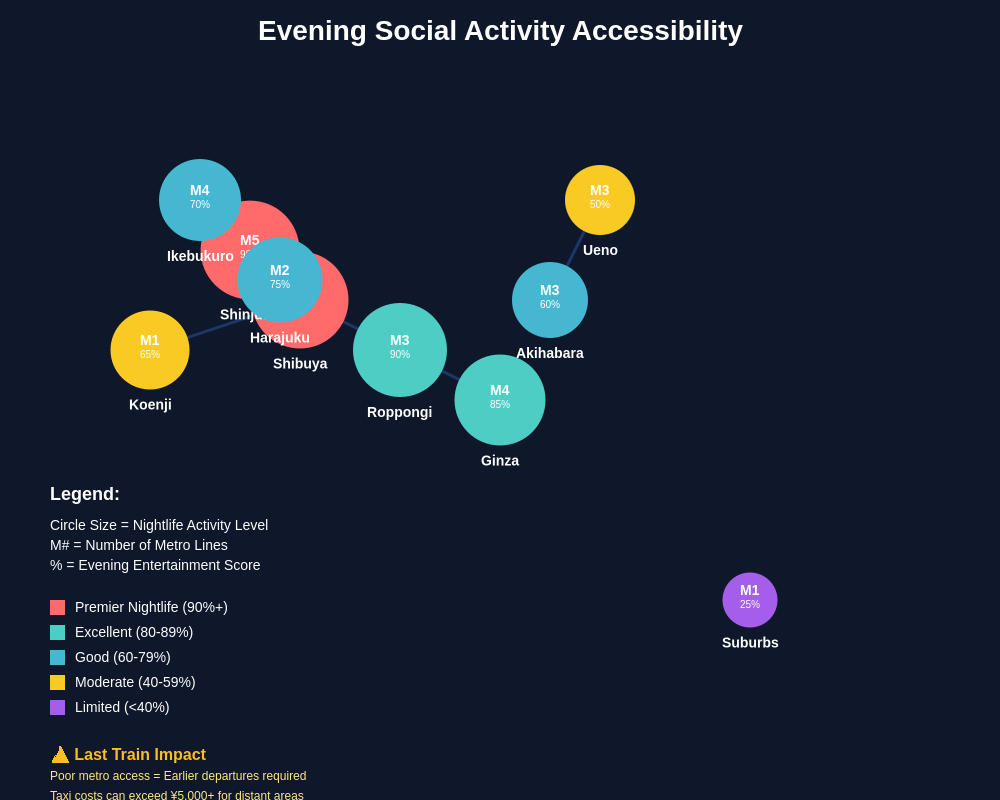
Tokyo’s entertainment ecosystem operates on precise timing schedules that align closely with metro service hours, creating natural barriers and opportunities based on your sharehouse location. The last train phenomenon significantly influences social planning, with residents in well-connected areas enjoying extended evening flexibility while those in peripheral locations face earlier departure pressures that can limit their participation in group activities.
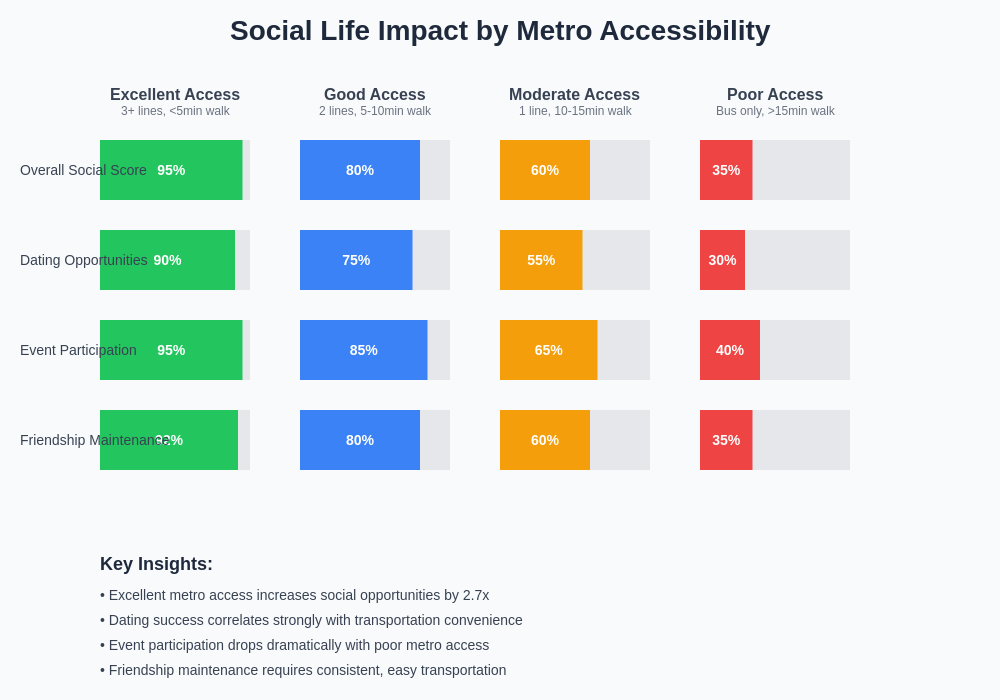
Dating while living in Tokyo sharehouses becomes significantly more complex when metro accessibility factors into romantic planning and relationship maintenance. The ability to easily reach popular dating districts like Shibuya, Roppongi, or Ginza can dramatically expand your romantic opportunities and social circle expansion potential.
Weekend social activities often concentrate in areas with superior metro connectivity, creating social stratification based on transportation accessibility. Residents with poor metro access frequently find themselves excluded from spontaneous social gatherings and struggle to maintain consistent participation in group activities that require reliable transportation access.
The cost implications of taxi usage for residents in metro-poor areas can create significant monthly budget strain, particularly for those who prioritize active social lives and regular participation in Tokyo’s diverse entertainment offerings. Understanding these hidden social costs helps inform housing decisions that align with lifestyle priorities and financial constraints.
Building and Maintaining Relationships Across Distance
The geography of friendship maintenance in Tokyo directly correlates with metro line efficiency and transfer requirements between different areas. Making friends through Tokyo sharehouse communities illustrates how transportation barriers can either facilitate or hinder the development of meaningful international friendships.
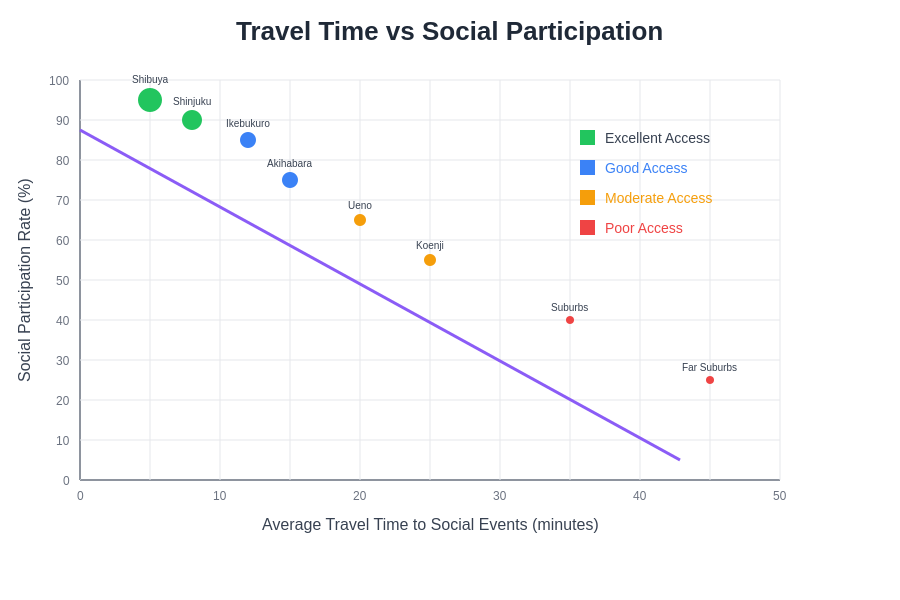
Relationships requiring multiple train transfers or extended travel times face natural decay pressures that well-connected friendships avoid, creating social network clustering around transportation hubs and metro-accessible areas. The mental threshold for maintaining friendships increases dramatically when visits require complex routing or extended travel commitments.
Professional networking opportunities concentrate in business districts with superior metro access, potentially limiting career development for residents in transportation-isolated areas. Business district sharehouses near Tokyo Station demonstrates how proximity to major commercial centers affects professional relationship building and career advancement opportunities.
International resident communities often develop around metro accessibility patterns, with well-connected areas attracting diverse expatriate populations while isolated locations may lack the multicultural social environments that many foreign residents seek. This geographical sorting affects cultural exchange opportunities and language learning environments.
Weekend Social Planning and Group Activities
Tokyo’s weekend social culture heavily emphasizes group activities and shared experiences that require coordination across multiple participants from different neighborhoods. Metro accessibility becomes the determining factor in group formation, with well-connected residents naturally becoming social coordinators while those in transportation-poor areas may find themselves consistently excluded from planning processes.
Popular weekend destinations such as theme parks, cultural festivals, and seasonal events often require specific metro line access that can exclude residents from peripheral areas or those requiring complex transfer routes. Tokyo vs Osaka sharehouses for international students highlights how transportation infrastructure affects social participation patterns in major Japanese cities.
The phenomenon of social momentum loss occurs when group activities face transportation barriers, leading to reduced participation rates and eventual exclusion of members who create logistical complications. Understanding these dynamics helps residents make housing decisions that support their desired level of social engagement and community participation.
Seasonal social activities in Tokyo often follow metro-accessible patterns, with cherry blossom viewing, summer festivals, and winter illuminations concentrated in areas with superior transportation links. Residents with poor metro access may miss these culturally significant social opportunities that form core memories of the Japanese experience.
Cultural Event Participation and Community Engagement
Tokyo’s rich cultural calendar operates within a metro-centric framework that prioritizes accessibility and convenience for maximum participation. Japanese sharehouse rules every foreigner should know explains how cultural integration opportunities often depend on transportation accessibility to cultural venues and community centers.
Language exchange events, international meetups, and cultural workshops typically concentrate in areas with excellent metro connectivity, creating natural barriers for residents in transportation-isolated locations. The cumulative effect of missing these regular social and educational opportunities can significantly impact cultural integration and language learning progress.
Community volunteering opportunities and civic engagement activities often require reliable transportation access to various locations throughout Tokyo, limiting participation for residents without convenient metro connections. These activities frequently serve as important social networking opportunities and community integration pathways for international residents.
The spontaneity factor in Tokyo social life heavily depends on metro accessibility, with well-connected residents able to respond to last-minute invitations and impromptu gatherings while those in isolated areas must commit to social plans well in advance due to transportation logistics.
Economic Impact on Social Spending
Transportation costs create hidden social expenses that significantly impact overall lifestyle budgets for residents in metro-poor areas. Living costs in Tokyo sharehouses explained demonstrates how transportation expenses can consume substantial portions of entertainment budgets when metro access is limited.
The taxi cost factor becomes particularly relevant for residents who prioritize active social lives but live in areas with poor late-night transportation options. Monthly taxi expenses can easily exceed rent savings from choosing isolated accommodation, creating false economy situations that ultimately reduce overall quality of life.
Alternative transportation methods such as bicycle usage or longer walking distances may provide cost savings but create time and weather dependency issues that can limit social participation flexibility. Understanding these trade-offs helps residents make informed decisions about housing location priorities.
Group transportation cost sharing becomes more complex when some participants require expensive alternative transportation options, potentially creating social friction and exclusion dynamics within friend groups and social circles.
Technology and Social Coordination Solutions
Modern social coordination increasingly relies on real-time communication and flexible planning that assumes metro accessibility for all participants. How social media groups connect sharehouse communities illustrates how digital tools attempt to bridge transportation barriers but cannot fully compensate for accessibility limitations.
Location-sharing applications and group coordination platforms work most effectively when all participants have reliable metro access, creating technological exclusion for residents in transportation-poor areas. The assumption of universal metro accessibility in social planning tools can inadvertently marginalize residents with limited transportation options.
Navigation applications and route planning tools optimize for metro-accessible destinations, potentially limiting social exploration and discovery opportunities for residents who rely heavily on transportation apps for social planning and activity selection.
Long-term Social Network Development
The cumulative effect of metro accessibility on social network development becomes apparent over extended residency periods, with well-connected residents developing broader, more diverse social circles while isolated residents may experience social network stagnation. Real stories from Tokyo sharehouse residents provides authentic accounts of how transportation access affects long-term social satisfaction.
Professional and personal relationship quality often correlates with meeting frequency and interaction consistency, both of which depend heavily on convenient transportation access between participants. Metro accessibility enables the regular interaction patterns necessary for developing deep, meaningful relationships.
Social skill development and cultural adaptation progress more rapidly for residents with superior metro access due to increased exposure to diverse social situations and cultural interactions. The learning opportunities available through enhanced social participation create compounding benefits over time.
Strategic Housing Selection for Social Optimization
Understanding your personal social priorities and lifestyle preferences should heavily influence housing location decisions within Tokyo’s metro network. How to find perfect sharehouse Tokyo emphasizes the importance of balancing accommodation costs with social accessibility factors.
Different metro lines offer distinct social advantages and community characteristics that align with various lifestyle preferences and social goals. Researching the social ecosystem of potential neighborhoods before committing to housing arrangements prevents later disappointment and social isolation.
The trade-off analysis between rent savings and social accessibility requires honest assessment of personal priorities and lifestyle goals during Tokyo residency. Understanding these factors helps prevent housing decisions that ultimately undermine social satisfaction and community integration objectives.
Future housing mobility plans should account for changing social needs and relationship development patterns that may require different metro accessibility levels as residency progresses and social networks evolve throughout the Tokyo experience.
Metro accessibility in Tokyo represents far more than simple transportation convenience, serving as a fundamental determinant of social opportunity, relationship development, and cultural integration success. The decisions you make about housing location within Tokyo’s extensive metro network will ripple through every aspect of your social life, influencing friendships, romantic relationships, cultural participation, and overall satisfaction with your Japanese living experience. By understanding these connections and prioritizing metro accessibility appropriately within your housing selection criteria, you can ensure that your sharehouse choice supports rather than limits your social goals and community integration objectives throughout your Tokyo adventure.
Disclaimer
This article is for informational purposes only and reflects general observations about Tokyo metro accessibility and social life patterns. Individual experiences may vary based on personal preferences, social skills, and specific circumstances. Metro schedules, routes, and accessibility can change, and readers should verify current transportation information when making housing decisions. Social opportunities depend on many factors beyond transportation access alone.