The presence of musical residents in Tokyo sharehouses fundamentally transforms the acoustic landscape and social dynamics of shared living spaces, creating entirely new frameworks for what constitutes acceptable noise levels and community interaction patterns. When musicians choose sharehouse living, they bring with them not only their instruments and practice schedules but also a completely different understanding of sound as both an artistic expression and a daily necessity that requires careful negotiation with non-musical housemates.
The integration of music practice into sharehouse environments represents one of the most complex challenges in communal living, as it involves balancing artistic pursuits with respect for shared spaces and varied lifestyle preferences among residents. Understanding how musical activities reshape noise expectations provides valuable insights for both musicians seeking appropriate housing and non-musicians who may find themselves living alongside dedicated practitioners in Tokyo’s diverse sharehouse communities.
The Acoustic Reality of Sharehouse Music Practice
Musical practice in sharehouses creates unique acoustic challenges that extend far beyond simple volume considerations, encompassing frequency ranges, practice duration, timing preferences, and the psychological impact of repetitive musical phrases on non-participating residents. Understanding why noise control becomes critical for career success highlights how sound management affects professional performance and personal well-being in shared living environments.
Traditional sharehouse noise policies typically focus on general conversation levels, television volume, and basic courtesy during sleeping hours, but musical practice introduces entirely different categories of sound that require specialized consideration and accommodation strategies. Acoustic instruments such as guitars, violins, flutes, and keyboards produce sustained tones, repetitive scales, and varying volume levels that can penetrate standard room barriers and affect multiple residents simultaneously across different areas of the house.
The temporal nature of music practice creates additional complexity, as musicians often require consistent daily practice schedules to maintain skill levels and prepare for performances, lessons, or auditions. Understanding how musical instruments affect noise policies explores how different instrument types create varying challenges for sound management and community harmony within shared living spaces.
Electronic instruments and digital music production introduce different acoustic considerations, including the use of headphones, amplified sound systems, and computer-based recording equipment that may generate unexpected noise sources such as cooling fans, clicking sounds, and occasional monitoring speaker usage that affects the overall sound environment in subtle but persistent ways.
Establishing New Community Sound Standards
The presence of musicians in sharehouses typically necessitates the development of more sophisticated and nuanced noise policies that account for artistic expression while maintaining livability for all residents. Learning about Japanese sharehouse rules every foreigner should know provides context for understanding how cultural expectations around sound and courtesy influence policy development in multicultural living environments.
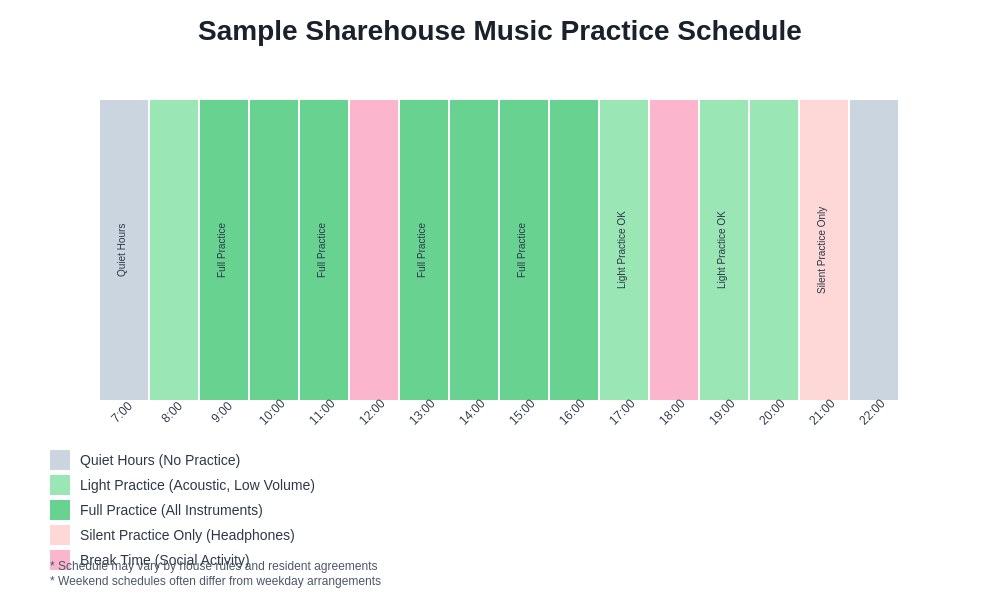
Successful musical sharehouses often implement time-based practice schedules that designate specific hours for different types of musical activities, creating predictable periods when residents can expect higher noise levels alongside quiet hours that ensure adequate rest and study time for non-musical activities. These schedules require ongoing negotiation and adjustment as resident needs change and new musicians join or leave the community.
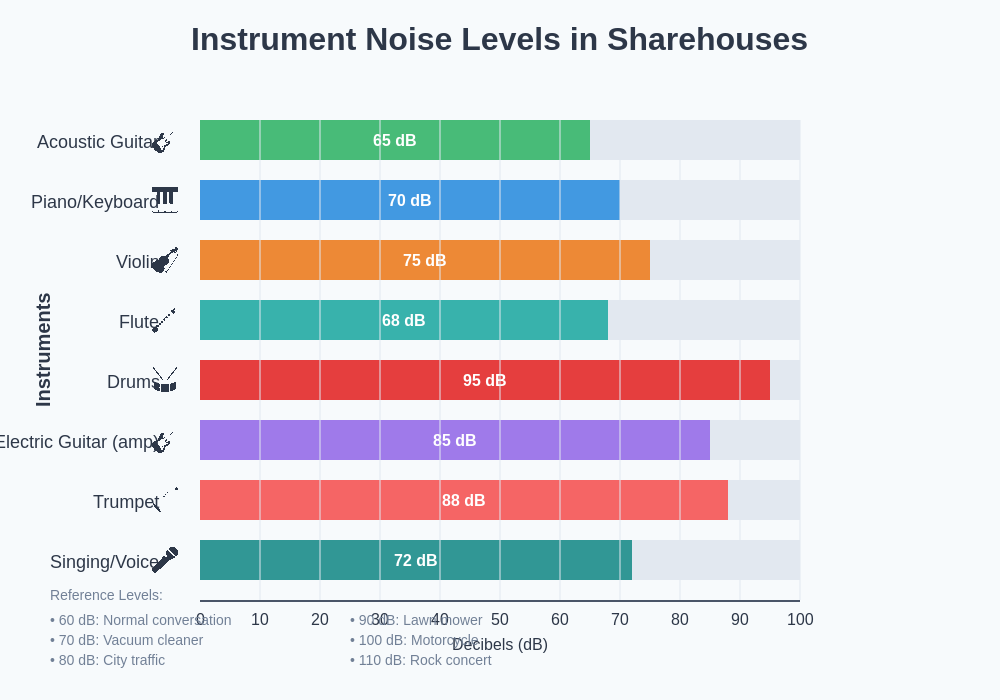
Volume limitations become more sophisticated in musical sharehouses, moving beyond simple “keep it down” requests to specific decibel guidelines, room-specific policies, and instrument-appropriate restrictions that acknowledge the inherent volume differences between a solo flute practice session and electric guitar amplification. The development of these standards often involves trial and error periods as communities learn what works for their specific combination of residents and living spaces.
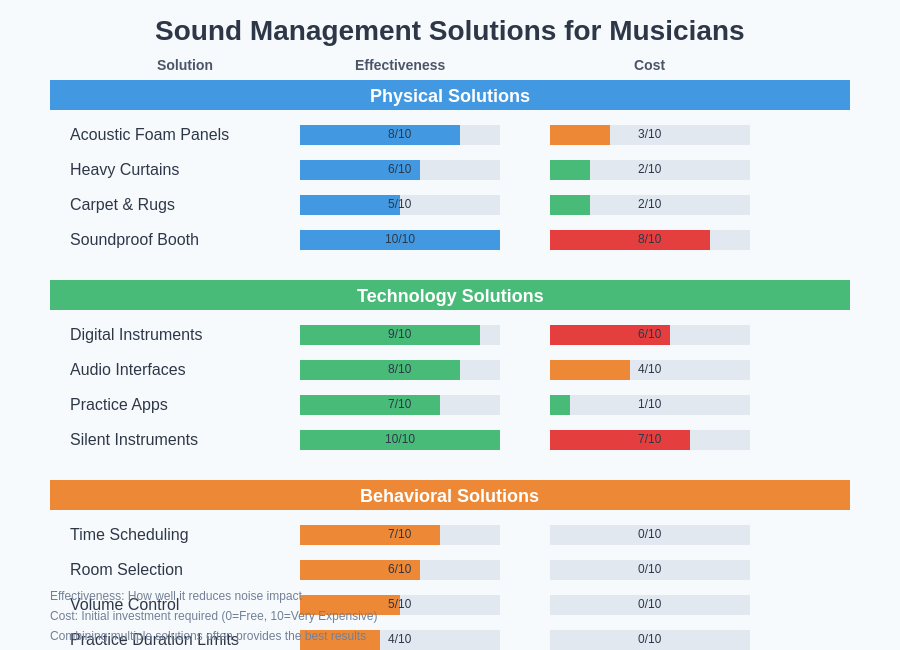
Sound isolation techniques become community investments rather than individual responsibilities, with residents collaborating on acoustic improvements such as foam padding, carpet installation, and strategic furniture placement that benefits everyone while enabling musical practice to continue without excessive disruption to daily activities and sleep patterns.
The Psychology of Musical Tolerance in Shared Spaces
Living with musicians fundamentally alters residents’ psychological relationship with ambient noise, gradually expanding tolerance levels and appreciation for musical sounds while simultaneously creating new sensitivities to practice repetition and timing considerations. Exploring how personality conflicts escalate quickly reveals how individual differences in sound sensitivity can create friction when not properly addressed through communication and accommodation strategies.
Non-musical residents often experience an adjustment period during which they learn to distinguish between productive practice sessions and casual playing, developing appreciation for the discipline and dedication required for musical improvement while also establishing personal boundaries around when musical activities become disruptive to their own activities and mental well-being.
The repetitive nature of musical practice creates unique psychological challenges, as residents must adapt to hearing the same scales, exercises, and song fragments multiple times during practice sessions. This repetition can become either a familiar background soundtrack that provides comfort and routine or a source of irritation that requires active coping strategies and communication between musical and non-musical residents.
Exposure to diverse musical styles and instruments often broadens residents’ musical appreciation and cultural understanding, creating opportunities for cultural exchange and artistic collaboration that enhance the overall living experience. Many non-musical residents report developing new interests in music and instruments through daily exposure to practice sessions and informal performances within the house community.
Instrument-Specific Challenges and Accommodations
Different musical instruments create distinct challenges for sharehouse living, requiring tailored accommodation strategies that account for volume levels, frequency ranges, practice requirements, and physical space needs that vary dramatically between instrument categories. Understanding how musical instruments affect daily routines explores how instrument choice influences living space utilization and community dynamics.
String instruments such as guitars, violins, and cellos produce sustained tones that can penetrate walls and travel through building structures, requiring careful consideration of practice timing and room selection to minimize impact on neighboring residents. Acoustic guitars generally create moderate volume levels but benefit from soft furnishings and closed doors, while electric instruments offer volume control through headphone usage but may require amplification for serious practice sessions.
Wind instruments including flutes, clarinets, and brass instruments create unique challenges due to their directional sound projection and breath-based volume fluctuations that can be difficult to control consistently. These instruments often require dedicated practice spaces with good ventilation and sound absorption, as well as scheduling coordination to avoid conflicts with residents who may be sensitive to higher frequency sounds.
Percussion instruments and electronic music production present the most significant challenges for sharehouse living due to their potential for sudden loud sounds, bass frequencies that travel through building structures, and the difficulty of containing drum sounds within single rooms. These activities often require specialized soundproofing solutions and may be restricted to specific times or designated areas within the house.
Scheduling Systems and Practice Time Management
Effective musical sharehouses develop sophisticated scheduling systems that balance the practice needs of multiple musicians with the daily routines and preferences of non-musical residents, creating predictable frameworks that allow everyone to plan their activities around known periods of musical activity. Learning how morning bathroom queues are inevitable in sharehouses demonstrates how shared resources require coordination systems that can be adapted for managing practice time and space allocation.
Time-blocking systems allow musicians to reserve specific practice periods while ensuring adequate quiet time for studying, working from home, sleeping, and relaxation activities that require minimal background noise. These systems often include buffer periods between practice sessions to allow for setup and breakdown of equipment while providing transitions between different musical activities and general house noise levels.
Rotation schedules become necessary when multiple musicians share limited practice spaces or when instrument types require similar acoustic considerations and room configurations. Fair rotation systems consider practice intensity requirements, preparation deadlines for performances or lessons, and the varying needs of different skill levels and musical commitments among resident musicians.
Emergency scheduling accommodations address urgent practice needs such as audition preparation, performance deadlines, or lesson requirements that may fall outside regular practice schedules. These systems require clear communication protocols and community agreement on when exceptional practice time requests are reasonable and how they should be managed without creating precedents for regular schedule violations.
Technology Solutions for Sound Management
Modern technology offers numerous solutions for managing musical practice in sharehouse environments, from personal audio equipment that eliminates acoustic output to sophisticated recording and practice applications that provide professional-quality practice experiences without generating external noise. Understanding how smart home features change daily routines explores how technological solutions can improve community living experiences and reduce conflicts around shared resources.
Digital instruments and practice applications enable silent practice through headphone usage while maintaining realistic playing experiences through advanced sound modeling and haptic feedback systems. Electric guitars, keyboards, and drum kits equipped with headphone outputs allow musicians to practice at any hour without affecting other residents, though some acoustic leakage from headphones and physical instrument sounds may still require consideration.
Recording technology allows musicians to capture practice sessions for later review and analysis, potentially reducing the need for extended live practice sessions while providing valuable learning tools that enhance practice efficiency. However, recording activities may introduce new noise sources such as equipment cooling fans, keyboard clicking, and monitoring speakers that require their own management strategies.
Sound monitoring applications and decibel meters provide objective measurements of noise levels, helping establish clear guidelines and providing feedback to musicians about their actual acoustic impact on the shared living environment. These tools can help resolve disputes by providing concrete data about noise levels and timing rather than relying on subjective impressions and complaints.
Building Musical Communities Within Sharehouses
Musical sharehouses often evolve into collaborative creative communities where residents support each other’s artistic development through shared performance opportunities, constructive feedback, and collaborative projects that enhance everyone’s musical experience while strengthening house social bonds. Exploring how creative communities form in artist-friendly spaces examines how artistic focus can create unique living environments that attract like-minded residents.
Informal performance opportunities such as house concerts, jam sessions, and musical gatherings create positive outlets for musical energy while providing entertainment and cultural enrichment for all residents regardless of their own musical abilities. These events help transform musical practice from a potentially disruptive individual activity into a community asset that adds value to the shared living experience.
Skill sharing and musical education often emerge naturally in musical sharehouses, with experienced musicians providing informal lessons and guidance to interested residents while learning about different musical styles and instruments from their housemates. This educational aspect can help non-musical residents develop greater appreciation for musical practice requirements and challenges while providing musicians with teaching experience and diverse musical exposure.
Conflict Resolution in Musical Living Environments
Despite best intentions and careful planning, conflicts around musical practice in sharehouses are inevitable and require specialized resolution approaches that acknowledge both the legitimate needs of musicians to practice their craft and the equally valid rights of non-musical residents to peaceful enjoyment of their living space. Learning how to handle roommate conflicts without moving out provides frameworks for addressing disputes constructively while maintaining positive relationships.
Communication strategies for musical conflicts often require more nuanced approaches than typical sharehouse disputes, as they involve artistic expression, personal schedules, and subjective experiences of sound that can be difficult to quantify and resolve through simple compromise. Successful resolution typically requires understanding the specific needs and constraints of all parties while identifying creative solutions that address underlying concerns rather than just surface-level complaints.
Mediation techniques specific to musical conflicts may involve temporary schedule adjustments, acoustic improvements, alternative practice arrangements, or community agreements about acceptable practice intensity and duration that address immediate concerns while working toward longer-term solutions that accommodate everyone’s needs and preferences.
Progressive enforcement systems help address chronic noise issues without immediately resorting to practice bans or resident eviction, providing graduated responses that encourage compliance while recognizing that musical practice involves learning processes and occasional mistakes that require patience and understanding from the community.
Long-term Adaptation and Community Evolution
Musical sharehouses typically undergo continuous evolution as residents adapt to changing practice needs, community dynamics, and acoustic challenges that emerge over time through experience and changing circumstances. Understanding how sharehouse living prepares you for future challenges explores how these adaptive experiences develop valuable life skills and problem-solving abilities.
Community maturation processes often result in more sophisticated and effective noise management systems as residents gain experience living together and develop better understanding of each other’s needs, schedules, and limitations. Long-term musical sharehouses frequently achieve remarkable harmony between artistic practice and community living through iterative improvements and ongoing communication.
Seasonal adjustments become necessary as academic schedules, performance seasons, and weather patterns affect practice needs and noise tolerance levels throughout the year. Successful communities develop flexible systems that can accommodate these natural variations while maintaining core principles of mutual respect and artistic support.
Legacy systems and institutional knowledge develop in stable musical sharehouses, with departing residents passing down effective strategies and newcomers benefiting from established protocols that have been tested and refined through practical experience. This accumulated wisdom helps new musical communities avoid common pitfalls and accelerate their development of effective coexistence strategies.
The experience of successfully navigating musical practice in sharehouse environments creates lasting skills in negotiation, compromise, cultural sensitivity, and creative problem-solving that benefit residents long after they move on to other living situations. These communities demonstrate that apparent conflicts between individual artistic expression and communal living can be resolved through thoughtful planning, open communication, and mutual respect for diverse needs and preferences.
Musical sharehouses represent unique laboratories for exploring how creative expression integrates with daily life, community building, and cultural exchange in ways that enrich everyone’s experience while maintaining the practical requirements of successful shared living arrangements in Tokyo’s dynamic urban environment.
Disclaimer
This article is for informational purposes only and does not constitute professional advice regarding music practice, noise regulations, or housing policies. Specific noise ordinances and sharehouse rules vary by location and property management. Musical residents should verify local regulations and house-specific policies before committing to practice routines. The experiences described may vary significantly depending on individual circumstances, instrument types, and community dynamics.