Musical instruments represent one of the most complex and contentious aspects of sharehouse noise policies, creating intricate challenges that extend far beyond simple volume considerations. The intersection of artistic expression, personal hobbies, professional development, and community harmony creates a delicate balance that sharehouses must navigate while accommodating diverse residents with varying tolerances, schedules, and cultural backgrounds regarding acceptable noise levels and musical activities.
The impact of musical instruments on sharehouse policies extends into legal requirements, building acoustics, resident satisfaction, and long-term community stability. Understanding these multifaceted implications helps both current and prospective residents make informed decisions about instrument practice, policy compliance, and alternative solutions that balance personal artistic pursuits with respectful community living in Tokyo’s densely populated shared housing environments.
Understanding Sound Physics and Building Acoustics in Sharehouses
The acoustic properties of most Tokyo sharehouses create significant challenges for musical instrument practice due to construction methods, materials, and space configurations that prioritize cost efficiency over sound isolation. Traditional Japanese building techniques often utilize lightweight materials and minimal insulation between rooms, allowing sound transmission that makes even quiet acoustic instruments audible throughout the building during practice sessions.
Low-frequency sounds from instruments like bass guitars, drums, and piano pedals penetrate building structures more effectively than higher frequencies, creating vibrations that travel through floors, walls, and ceilings to reach residents several rooms away. Why noise complaints happen even in quiet sharehouses explores how building design amplifies seemingly minor sounds into major disruptions for neighboring residents.
The time-of-day variations in ambient noise levels dramatically affect how instrument sounds are perceived and received by other residents. Morning practice sessions that seem reasonably quiet can become intrusive disturbances during evening quiet hours when background traffic and activity levels decrease significantly. Understanding these acoustic realities helps residents and property managers establish realistic expectations and appropriate policies for instrument use.
Sound reflection and amplification within small sharehouse rooms can create acoustic conditions where instruments sound much louder to practicing musicians than they actually are, leading to underestimation of the volume levels that neighboring residents experience. This acoustic illusion contributes to conflicts when instrument players believe they are practicing quietly while others perceive excessive noise levels.
Legal Framework and Municipal Noise Regulations
Tokyo’s municipal noise ordinances establish specific decibel limits and time restrictions that apply to all residential buildings, including sharehouses, creating legal frameworks that property managers must enforce regardless of individual resident preferences or artistic needs. Japanese sharehouse rules every foreigner should know covers the broader legal context that influences how instrument policies are developed and implemented.
The legal distinction between residential and commercial noise standards affects how musical practice is regulated, with residential properties held to stricter standards that can make certain instruments effectively impossible to practice legally during specific hours. Violation of noise ordinances can result in official complaints to local authorities, fines for property managers, and potential eviction proceedings for repeatedly offending residents.
Property managers face legal liability for noise disturbances that affect neighboring buildings, creating additional pressure to implement and enforce strict instrument policies that minimize risk of external complaints. This legal responsibility often results in blanket prohibitions on certain instrument types rather than nuanced policies that attempt to accommodate musical activities within legal limits.
Individual lease agreements and house rules cannot override municipal noise regulations, meaning that even explicit permission for instrument practice does not protect residents or property managers from legal consequences if noise levels exceed municipal standards. Understanding these legal constraints helps explain why many sharehouses adopt conservative approaches to instrument policies.
Instrument Classification and Volume Impact Assessment
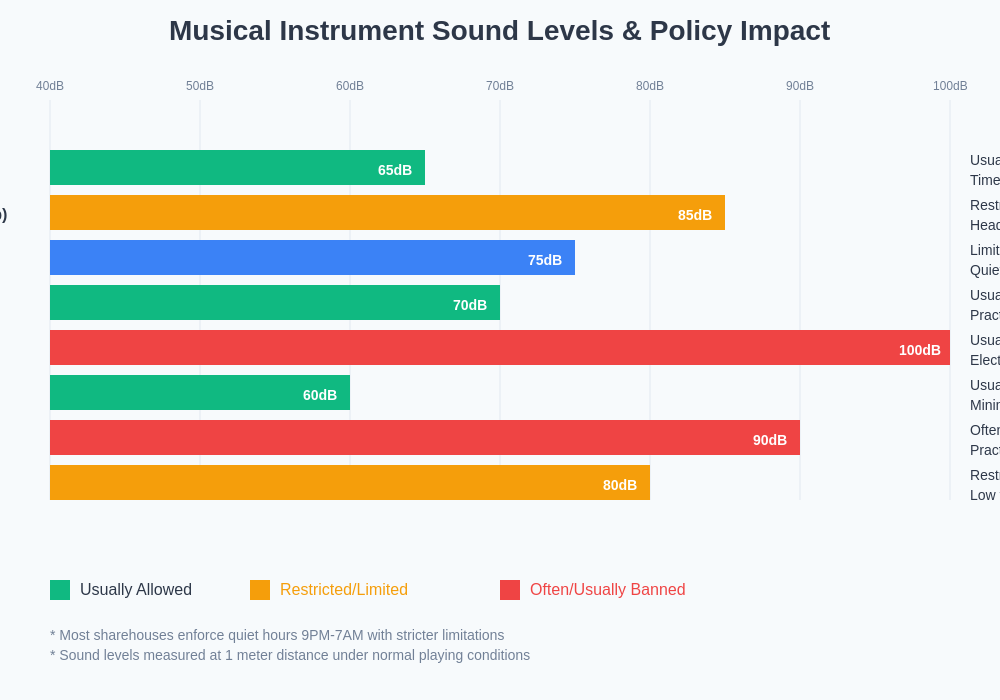
Different musical instruments create vastly different acoustic challenges that require distinct policy approaches and management strategies. Acoustic instruments like guitars, violins, and flutes produce variable volume levels that can be controlled through playing technique and practice methods, making them more manageable within sharehouse environments than consistently loud instruments.
Electric instruments with headphone capabilities offer theoretical solutions for silent practice, but amplifier usage, unelectrified practice, and technical limitations often result in acoustic sound production that still affects neighboring residents. How music preferences clash in shared spaces examines how different musical styles and instrument choices create varying levels of community impact.
Percussion instruments present particular challenges due to their impulsive sound characteristics and low-frequency content that penetrates building structures effectively. Practice pads, electronic drums, and volume reduction techniques provide partial solutions but rarely eliminate all acoustic impact on other residents in typical sharehouse construction environments.
Wind instruments create unique challenges related to breath support requirements, embouchure development, and tone production that make silent practice methods less effective than for stringed or electronic instruments. The inability to practice fundamentally important technical aspects silently often leads to conflicts between musical development needs and community noise considerations.
Time-Based Restrictions and Cultural Considerations
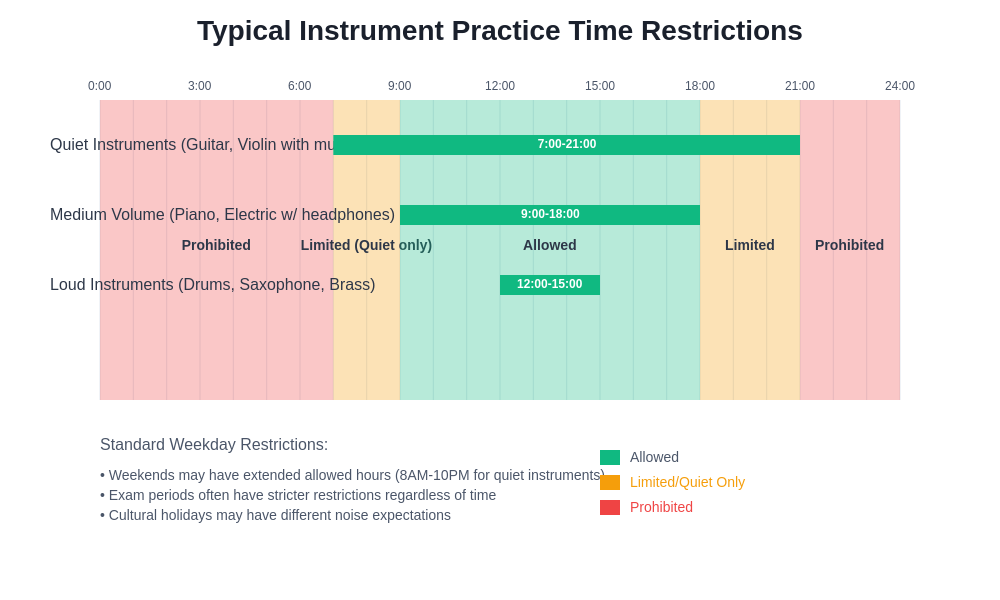
Japanese cultural norms around appropriate hours for various activities create specific expectations that influence how instrument policies are structured and enforced within sharehouses. Traditional quiet hours typically begin earlier than Western cultural standards, affecting when instrument practice becomes socially unacceptable regardless of technical volume levels.
Why morning bathroom queues are inevitable in sharehouses illustrates how daily schedules affect shared space usage, similarly instrument practice must navigate peak usage times, work schedules, and rest periods that vary among international residents with different cultural backgrounds and professional obligations.
Seasonal variations in daylight hours, holiday periods, and examination seasons create changing contexts that affect appropriate practice times and community tolerance for musical activities. University students preparing for performances or auditions may have intensive practice needs that conflict with other residents’ study schedules and stress management requirements.
Cultural differences in musical appreciation, volume tolerance, and appropriate expression of artistic pursuits can create misunderstandings and conflicts that go beyond simple noise level considerations. Building cultural awareness and establishing clear communication channels becomes essential for managing these interpersonal dynamics effectively.
Technology Solutions and Practice Alternatives
Modern technology offers various solutions for reducing instrument-related noise issues, though each approach has limitations and effectiveness varies significantly depending on instrument type, building acoustics, and specific usage requirements. Electronic instruments with high-quality headphone output can provide near-silent practice opportunities for many musical styles and skill development activities.
Practice mutes for brass and string instruments reduce volume levels substantially while maintaining most technical practice benefits, though tone quality and some advanced techniques may be compromised. How smart home features change daily routines explores how technological adaptations affect living patterns, similar to how practice technology influences musical routines.
Digital audio workstations, virtual instruments, and music production software provide alternatives for compositional work, arrangement practice, and some performance skills that can be developed with headphones. However, these technologies cannot fully replace acoustic instrument practice for developing proper technique, embouchure, bow control, and other physical aspects of musical performance.
Acoustic treatment options like portable sound barriers, foam panels, and practice room modifications can reduce sound transmission but rarely eliminate it completely in typical sharehouse construction. The cost, space requirements, and aesthetic impact of effective acoustic treatment often exceed what is practical for temporary residents in shared accommodations.
Economic Impact on Sharehouse Operations
Musical instrument policies significantly affect sharehouse marketability, resident retention, and operational efficiency in ways that extend beyond simple noise management. Properties that accommodate musicians can attract specialized demographics and command premium rents, while strict no-instrument policies may eliminate potential residents who contribute to cultural diversity and community vibrancy.
Why some sharehouses require japanese guarantors demonstrates how specialized requirements affect resident selection, similarly instrument policies influence the demographic composition and community character of sharehouses. Properties near music schools, conservatories, and entertainment districts often develop reputations that affect their market positioning.
Noise-related conflicts and complaints create administrative burdens for property managers, requiring time and resources for mediation, policy enforcement, and potential resident replacement. The cost of resident turnover due to instrument-related conflicts can exceed the administrative expense of developing and implementing more nuanced policies that better balance competing needs.
Sound-proofing investments, designated practice spaces, and specialized accommodations for musicians require significant capital expenditure but can differentiate properties in competitive markets and justify higher rental rates. Understanding these economic considerations helps explain the variety of approaches that different sharehouses take regarding instrument policies.
Community Dynamics and Social Integration
Musical activities can serve as powerful community building tools when properly managed, creating opportunities for cultural exchange, collaborative activities, and shared appreciation that strengthens sharehouse social bonds. Making friends through tokyo sharehouse communities explores how shared interests facilitate relationship building among residents.
Conversely, instrument-related conflicts can create lasting tensions that affect overall community atmosphere, social cohesion, and resident satisfaction levels that extend far beyond the immediate participants in musical disputes. The polarizing nature of sound preferences and artistic expression can create in-group and out-group dynamics that undermine inclusive community environments.
Cultural celebrations, informal concerts, and collaborative musical activities can enhance the international character and cultural richness of sharehouse communities when participants are respectful of noise limitations and inclusive in their approach to musical sharing. However, exclusive musical groups or culturally specific musical practices may inadvertently create social divisions.
Professional musicians, music students, and serious hobbyists often have practice requirements that are difficult to accommodate within standard sharehouse noise policies, creating tension between individual career development needs and community harmony considerations. Balancing these competing priorities requires sophisticated policy development and community communication strategies.
Property Management Strategies and Policy Implementation
Effective instrument policies require clear communication during the application process, detailed written guidelines, and consistent enforcement mechanisms that treat all residents fairly while maintaining community standards. How to handle roommate conflicts without moving out provides conflict resolution strategies that apply to instrument-related disputes.
Gradual policy implementation and trial periods allow communities to adjust to new instrument-related rules while providing feedback mechanisms for policy refinement based on actual experience rather than theoretical concerns. Successful policies often develop through iterative processes that balance resident input with practical management requirements.
Alternative solutions such as designated practice times, shared practice spaces, off-site practice arrangements, and community guidelines for respectful musical activity can address instrument needs without completely prohibiting musical expression. Creative policy development requires understanding both musical requirements and community dynamics.
Regular policy review and adaptation ensure that instrument guidelines remain relevant as resident demographics change, new technologies emerge, and community needs evolve. Static policies that fail to adapt to changing circumstances often become sources of conflict rather than community harmony tools.
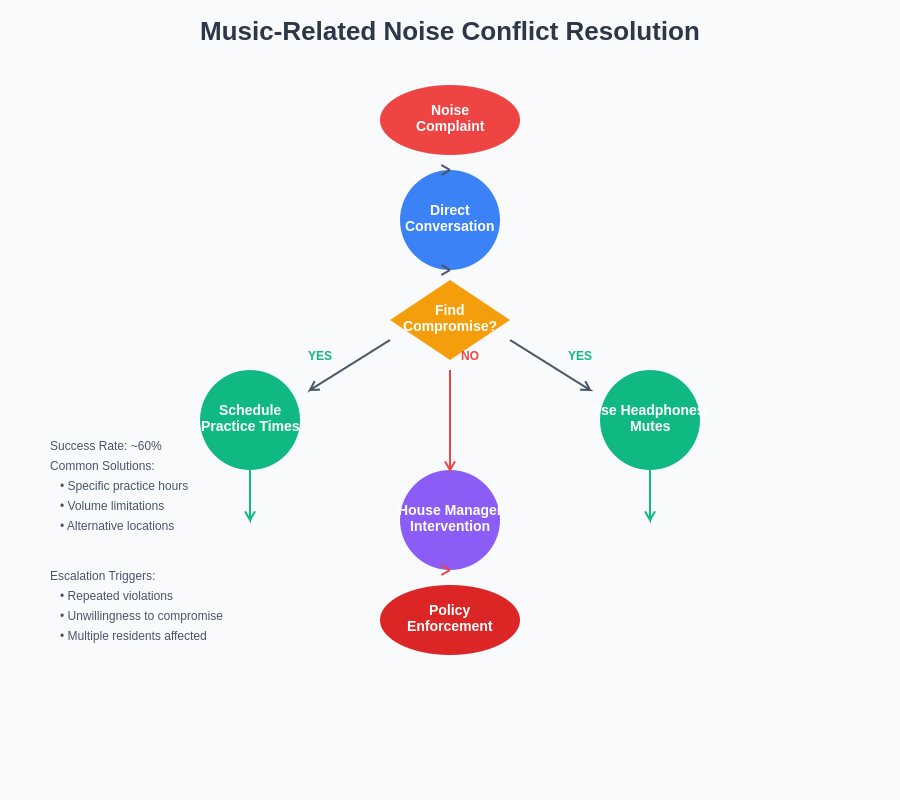
This systematic approach to conflict resolution helps maintain community harmony while addressing legitimate concerns from both musicians and other residents. The key lies in finding mutually acceptable solutions that respect everyone’s needs and living situations.
Impact on Resident Selection and Community Composition
Instrument policies significantly influence the types of residents who apply to and remain in sharehouses, creating demographic effects that extend beyond musical interests to include cultural diversity, age distribution, professional backgrounds, and lifestyle preferences. Musicians often contribute distinctive perspectives and cultural richness that enhance international community experiences.
Why some sharehouses avoid certain nationalities examines discriminatory practices in resident selection, while instrument policies can create similar selective effects that may inadvertently exclude certain cultural groups or professional categories. Understanding these implications helps ensure that policies support rather than undermine diversity goals.
The correlation between musical interests and other lifestyle characteristics means that instrument policies indirectly affect community dynamics related to social activities, cultural celebrations, creative pursuits, and intellectual engagement. Properties that successfully accommodate musicians often develop vibrant cultural atmospheres that attract other creative individuals.
Seasonal variations in musician availability, academic schedules, and performance opportunities create fluctuating demand for musician-friendly accommodations that affects occupancy rates and community stability throughout the year. Understanding these patterns helps property managers develop policies that maintain community continuity.
Long-term Community Sustainability and Adaptation
Sustainable instrument policies must balance immediate noise management needs with long-term community development goals that support cultural diversity, creative expression, and inclusive environments for international residents with varied interests and professional requirements. Why some residents become unofficial leaders shows how individual residents can influence community culture positively.
Evolution of musical technology, changing cultural norms around appropriate noise levels, and developments in building acoustics continue to create new opportunities for more effective instrument accommodation in shared living environments. Communities that remain adaptable to these changes can better serve diverse resident needs over time.
The success of instrument policies often depends on developing strong community communication channels, mutual respect among residents, and collaborative problem-solving approaches that address conflicts constructively rather than through rigid rule enforcement. Building these social capabilities requires ongoing attention and investment from both residents and property managers.
Future trends in urban housing, co-living concepts, and cultural integration will likely influence how sharehouses approach instrument policies, with successful communities developing innovative solutions that balance individual expression with collective harmony. Understanding these broader trends helps communities prepare for evolving challenges and opportunities in musical accommodation.
Musical instruments in sharehouses represent complex intersections of artistic expression, community living, legal compliance, and cultural integration that require thoughtful policy development and ongoing community engagement. Success in managing these challenges depends on understanding the multifaceted nature of sound in shared environments while maintaining respect for both individual creativity and collective harmony in Tokyo’s vibrant international housing communities.
Disclaimer
This article is for informational purposes only and does not constitute legal advice regarding noise ordinances or property regulations. Specific instrument policies vary significantly between sharehouses and may change based on local regulations, building characteristics, and community needs. Residents should verify current policies with property managers and understand their legal obligations regarding noise in their specific living situations.