The transformation of Tokyo neighborhoods from day to night presents one of the most significant safety considerations for international residents living in sharehouses across the metropolitan area. While Japan maintains a reputation as one of the world’s safest countries, the reality of neighborhood safety varies dramatically between daylight and nighttime hours, creating complex security landscapes that sharehouse residents must navigate with informed awareness and strategic preparation.
Understanding these nocturnal safety shifts becomes essential for making informed decisions about sharehouse locations, daily routines, and personal security measures that can significantly impact your overall living experience in Tokyo. The interplay between neighborhood characteristics, demographic patterns, and temporal crime fluctuations creates a dynamic security environment that requires nuanced understanding rather than simple generalizations about Tokyo’s overall safety reputation.
The Fundamental Shift in Urban Safety Dynamics
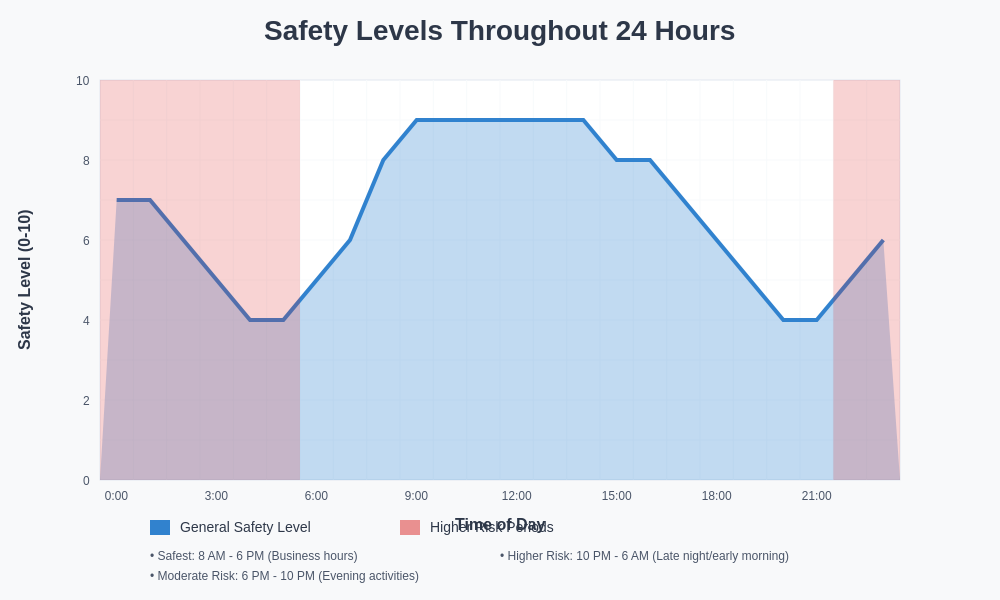
Tokyo’s neighborhood safety profile undergoes remarkable transformations as daylight fades into darkness, with previously bustling commercial districts evolving into quiet residential areas while entertainment zones experience surge in activity and associated security challenges. Understanding why some areas have higher crime rates provides essential context for recognizing how temporal factors influence criminal activity patterns and personal safety risks throughout different parts of the city.
The demographic composition of street-level populations shifts significantly during evening and late-night hours, with commuter-heavy business districts becoming virtually deserted while entertainment districts experience concentrated influxes of people engaged in nightlife activities. This population redistribution fundamentally alters the social dynamics, surveillance levels, and potential risk factors that sharehouse residents encounter when moving through their neighborhoods during different times of day.
Commercial lighting patterns, business operating hours, and public transportation frequencies create additional layers of complexity in neighborhood safety assessments. Areas that feel secure and well-monitored during business hours may become isolated and poorly lit after establishments close, while districts known for vibrant nightlife may present increased risks from intoxicated individuals, aggressive behavior, and opportunistic criminal activity.
The psychological impact of reduced visibility, decreased foot traffic, and altered social atmospheres can significantly affect residents’ comfort levels and decision-making processes regarding late-night activities, route selection, and personal safety precautions. Understanding why crime statistics matter for night safety helps residents develop realistic assessments of actual versus perceived risks in their specific neighborhoods.
Transportation Safety and Accessibility Challenges
Late-night transportation safety represents a critical concern for sharehouse residents whose social activities, work schedules, or emergency situations require movement through Tokyo’s metropolitan area during hours when public transportation operates on reduced schedules or ceases entirely. How late-night transportation limits social life explores the practical implications of these temporal restrictions on residents’ lifestyle choices and safety considerations.
The transition from reliable daytime train and bus services to limited late-night options forces residents to rely on alternative transportation methods such as taxis, ride-sharing services, or extended walking distances that may expose them to increased safety risks. Walking routes that feel comfortable and secure during daylight hours can present entirely different risk profiles when traveled during late-night or early morning hours with reduced lighting, fewer witnesses, and altered neighborhood demographics.
Station areas that serve as major transportation hubs during peak hours often become gathering points for various social groups during late-night periods, including individuals whose behavior may be unpredictable due to alcohol consumption or other factors. Understanding the safety dynamics around major stations near your sharehouse becomes essential for planning safe routes and identifying potential areas of concern during different time periods.
Emergency transportation considerations become particularly important for sharehouse residents who may need to reach medical facilities, respond to family emergencies, or evacuate their neighborhoods during natural disasters or other crisis situations that could occur during nighttime hours when transportation options are severely limited.
Entertainment District Dynamics and Associated Risks
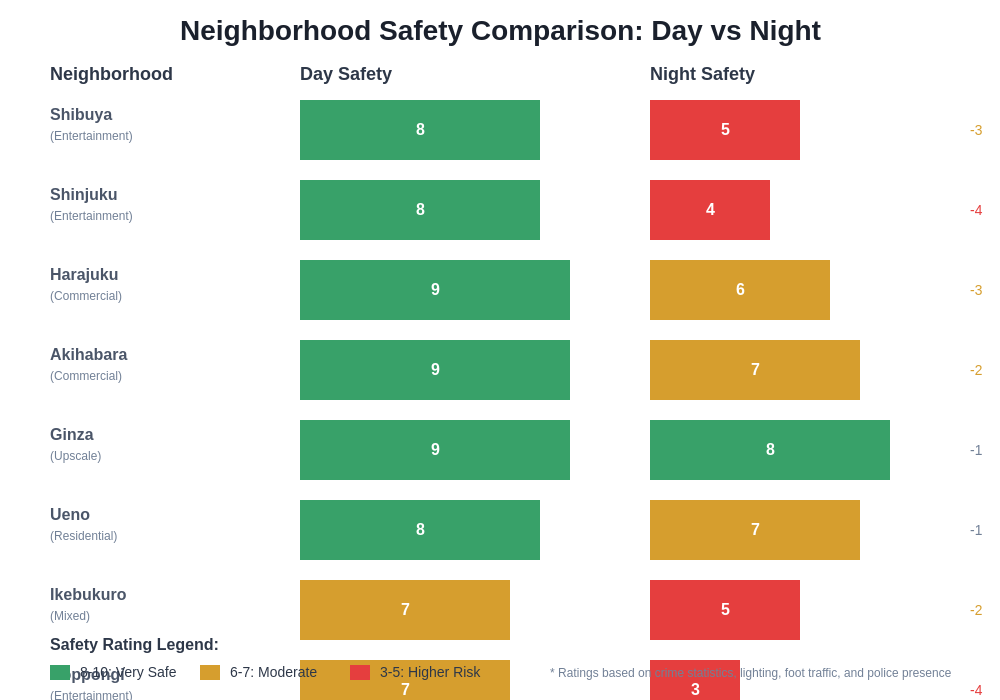
Tokyo’s renowned entertainment districts undergo dramatic transformations after dark, evolving from relatively quiet daytime areas into bustling centers of nightlife activity that present both opportunities for social engagement and increased exposure to various safety risks. The concentration of bars, clubs, restaurants, and adult entertainment establishments creates complex social environments where alcohol consumption, crowd dynamics, and commercial pressures can contribute to elevated risks of harassment, aggressive behavior, and criminal activity.
Dating while living in Tokyo sharehouses becomes particularly relevant when considering how entertainment district safety affects social activities and relationship building for international residents who may be unfamiliar with local customs, social cues, and potential danger signs in nightlife environments.
The presence of organized crime elements in certain entertainment areas, while generally not directly threatening to ordinary residents, can create atmospheres of tension and unpredictability that affect overall neighborhood safety perceptions and actual risk levels. Understanding which areas have historical connections to criminal organizations helps residents make informed decisions about socializing locations and late-night activity choices.
Tourist concentrations in popular entertainment districts can create additional safety considerations, as areas with high numbers of visitors often experience increased petty crime, scams targeting foreigners, and conflicts arising from cultural misunderstandings or language barriers that can escalate into more serious safety concerns.
Residential Area Security Variations
Purely residential neighborhoods throughout Tokyo experience their own unique safety transformations during nighttime hours, with quiet suburban areas that feel peaceful during the day potentially becoming isolated and vulnerable environments where criminal activity can occur with reduced likelihood of detection or intervention. The absence of commercial lighting, pedestrian traffic, and natural surveillance creates conditions where personal safety risks may actually increase despite the generally peaceful atmosphere.
How neighborhood safety changes after dark varies significantly between different types of residential areas, with densely populated apartment complexes offering different security profiles compared to single-family home neighborhoods or mixed-use developments that combine residential and commercial elements.
The socioeconomic characteristics of residential areas influence nighttime safety patterns, with affluent neighborhoods typically maintaining better lighting, security systems, and community watch programs that contribute to enhanced safety during evening hours. Conversely, areas with economic challenges may experience increased criminal activity during nighttime hours when reduced visibility and social oversight create opportunities for illicit activities.
Family-oriented residential areas often develop informal community security networks where neighbors look out for each other and report suspicious activities, creating enhanced safety environments for residents who integrate into these social structures. International sharehouse residents may need to actively engage with local community safety initiatives to benefit from these protective social networks.
Gender-Specific Safety Considerations
Female sharehouse residents face distinctly different safety challenges during nighttime hours, with risks of harassment, stalking, and assault requiring specific precautionary measures and awareness strategies that differ significantly from general safety considerations. Living with Japanese roommates in Tokyo sharehouses can provide valuable insights into local safety customs and protective behaviors that experienced residents use to navigate gender-specific risks.
The cultural context of gender relations in Japan creates unique safety dynamics for international female residents who may not be familiar with local harassment patterns, appropriate response strategies, or available support resources when encountering threatening situations. Understanding how to recognize early warning signs of problematic behavior and knowing appropriate escalation procedures becomes essential for maintaining personal safety.
Late-night commuting presents particular challenges for female residents, with empty train cars, isolated station platforms, and dark walking routes requiring heightened awareness and specific safety strategies. The timing of social activities, route planning, and emergency communication systems become crucial elements of personal safety planning for female sharehouse residents.
Male residents also face gender-specific safety considerations, particularly regarding involvement in conflicts, expectations of physical intervention in dangerous situations, and different types of criminal targeting that may affect their personal security during nighttime hours. Understanding these gender-specific risk patterns helps all residents develop appropriate safety strategies.
Technology and Personal Safety Tools
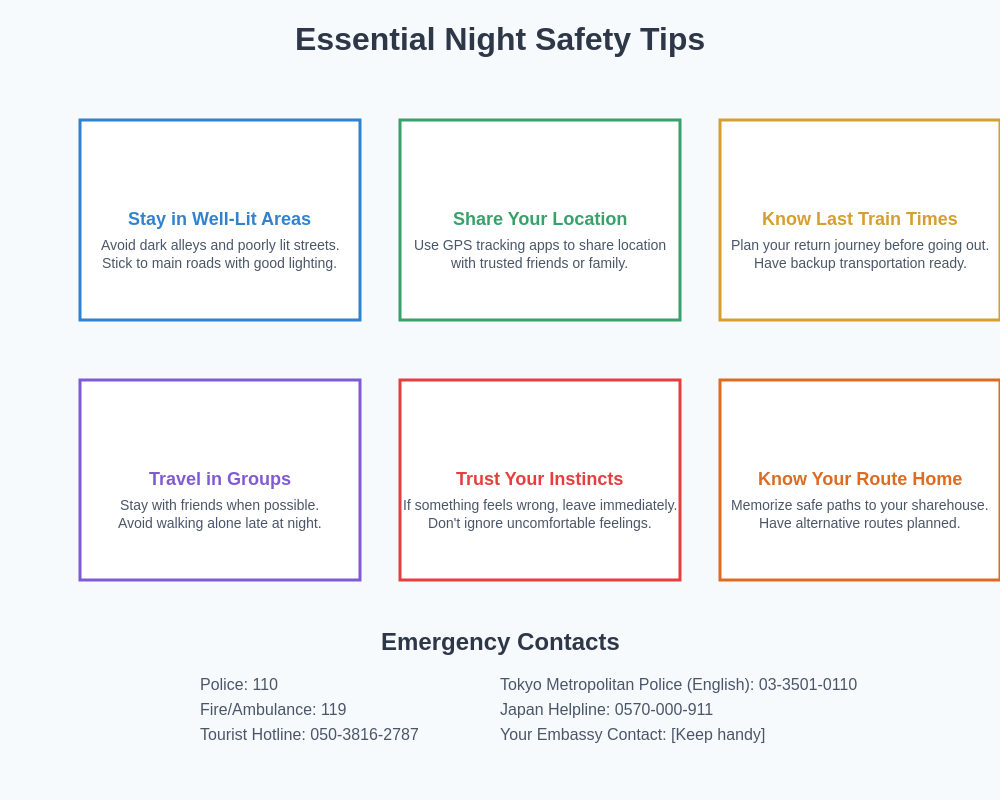
Modern technology offers numerous tools and applications specifically designed to enhance personal safety during nighttime hours, with smartphone apps providing real-time location sharing, emergency communication systems, and access to safety services that can significantly improve security for sharehouse residents navigating Tokyo’s changing neighborhood dynamics after dark.
GPS tracking and location sharing features enable residents to maintain contact with trusted friends or family members during late-night activities, providing both real-time safety monitoring and potential assistance coordination if dangerous situations arise. These technological solutions become particularly valuable for international residents who may lack established local social networks that could provide traditional safety support systems.
Emergency communication systems, including direct connections to police services and private security companies, offer rapid response capabilities that can be crucial during threatening situations. Understanding how to effectively utilize these systems, including language considerations and proper protocol for emergency reporting, becomes essential knowledge for all sharehouse residents.
Personal safety devices, including alarm systems, tracking devices, and self-defense tools, provide additional layers of security that can enhance confidence and actual safety during nighttime activities. However, understanding legal restrictions and cultural appropriateness of various safety tools ensures that residents can enhance their security without inadvertently creating legal or social complications.
Community Safety Networks and Social Support
Sharehouse communities often develop informal safety networks where residents share information about neighborhood risks, coordinate late-night activities for mutual protection, and establish communication systems that enhance overall security for all community members. Making friends through Tokyo sharehouse communities becomes particularly relevant for building these protective social connections that can significantly improve personal safety.
Local community safety initiatives, including neighborhood watch programs, business association security measures, and municipal safety campaigns, provide additional layers of protection that sharehouse residents can access through active community engagement. Understanding how to connect with these local safety resources requires cultural awareness and proactive community participation.
Information sharing about recent criminal incidents, suspicious activities, and changing neighborhood conditions helps residents stay informed about evolving safety considerations that may affect their daily routines and decision-making processes. Social media groups, community bulletin boards, and sharehouse communication systems can facilitate this essential information exchange.
Building relationships with local business owners, neighbors, and community leaders creates informal support networks that can provide assistance during emergency situations and contribute to overall neighborhood safety through increased social cohesion and mutual awareness of potential security concerns.
Economic Factors Influencing Nighttime Safety
The economic characteristics of neighborhoods significantly influence their nighttime safety profiles, with areas experiencing economic stress often showing increased criminal activity during evening hours when legitimate economic opportunities are reduced and desperation-driven illegal activities may increase. How living costs in Tokyo sharehouses explained provides context for understanding how economic pressures affect neighborhood safety dynamics.
Commercial district vitality during evening hours directly correlates with safety levels, as areas with thriving restaurants, shops, and entertainment establishments maintain higher levels of foot traffic, lighting, and informal surveillance that deter criminal activity. Conversely, areas with high business vacancy rates or early closing times may become more vulnerable to criminal activity during nighttime hours.
The presence of economic opportunities such as night-shift employment, 24-hour businesses, and late-night services creates populations of legitimate nighttime workers whose presence contributes to enhanced safety through increased activity and social oversight. Understanding which areas maintain healthy nighttime economies helps residents identify safer locations for late-night activities.
Property values and development investment levels often correlate with security infrastructure quality, including lighting systems, surveillance cameras, and private security services that enhance neighborhood safety during all hours. Areas experiencing economic decline may see deterioration in these safety-supporting infrastructure elements.
Seasonal and Weather-Related Safety Variations
Seasonal changes dramatically affect nighttime safety patterns throughout Tokyo, with winter months bringing earlier darkness that extends the period of elevated risk while summer months create different safety dynamics related to increased outdoor social activity and heat-related behavioral changes. Weather conditions such as rain, snow, and extreme temperatures create additional safety challenges that interact with existing neighborhood risk factors.
Rainy season and winter weather conditions reduce visibility and pedestrian traffic while creating slippery walking conditions that increase accident risks and may provide cover for criminal activity. How weather affects transportation choices becomes relevant for understanding how seasonal conditions influence safety considerations and travel decisions.
Holiday periods and seasonal festivals create temporary changes in neighborhood safety profiles, with increased tourist activity, altered police patrol patterns, and modified business operating hours affecting the normal safety dynamics that residents rely upon for personal security planning. Understanding these seasonal variations helps residents adjust their safety strategies accordingly.
Cultural events and seasonal celebrations may bring increased alcohol consumption and crowd-related safety concerns to normally quiet neighborhoods, requiring residents to adapt their safety awareness and precautionary measures during these temporary but potentially significant risk periods.
Emergency Preparedness and Response Planning
Developing comprehensive emergency response plans becomes crucial for sharehouse residents who must navigate safety challenges during nighttime hours when assistance may be less readily available and response times for emergency services may be extended. How emergency communication plans often fail provides insights into common planning mistakes and effective preparation strategies.
Understanding the locations and operating hours of nearby police stations, hospitals, and other emergency services enables residents to make informed decisions about safety planning and emergency response procedures. This knowledge becomes particularly important during nighttime hours when some facilities may have reduced staffing or modified operating procedures.
Communication planning for emergency situations requires consideration of language barriers, technological failures, and coordination with both local emergency services and international support networks that may be located in different time zones. Preparing multiple communication strategies ensures redundancy during crisis situations.
Personal emergency supplies, including communication devices, identification documents, emergency cash, and basic safety equipment, should be readily accessible for situations requiring rapid evacuation or extended periods without normal support services. Understanding what to include in emergency preparations and how to maintain readiness requires ongoing attention and periodic updates.
Long-term Adaptation and Safety Skill Development
Living successfully in Tokyo sharehouses requires ongoing development of safety awareness skills and adaptive strategies that evolve with changing neighborhood conditions, personal circumstances, and seasonal variations that affect nighttime security dynamics. How sharehouse living prepares you for future challenges explores how these experiences contribute to overall personal development and safety competency.
Cultural integration and language development significantly enhance personal safety by improving communication abilities during emergency situations, enabling better understanding of local safety customs, and facilitating integration into community safety networks that provide mutual protection and support. Investment in cultural learning pays dividends in personal security enhancement.
Regular safety routine evaluation and adjustment ensures that personal security measures remain effective as neighborhoods change, personal circumstances evolve, and new safety challenges emerge. This ongoing assessment process helps residents maintain optimal safety practices without becoming overly restrictive or paranoid about normal activities.
Building confidence through experience and knowledge development enables residents to enjoy Tokyo’s nightlife and evening activities while maintaining appropriate safety awareness and precautionary measures. The goal is achieving a balanced approach that maximizes both safety and quality of life rather than avoiding all nighttime activities due to exaggerated fear.
The transformation of Tokyo neighborhoods after dark represents a complex interplay of social, economic, and environmental factors that create dynamic safety landscapes requiring informed navigation and adaptive responses. Understanding these changes enables sharehouse residents to make educated decisions about personal safety while fully experiencing the rich cultural and social opportunities that Tokyo offers during all hours of the day and night.
Disclaimer
This article is for informational purposes only and does not constitute professional safety or security advice. Neighborhood safety conditions can change rapidly, and individual circumstances may require specific safety considerations not covered in this general overview. Readers should conduct their own safety assessments, consult with local authorities and security professionals, and maintain ongoing awareness of changing conditions in their specific neighborhoods. Personal safety is ultimately the responsibility of each individual.