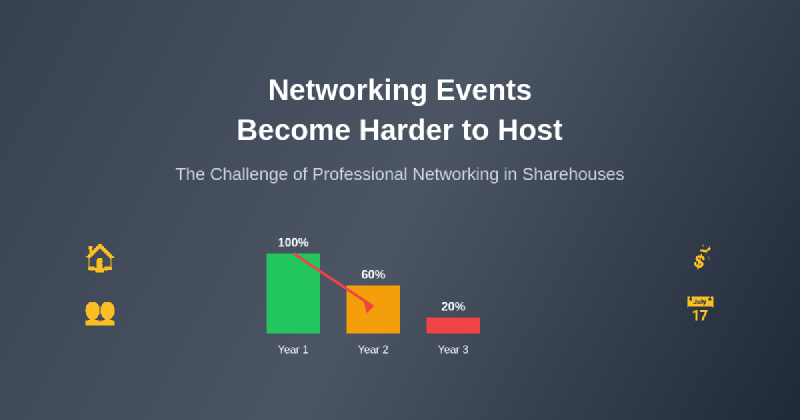
The growing complexity of hosting networking events in Tokyo sharehouses reflects broader challenges facing international professionals who discover that their ambitious plans for building business connections and career opportunities gradually succumb to practical limitations imposed by shared living arrangements, cultural barriers, and evolving social dynamics within residential communities never designed for professional entertainment. What initially seems like an ideal opportunity to leverage diverse international communities for career advancement transforms into frustrating experiences where logistical obstacles, cultural misunderstandings, and competing priorities create insurmountable barriers to meaningful professional relationship building.
The deterioration of networking event feasibility in sharehouses encompasses multiple interconnected factors that compound over time, creating progressive difficulties that force ambitious professionals to abandon their community-building aspirations in favor of external venues that offer better control but eliminate the cost advantages and intimate atmosphere that originally made sharehouse networking attractive. Understanding these escalating challenges reveals fundamental incompatibilities between residential shared living and professional networking that many residents discover too late to adjust their career development strategies effectively.
Space Limitations and Physical Constraints
The physical reality of sharehouse common areas presents immediate obstacles to hosting meaningful networking events, as spaces designed for casual daily interaction among residents prove inadequate for professional gatherings that require formal presentation capabilities, comfortable seating arrangements, and appropriate acoustic environments for business conversations. Making friends through Tokyo sharehouse communities demonstrates social possibilities, but professional networking demands significantly different spatial requirements that most sharehouses cannot accommodate effectively.
Common room furniture arrangements optimize daily living convenience rather than event hosting flexibility, creating setup challenges where hosts must rearrange entire spaces before events while ensuring restoration afterward to avoid conflicts with housemates who expect consistent access to shared areas for relaxation and daily activities. The time and energy required for repeated space transformation often exceeds the networking benefits gained, particularly when setup limitations restrict event formats to informal standing gatherings that fail to facilitate meaningful business relationship development.
Kitchen and dining area integration presents additional complexity when networking events extend beyond simple meet-and-greet formats to include refreshment service or meal components that compete with residents’ cooking schedules and food storage arrangements while creating cleanup obligations that affect multiple household members. The shared nature of food preparation spaces creates conflicts between event hosting needs and residents’ daily meal routines, forcing hosts to choose between comprehensive event planning and maintaining positive household relationships.
Outdoor space availability in urban Tokyo sharehouses rarely provides adequate alternatives for larger networking gatherings, with balconies and terraces typically sized for individual relaxation rather than group entertainment, while weather dependence creates unreliable hosting conditions that prevent consistent event scheduling and professional reputation building among potential attendees who expect reliable meeting environments.
Resident Cooperation and House Dynamics
The success of networking events depends heavily on cooperation from all household members who must tolerate disruptions to their normal routines, noise levels that exceed typical residential standards, and temporary loss of common area access during event periods that may conflict with their own social, academic, or professional needs. How social hierarchies develop naturally illustrates community dynamics that affect event planning, but networking events create additional tensions through their formal and exclusionary nature.
Personality conflicts and differing social comfort levels among residents create obstacles when some housemates feel uncomfortable with professional networking atmospheres or resent the transformation of their relaxed living environment into business-focused spaces where they feel excluded or obligated to participate in networking activities that don’t align with their career interests or social preferences. The diversity that initially makes sharehouses attractive for networking becomes problematic when cultural differences create misunderstandings about appropriate behavior, conversation topics, and professional networking etiquette.
Time zone differences and varying work schedules among international residents complicate event timing decisions where hosts must balance optimal networking hours with residents’ sleep, study, and work requirements while accommodating diverse cultural expectations about appropriate social gathering times and durations. The challenge of finding suitable event windows increases as household size grows and resident schedules become more complex and conflicting.
Long-term resident turnover affects networking event consistency as established relationships with cooperative housemates disappear when residents move out, forcing event organizers to repeatedly negotiate with new residents who may have different tolerance levels for disruption and different understanding of shared space usage expectations that were previously established through informal agreements.
Guest Policies and External Visitor Management
Sharehouse guest policies create significant obstacles for networking events that typically require inviting professional contacts who are unknown to residents and property managers, leading to complicated approval processes, visitor registration requirements, and liability concerns that discourage spontaneous networking opportunities while adding administrative burdens to event planning. How guest policies affect your social life explains general visitor restrictions, but networking events present unique challenges through their business-oriented nature and larger group dynamics.
Security and access control systems in many sharehouses prevent hosts from providing independent building access to networking event attendees, requiring constant coordination with residents for door management while creating awkward situations where professional contacts must wait outside or depend on residents’ availability for building entry throughout event durations. The professional image concerns associated with complicated entry procedures often deter potential attendees who expect smooth, professional event experiences rather than residential building navigation challenges.
Liability issues surrounding business networking in residential spaces create legal and insurance concerns that property managers increasingly restrict through policies that limit commercial activities, professional gatherings, and business-related uses of shared spaces, forcing hosts to choose between honest event description that risks policy violations or misleading characterizations that create problems when actual event purposes become apparent.
Parking and transportation access for networking event attendees becomes problematic in residential areas where visitor parking is limited or nonexistent, forcing attendees to navigate complex public transportation routes or expensive taxi services that create attendance barriers while neighborhood parking competition generates conflicts with local residents who view business networking as inappropriate residential area usage.
Cultural and Professional Expectations
Japanese business culture expectations create additional complexity for networking events hosted in residential settings, as professional contacts may find sharehouse environments inappropriate for serious business relationship development while cultural norms around gift-giving, formal introductions, and hierarchical respect become difficult to maintain in casual residential atmospheres that conflict with established business networking protocols.
International professional diversity in Tokyo creates networking challenges where event hosts must navigate varying cultural expectations about appropriate business networking behavior, conversation topics, professional dress codes, and relationship development timelines while managing language barriers that prevent inclusive participation and meaningful connection building among diverse professional backgrounds and communication styles.
Age and career stage differences among sharehouse residents and networking event attendees create social dynamics where junior professionals feel intimidated by senior business contacts while experienced professionals question the appropriateness of residential networking venues for serious business relationship development, leading to stratified interactions that fail to achieve networking event objectives of meaningful professional connection building.
Industry-specific networking requirements often prove incompatible with general sharehouse environments where discussions of confidential business information, strategic planning, or sensitive professional topics become inappropriate in residential settings where non-participating residents may overhear conversations that require privacy and professional discretion that shared living spaces cannot provide effectively.
Technology and Infrastructure Limitations
Internet bandwidth and connectivity issues in sharehouses become critical problems during networking events where multiple attendees simultaneously access wireless networks for business communications, social media engagement, and professional presentation needs while competing with residents’ streaming, gaming, and work-related internet usage that creates performance degradation and connectivity failures during critical networking moments.
Audio-visual equipment needs for professional presentations, demonstration materials, or networking event documentation require technical capabilities that most sharehouses lack, including projection systems, sound amplification, professional lighting, and electrical capacity to support business equipment while maintaining appropriate presentation quality that meets professional standards expected by serious business networking participants.
Video conferencing and virtual networking integration becomes necessary for hybrid events that include remote participants, but sharehouse internet infrastructure and acoustic environments typically prove inadequate for professional-quality virtual meetings that require stable connections, background noise control, and technical reliability that residential shared spaces cannot consistently provide during important business networking opportunities.
Power distribution and electrical capacity issues arise when networking events require multiple devices, equipment, and lighting needs that exceed residential electrical systems designed for daily living rather than business event support, creating technical failures and safety concerns that compromise professional networking event quality and attendee experience expectations.
Time Management and Scheduling Conflicts
Work schedule coordination among international professionals in Tokyo creates increasingly complex timing challenges as networking event organizers must accommodate diverse work hours, international business obligations, and cultural holiday differences while avoiding conflicts with residents’ academic, social, and personal commitments that compete for common space access and household attention during optimal networking time periods.
Event preparation and cleanup time requirements extend far beyond actual networking event durations, creating extended periods where common areas remain disrupted while hosts manage setup, hosting responsibilities, and restoration activities that affect household routines and residents’ quality of life in ways that generate conflicts and reduce cooperation for future networking event planning attempts.
Professional obligation conflicts arise when residents’ career advancement opportunities, client meetings, or work emergencies compete with networking event schedules, forcing difficult decisions between personal professional needs and community networking commitments that create resentment and reduce long-term collaboration for sustainable networking event programming within sharehouse environments.
Seasonal and cultural event conflicts in Tokyo create additional scheduling complexity where networking events must compete with traditional Japanese celebrations, international holidays, and cultural observances that affect both resident availability and potential attendee participation while creating periods where networking activities become culturally inappropriate or practically impossible to organize effectively.
Cost and Financial Burden Distribution
Food and beverage costs for networking events create financial pressures that hosts increasingly struggle to manage independently while attempts to share expenses among attendees create professional relationship complications and administrative burdens that detract from networking objectives while generating awkward financial negotiations that damage professional credibility and relationship development potential.
Venue enhancement costs for transforming residential spaces into professional networking environments require investments in decorations, lighting, furniture rental, and ambiance improvements that exceed individual resident budgets while creating temporary modifications that may damage property or violate lease agreements, leading to additional financial liabilities and conflicts with property management policies.
Equipment rental and technical support costs for professional networking events become substantial expenses when hosts need projectors, sound systems, presentation materials, or catering equipment that sharehouses lack, while delivery and setup coordination in residential buildings creates logistical complications and additional costs that make networking events financially unsustainable for individual residents organizing community-building activities.
Liability insurance and event coverage requirements for business networking activities in residential properties often prove unavailable or prohibitively expensive for individual residents, creating legal and financial risks that responsible hosts cannot accept while property managers increasingly restrict networking activities to avoid insurance complications and potential legal issues that threaten property operations.
Professional Reputation and Career Impact
Event quality expectations from business networking participants continuously rise as professional contacts compare sharehouse networking events with commercial venue alternatives that offer superior facilities, services, and professional atmospheres, leading to declining attendance and reduced networking effectiveness that damages hosts’ professional reputations within their industry communities and business development networks.
Business relationship development requires consistent, reliable networking opportunities that build trust and credibility over time, but the increasing difficulties of hosting events in sharehouses create irregular scheduling and declining quality that prevents meaningful professional relationship building while creating negative impressions among potential business contacts who question hosts’ organizational capabilities and professional seriousness.
Career advancement opportunities suffer when networking event difficulties prevent international professionals from building the local business relationships necessary for job opportunities, business development, and professional growth in Tokyo’s competitive international business environment where personal connections often determine career success more significantly than individual qualifications or experience levels.
Professional network expansion becomes limited when sharehouse networking constraints force residents to choose between inadequate residential networking events or expensive external alternatives that exceed individual budgets, creating professional isolation that affects long-term career development and business opportunity access while reducing the collaborative advantages that initially attracted residents to international sharehouse communities.
Evolution Toward External Solutions
Commercial venue alternatives become increasingly attractive as networking event organizers discover that restaurant meeting rooms, co-working spaces, and hotel conference facilities offer professional environments, technical support, and service quality that justify additional costs while eliminating household conflicts and residential space limitations that compromise networking effectiveness and professional relationship development opportunities.
Professional networking organizations and established business groups provide alternative networking access that proves more reliable and effective than sharehouse-based events, leading residents to redirect their networking energy toward external communities while reducing investment in sharehouse networking activities that fail to meet professional development needs and career advancement objectives.
Virtual networking solutions gain preference among time-pressed professionals who find online networking platforms and video conferencing alternatives more efficient than residential event coordination while offering global networking access that exceeds local sharehouse community limitations and provides professional development opportunities that transcend geographic and residential constraints.
Individual relationship building through one-on-one meetings at external venues becomes the preferred networking strategy as professionals abandon group event organization in favor of direct relationship development that avoids sharehouse complications while providing more focused business relationship building opportunities that align better with serious professional networking objectives and career development goals.
The progressive difficulty of hosting networking events in Tokyo sharehouses reflects fundamental incompatibilities between residential shared living environments and professional relationship building requirements that become more pronounced as residents mature professionally and develop higher standards for business networking effectiveness. Understanding these limitations enables residents to develop realistic expectations about sharehouse networking potential while directing their professional development energy toward more sustainable and effective networking strategies that support long-term career growth in Tokyo’s dynamic international business environment.
Disclaimer
This article is for informational purposes only and reflects common experiences in Tokyo sharehouse living. Individual experiences may vary significantly based on specific properties, residents, and circumstances. Readers should consider their own professional networking needs and sharehouse environments when planning networking activities. Professional networking strategies should be adapted to individual career goals and industry requirements.