Living in a Tokyo sharehouse presents an extraordinary array of daily situations that systematically challenge even the most patient individuals, transforming ordinary activities into exercises in tolerance, understanding, and emotional regulation. The constant interaction with housemates from diverse cultural backgrounds, combined with the intimate nature of shared living spaces, creates a unique environment where patience becomes not just a virtue but an essential survival skill that determines the quality of your entire living experience.
The reality of sharehouse living in Tokyo extends far beyond the romanticized notion of international friendship and cultural exchange, revealing itself as a complex social ecosystem where individual habits, cultural norms, and personal boundaries collide on a daily basis. Each morning brings fresh opportunities for patience to be tested, from the seemingly simple act of accessing the bathroom to navigating the intricate politics of shared kitchen space during peak hours when everyone needs to prepare for work or school simultaneously.
Morning Routine Chaos and Bathroom Queues
The dawn of each day in a Tokyo sharehouse begins with what many residents describe as the most challenging test of patience: the morning bathroom queue. Why morning bathroom queues are inevitable in sharehouses becomes painfully apparent when fifteen residents share two bathrooms and everyone needs to leave for work between seven and eight-thirty in the morning, creating a logistical nightmare that would challenge even the most sophisticated scheduling system.
The cultural differences in morning routine durations compound this challenge exponentially. Some residents complete their entire morning preparation in fifteen minutes, while others require elaborate beauty regimens that can stretch beyond an hour, creating bottlenecks that affect everyone’s schedule and stress levels. The silent frustration of standing in hallways, checking the time repeatedly, and calculating whether you’ll make your train connection becomes a daily meditation in patience that few residents anticipate when signing their sharehouse contracts.
Personal hygiene standards vary dramatically among international residents, leading to situations where some individuals leave bathrooms in conditions that require additional cleaning time from subsequent users. The discovery of hair clogs, unflushed toilets, or borrowed toiletries creates immediate moral dilemmas about whether to address issues directly, leave passive-aggressive notes, or simply clean up after others while seething internally about the unfairness of the situation.
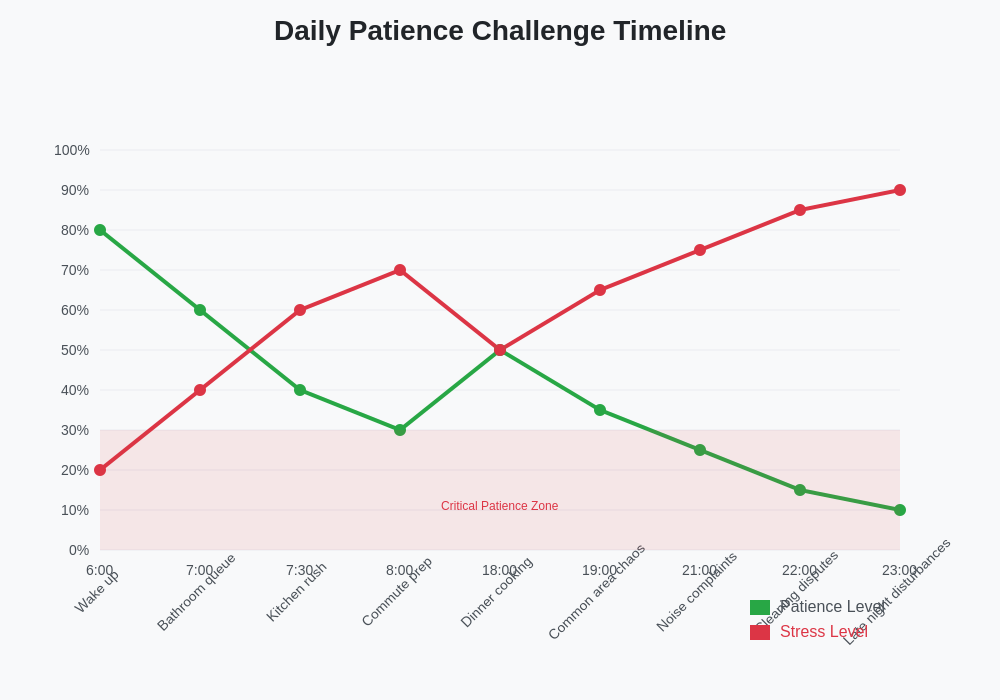
The progression of patience levels throughout a typical day reveals predictable patterns of stress accumulation and relief that affect every aspect of sharehouse living and resident well-being.
Kitchen Politics and Meal Preparation Conflicts
The shared kitchen environment represents perhaps the most complex arena for patience testing in sharehouse living, where cultural food preferences, cooking schedules, and cleanliness standards intersect in ways that can either foster community spirit or generate deep-seated resentments. How kitchen politics actually work in Japanese sharehouses reveals the intricate social dynamics that govern these shared spaces and the unwritten rules that residents must navigate daily.
Equipment availability becomes a constant source of tension when multiple residents attempt to prepare elaborate meals simultaneously using limited cooking appliances, storage space, and preparation areas. The sight of someone monopolizing the single functioning stove for an hour-long cooking session while others wait hungrily with their own ingredients tests patience in ways that extend beyond simple inconvenience into questions of fairness, consideration, and community responsibility.
Refrigerator space allocation creates ongoing diplomatic challenges that require constant negotiation and compromise. The discovery that someone has consumed your labeled food items, or that your carefully planned meal ingredients have been pushed to the back of an overcrowded refrigerator and forgotten until they spoil, generates frustration that accumulates over time and can eventually explode into major conflicts that affect entire house dynamics.
Noise Tolerance and Sleep Disruption Challenges
The acoustic environment of sharehouse living presents continuous tests of patience as residents with different schedules, cultural backgrounds, and noise sensitivity levels attempt to coexist in buildings that often lack adequate soundproofing between rooms and common areas. How noise control becomes critical for career success demonstrates how these challenges extend beyond mere inconvenience into serious impacts on professional performance and personal well-being.
Late-night phone conversations conducted in common areas, early morning shower routines, and the inevitable door slamming that accompanies hurried departures create a constant soundtrack of disruption that requires residents to develop either increased tolerance or sophisticated noise-canceling strategies. The cultural differences in what constitutes acceptable noise levels add another layer of complexity, as some residents genuinely cannot understand why their normal behavior patterns are perceived as disruptive by others.
Musical instrument practice, television viewing preferences, and gaming sessions with online friends create additional sources of noise conflict that test patience in unique ways. The realization that your quiet study time coincides perfectly with your neighbor’s guitar practice session, or that your preferred bedtime occurs during peak gaming hours, forces difficult conversations about compromise and mutual consideration that many residents struggle to navigate diplomatically.
Cleaning Responsibilities and Hygiene Standards
The maintenance of shared living spaces reveals stark differences in cleanliness standards and personal responsibility that can generate daily frustration and resentment among residents who approach household management from vastly different cultural and personal perspectives. How cleaning responsibilities create house drama explores the complex dynamics that emerge when individual standards clash with collective needs.
The perpetual cycle of dishes accumulating in sinks, common areas returning to states of chaos shortly after cleaning, and the mysterious appearance of personal belongings in shared spaces creates an environment where patient individuals find themselves constantly cleaning up after others or living in conditions that fall below their comfort standards. The decision between maintaining personal standards through extra effort or allowing standards to decline to match the group average becomes a daily test of patience and personal values.
Bathroom cleanliness issues present particularly challenging tests of patience, as these spaces require the highest hygiene standards but often receive the least consistent maintenance from busy residents who prioritize convenience over community responsibility. The discovery of hair-clogged drains, unflushed toilets, or personal items scattered throughout shared bathroom spaces forces immediate decisions about whether to address problems directly, clean them personally, or allow conditions to deteriorate while hoping someone else will take responsibility.
Communication Barriers and Cultural Misunderstandings
Language barriers create daily patience challenges that extend far beyond simple vocabulary limitations into complex cultural communication patterns that can lead to misunderstandings, hurt feelings, and unresolved conflicts that accumulate over time. How cultural communication styles create misunderstandings reveals how different approaches to directness, conflict resolution, and social interaction can generate ongoing friction in shared living environments.
The frustration of being unable to express complex concerns or preferences clearly in a second language creates situations where important issues remain unaddressed while minor irritations compound into major resentments. The cultural differences in what constitutes appropriate directness versus politeness add another layer of complexity, as residents from different backgrounds may interpret the same communication as either refreshingly honest or unnecessarily rude.
Non-verbal communication differences create additional opportunities for misunderstanding and patience testing, as gestures, facial expressions, and personal space preferences vary significantly among international residents. How body language differs between cultures demonstrates how these subtle differences can create ongoing tension and discomfort that residents struggle to identify and address effectively.
Personal Space Boundaries and Privacy Expectations
The concept of personal space and privacy varies dramatically among cultures and individuals, creating daily situations where residents must navigate conflicting expectations about appropriate boundaries, social interaction levels, and respect for private time and space. Why privacy is limited even in private rooms explores how these challenges manifest in practical ways that affect daily comfort and stress levels.
Common area usage patterns reveal different cultural approaches to shared space ownership and consideration, as some residents treat these areas as extensions of their private rooms while others maintain strict boundaries between personal and communal territories. The sight of personal belongings permanently occupying shared spaces, or the discovery that your favorite common area spot has been claimed by someone else’s ongoing project, tests patience in ways that require careful consideration of fairness and community harmony.
Social interaction expectations create additional challenges as some residents seek constant community engagement while others prefer minimal interaction with housemates. The balance between being a friendly community member and maintaining personal boundaries requires constant negotiation and adjustment that can exhaust even the most socially skilled individuals.
Financial Transparency and Shared Expense Management
Money-related issues provide some of the most severe tests of patience in sharehouse living, as financial transparency, fairness perceptions, and expense-sharing arrangements reveal different cultural approaches to money management and community responsibility. How shared expense apps create new problems demonstrates how even technological solutions can generate additional sources of frustration and conflict.
Utility bill fluctuations and the complex calculations required to fairly distribute costs among residents with different usage patterns create ongoing sources of tension and disagreement. The discovery that some residents consistently use significantly more electricity, water, or internet bandwidth while paying the same shared rates tests concepts of fairness and community responsibility in ways that can generate lasting resentments.
Group purchase coordination for household supplies, bulk buying arrangements, and shared amenity costs require constant negotiation and monitoring that can exhaust residents who simply want to focus on their personal goals rather than managing complex group financial dynamics. How group buying power reduces individual costs explores both the benefits and challenges of these collaborative financial arrangements.
Technology Conflicts and Digital Resource Competition
Internet bandwidth limitations and digital resource sharing create modern patience challenges that previous generations of shared living never faced, as residents compete for reliable connections while engaging in bandwidth-intensive activities like video streaming, online gaming, and remote work. Why device limits cause internet connection issues reveals how technology conflicts can affect everything from entertainment to professional responsibilities.
Shared streaming service access, gaming console scheduling, and common area television programming preferences require constant negotiation and compromise that can exhaust residents who simply want to relax after long workdays. The cultural differences in entertainment preferences and viewing habits add another layer of complexity to these already challenging negotiations.
Smart home device compatibility and personal technology integration create additional sources of friction as residents attempt to customize shared living environments to match their personal preferences and technological needs. The balance between individual convenience and community harmony requires ongoing patience and flexibility that many residents find surprisingly challenging to maintain.
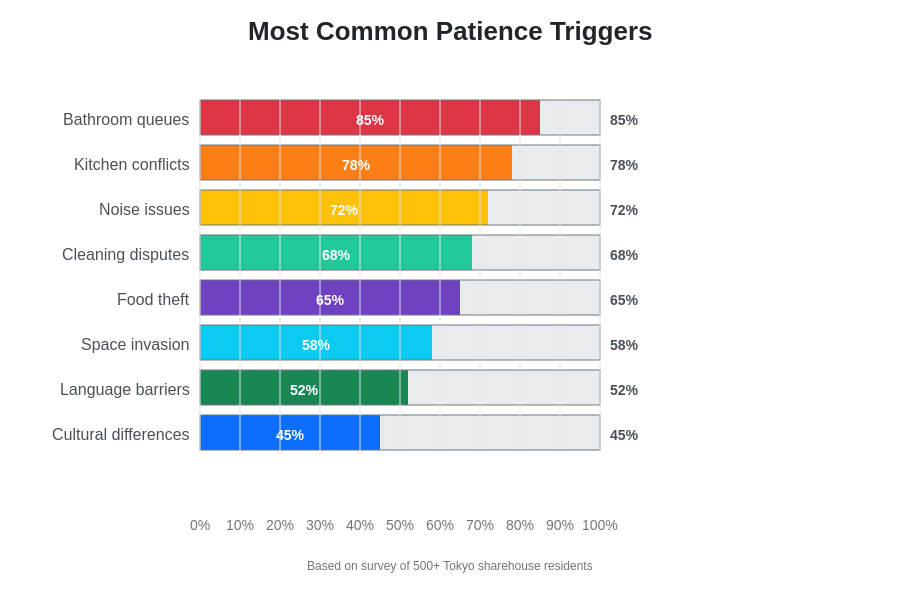
Understanding which situations most commonly trigger patience challenges helps residents prepare mentally and develop targeted coping strategies for the most problematic aspects of shared living.
Developing Patience Strategies and Coping Mechanisms
The daily patience challenges of sharehouse living, while often frustrating and exhausting, provide valuable opportunities for personal growth and the development of crucial life skills that extend far beyond housing situations. How to handle roommate conflicts without moving out offers practical strategies for maintaining relationships and community harmony despite ongoing challenges.
Mindfulness practices, breathing techniques, and perspective-shifting exercises become essential tools for managing the emotional responses to daily frustrations and maintaining mental health in challenging living environments. The recognition that patience testing is a normal and predictable aspect of shared living helps residents develop more realistic expectations and more effective coping strategies.
Communication skill development, cultural sensitivity training, and conflict resolution abilities improve naturally through the daily practice of navigating patience challenges with diverse housemates. These skills prove valuable in professional environments, romantic relationships, and future living situations, making the patience testing of sharehouse living an investment in long-term personal development.
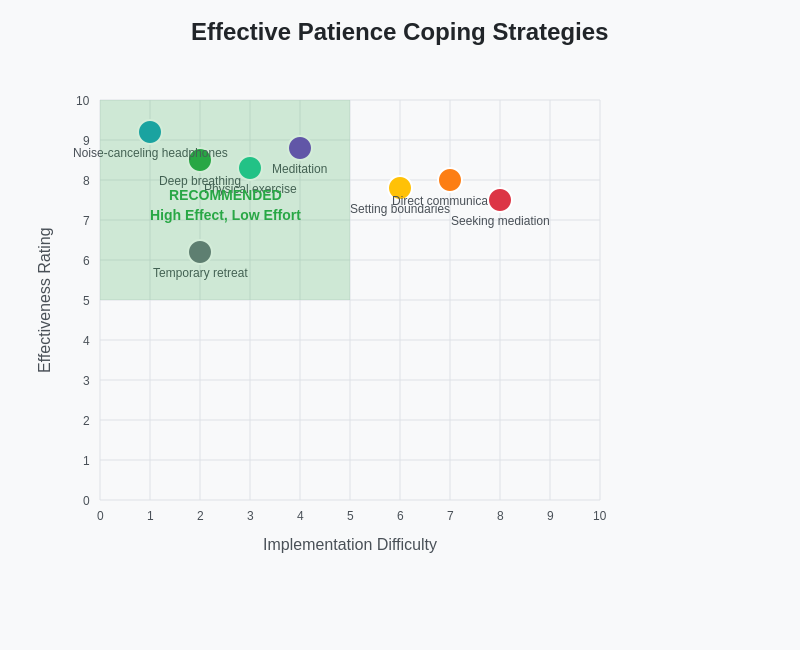
The effectiveness of different coping strategies varies based on implementation difficulty and personal preferences, with some techniques providing immediate relief while others require sustained practice to develop proficiency.
Building Resilience Through Daily Challenges
The accumulation of daily patience challenges in sharehouse living creates opportunities for building emotional resilience and developing more sophisticated approaches to stress management and interpersonal relations. How patience levels get tested daily becomes a pathway to personal growth rather than simply an endurance test when approached with the right mindset and strategies.
Problem-solving abilities improve through constant exposure to novel challenges that require creative solutions and collaborative approaches. The daily practice of finding compromises, negotiating differences, and maintaining relationships despite ongoing frustrations develops skills that prove valuable throughout life in both personal and professional contexts.
Adaptability and flexibility increase naturally as residents learn to adjust expectations, modify routines, and accommodate the needs and preferences of others while still maintaining their own well-being and personal goals. This balance between individual needs and community harmony represents one of the most valuable skills that sharehouse living can develop.
The daily testing of patience levels in Tokyo sharehouses ultimately serves as an intensive training program in human relations, emotional regulation, and community living that prepares residents for future challenges while providing immediate opportunities for personal growth and cultural understanding. While these tests can be exhausting and frustrating in the moment, they contribute to the development of more patient, understanding, and socially skilled individuals who are better equipped to handle the complexities of modern urban living and international relationships.
Disclaimer
This article is for informational purposes only and reflects common experiences in sharehouse living. Individual experiences may vary significantly depending on specific house dynamics, cultural backgrounds, and personal circumstances. The strategies mentioned should be adapted to individual situations and may not be suitable for all living arrangements. Readers experiencing persistent conflicts or stress should consider seeking professional mediation or alternative living arrangements.