Tokyo’s recycling system represents one of the world’s most sophisticated and complex waste management frameworks, yet this complexity creates significant challenges for international residents living in sharehouses across the city’s twenty-three special wards. Each ward maintains its own distinct set of recycling rules, collection schedules, and sorting requirements that can dramatically differ from neighboring areas, making compliance both crucial and confusing for newcomers to Japan’s capital city.
Understanding these ward-specific recycling regulations becomes particularly important for sharehouse residents, as improper waste disposal can result in fines, strained relationships with neighbors, and potential issues with property management companies. The variations in recycling rules across Tokyo wards reflect local infrastructure capabilities, environmental priorities, and community preferences that have evolved over decades of waste management refinement.
The Foundation of Tokyo’s Ward-Based System
Tokyo’s decentralized approach to waste management allows each of the twenty-three special wards to develop recycling programs tailored to their specific demographic needs, infrastructure capacity, and environmental goals. This autonomy creates a patchwork of regulations that can seem overwhelming to newcomers but reflects the democratic principle of local self-governance that defines Tokyo’s administrative structure.
The historical development of ward-specific recycling rules emerged from practical considerations including population density, available processing facilities, and local community initiatives that gained momentum during Japan’s environmental awakening of the 1990s. Understanding utility bills in Japanese sharehouses often includes waste management fees that vary significantly based on ward policies and service levels.
Ward governments invest considerable resources in developing multilingual educational materials, mobile applications, and community outreach programs to help international residents understand their specific requirements. However, the responsibility ultimately falls on individual residents to research and comply with their ward’s particular regulations, making thorough understanding essential for successful integration into local communities.
The enforcement mechanisms for recycling compliance vary significantly between wards, with some employing strict inspection systems while others rely primarily on community peer pressure and educational initiatives. Why some residents ignore environmental policies explores the challenges that arise when sharehouse communities fail to maintain consistent compliance with local regulations.
Major Categories and Universal Principles
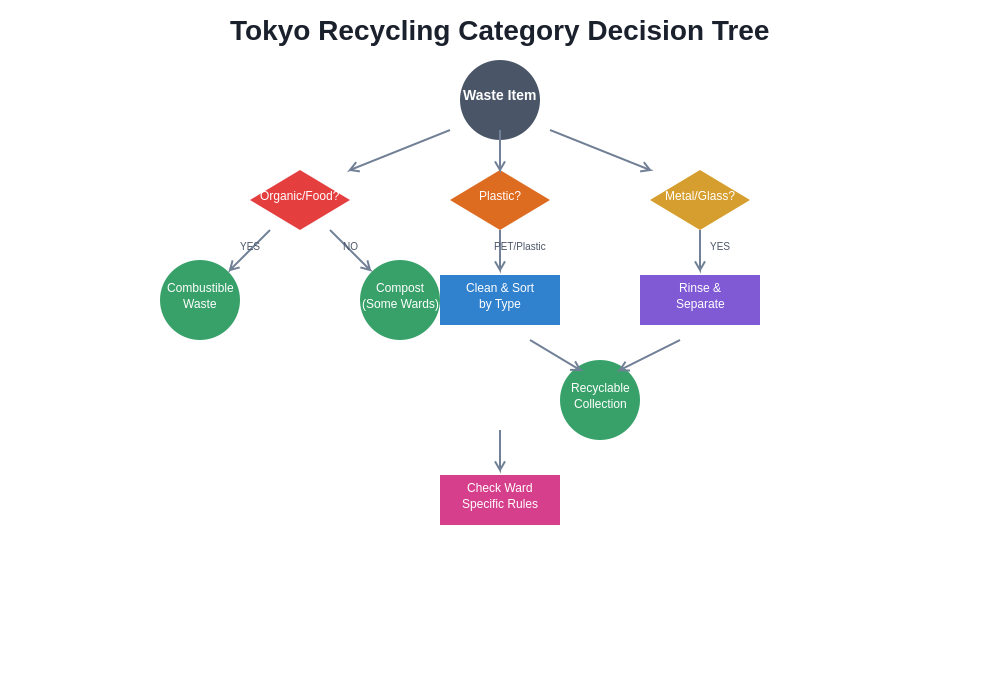
Despite ward-specific variations, Tokyo’s recycling system operates on several universal principles that provide a foundation for understanding local requirements. The basic categories typically include combustible waste, non-combustible waste, recyclable materials, and oversized items, though the specific definitions and sorting requirements for each category can differ significantly between wards.
Combustible waste generally encompasses organic materials, paper products, and certain plastics, but the acceptable items within this category vary considerably based on local processing capabilities and environmental policies. Some wards accept food waste in combustible collections while others require separate organic waste processing or discourage food waste disposal entirely through community composting programs.
Non-combustible waste classifications present even greater variation, with some wards accepting small electronics and metal items while others require separate collection systems for these materials. How water filter maintenance gets neglected often relates to confusion about proper disposal methods for filter cartridges and small appliances that vary by ward.
Recyclable materials typically include paper, cardboard, glass bottles, aluminum cans, and certain plastics, but the sorting requirements, cleaning standards, and collection methods can differ dramatically. Some wards require extensive cleaning and separation of materials while others accept mixed recyclables that are sorted at processing facilities.
Ward-Specific Scheduling and Collection Systems
Collection schedules represent one of the most immediately practical aspects of ward-specific recycling rules, as missing collection days can result in waste accumulation that affects entire sharehouse communities. Why morning bathroom queues are inevitable in sharehouses often correlates with early morning waste collection schedules that require residents to coordinate their routines around municipal services.
Shibuya Ward operates on a compressed schedule that requires residents to place waste outside between 6:00 AM and 8:00 AM on designated collection days, while neighboring Shinjuku Ward allows more flexible timing with collections occurring throughout the morning hours. These timing differences can create confusion for residents who move between wards or work in different areas than where they live.
Frequency variations also impact daily routines significantly, with some wards offering daily combustible waste collection while others restrict collections to twice weekly. How seasonal employment affects payment ability can compound when residents must store waste longer due to less frequent collection schedules.
The bag requirements and labeling systems present another layer of complexity, as some wards require specific colored bags purchased from designated vendors while others accept standard transparent bags with proper sorting. Some wards have implemented high-tech solutions including QR code systems that track waste sources, while others maintain traditional paper-based identification methods.
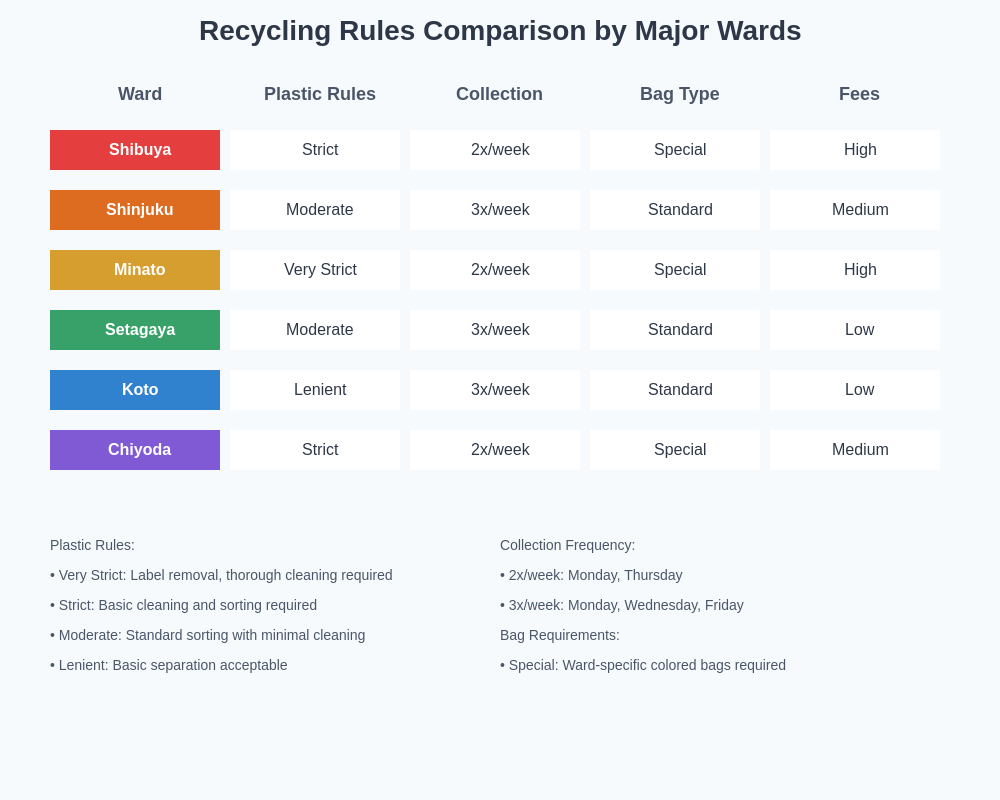
This comparison highlights the significant differences between major Tokyo wards in their approach to recycling requirements, demonstrating why residents must research their specific ward’s regulations rather than assuming universal standards across the city.
Plastic Waste Regulations and PET Bottle Systems
Plastic waste management showcases the most dramatic variations between Tokyo wards, reflecting different environmental priorities and processing capabilities that can significantly impact daily routines for sharehouse residents. The classification of acceptable plastics ranges from comprehensive acceptance of all marked recyclable plastics to strict limitations on specific types based on local processing equipment.
PET bottle collection systems vary extensively in their cleaning requirements, label removal expectations, and cap separation policies. Minato Ward requires complete label and cap removal with thorough cleaning before disposal, while Koto Ward accepts PET bottles with labels attached but requires cap separation. How sustainable living practices clash with convenience often centers around these time-consuming preparation requirements.
Plastic packaging regulations create particular challenges for sharehouse residents who frequently purchase convenience foods and ready-made meals. Some wards accept food packaging plastics in recyclable collections while others classify them as combustible waste, requiring residents to understand complex material composition rules that may not be immediately obvious from packaging labels.
The enforcement of plastic contamination rules varies significantly, with some wards rejecting entire recyclable collections if improperly sorted plastics are discovered, while others employ sorting facilities that can handle minor contamination. Why some eco-friendly products cost more often relates to the additional processing costs that wards pass on to residents through waste management fees.
Electronics and Hazardous Material Disposal
Electronic waste disposal regulations represent perhaps the most complex aspect of ward-specific recycling rules, as they involve both municipal regulations and national legislation that creates overlapping jurisdictions and responsibilities. The size thresholds for home appliance recycling vary between wards, with some accepting small electronics in regular non-combustible collections while others require all electronic items to go through specialized disposal processes.
Battery disposal regulations showcase significant variation in convenience and accessibility, with some wards maintaining extensive networks of collection points while others require residents to travel to central facilities or coordinate with special collection events. How prescription storage requires extra security extends to battery storage for disposal, as some wards require extended storage periods between collection opportunities.
Fluorescent light and LED bulb disposal creates particular challenges for sharehouse residents, as these items often contain hazardous materials that require special handling. Some wards provide frequent collection opportunities at local facilities while others integrate these items into monthly special waste collections that require advance scheduling and preparation.
The recycling fees and deposit systems for large electronics vary considerably between wards, with some requiring payment at the time of disposal while others incorporate these costs into general waste management fees. Living costs in Tokyo sharehouses explained should include consideration of these disposal costs that can accumulate significantly over extended residency periods.
Food Waste and Organic Material Management
Food waste policies across Tokyo wards reflect dramatically different approaches to organic waste management, from comprehensive composting programs to strict prohibition of food waste disposal through regular channels. These variations significantly impact daily kitchen routines and shopping habits for sharehouse residents who must adapt their consumption patterns to local disposal capabilities.
Setagaya Ward operates an extensive community composting program that encourages residents to separate food waste for local processing, while central wards like Chiyoda focus on waste reduction education rather than separate organic waste collection. How food storage rules impact your eating habits often interconnects with disposal rules that encourage specific consumption patterns.
Cooking oil disposal presents particular challenges with significant ward-to-ward variation in acceptable methods and collection systems. Some wards provide special collection points for used cooking oil recycling while others require solidification and disposal as combustible waste. How cooking odors create cultural conflicts sometimes extends to cooking oil disposal methods that affect shared kitchen environments.
The seasonal variations in food waste acceptance reflect agricultural cycles and processing capacity changes that can catch residents unprepared for temporary rule modifications. Garden waste and fallen leaves from balcony plants may be acceptable during certain seasons while restricted during peak volume periods, requiring residents to plan plant care around disposal availability.
Paper and Cardboard Collection Variations
Paper and cardboard recycling rules demonstrate significant variation in preparation requirements, bundling methods, and contamination tolerance that can impact daily routines for sharehouse residents who frequently receive deliveries and purchase packaged goods. The string-tying requirements for paper bundles vary from specific knot types to acceptable string materials that reflect traditional practices adapted to modern waste management systems.
Weather protection requirements for paper collections range from mandatory waterproof covering to specific placement locations that protect materials from rain damage during collection delays. How online shopping deliveries overwhelm entryways connects to cardboard accumulation that must be managed according to ward-specific preparation and scheduling requirements.
Contamination rules for paper products create complexity around food packaging, glossy materials, and adhesive labels that different wards handle through varying approaches. Some wards employ sophisticated sorting facilities that can process mixed paper products while others require extensive pre-sorting and cleaning that places significant time demands on residents.
The size restrictions and folding requirements for cardboard disposal vary significantly, with some wards accepting large flat pieces while others require cutting into specific dimensions. How bulk shopping changes in shared living must account for cardboard disposal logistics that can influence purchasing decisions and storage strategies.
Glass and Metal Container Systems
Glass and metal container recycling showcases different approaches to cleaning requirements, color separation, and cap removal that reflect varying processing capabilities and quality standards across Tokyo wards. The rinsing standards range from basic cleaning to complete removal of all residual contents and labels, with some wards providing specific guidance on acceptable cleaning methods and water conservation during preparation.
Color separation requirements for glass vary dramatically, with some wards requiring detailed separation into clear, brown, and green categories while others accept mixed glass collections. How water usage monitoring creates awareness often includes consideration of cleaning water usage for recyclable preparation that varies based on ward requirements.
Metal container classification includes complex rules around aluminum versus steel identification that may require residents to understand material properties not immediately obvious from visual inspection. Some wards provide magnet testing guidance while others rely on resident judgment that can lead to contamination issues affecting entire collection batches.
The cap and label removal requirements create additional preparation work that varies significantly in strictness and enforcement. How individual environmental choices affect groups becomes particularly relevant when improper preparation by one resident can result in rejection of shared collection containers.
Oversized Item and Special Waste Procedures
Oversized item disposal represents one of the most bureaucratic aspects of ward-specific recycling rules, often requiring advance scheduling, fee payments, and complex preparation procedures that can take weeks to complete. The size thresholds that define oversized items vary considerably between wards, with some accepting moderately large items in regular collections while others classify even small appliances as oversized waste.
Scheduling systems range from online booking platforms to telephone-only systems that may not accommodate non-Japanese speakers, creating barriers for international residents. How moving costs exceed initial estimates often includes unexpected oversized item disposal fees that vary significantly based on ward policies and timing requirements.
Fee structures for oversized item disposal can include flat rates, weight-based pricing, or size-category systems that require residents to accurately assess their items before scheduling collection. Some wards offer discount programs for bulk disposal while others maintain strict per-item pricing that can make large cleanouts prohibitively expensive.
The preparation requirements for oversized items include disassembly expectations, component separation, and placement logistics that vary significantly in complexity. What moving out really costs in Tokyo sharehouses should factor in both time and monetary costs of compliance with ward-specific oversized waste procedures.
Enforcement Mechanisms and Penalty Systems
Enforcement approaches across Tokyo wards range from educational warnings to significant financial penalties that can affect both individual residents and entire sharehouse communities. The inspection systems vary from random spot-checks to comprehensive bag inspections that can identify non-compliant households through various tracking methods including address labeling requirements.
Warning systems typically progress from educational notices through escalating penalty structures that may include mandatory educational sessions, increased waste management fees, or in extreme cases, service suspension. How legal disputes get resolved in sharehouses sometimes involves waste management violations that affect entire household communities.
Community reporting systems empower neighbors to report violations, creating social pressure for compliance that can be particularly intense in residential areas where waste management reflects on community reputation. The cultural emphasis on group harmony means that waste violations can strain relationships beyond the immediate penalty implications.
The appeal processes for waste management penalties vary in accessibility and fairness, with some wards offering comprehensive review systems while others maintain limited options for residents to contest violations. Understanding these systems becomes crucial for international residents who may face language barriers during enforcement proceedings.
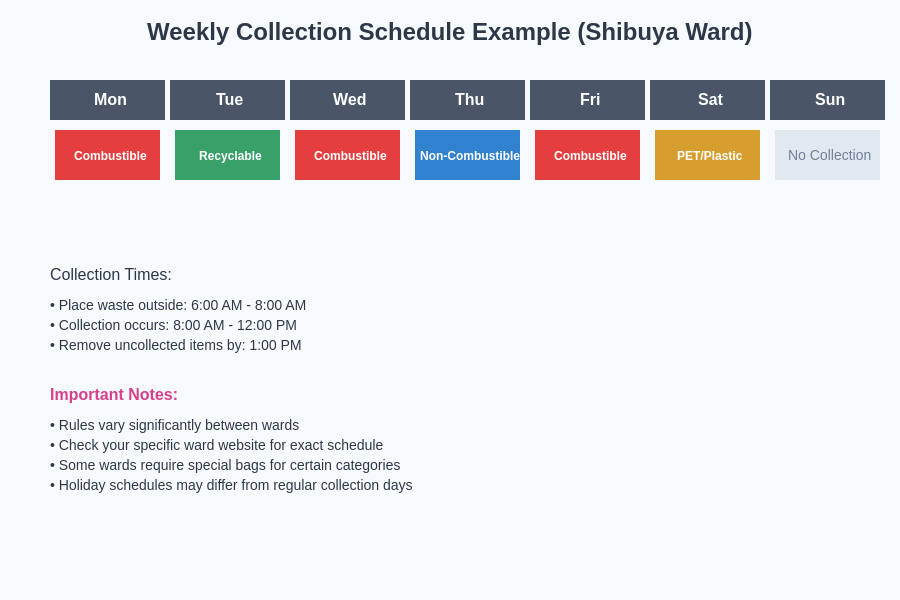
This example schedule from Shibuya Ward demonstrates the complexity of managing different waste types throughout the week, with specific timing requirements that residents must follow to avoid violations and maintain community harmony.
Technology Integration and Modern Solutions
Modern technology integration varies dramatically between wards, with some implementing sophisticated tracking systems, mobile applications, and digital payment methods while others maintain traditional paper-based systems that require physical interaction with municipal offices. The digital divide between progressive and traditional wards can significantly impact the convenience and accessibility of waste management compliance.
Mobile application availability ranges from comprehensive multilingual platforms that provide scheduling, reminders, and educational resources to ward-specific Japanese-only systems that may exclude international residents. How translation apps help daily interactions becomes particularly relevant for navigating digital waste management systems that may lack English language support.
QR code systems and smart collection bins represent the cutting edge of waste management technology in progressive wards, offering real-time feedback and automated tracking that can help residents improve their compliance. However, these systems may create additional complexity for residents who lack smartphone access or technical familiarity.
The integration of cashless payment systems for waste-related fees varies significantly, with some wards accepting mobile payments and credit cards while others require cash transactions at physical locations. How contactless payments are becoming standard influences the practical accessibility of waste management compliance for international residents.
Practical Strategies for Multi-Ward Navigation
International residents who work, study, or socialize across multiple wards must develop strategies for managing different recycling requirements that may affect their daily routines and consumption patterns. Understanding the most restrictive common denominator among frequently visited wards can provide a baseline for consistent behavior that reduces confusion and potential violations.
Travel preparation must account for waste generation in different wards, as materials acceptable in home wards may require different handling in other areas. How business travel affects long-term community building can include consideration of waste management logistics that affect extended stays in different parts of Tokyo.
Resource sharing between sharehouse residents from different wards can provide valuable knowledge exchange and mutual support for navigating complex requirements. How networking abilities improve through diverse contacts often includes practical knowledge about waste management that benefits entire communities.
Emergency disposal situations require understanding of which wards offer the most flexible options for urgent waste removal, as some maintain more accessible special collection services while others require extensive advance planning. Developing backup plans for different types of emergency disposal needs can prevent accumulation problems that affect entire sharehouse communities.
The complexity of Tokyo’s ward-specific recycling rules reflects the city’s commitment to environmental sustainability and local democratic governance, but this complexity requires dedicated effort from international residents to achieve full compliance. Success in navigating these systems contributes not only to environmental goals but also to community integration and respect for local customs that enhance the overall sharehouse living experience.
Understanding and respecting these ward-specific requirements demonstrates commitment to environmental responsibility and cultural adaptation that extends far beyond simple waste disposal compliance. The investment in learning these systems pays dividends through improved community relationships, reduced living costs, and contribution to Tokyo’s remarkable environmental achievements that benefit all residents of this extraordinary city.
Disclaimer
This article is for informational purposes only and does not constitute official municipal guidance. Recycling rules and regulations change frequently and vary significantly between wards. Readers should consult their specific ward’s official resources and current documentation for accurate, up-to-date requirements. The author is not responsible for violations or penalties resulting from reliance on this general information rather than official ward guidelines.