
The phenomenon of romantic relationships developing within sharehouse environments represents one of the most fascinating and complex aspects of shared living arrangements. These intimate connections that bloom in close quarters create unique opportunities for deep bonding while simultaneously introducing intricate social dynamics that can profoundly impact entire house communities. Understanding how these relationships form, evolve, and influence the broader living environment provides essential insights for anyone considering or currently experiencing shared accommodation.
The confined nature of sharehouse living creates an environment where relationships can develop more rapidly and intensely than in traditional dating scenarios. Daily interactions over breakfast conversations, late-night study sessions, and shared experiences of navigating life in a foreign country often serve as the foundation for romantic connections that might never have occurred in conventional social settings. These relationships frequently evolve from friendship through shared experiences, cultural exchange, and the unique intimacy that develops when people share living spaces and daily routines.
The Natural Evolution from Friendship to Romance
Sharehouse environments naturally foster deep friendships through constant proximity, shared experiences, and mutual support during challenging periods of adjustment to new countries, careers, or life circumstances. Making friends through Tokyo sharehouse communities demonstrates how these initial platonic connections often provide the foundation upon which romantic relationships eventually develop.
The transition from friendship to romantic interest in sharehouses typically occurs gradually, often beginning with increased one-on-one time during daily activities such as cooking together, sharing transportation to work or social events, or providing emotional support during difficult periods. These intimate moments of vulnerability and connection create opportunities for deeper emotional bonds that can naturally evolve into romantic attraction.
Cultural exchange plays a particularly significant role in romance development within international sharehouses, where residents from different countries find themselves drawn to partners who offer new perspectives, languages, and cultural experiences. The excitement of learning about different traditions, customs, and worldviews often intensifies the romantic connection while adding layers of complexity to relationship dynamics.
The shared experience of adapting to new environments, whether adjusting to Tokyo’s urban lifestyle, navigating work challenges, or managing financial pressures, creates natural bonding opportunities that accelerate relationship development beyond typical dating timeframes. Partners who meet in sharehouses often report feeling more connected and understanding of each other’s daily struggles and achievements compared to relationships formed through conventional dating approaches.
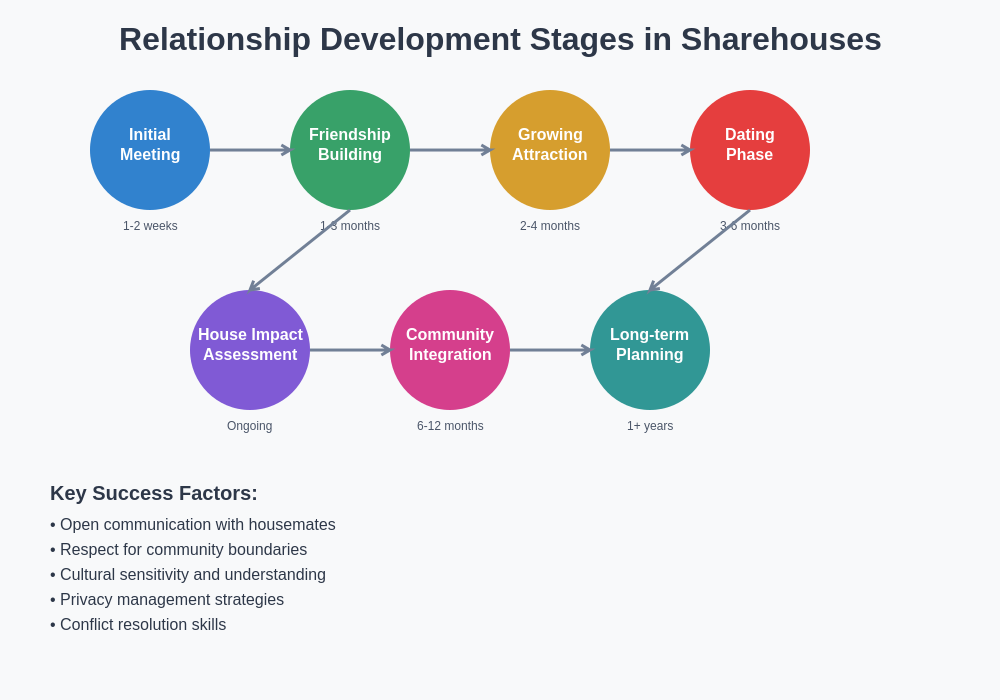
This structured progression shows how relationships in sharehouses follow predictable patterns, though the timeline can vary significantly based on individual personalities, cultural backgrounds, and house community dynamics.
Proximity and Its Impact on Relationship Development
The constant proximity inherent in sharehouse living creates unique advantages and challenges for developing romantic relationships. Unlike traditional dating scenarios where couples gradually increase their time together, sharehouse partners immediately experience intensive daily contact that can either accelerate relationship bonding or expose incompatibilities more quickly than conventional courtship patterns.
Morning routines become shared experiences where couples observe each other’s authentic daily habits, personal hygiene practices, and mood patterns that typically remain hidden during early dating phases. This immediate intimacy can strengthen relationships by eliminating pretense and encouraging genuine connection, but it can also create pressure for individuals who prefer gradual relationship progression.
The inability to maintain personal space and privacy during relationship development can create stress for both the couple and surrounding housemates. How personal space needs vary dramatically becomes particularly relevant when romantic partners struggle to balance their relationship needs with respectful cohabitation practices that maintain house harmony.
Shared responsibilities such as cleaning schedules, grocery shopping, and household maintenance provide natural opportunities for couples to practice collaboration and compromise skills essential for long-term relationship success. However, these same activities can also become sources of conflict when romantic partners disagree about standards, responsibilities, or fairness in household contributions.
Cultural Dynamics and Cross-Cultural Romance
International sharehouses frequently become breeding grounds for cross-cultural romantic relationships that offer unique opportunities for personal growth and global understanding. Living with Japanese roommates in Tokyo sharehouses highlights how cultural differences initially attract partners but can later create communication challenges and expectation conflicts that require careful navigation.
Language barriers in cross-cultural sharehouse relationships often create both romantic charm and practical difficulties. Partners may find each other’s accents endearing and enjoy teaching their native languages, but important conversations about relationship expectations, cultural traditions, and future planning can become complicated by communication limitations that affect relationship depth and understanding.
Different cultural approaches to dating, physical affection, family involvement, and relationship milestones can create confusion and conflict for cross-cultural couples who must negotiate between their respective cultural norms while respecting the expectations of their diverse housemate community. These negotiations often require patience, open communication, and willingness to compromise on traditions and practices.
Holiday celebrations, religious practices, and family communication patterns can become complex issues for cross-cultural couples who must balance their individual cultural obligations with their relationship development while considering the impact on their sharehouse community dynamics.
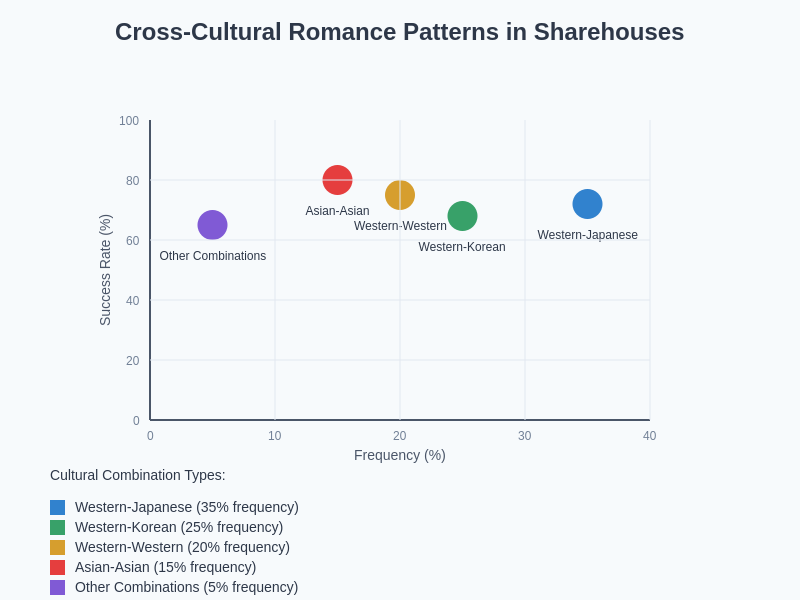
Cross-cultural relationships in sharehouses show varying success rates, with some cultural combinations demonstrating higher compatibility and longer-term success than others, influenced by communication styles, cultural expectations, and shared values.
House Dynamics and Community Impact
The development of romantic relationships within sharehouses inevitably affects the entire house community, creating shifts in social dynamics, friendship patterns, and daily living arrangements that can either enhance or complicate the overall living environment. How friend groups form and exclude others becomes particularly relevant when romantic couples inadvertently create exclusive social units within the broader house community.
Existing friendships within the house may experience strain when friends become romantic partners, as the transition changes the nature of group interactions and can make other residents feel excluded from the couple’s intensified connection. House activities that previously included all residents equally may become complicated when couples prefer to participate together or when their relationship conflicts affect group harmony.
Common area usage patterns often change when couples form within sharehouses, as romantic partners may monopolize spaces for private conversations, increase their presence in shared areas, or create informal territorial claims that affect other residents’ comfort and access to communal facilities. These changes require careful negotiation and house rule adjustments to maintain fairness and community harmony.
The emotional atmosphere within the house can be significantly influenced by the couple’s relationship status, with happy relationships contributing to positive community energy while relationship conflicts or breakups can create tension and discomfort for all residents. Dating while living in Tokyo sharehouses explores how romantic relationships affect the broader social environment.
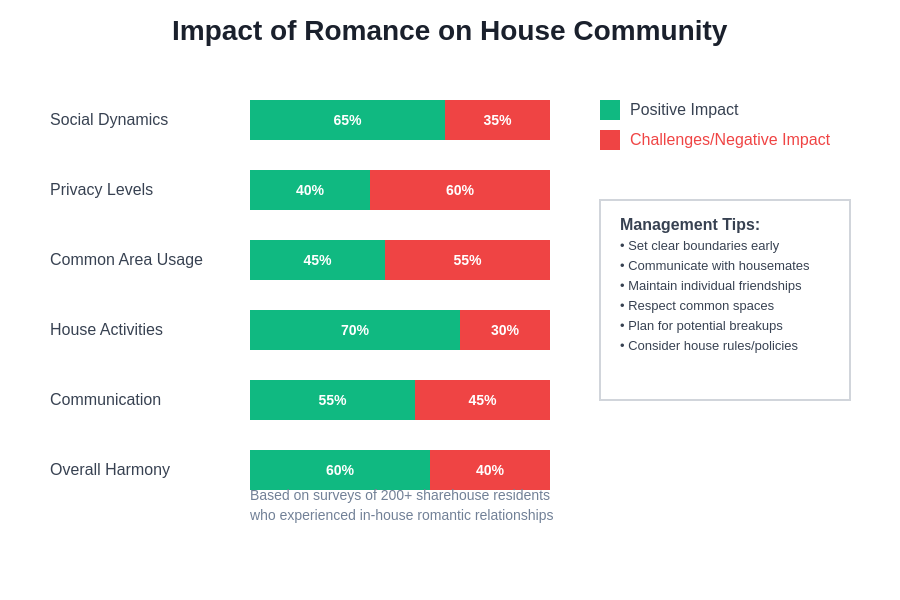
The data reveals that while romantic relationships can enhance social dynamics and house activities, they often create challenges around privacy and common area usage that require careful management.
Privacy Challenges and Intimate Space Management
Managing privacy needs while developing romantic relationships in sharehouses requires creative solutions and respectful communication with other residents. The lack of private spaces for intimate conversations, physical affection, and relationship discussions can create stress for couples who must balance their romantic needs with the realities of shared living arrangements.
Room sharing arrangements become particularly complex when romantic relationships develop, as partners may want to spend nights together while respecting roommate comfort levels and house policies regarding overnight guests. These situations require clear communication about boundaries, schedules, and expectations that protect everyone’s comfort and privacy rights.
Bathroom scheduling, kitchen usage during meal preparation for romantic dinners, and common area occupation for private conversations all become negotiation points that couples must manage sensitively to maintain positive relationships with their housemates while nurturing their romantic connection.
Sound management becomes crucial for romantic couples who must be mindful of noise levels during intimate conversations, late-night activities, and emotional discussions that could disturb other residents. The thin walls and close quarters typical of many sharehouses require couples to develop awareness and consideration for their impact on the broader community.
Relationship Milestones and House Rules
Sharehouse communities often develop formal or informal policies regarding romantic relationships between residents, ranging from complete acceptance to restrictions designed to maintain community stability and prevent complications. Japanese sharehouse rules every foreigner should know may include specific guidelines about resident dating and relationship conduct within the shared living environment.
The progression of romantic relationships through various milestones such as becoming exclusive, meeting each other’s families, or making long-term plans can create complications for sharehouse living arrangements. Couples may face decisions about whether both partners should remain in the same house, move to different accommodations, or adjust their living arrangements to accommodate relationship growth.
House meeting discussions about relationship policies, overnight guest limitations, and common area usage guidelines become necessary when romantic relationships develop, requiring community input and consensus-building to establish fair and comfortable rules for all residents.
Conflict resolution procedures become particularly important when romantic relationships create disputes or discomfort within the house community. How to handle roommate conflicts without moving out provides strategies for addressing relationship-related tensions that affect house harmony and resident comfort.
Long-Term Relationship Considerations
Couples who meet in sharehouses face unique decisions about their living arrangements as their relationships progress toward more serious commitments. The question of whether to continue living in the same sharehouse, move to separate accommodations, or transition to private couple housing together becomes a significant milestone that affects both their relationship development and their connections to the sharehouse community.
Career opportunities, visa status changes, and family considerations can complicate long-term planning for couples who met in sharehouses, particularly when partners come from different countries with varying immigration requirements and professional obligations. How career changes affect sharehouse eligibility may influence couples’ housing decisions as their professional lives evolve.
Financial planning becomes more complex for couples who must coordinate their individual sharehouse expenses while potentially planning for future shared housing costs, travel expenses for visiting each other’s home countries, and the financial implications of relationship milestones such as engagement or marriage.
The integration of romantic relationships into long-term life planning requires couples to consider how their sharehouse origins and community connections will influence their future housing choices, social networks, and lifestyle decisions as their relationships mature beyond the shared living environment.
Managing Breakups in Shared Living Spaces
The dissolution of romantic relationships within sharehouses presents unique challenges that can significantly impact both the former couple and the broader house community. How breakups affect entire house dynamics explores the complex emotional and practical considerations that arise when romantic relationships end in shared living environments.
Continued cohabitation following breakups requires exceptional maturity and communication skills from both former partners, who must navigate daily interactions while processing their emotional separation. The inability to maintain distance during the healing process can complicate recovery and create ongoing tension that affects the entire house atmosphere.
Mutual friends within the house may feel pressured to choose sides or maintain neutrality, creating social divisions and discomfort that can fracture the community bonds that previously supported all residents. House activities and social gatherings may become awkward or impossible when former couples struggle to coexist peacefully in shared spaces.
Practical considerations such as shared belongings, financial obligations, and housing arrangements require immediate attention when couples break up in sharehouses. Former partners may need to renegotiate room assignments, modify shared expenses, and establish new boundaries around common area usage and social interactions.
Success Strategies for Sharehouse Romance
Successful romantic relationships that develop within sharehouses typically involve partners who establish clear boundaries, maintain respect for their housemate community, and actively work to minimize the impact of their relationship on the broader living environment. Open communication with other residents about relationship developments helps prevent misunderstandings and maintains community harmony.
Regular house meetings that address relationship-related concerns and establish fair policies for all residents create frameworks for managing romantic relationships without creating divisions or favoritism within the community. These discussions should include topics such as overnight guest policies, common area usage, and conflict resolution procedures.
Maintaining individual friendships and interests outside the romantic relationship helps partners avoid becoming isolated from their house community while ensuring that their relationship enhancement rather than replaces their broader social connections within the shared living environment.
Planning for relationship progression includes considering the impact on housemates and developing transition strategies that minimize disruption to the community when couples decide to move in together privately or make other major relationship decisions that affect their sharehouse participation.
The phenomenon of romantic relationships developing within sharehouses represents a natural outcome of close living arrangements that can create both beautiful connections and complex social dynamics. Success depends largely on the maturity, communication skills, and community awareness of the individuals involved, as well as the supportive framework established by the broader house community. When managed thoughtfully, these relationships can enhance the sharehouse experience for everyone while creating lasting partnerships that extend far beyond the shared living arrangement.
Disclaimer
This article is for informational purposes only and does not constitute relationship advice. The experiences and outcomes of romantic relationships in sharehouses vary greatly depending on individual circumstances, cultural backgrounds, and house community dynamics. Readers should consider their own situation and comfort levels when navigating romantic relationships in shared living environments. The success of sharehouse relationships depends on individual maturity, communication skills, and community considerations that may differ significantly between properties and residents.