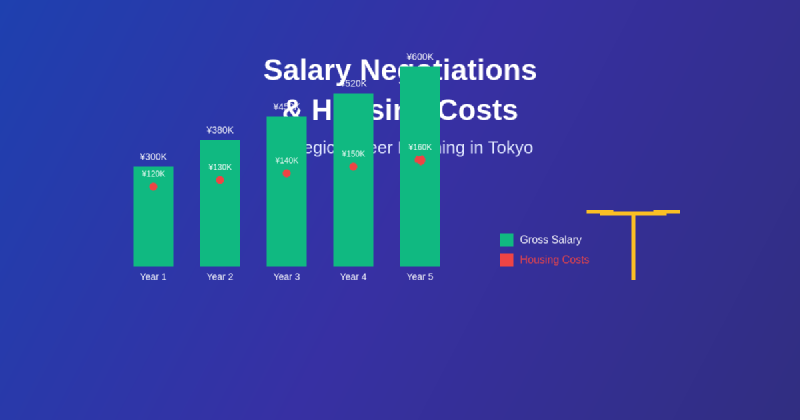
The intricate relationship between housing costs and salary negotiations in Tokyo creates complex financial dynamics that international professionals must navigate carefully to maintain career advancement while managing the substantial expense burden of living in one of the world’s most expensive cities. Understanding how sharehouse living costs directly influence salary discussions, job mobility decisions, and long-term career planning becomes essential for professionals who want to maximize their earning potential while maintaining acceptable living standards in Tokyo’s competitive employment market.
The psychological impact of housing cost pressures affects negotiation confidence and decision-making processes in ways that can significantly influence career outcomes, creating situations where professionals may accept suboptimal compensation packages or remain in unsuitable positions due to housing-related financial constraints that limit their flexibility and bargaining power during critical career moments. The burden of Tokyo’s housing expenses forces international workers to approach salary negotiations with considerations that extend far beyond traditional compensation evaluation methods used in less expensive markets.
The Housing Cost Foundation of Salary Requirements
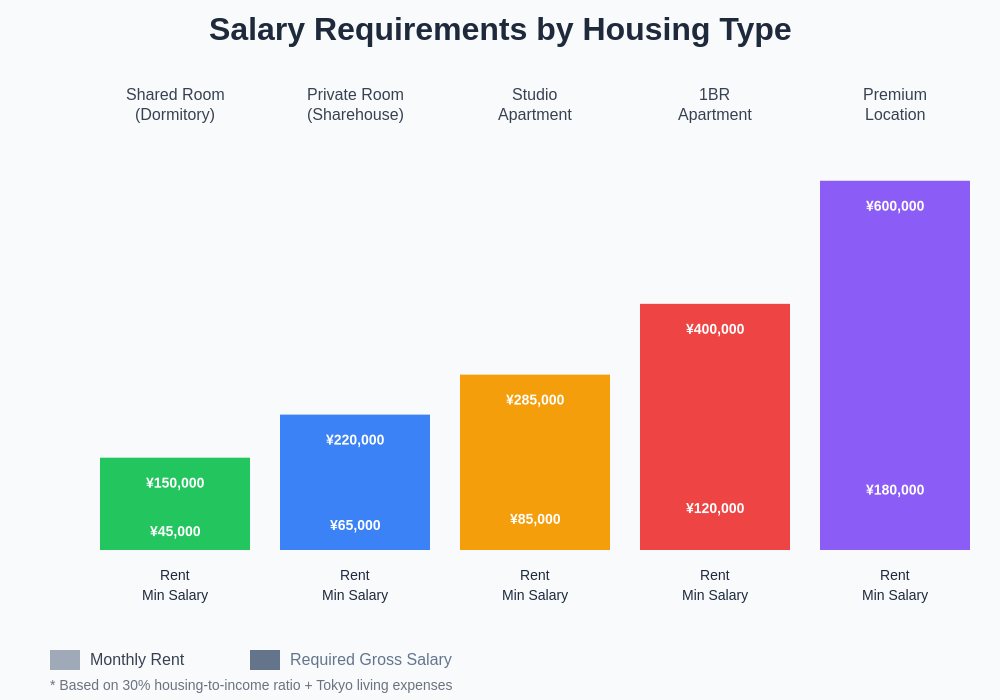
Tokyo’s housing market creates baseline salary requirements that international professionals must achieve simply to maintain basic living standards, establishing minimum compensation thresholds that influence every aspect of career planning and job selection regardless of individual professional qualifications or market value in other geographic locations. How much Tokyo sharehouses really cost per month demonstrates the substantial monthly financial commitments that form the foundation of salary negotiation strategies for professionals seeking sustainable living arrangements.
Housing costs typically consume 30-40% of gross income for international professionals living in Tokyo sharehouses, creating mathematical constraints that eliminate many job opportunities and force professionals to prioritize compensation levels over career development opportunities, work-life balance considerations, or professional growth potential that might be more valuable in markets with lower living costs. The rigid relationship between housing expenses and required income levels creates career decision frameworks that prioritize immediate financial survival over strategic long-term professional development.
International professionals must factor housing deposit requirements, key money payments, and initial setup costs into job transition planning, often requiring salary increases of 20-30% to justify job changes that would be financially neutral in less expensive markets due to the substantial upfront costs associated with relocating within Tokyo’s rental market. The cash flow requirements for housing transitions create significant barriers to career mobility that affect negotiation leverage and job market flexibility.
The relationship between housing costs and take-home pay becomes particularly complex for international workers who must also manage currency exchange risks, international tax obligations, and potential repatriation costs that create additional financial pressures beyond basic living expenses, requiring salary levels that account for financial complexities that domestic workers never encounter.
Geographic Salary Premiums and Location Dependencies
Tokyo’s salary premiums for international professionals partially compensate for elevated living costs but often prove inadequate when housing expenses are properly calculated to include all associated costs such as transportation, utilities, and the premium pricing that affects all aspects of daily life in Japan’s capital city. Best Tokyo neighborhoods for sharehouse living reveals how neighborhood selection affects both housing costs and commute expenses that compound the total cost of living calculations necessary for effective salary negotiations.
Different Tokyo districts create varying cost structures that affect salary requirement calculations, with central locations offering reduced transportation costs but higher housing expenses, while suburban sharehouses provide lower rent but increase commute costs and time investments that must be factored into total compensation evaluations. The geographic complexity of Tokyo’s cost structures requires sophisticated financial analysis to determine optimal salary-to-location ratios for individual career situations.
International companies operating in Tokyo often use standardized global compensation structures that may not adequately account for Japan-specific living costs, creating negotiation opportunities for professionals who can demonstrate the actual financial requirements necessary to maintain appropriate living standards while contributing effectively to their organizations. The gap between corporate compensation formulas and real-world Tokyo living costs provides leverage points for informed salary discussions.
Career advancement opportunities may require geographic mobility within Tokyo that creates substantial housing transition costs, making salary negotiations complex evaluations of current compensation adequacy versus future earning potential adjusted for relocation expenses and housing market transitions that can consume months of salary increases in transition costs alone.
Industry-Specific Housing Considerations
Different professional industries in Tokyo create varying approaches to housing cost accommodation, with some sectors providing housing subsidies, company-sponsored accommodation, or location allowances that significantly affect total compensation value and negotiation strategies for professionals seeking to optimize their financial positions while maintaining career development trajectories. English-speaking sharehouses in Tokyo for foreigners demonstrates how industry concentrations affect both housing options and salary market dynamics.
Technology companies often provide housing allowances or flexible work arrangements that reduce commute requirements, creating compensation packages where base salary levels may appear lower but total compensation value exceeds traditional salary structures when housing cost reductions are properly calculated. The emergence of remote work flexibility in certain industries creates new variables in housing cost calculations that affect negotiation strategies and career planning decisions.
Financial services and consulting industries typically offer higher base salaries but expect longer working hours and greater availability that may require living in more expensive central locations to meet professional obligations, creating cost structures where high salaries may provide less financial flexibility than lower-paying positions with better work-life balance and location flexibility.
Educational and non-profit sectors often provide lower monetary compensation but may offer housing assistance, visa sponsorship support, or other benefits that reduce overall living costs while providing career satisfaction and professional development opportunities that have long-term value beyond immediate financial considerations.
Negotiation Leverage and Housing Flexibility
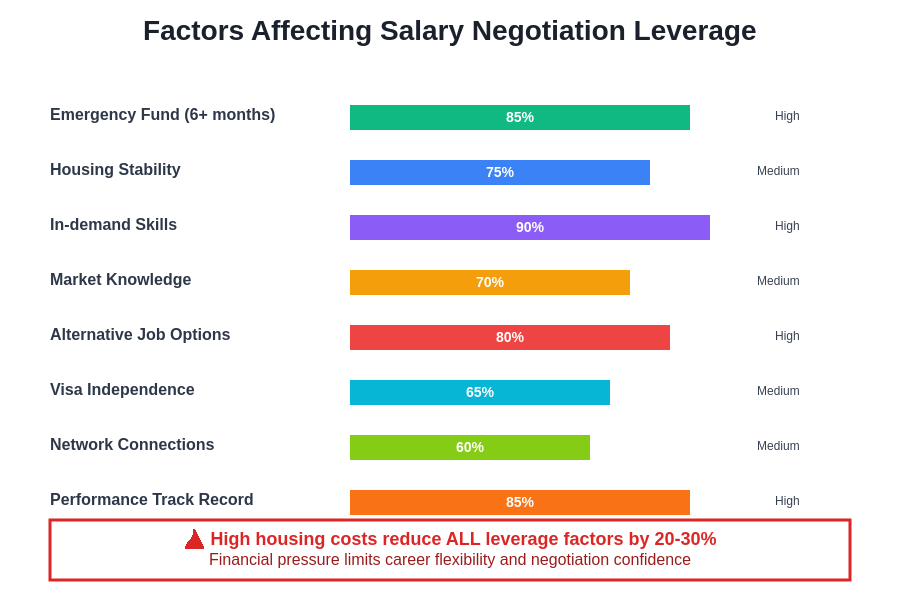
Housing cost pressures can significantly reduce negotiation leverage for international professionals who face immediate financial obligations that prevent them from taking risks during salary discussions or exploring alternative employment opportunities that might offer better long-term compensation but require short-term financial sacrifices during transition periods. How to calculate your true living costs provides frameworks for understanding total financial requirements that support more confident negotiation approaches.
Professionals with housing stability and lower monthly obligations possess greater negotiation flexibility because they can afford to pursue opportunities that offer better long-term career development even if immediate compensation increases are modest, creating competitive advantages that compound over time through better job selection and more aggressive career advancement strategies.
Emergency fund adequacy directly affects salary negotiation confidence, with professionals who maintain substantial savings able to negotiate more aggressively and take calculated career risks that may provide superior long-term financial outcomes compared to professionals who must prioritize immediate financial security due to inadequate emergency reserves relative to Tokyo’s high living costs.
The ability to relocate quickly for better opportunities depends heavily on maintaining sufficient liquid assets to cover housing transition costs, security deposits, and temporary accommodation expenses that can easily exceed three months of current salary, creating career mobility requirements that affect salary negotiation strategies and job selection criteria.
Career Progression and Housing Cost Scaling
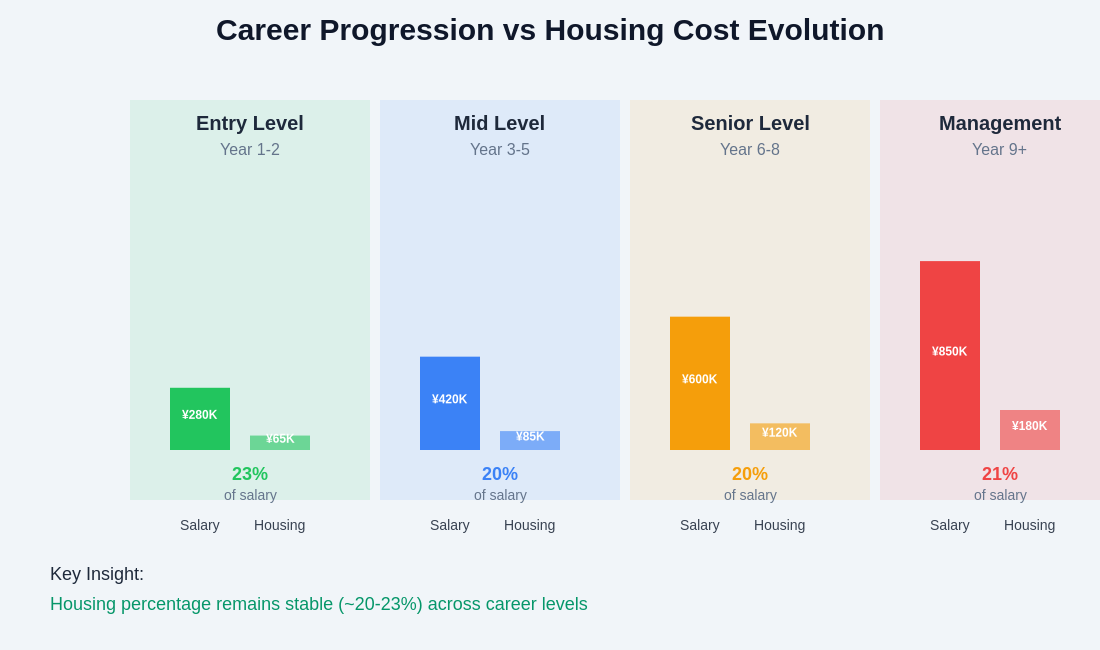
Salary progression planning must account for Tokyo’s housing market dynamics where rent increases, deposit requirements for better accommodations, and lifestyle inflation create financial pressures that require career advancement at rates that exceed simple cost-of-living adjustments to maintain improving living standards over time. Living costs in Tokyo sharehouses explained demonstrates how housing costs evolve with career progression and lifestyle expectations.
Professional advancement often requires housing upgrades that demand significant salary increases to maintain financial stability, with transitions from shared accommodation to private apartments requiring income increases of 50-100% to maintain similar discretionary spending levels while accommodating higher housing costs and related lifestyle expenses.
Long-term career planning in Tokyo requires consideration of family formation, aging considerations, and potential repatriation costs that affect salary requirement projections and negotiation strategies throughout different career phases, with housing costs serving as fundamental constraints that influence major life decisions and professional development choices.
International professionals must balance career development investments such as additional education, certification programs, or skill development activities against immediate housing cost pressures, creating complex financial optimization problems where short-term salary maximization may conflict with long-term career advancement strategies that require upfront investments.
Market Dynamics and Compensation Trends
Tokyo’s international talent market creates compensation dynamics where housing costs serve as baseline requirements that affect overall salary level expectations, with employers increasingly recognizing that competitive compensation packages must account for the full cost of living rather than simple salary comparisons with other markets or historical compensation levels.
Shortage of qualified international professionals in certain sectors provides negotiation leverage that can be used to secure housing allowances, flexible work arrangements, or other benefits that effectively reduce housing cost burdens while maintaining competitive base salary levels that support career advancement and professional development goals.
Economic fluctuations affect both salary growth potential and housing costs simultaneously, creating complex market dynamics where professionals must navigate changing compensation landscapes while managing variable housing cost pressures that may not correlate directly with salary adjustment patterns or economic cycles.
Currency exchange rate fluctuations create additional complexity for international professionals whose salary negotiations must account for potential changes in real purchasing power that affect housing affordability and overall financial stability throughout employment periods that may span multiple years of economic variability.
Strategic Negotiation Approaches
Effective salary negotiations in Tokyo require comprehensive preparation that includes detailed housing cost analysis, market research on compensation levels, and clear understanding of total employment value including benefits, work-life balance, and career development opportunities that affect long-term financial outcomes beyond immediate salary figures. How to budget realistically for sharehouse living provides foundational financial analysis tools that support informed negotiation strategies.
Presentation of housing cost data during salary discussions can provide concrete justification for compensation requests that demonstrate professional understanding of Tokyo’s market realities while highlighting the need for competitive compensation packages that enable effective job performance and long-term employee retention in expensive urban markets.
Negotiation timing considerations must account for housing cost cycles, lease renewal periods, and personal financial obligations that affect flexibility and risk tolerance during salary discussions, with optimal negotiation timing often depending on housing stability and financial reserve adequacy rather than traditional performance review schedules.
Alternative compensation structures such as housing allowances, transportation subsidies, or flexible work arrangements may provide greater value than equivalent salary increases when properly evaluated against actual living cost requirements, creating opportunities for creative negotiation solutions that benefit both employers and employees.
Long-term Financial Planning Integration
Housing cost considerations must be integrated into comprehensive financial planning that includes retirement savings, emergency fund maintenance, and potential repatriation planning, with salary negotiation strategies supporting overall financial goals rather than simply maximizing immediate compensation without regard for long-term financial security and career sustainability.
Career mobility planning requires maintaining financial flexibility through salary levels that exceed immediate housing cost requirements, creating capacity for career transitions, professional development investments, and emergency situations that may require rapid financial adaptation or geographic relocation within Tokyo’s expensive market environment.
Tax planning considerations affect the real value of salary increases relative to housing costs, with international professionals needing to understand how increased compensation affects their total tax obligations in both Japan and their home countries to make informed decisions about salary negotiation priorities and compensation structure preferences.
Investment opportunities and wealth building strategies require discretionary income above housing and basic living costs, making salary negotiations critical components of long-term financial independence planning that extends beyond immediate career considerations to encompass comprehensive life planning and financial goal achievement.
Understanding the relationship between housing costs and salary negotiations empowers international professionals to make informed career decisions that support both immediate financial stability and long-term professional growth while navigating Tokyo’s complex and expensive urban environment. The integration of housing cost analysis into career planning and salary negotiation strategies creates competitive advantages that compound over time through better financial decision-making and more strategic career development approaches.
Disclaimer
This article is for informational purposes only and does not constitute professional financial, legal, or career advice. Salary negotiation strategies and housing cost considerations vary significantly based on individual circumstances, industry requirements, and market conditions. Readers should consult with qualified professionals for personalized guidance on career planning and financial management. The information provided may not reflect current market conditions or individual employment situations.