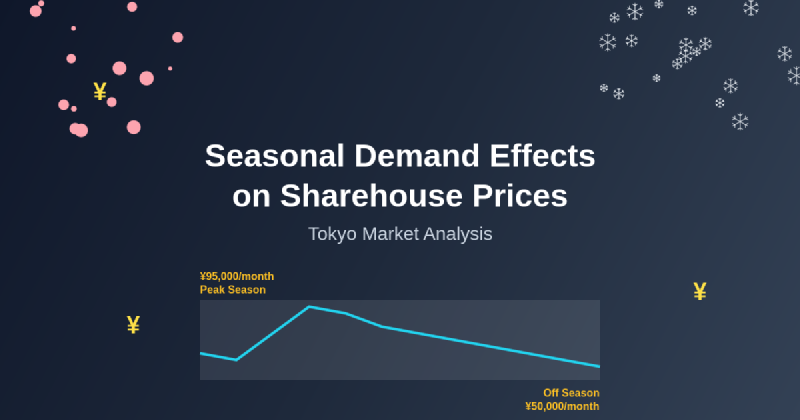
Tokyo’s sharehouse rental market experiences dramatic price fluctuations throughout the year, creating opportunities for savvy renters to secure significant savings while presenting challenges for those who need housing during peak demand periods. Understanding these seasonal patterns represents one of the most crucial factors in successful sharehouse hunting, as timing your search appropriately can result in monthly savings of 20,000 to 40,000 yen or more depending on the specific property and location.
The intricate relationship between seasonal demand and pricing in Tokyo’s sharehouse market reflects broader patterns in Japanese society, including academic calendars, corporate hiring cycles, and cultural events that drive population movements throughout the metropolitan area. These predictable patterns create both opportunities and obstacles for international residents seeking accommodation, making seasonal awareness an essential component of effective housing strategy.
Understanding Tokyo’s Academic and Corporate Cycles
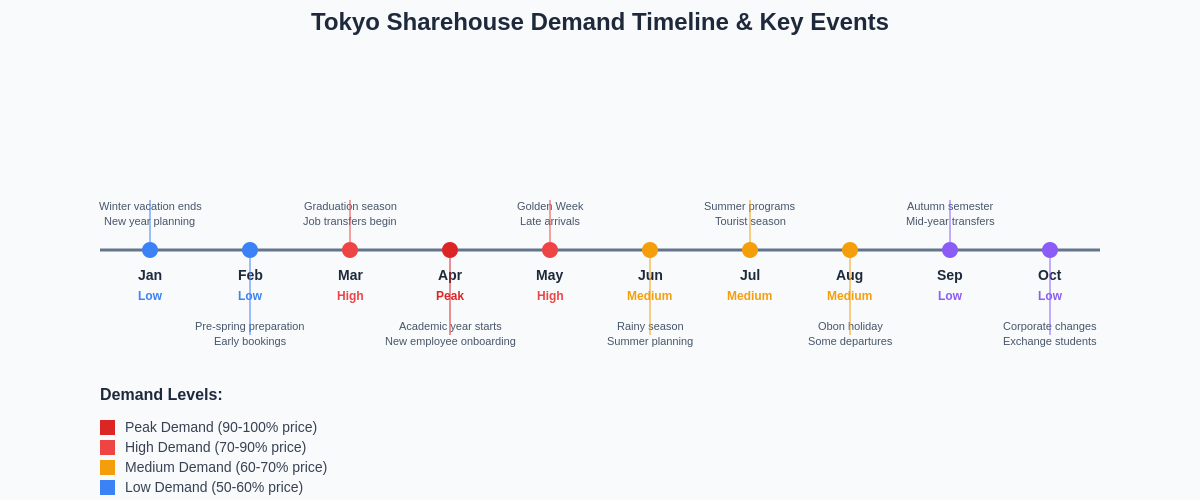
The foundation of seasonal demand in Tokyo’s sharehouse market stems from Japan’s unique academic and corporate calendar systems, which create massive population shifts at specific times throughout the year. The Japanese academic year begins in April, triggering enormous demand for housing as hundreds of thousands of new students arrive in Tokyo for university enrollment, while simultaneously creating availability as graduating students vacate their accommodations.
Student sharehouses near top Tokyo universities experience the most dramatic seasonal variations, with properties near major educational institutions commanding premium prices during peak enrollment periods. The corporate hiring cycle, known as “shinsotsu saiyō,” also aligns with the academic calendar, as new graduates begin their careers in April, further intensifying housing demand during this critical period.
Corporate relocations and job transfers, particularly common in Japanese business culture, typically occur during fiscal year transitions in March and April. International companies operating in Tokyo often align their hiring and transfer schedules with these local patterns, creating additional demand pressure during specific months while leaving other periods with reduced competition for available properties.
Peak Season Pricing and Demand Patterns
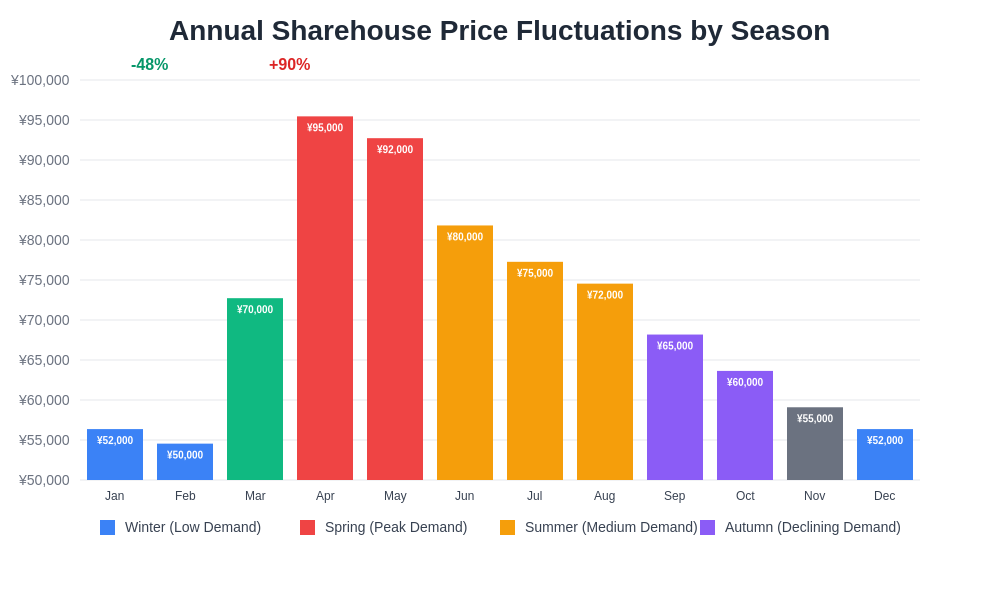
March through May represents the absolute peak season for sharehouse demand in Tokyo, with prices reaching their annual maximum during this period. Properties that rent for 60,000 yen per month during off-peak periods may command 80,000 to 100,000 yen during peak season, representing increases of 30 to 65 percent above baseline pricing levels.
The intensity of competition during peak season extends beyond simple price increases to include reduced negotiation flexibility, stricter application requirements, and faster decision-making demands from potential residents. How to find the perfect sharehouse in Tokyo becomes significantly more challenging during these months, as desirable properties may receive multiple applications within hours of listing.
Security deposit requirements often increase during peak season, with some operators demanding additional deposits or implementing non-refundable fees that effectively function as premium charges for peak-season bookings. Key money payments, already substantial in Tokyo’s rental market, may see additional surcharges during high-demand periods, further inflating the total cost of securing accommodation.
Popular neighborhoods and well-managed properties experience the most dramatic price increases during peak season, while lower-quality or less desirable locations may see more modest increases. Best Tokyo neighborhoods for sharehouse living command the highest premiums, particularly those with excellent transportation access and international resident communities.
Golden Week and Summer Pricing Dynamics
Golden Week in late April and early May creates a unique pricing anomaly within the broader peak season period, as the extended holiday period temporarily reduces viewing activity while maintaining high underlying demand. Properties that list during Golden Week may experience slightly reduced immediate interest, but prices remain elevated due to the continued shortage of available accommodation from the preceding months.
Summer months from June through August typically see gradual price stabilization as the initial rush of spring relocations subsides, though demand remains elevated compared to off-season periods. Living costs in Tokyo sharehouses explained during summer months includes additional considerations such as air conditioning costs, which can add 5,000 to 15,000 yen to monthly expenses depending on building efficiency and house policies.
The rainy season in June and July may create temporary softening in demand as apartment hunting becomes less convenient, potentially creating brief opportunities for negotiation or finding properties that have lingered on the market. However, this effect is typically modest and short-lived, as the underlying supply shortage continues to support elevated pricing levels.
International student arrival patterns during summer months, particularly for language school enrollments and semester exchange programs, create secondary demand spikes that prevent significant price reductions during this period. Properties specifically marketed to international residents may maintain peak-season pricing throughout the summer months due to this continued international demand.
Autumn Market Adjustments and Opportunities
September through November represents a transitional period in Tokyo’s sharehouse market, as the immediate pressure of spring relocations subsides while new demand patterns emerge from mid-year corporate transfers and international arrivals. Pricing during this period typically decreases 10 to 20 percent from peak levels, though rates remain elevated compared to true off-season pricing.
Corporate hiring cycles create modest demand increases in October as companies implement mid-year recruiting and international transfers align with fiscal planning cycles. Business district sharehouses near Tokyo Station may experience particular demand during this period as multinational corporations adjust their Tokyo staffing levels.
The autumn period offers improved negotiation opportunities compared to peak season, with property managers more willing to consider flexible lease terms, reduced security deposits, or included utilities packages to attract quality tenants before the winter slowdown. International residents planning moves during this period often find significantly more choice and better terms compared to spring relocations.
University exchange programs and language school fall enrollments create continued international demand during autumn months, though this tends to be more dispersed across the city rather than concentrated in specific university districts. This pattern can create opportunities in traditionally student-heavy areas while maintaining pressure on properties popular with international residents.
Winter Market Dynamics and Off-Season Advantages
December through February represents the off-season for Tokyo’s sharehouse market, with demand reaching annual lows as most academic and corporate relocations conclude and new arrivals delay moves until spring. Pricing during this period can drop 25 to 40 percent below peak levels, creating exceptional opportunities for budget-conscious renters willing to secure housing during less convenient months.
The psychological impact of winter weather on apartment hunting behavior creates additional downward pressure on demand, as potential residents postpone moves until more favorable weather conditions arrive. Property managers facing vacant rooms during winter months often implement aggressive pricing strategies, promotional offers, and flexible terms to maintain occupancy levels during traditionally slow periods.
Cheaper sharehouse options in Tokyo suburbs become particularly attractive during winter months, as reduced competition allows for careful evaluation of properties that might be overlooked during peak season. The combination of reduced base prices and decreased competition creates optimal conditions for securing excellent value accommodations.
International residents arriving during winter months often find property managers eager to accommodate special requests, negotiate terms, or provide additional services to secure reliable tenants before the spring rush begins. This period offers optimal conditions for establishing relationships with property management companies and securing favorable long-term arrangements.
Regional and Neighborhood Variations
Different Tokyo neighborhoods experience varying degrees of seasonal price fluctuation based on their primary resident demographics and local economic factors. University districts such as areas near Waseda, Keio, and Tokyo University see the most extreme seasonal variations, with prices potentially doubling during peak enrollment periods before returning to baseline levels during off-season months.
Business districts and areas popular with international corporations tend to experience more moderate seasonal variations, as corporate relocations spread across multiple months rather than concentrating in specific periods. English-speaking sharehouses in Tokyo for foreigners in business-oriented neighborhoods may maintain relatively stable pricing throughout the year due to consistent international demand.
Suburban areas and neighborhoods with less convenient transportation access typically experience smaller seasonal price swings, as they attract residents primarily based on affordability rather than timing convenience. These areas may offer year-round value for budget-conscious residents less concerned about location prestige or convenience factors.
Trendy neighborhoods popular with young professionals and international residents often maintain elevated pricing throughout most of the year, with seasonal variations reflecting demand intensity rather than fundamental affordability changes. Understanding these local patterns helps identify optimal timing for moves within specific areas of interest.
Strategic Timing for Different Resident Types
Students planning to study in Tokyo should ideally secure housing by January or February to avoid peak-season pricing while ensuring availability for April enrollment. Early booking often allows for better room selection and more favorable contract terms, though this requires significant advance planning and financial preparation.
Working professionals with flexible start dates can achieve substantial savings by timing their arrivals for autumn or winter months, particularly if their employers allow delayed start dates or remote work arrangements during initial relocation periods. How to find the perfect sharehouse in Tokyo becomes significantly easier and more cost-effective during off-peak periods.
Short-term residents and digital nomads can optimize their Tokyo experiences by avoiding peak-season pricing entirely, focusing their stays during winter and early autumn months when both accommodation and general tourism costs remain lower. This strategy also provides access to better properties and more authentic local experiences due to reduced tourist presence.
International residents with existing Tokyo housing who plan to relocate within the city should time their moves for off-peak periods to take advantage of reduced competition and better negotiation opportunities. The savings achieved through strategic timing often exceed the inconvenience of moving during less ideal weather conditions.
Economic Factors and External Influences
Currency exchange rates significantly impact international residents’ experience of seasonal pricing variations, as periods of yen weakness can offset peak-season price increases while yen strength amplifies the cost impact of seasonal premiums. How much Tokyo sharehouses really cost per month requires consideration of both seasonal pricing and currency fluctuations for international budgeting purposes.
Economic conditions in Japan and globally influence the intensity of seasonal demand patterns, with recession periods potentially dampening peak-season price increases while economic growth may intensify seasonal variations. International student enrollment numbers and corporate expansion plans directly impact demand intensity during peak periods.
Government policy changes affecting international students, working holiday programs, or corporate immigration can alter traditional seasonal patterns by changing the composition and timing of foreign resident arrivals in Tokyo. Understanding these broader economic and policy contexts helps predict variations in typical seasonal patterns.
Tourism patterns and major international events in Tokyo can create secondary demand pressures during traditionally off-peak periods, particularly for short-term sharehouse options and properties in tourist-accessible areas. Dating while living in Tokyo sharehouses and social activities may also influence housing preferences during major event periods.
Negotiation Strategies Across Seasons
Peak season negotiations require different approaches compared to off-season discussions, with spring property hunting focusing on speed and competitive applications rather than price negotiations or special terms. During high-demand periods, offering to sign longer lease terms or pay larger security deposits may provide advantages over attempting to negotiate lower monthly rates.
Off-season negotiations can focus on achieving comprehensive value packages including reduced rent, waived fees, included utilities, or flexible lease terms that would be impossible during peak demand periods. Property managers facing vacancy pressures during winter months often prove receptive to creative arrangements that ensure stable occupancy through the slow period.
Understanding individual property managers’ seasonal pressures and occupancy patterns enables more effective negotiation strategies tailored to specific situations. Japanese sharehouse rules every foreigner should know include seasonal considerations that may affect negotiation approaches and available flexibility.
Building relationships with property management companies during off-peak periods can provide advantages when seeking upgrades or transfers during peak season, as established tenants often receive priority consideration over new applicants during high-demand periods.
Long-term Planning and Seasonal Strategies
Successful long-term residents often plan their Tokyo housing strategies around seasonal patterns, timing lease renewals and relocations to take advantage of favorable market conditions while avoiding peak-season pressures. Understanding these cycles enables more effective financial planning and housing optimization over extended periods.
International residents planning extended Tokyo stays should consider securing longer-term leases during off-peak periods to lock in favorable rates and avoid annual peak-season price increases. Many sharehouses offer modest discounts for longer lease commitments, particularly when signed during low-demand periods.
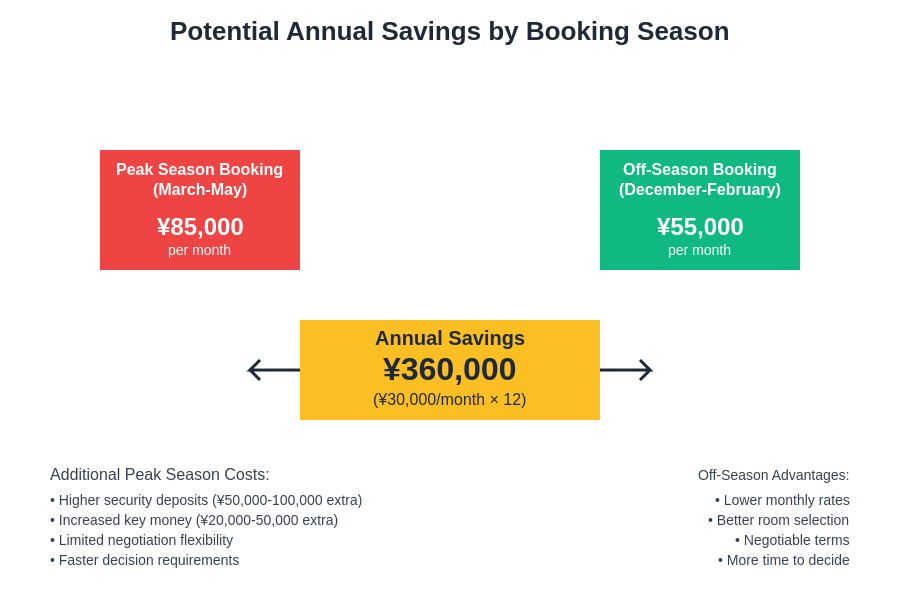
Career planning and educational timing decisions should incorporate seasonal housing cost considerations, as the total cost impact of peak versus off-peak arrival timing can amount to several months of living expenses over the course of a year. Real stories from Tokyo sharehouse residents often highlight the financial impact of arrival timing on overall Tokyo experiences.
Building financial reserves to handle seasonal price variations ensures flexibility in housing decisions and reduces pressure to accept suboptimal arrangements due to budget constraints during high-demand periods. Understanding seasonal patterns enables more accurate budgeting and financial preparation for Tokyo living expenses.
Tokyo’s sharehouse market seasonal patterns create both challenges and opportunities for international residents willing to understand and adapt to these cyclical dynamics. Strategic timing of housing searches and relocations can result in substantial financial savings while providing access to better properties and more favorable lease terms. The key to success lies in advanced planning, flexibility in timing decisions, and comprehensive understanding of the factors driving seasonal demand fluctuations throughout Tokyo’s dynamic rental market.
Disclaimer
This article is for informational purposes only and does not constitute professional financial or rental advice. Sharehouse pricing and availability are subject to market conditions, economic factors, and individual property management policies that may change without notice. Readers should conduct current market research and consult with rental professionals when making housing decisions. Seasonal patterns described may vary based on economic conditions, policy changes, and other external factors beyond the scope of this analysis.