The arrival of Japan’s darker winter months brings more than just cooler temperatures and shorter days to sharehouse communities across Tokyo. Seasonal Affective Disorder, commonly known as seasonal depression or the winter blues, creates subtle yet profound shifts in house dynamics that can fundamentally alter the social fabric and daily rhythms of shared living spaces. Understanding these changes becomes essential for maintaining healthy community relationships and providing appropriate support during the challenging winter period.
The impact of seasonal depression extends far beyond individual mood changes, creating ripple effects that influence everything from kitchen usage patterns to social gatherings, conflict resolution approaches, and the overall atmosphere that defines each unique sharehouse community. These seasonal shifts in behavior and energy levels can either strengthen community bonds through mutual support or create unexpected tensions that challenge even the most harmonious living arrangements.
Understanding Seasonal Depression in Shared Living Environments
Seasonal Affective Disorder manifests differently within the concentrated social environment of sharehouses compared to solitary living situations. The reduced sunlight and shorter daylight hours that characterize Tokyo winters trigger biochemical changes in residents that affect serotonin and melatonin levels, leading to decreased energy, altered sleep patterns, and shifted social preferences that inevitably influence community interactions.
Living with Japanese roommates in Tokyo sharehouses can provide unique cultural perspectives on managing seasonal mood changes, as different cultural backgrounds bring varying coping mechanisms and social expectations during difficult periods. The collective nature of sharehouse living means that one person’s seasonal depression can influence the entire community’s energy and social dynamics.
The confined indoor environment during winter months intensifies the effects of seasonal depression while simultaneously limiting the natural mood-boosting activities that residents might pursue independently. Common areas that once buzzed with social activity may become quieter as residents withdraw to their private rooms, creating a noticeable shift in the communal atmosphere that defines successful sharehouse living.
Recognition of seasonal depression symptoms becomes particularly important in multicultural sharehouse environments where residents may express distress differently based on their cultural backgrounds and personal communication styles. Some residents may become more vocal about their struggles, while others may withdraw completely, making it challenging for housemates to provide appropriate support without overstepping personal boundaries.
Changes in Daily Routines and Space Usage
Winter’s impact on individual circadian rhythms creates noticeable shifts in how residents utilize shared spaces and structure their daily activities. Morning bathroom queues that are inevitable in sharehouses may become longer or shift to different times as residents struggle with altered sleep patterns and difficulty waking up during dark mornings.
Kitchen usage patterns often change dramatically during winter months as residents affected by seasonal depression may lose interest in cooking elaborate meals or participating in social cooking activities that previously brought the community together. This shift can create both practical challenges around meal planning and social voids where communal cooking once served as natural bonding opportunities.
The reduced motivation and energy levels associated with seasonal depression often lead to decreased participation in house maintenance activities, creating potential friction around cleaning schedules and shared responsibilities. How cleaning responsibilities create house drama becomes particularly relevant during winter months when some residents may struggle to maintain their usual contribution levels.
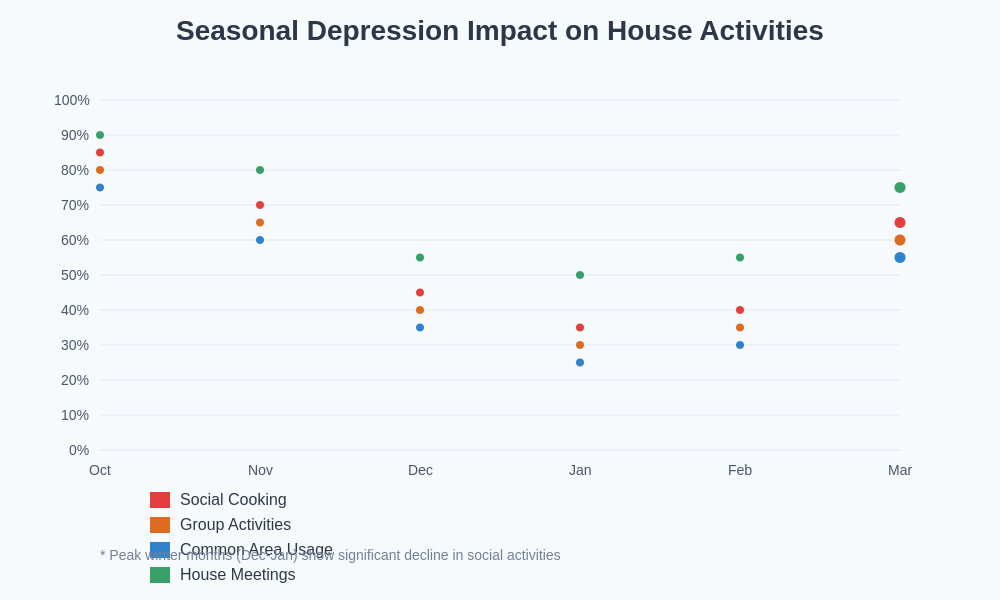
Common area usage typically declines as residents spend more time in their private rooms, seeking comfort in familiar, controlled environments rather than navigating the social complexities of shared spaces. This withdrawal can create a cyclical effect where reduced social interaction further exacerbates feelings of isolation and depression, making recovery more challenging for affected residents.
Impact on Social Interactions and Community Building
The social fabric of sharehouse communities faces unique challenges during winter months as seasonal depression affects residents’ capacity and desire for social engagement. Making friends through Tokyo sharehouse communities becomes more complex when some residents experience reduced social energy and motivation to participate in group activities or casual conversations.
Communication patterns shift as residents dealing with seasonal depression may become less responsive to house group chats, miss community meetings, or decline invitations to social gatherings that they would normally enjoy. This change can create misunderstandings among housemates who may interpret withdrawal as rudeness or disinterest rather than recognizing it as a symptom of seasonal mood changes.
The reduced daylight hours limit outdoor social activities that naturally bring sharehouse communities together, forcing residents to rely more heavily on indoor bonding activities that may feel forced or artificial to those struggling with depression. Traditional community-building activities like group dinners or movie nights may lose their appeal for affected residents, requiring creative alternatives that accommodate different energy levels and social preferences.
Conflict resolution becomes more challenging during winter months as seasonal depression can affect emotional regulation and stress tolerance levels. How to handle roommate conflicts without moving out requires additional sensitivity and patience when dealing with residents who may be experiencing seasonal mood changes that affect their typical conflict resolution abilities.
Financial and Practical Consequences
Seasonal depression can create unexpected financial pressures within sharehouse communities as affected residents may struggle with decreased work productivity, missed employment opportunities, or increased spending on comfort items and mood-boosting activities. Living costs in Tokyo sharehouses explained becomes more complex when accounting for seasonal variations in individual financial capacity and spending patterns.
Utility costs typically increase during winter months as residents spend more time indoors with heating, lighting, and entertainment systems running for extended periods. The combination of higher bills and potentially reduced income from seasonal depression’s impact on work performance can create financial stress that affects the entire house community’s budget planning and expense sharing arrangements.
Food costs may fluctuate as residents alternate between decreased appetite and increased comfort eating, making group grocery shopping and meal planning more challenging to coordinate. Some residents may withdraw from shared cooking arrangements entirely, while others may require additional support to maintain healthy eating patterns during depressive episodes.
The tendency to order delivery food and convenience meals increases during seasonal depression periods, impacting both individual budgets and the house’s approach to shared meal planning. How food delivery apps change sharehouse dynamics becomes particularly relevant as residents seek convenient alternatives to cooking during low-energy periods.
Creating Supportive House Environments
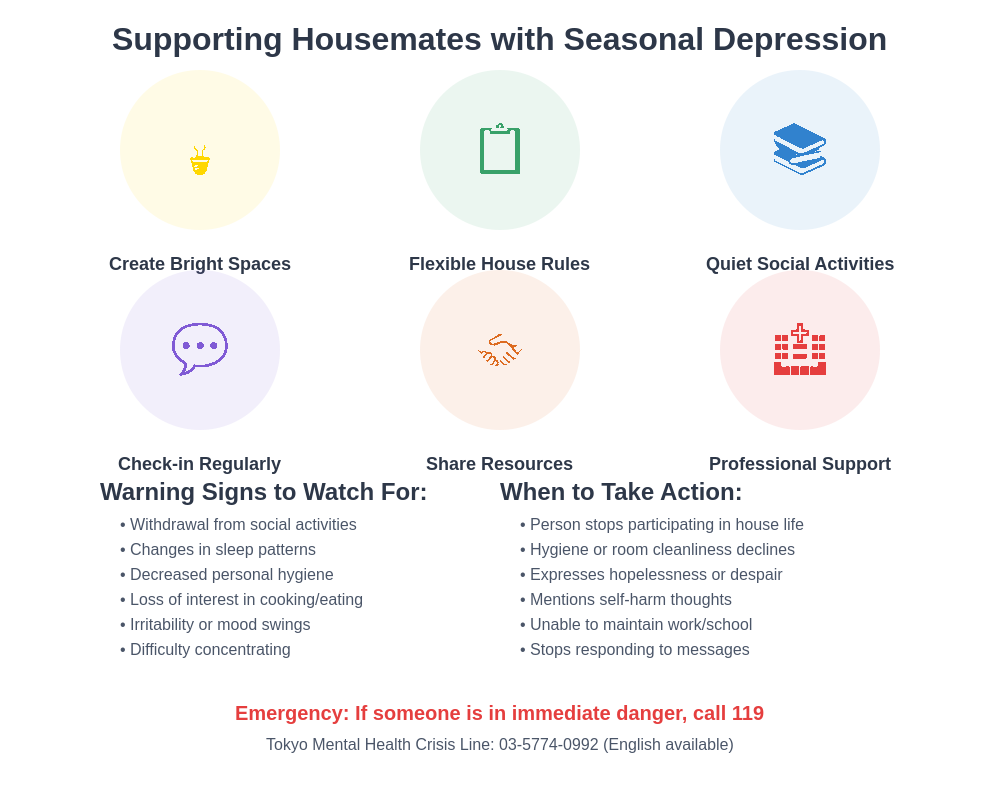
Successful sharehouse communities develop strategies for recognizing and responding to seasonal depression that balance individual needs with community well-being. Establishing open communication channels allows residents to express their seasonal struggles without judgment while enabling housemates to offer appropriate support without overstepping personal boundaries or creating additional pressure.
Light therapy initiatives can become community projects that benefit all residents while providing targeted support for those experiencing seasonal depression. Installing bright lights in common areas, organizing morning light exposure activities, or creating bright, welcoming spaces can help combat the darkness that exacerbates seasonal mood disorders while maintaining the social aspects that make sharehouse living beneficial.
Flexible house rules and expectations during winter months acknowledge that seasonal depression affects residents’ capacity to participate fully in all community activities and responsibilities. Japanese sharehouse rules every foreigner should know may require seasonal modifications that accommodate reduced energy levels while maintaining essential house functions.
Creating alternative social activities that accommodate different energy levels ensures that community building continues even when traditional high-energy gatherings become less appealing. Quiet movie nights, book clubs, or craft activities provide social connection opportunities that don’t overwhelm residents experiencing seasonal depression while maintaining the community bonds that make sharehouse living worthwhile.
Professional Support and Resource Sharing
Encouraging professional help-seeking becomes a community responsibility when seasonal depression significantly impacts house dynamics and individual well-being. Sharing information about mental health resources, local therapists who speak multiple languages, and seasonal depression treatment options creates a supportive environment that normalizes seeking help while providing practical assistance for residents who may struggle to navigate Japan’s healthcare system independently.
Group therapy or counseling sessions specifically designed for international residents experiencing seasonal depression can become community initiatives that address both individual needs and house-wide relationship challenges. Student sharehouses near top Tokyo universities often have additional access to mental health resources through academic institutions that can benefit entire house communities.
Medication management and light therapy equipment sharing can become practical community support measures, though these require careful consideration of privacy and medical confidentiality. Some sharehouses develop informal support networks where residents who have successfully managed seasonal depression provide guidance and encouragement to those currently struggling.
Emergency support protocols help ensure that severe depressive episodes receive appropriate intervention without compromising individual privacy or creating panic within the house community. Establishing clear guidelines for when and how to seek professional help protects both affected individuals and concerned housemates who may feel uncertain about appropriate response levels.
Long-term Community Resilience Strategies
Building house communities that can weather seasonal depression challenges requires intentional planning and ongoing attention to mental health awareness throughout the year, not just during winter months. Real stories from Tokyo sharehouse residents often highlight the importance of proactive community building that creates strong enough bonds to support members through difficult seasonal periods.
Annual planning that anticipates seasonal mood changes allows communities to prepare support systems, adjust expectations, and organize mood-boosting activities before depression symptoms become severe. This proactive approach prevents the reactive crisis management that can strain house relationships and create additional stress for all residents.
Education about seasonal depression symptoms, triggers, and management strategies empowers all residents to recognize early warning signs in themselves and others while reducing stigma around mental health discussions. Cultural sensitivity training helps multicultural sharehouse communities understand how different backgrounds influence depression expression and support preferences.
Succession planning ensures that essential house functions continue even when key community members experience seasonal depression. Distributing leadership responsibilities and creating backup systems for crucial activities maintains house stability while reducing pressure on individuals who may be struggling with seasonal mood challenges.
Building Stronger Communities Through Adversity
The experience of navigating seasonal depression as a community often strengthens house bonds and creates deeper understanding among residents who learn to support each other through challenging periods. How to find the perfect sharehouse in Tokyo should include considerations about mental health support and community resilience that extend beyond basic amenities and location factors.
Success stories from sharehouses that have effectively managed seasonal depression create models for other communities facing similar challenges. These experiences demonstrate that shared living environments can provide unique advantages for managing mental health challenges when communities approach seasonal depression with understanding, flexibility, and mutual support.
The skills developed through supporting housemates with seasonal depression—empathy, communication, flexibility, and community problem-solving—create stronger, more resilient communities that can handle various challenges beyond mental health issues. These capabilities benefit all residents and contribute to the long-term success and satisfaction of sharehouse living arrangements.
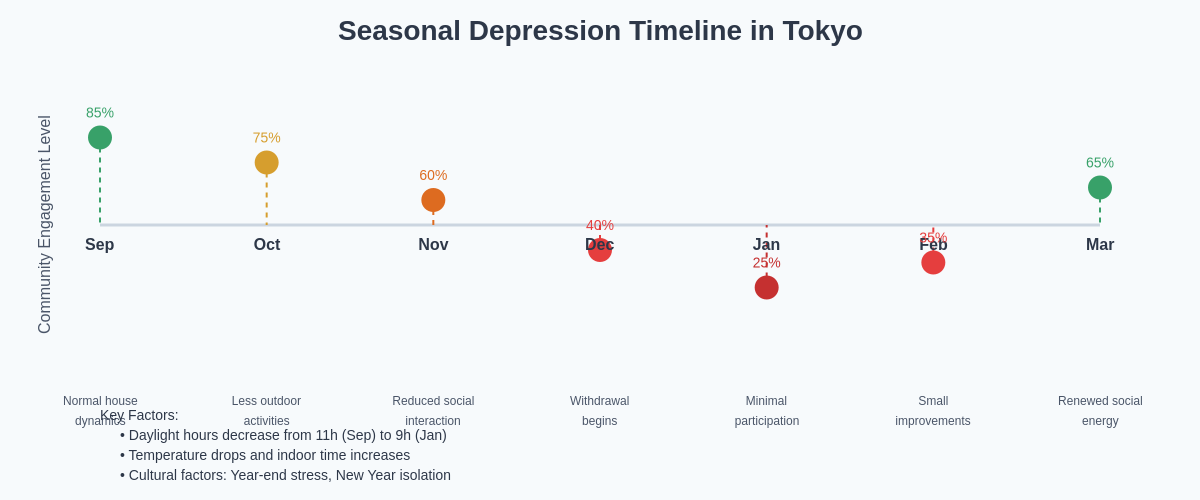
Winter’s end often reveals communities that have grown stronger through adversity, with deeper relationships and better support systems that benefit all residents throughout the year. The seasonal cycle of challenge and recovery becomes an opportunity for community growth rather than simply a period to endure, transforming how residents approach both individual struggles and collective well-being in their shared living environment.
Understanding and addressing seasonal depression in sharehouse settings requires balancing individual needs with community well-being while recognizing that mental health challenges can either divide or strengthen shared living communities depending on how thoughtfully they are approached. With proper awareness, support systems, and community commitment, seasonal depression becomes a manageable challenge that can ultimately enhance rather than undermine the bonds that make sharehouse living a transformative experience for international residents in Tokyo.
Disclaimer
This article is for informational purposes only and does not constitute professional medical or mental health advice. Seasonal depression is a serious mental health condition that may require professional treatment. Readers experiencing symptoms of depression should consult with qualified healthcare providers. The information provided reflects general observations about sharehouse dynamics and should not replace individualized medical care or professional mental health services.