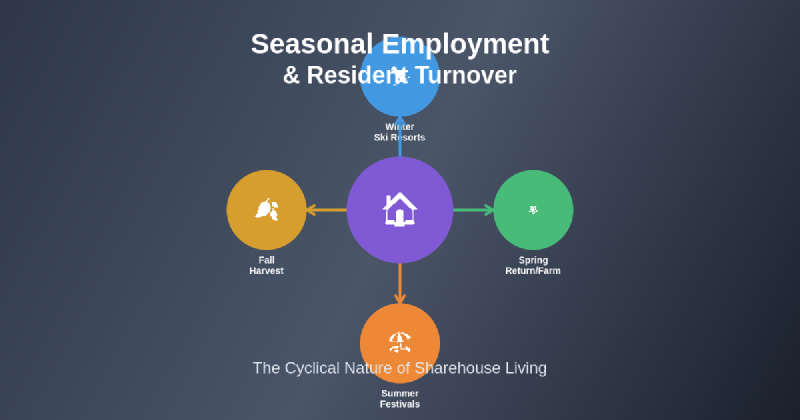
The rhythm of seasonal employment in Japan creates a unique dynamic within Tokyo’s sharehouse communities that profoundly influences resident turnover patterns throughout the year. This cyclical movement of workers pursuing temporary opportunities in ski resorts, summer festivals, agricultural harvests, and tourism hotspots generates waves of departures and arrivals that reshape the social fabric of shared living spaces with predictable regularity. Understanding these patterns becomes essential for both current residents and property managers who must navigate the challenges and opportunities that seasonal employment cycles bring to community stability.
The intersection of seasonal work opportunities and sharehouse living represents more than just housing logistics; it reflects the broader reality of Japan’s temporary employment landscape and its impact on international residents seeking flexible accommodation options. The seasonal employment phenomenon affects everything from rent pricing strategies to community building efforts, creating both challenges for maintaining stable relationships and opportunities for cultural exchange as new residents bring fresh perspectives from their seasonal work experiences.
Understanding Japan’s Seasonal Employment Landscape
Japan’s seasonal employment market operates on well-established cycles that correspond to natural seasons, cultural festivals, and tourism peaks throughout the year. The winter season brings massive recruitment for ski resort positions in regions like Hokkaido, Nagano, and Niigata, drawing thousands of international workers from Tokyo sharehouses to mountain communities where they can combine work with recreational skiing and snowboarding experiences.
Summer months trigger equally significant employment migrations as festivals, beach resorts, and agricultural operations require substantial temporary workforce increases. English-speaking sharehouses in Tokyo for foreigners often serve as launching points for these seasonal adventures, providing residents with stable Tokyo bases while they pursue temporary opportunities elsewhere.
The working holiday visa system particularly amplifies these seasonal employment patterns, as young international residents actively seek diverse work experiences that maximize their cultural immersion and travel opportunities during their limited time in Japan. Agricultural work during harvest seasons, summer camp counseling positions, and festival staff roles provide income while offering unique cultural experiences that many residents prioritize over stable year-round employment.
Traditional Japanese employment cycles also influence seasonal turnover patterns, with many companies conducting major hiring periods in spring and fall that create opportunities for both departure and return among sharehouse residents. These established business rhythms interact with international seasonal work patterns to create complex turnover dynamics that vary significantly between different types of sharehouses and neighborhoods.
Peak Departure Seasons and Turnover Patterns
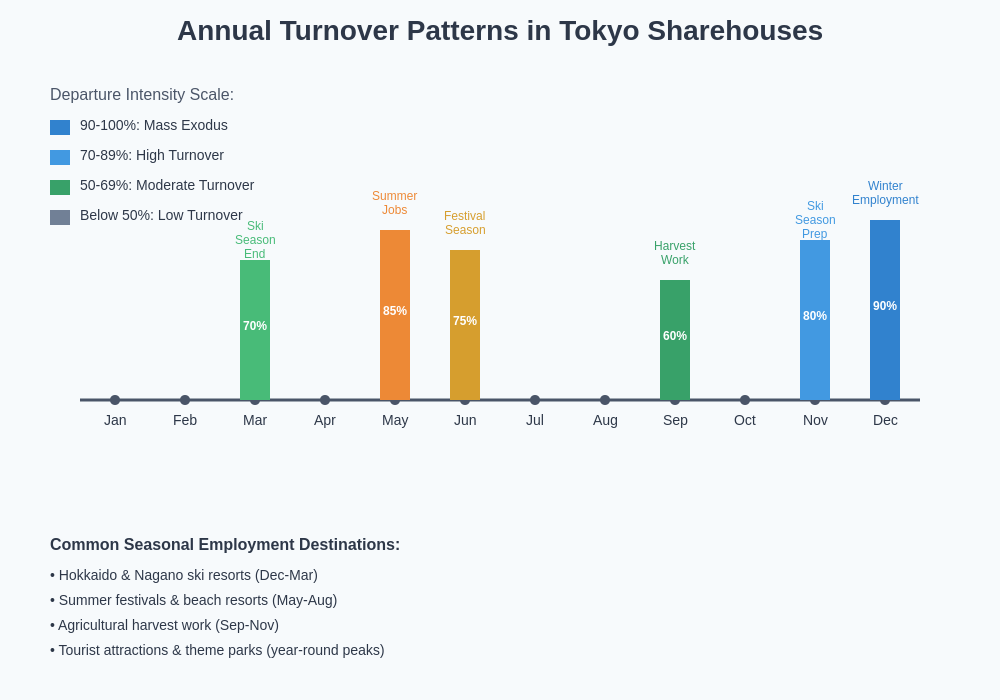
Winter departures typically begin in November and December as ski resort operators commence recruitment and training programs for the upcoming season. Cheaper sharehouse options in Tokyo suburbs experience particularly high turnover during this period as budget-conscious residents pursue seasonal work that offers both income and accommodation in resort locations.
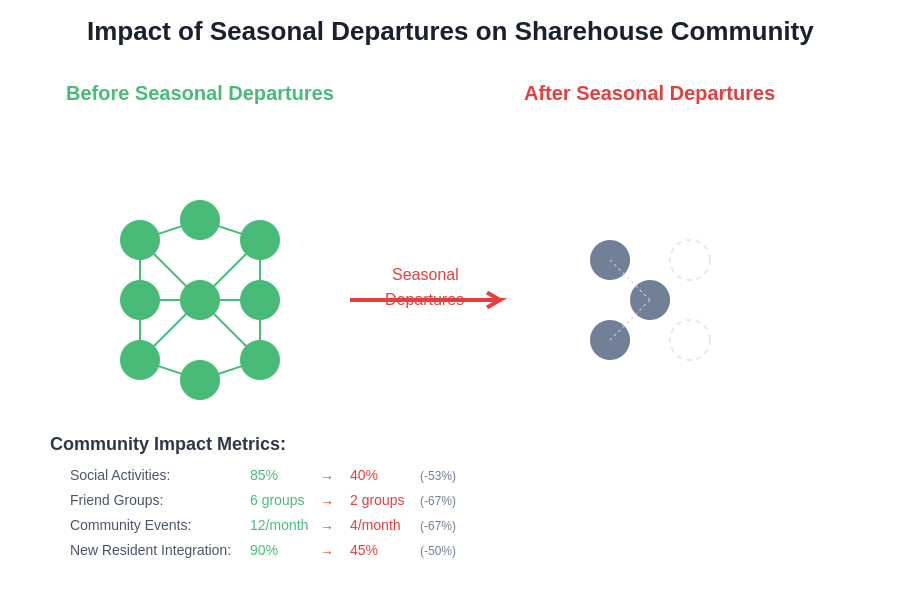
The mass exodus for winter employment creates significant disruptions in established sharehouse communities, often breaking up friend groups and social networks that took months to develop. Residents who remain in Tokyo frequently report feeling abandoned or experiencing difficulty maintaining relationships with departing housemates who become absorbed in their new seasonal work environments and social circles.
Spring departures coincide with both the end of ski seasons and the beginning of agricultural work opportunities, creating a secondary wave of turnover as some residents return from winter employment while others depart for farming positions. This transitional period often generates the highest uncertainty in sharehouse communities as residents make last-minute decisions about their next employment opportunities.
Summer festivals and tourism work trigger another major departure period starting in May and June, particularly affecting sharehouses near universities where students and recent graduates seek seasonal employment that aligns with academic breaks. Student sharehouses near top Tokyo universities must regularly adapt to these predictable but disruptive turnover cycles.
Impact on Community Dynamics and Social Relationships
The cyclical nature of seasonal employment departures creates ongoing challenges for building lasting relationships and maintaining community cohesion within sharehouses. Residents who invest emotional energy in developing friendships often experience disappointment and frustration when housemates unexpectedly announce departure plans for seasonal work opportunities that arose suddenly or were planned secretly.
Making friends through Tokyo sharehouse communities becomes particularly complex when residents maintain awareness that many relationships may be temporary due to seasonal employment cycles. This awareness can paradoxically both encourage residents to form connections quickly and prevent them from investing deeply in relationships they expect to be short-lived.
The departure of established community leaders and social organizers for seasonal work often disrupts house activities, traditions, and informal support systems that took considerable time to develop. New residents arriving during peak departure periods may encounter fractured communities with reduced social programming and weakened cultural integration support.
Seasonal employment also creates hierarchies and social divisions based on residents’ willingness or ability to pursue temporary work opportunities. Those who remain in Tokyo year-round sometimes develop resentment toward residents they perceive as irresponsible or uncommitted, while seasonal workers may view permanent residents as lacking adventurous spirit or cultural curiosity.
Financial Implications for Residents and Properties
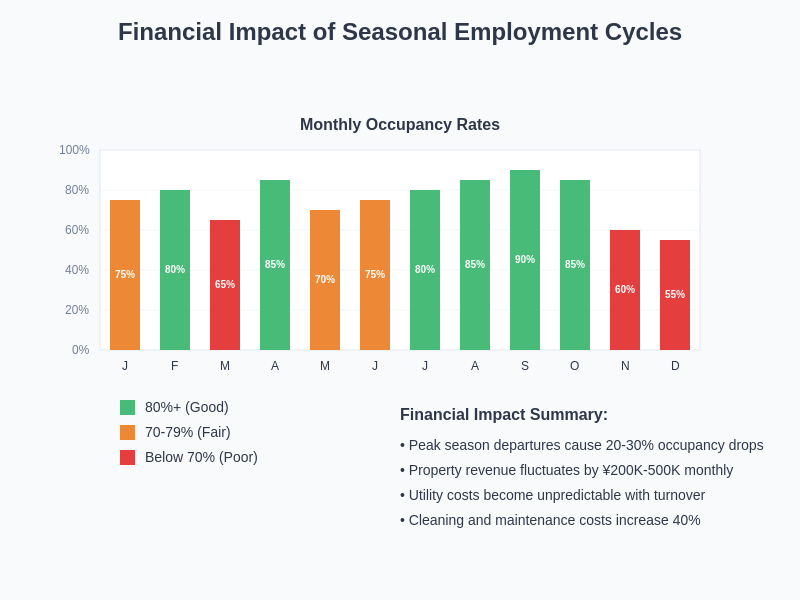
Property managers face significant financial challenges managing the revenue fluctuations caused by seasonal employment turnover patterns. Living costs in Tokyo sharehouses explained must account for the reality that many residents will suspend or terminate their rental agreements for seasonal work periods, creating cash flow uncertainties that affect property operations and maintenance schedules.
Residents planning seasonal employment departures often struggle with timing their final rent payments and security deposit recoveries to align with their employment start dates and initial expenses. How to actually get your deposit back becomes particularly important for residents whose seasonal employment income depends on recovering their sharehouse deposits to fund relocation expenses.
The financial pressure to secure seasonal employment can lead residents to make hasty decisions about departures, sometimes breaking lease agreements or abandoning shared responsibilities without adequate notice to housemates or property managers. These sudden departures often result in increased costs for remaining residents who must cover abandoned utility bills, cleaning fees, or shared expense obligations.
Seasonal workers returning to Tokyo after temporary employment often face financial constraints that limit their housing options and force them into budget accommodations with lower community standards than their previous sharehouses. This downward mobility can create disappointment and social adjustment difficulties that affect their integration into new living environments.
Management Strategies and Adaptations
Progressive sharehouse operators have developed sophisticated strategies for managing seasonal employment turnover that minimize disruption while capitalizing on the cultural diversity that seasonal workers bring to their properties. Some operators offer flexible lease arrangements that accommodate seasonal departures with reduced penalties or guaranteed room availability upon return.
Japanese sharehouse rules every foreigner should know increasingly include specific provisions for seasonal employment departures, establishing clear procedures for lease suspensions, deposit handling, and community responsibility transfers that protect both departing residents and those remaining in the sharehouse.
Advanced booking systems allow properties to manage seasonal turnover by coordinating departure timing with new resident arrivals, reducing vacancy periods and maintaining community continuity. Some operators actively recruit residents with complementary seasonal employment patterns to ensure consistent occupancy throughout the year.
Community-building initiatives specifically designed to accommodate seasonal turnover include mentorship programs pairing long-term residents with newcomers, digital platforms for maintaining connections with departed residents, and alumni networks that facilitate re-integration when seasonal workers return to Tokyo.
The Return Cycle and Re-integration Challenges
Residents returning from seasonal employment often face significant re-integration challenges as they attempt to reconnect with sharehouse communities that evolved during their absence. Living with Japanese roommates in Tokyo sharehouses requires rebuilding relationships and understanding new social dynamics that developed among residents who remained throughout their seasonal work period.
The financial and emotional investment required to re-establish Tokyo living arrangements can be substantial, particularly for residents whose seasonal employment income was lower than expected or who experienced unexpected expenses during their temporary work periods. Housing market changes during their absence may force returning residents into different neighborhoods or accommodation types than they previously enjoyed.
Cultural reverse-shock affects many returning seasonal workers who became accustomed to different social environments, work cultures, and daily routines during their temporary employment. The transition back to urban sharehouse living often requires significant adjustment periods that can strain both personal well-being and community relationships.
Skill development and language improvement gained during seasonal employment can create positive re-integration experiences when returning residents share their new abilities and cultural knowledge with sharehouse communities. However, these benefits often require intentional effort to translate into improved community relationships and housing satisfaction.
Long-term Effects on Housing Stability
The prevalence of seasonal employment among sharehouse residents contributes to broader housing instability that affects both individual residents and the wider accommodation market. How to find perfect sharehouse tokyo becomes an ongoing challenge for residents caught in cycles of departure and return driven by seasonal employment opportunities.
Frequent housing changes associated with seasonal employment patterns can prevent residents from developing the local connections, credit history, and rental references necessary for transitioning to more stable accommodation types. This housing mobility trap particularly affects working holiday visa holders whose temporary legal status already limits their housing options.
Property quality and management standards may decline in areas with high seasonal employment turnover as operators focus on quick resident turnover rather than long-term community development and property maintenance. This creates negative feedback loops where housing instability breeds further instability through deteriorating living conditions.
The cumulative stress of repeated housing transitions related to seasonal employment can affect residents’ mental health, financial stability, and career development in ways that extend far beyond their temporary work experiences. Understanding these long-term implications becomes crucial for residents considering seasonal employment opportunities.
Industry Adaptations and Future Trends
The sharehouse industry continues evolving to better accommodate seasonal employment patterns through innovative lease structures, technology solutions, and community programming designed for transient populations. Tokyo vs osaka sharehouses for international students increasingly includes seasonal employment considerations as operators recognize the importance of this demographic.
Digital platforms facilitating seasonal employment coordination among sharehouse residents help create more organized and less disruptive departure and return processes. These tools enable better planning for both residents and property managers while maintaining community connections during separation periods.
Specialized sharehouse concepts designed specifically for seasonal workers are emerging in major cities, offering flexible accommodation that aligns with employment cycles while providing consistent community experiences regardless of individual departure and return patterns.
Real stories from Tokyo sharehouse residents increasingly highlight the importance of understanding seasonal employment impacts when selecting sharehouses and planning long-term accommodation strategies in Japan.
The intersection of seasonal employment and sharehouse living represents a fundamental aspect of the international resident experience in Japan that requires careful consideration and strategic planning. While these employment cycles create challenges for community stability and relationship building, they also offer unique opportunities for cultural exchange, skill development, and adventure that many residents value highly. Success in navigating seasonal employment impacts depends on realistic expectations, careful financial planning, and active commitment to maintaining community connections despite the inevitable departures and arrivals that define sharehouse life in Tokyo.
The ongoing evolution of Japan’s seasonal employment landscape and sharehouse industry responses suggest that future accommodation solutions will increasingly accommodate these cyclical patterns while minimizing their disruptive effects on community building and housing stability. Understanding and adapting to seasonal employment impacts remains essential for anyone seeking long-term success and satisfaction in Tokyo’s dynamic sharehouse environment.
Disclaimer
This article is for informational purposes only and does not constitute professional employment or housing advice. Seasonal employment patterns and sharehouse policies vary significantly by location, operator, and individual circumstances. Readers should conduct their own research and consult with relevant professionals when making employment and housing decisions. The effectiveness of management strategies mentioned may vary depending on specific situations and market conditions.