Living in a Tokyo sharehouse presents unique challenges when it comes to managing seasonal shopping and storage space, particularly given Japan’s distinct four-season climate that demands different clothing, equipment, and lifestyle items throughout the year. The limited personal storage space in most sharehouses, combined with seasonal purchasing patterns that can quickly overwhelm small living areas, creates a complex dynamic that requires strategic planning and mindful consumption habits to navigate successfully.
The seasonal shopping cycle in Japan intensifies storage challenges as residents accumulate winter jackets, summer cooling equipment, seasonal footwear, and holiday decorations that must somehow fit into compact personal spaces typically measuring just a few cubic meters. Understanding how these purchasing patterns affect daily living conditions and developing effective management strategies becomes essential for maintaining comfortable and organized living environments throughout the year.
Understanding Japan’s Seasonal Shopping Patterns
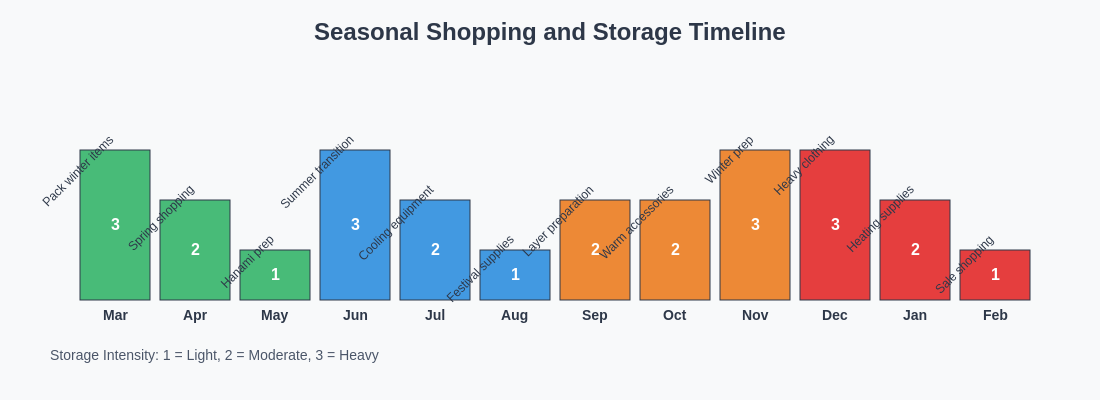
Japan’s retail calendar revolves around distinct seasonal transitions that encourage specific purchasing behaviors and create predictable storage demands throughout the year. The cultural emphasis on seasonal appropriateness in clothing, home decor, and lifestyle items drives consumption patterns that can quickly overwhelm limited storage capacity in sharehouse environments.
Spring shopping typically focuses on lighter clothing, cherry blossom viewing supplies, and fresh bedding to replace heavier winter items. The transition period creates dual storage demands as residents must maintain access to both winter and spring items during unpredictable weather periods that can extend for several weeks.
Summer preparations involve cooling equipment, lightweight clothing, festival attire, and outdoor recreation gear that requires specialized storage solutions due to bulky items like portable fans, summer futons, and beach accessories. How summer heat makes small rooms unbearable becomes particularly relevant when storage solutions compete with living space for cooling efficiency.
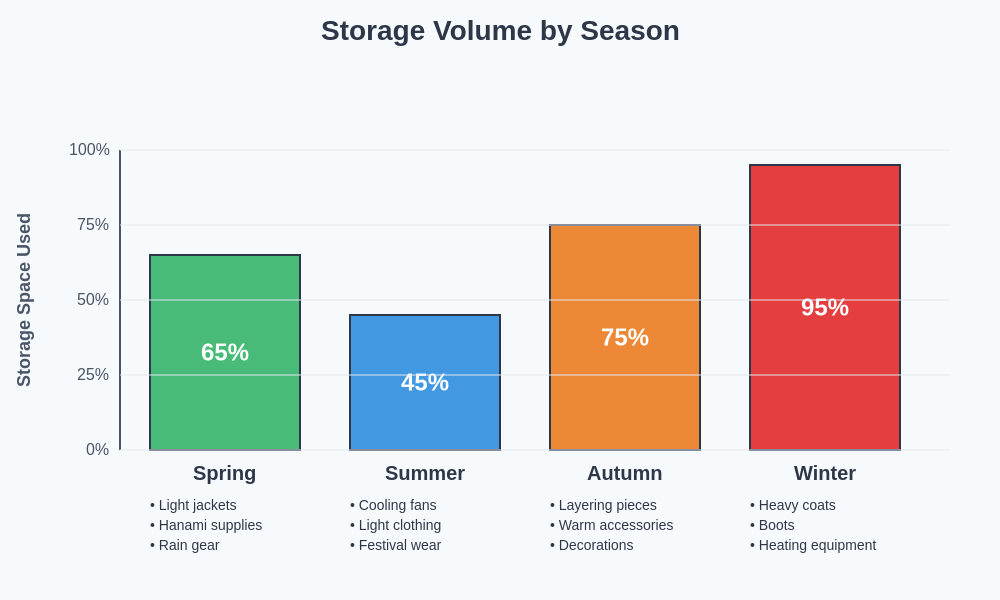
Autumn shopping patterns emphasize layering pieces, warm accessories, and preparation items for winter that gradually accumulate throughout the season. Winter purchases typically represent the most storage-intensive period with heavy coats, boots, blankets, and heating accessories that consume significant space while remaining essential for daily comfort and safety.
Storage Space Limitations in Tokyo Sharehouses
Most Tokyo sharehouses provide minimal personal storage space, typically consisting of a small closet area, under-bed storage, and limited shelf space that totals less than two cubic meters per resident. This constraint becomes particularly challenging when accommodating seasonal items that may only be used for three to four months annually but require year-round storage solutions.
Limited storage forces you to live minimally creates both challenges and opportunities for residents to develop more intentional consumption habits and creative storage solutions that maximize available space efficiency.
Shared storage areas in common spaces may offer additional capacity but come with complications including security concerns, access limitations, and potential conflicts over space allocation among residents. Understanding house rules and etiquette around shared storage becomes essential for utilizing these resources effectively without creating community tensions.
The vertical nature of Japanese storage solutions requires residents to think three-dimensionally about space utilization, incorporating ceiling-height shelving, stackable containers, and hanging systems that maximize cubic footage within compact room dimensions.
Spring Shopping and Storage Challenges
Spring seasonal transitions create complex storage dynamics as residents must simultaneously store winter items while acquiring spring necessities, often during periods when weather patterns remain unpredictable and require access to items from multiple seasons. The gradual warming process means that heavy winter coats might still be needed occasionally while lighter spring jackets become daily essentials.
Cherry blossom season brings unique storage demands with hanami supplies, portable seating, and outdoor dining accessories that require temporary storage solutions for seasonal activities. These items often have irregular shapes and sizes that complicate efficient storage arrangements and may only be used for a few weeks annually.
Spring cleaning traditions encourage acquisition of organizational supplies, cleaning equipment, and fresh household items that compete with existing possessions for limited storage space. How to find the perfect sharehouse in Tokyo includes considerations about storage capacity that become particularly relevant during seasonal transition periods.
The transition from heating to cooling systems requires storage solutions for seasonal appliances, bedding changes, and wardrobe rotations that can temporarily double storage requirements during changeover periods. Planning these transitions and developing efficient rotation systems becomes essential for maintaining organized living spaces.
Summer Storage Intensification
Summer months bring unique storage challenges as residents acquire cooling equipment, lightweight clothing, and outdoor recreation gear while maintaining access to occasional air conditioning alternatives and rain gear for Japan’s intense rainy season. The bulk and irregular shapes of cooling fans, summer futons, and beach accessories create particular storage complications in compact living spaces.
Festival season introduces temporary storage needs for yukata, traditional accessories, and celebration supplies that require careful handling and specialized storage to prevent damage during extended storage periods. These cultural items often have sentimental value that makes damage prevention a priority over space efficiency.
Summer travel preparations add luggage, outdoor equipment, and travel accessories to already cramped storage areas, often requiring temporary reorganization of existing storage systems to accommodate short-term additions. How to budget realistically for sharehouse living includes considerations for seasonal storage solutions that may require additional investment.
Cooling strategies that rely on personal equipment rather than central air conditioning create ongoing storage challenges for portable fans, cooling mats, and seasonal bedding that must remain easily accessible throughout the extended summer period while competing with other storage priorities.
Autumn Accumulation Patterns
Autumn shopping patterns typically involve gradual accumulation of layering pieces, warm accessories, and preparatory items for winter that slowly build storage pressure throughout the season. The moderate weather conditions during early autumn can create false security about storage capacity that becomes problematic as heavier items accumulate.
Seasonal decoration items for Halloween and autumn festivals add temporary storage demands that compete with essential clothing and equipment for limited space. These items often require careful storage to prevent damage during extended storage periods between seasons.
The transition from cooling to heating systems requires storage space for summer equipment while making room for winter heating accessories, creating temporary double-storage demands that can overwhelm unprepared residents. How climate control preferences create conflicts becomes relevant when personal heating solutions require individual storage space.
Preparation for winter months encourages bulk purchasing of warm clothing, blankets, and heating supplies that gradually consume available storage space throughout the autumn period. Planning these purchases and storage allocation prevents sudden space shortages as winter approaches.
Winter Storage Peak Demands
Winter represents the peak storage challenge period when heavy coats, boots, blankets, and heating accessories consume maximum storage space while remaining essential for daily comfort and safety. The bulky nature of winter items means that storage efficiency becomes critical for maintaining livable personal spaces.
Holiday shopping and gift storage create additional temporary demands on already strained storage systems, particularly when planning celebrations or preparing items for shipping to family members. These temporary additions can push storage systems beyond capacity if not planned carefully.
Snow and wet weather accessories including waterproof clothing, umbrellas, and boot drying equipment require accessible storage that doesn’t interfere with daily routines while protecting other stored items from moisture damage. Why heating bills create monthly budget chaos connects to storage challenges when personal heating solutions compete with living space.
End-of-year shopping sales often encourage purchases of items that won’t be immediately needed, creating storage challenges for forward-planning residents who want to take advantage of seasonal discounts while managing limited current storage capacity.
Storage Solutions and Optimization Strategies
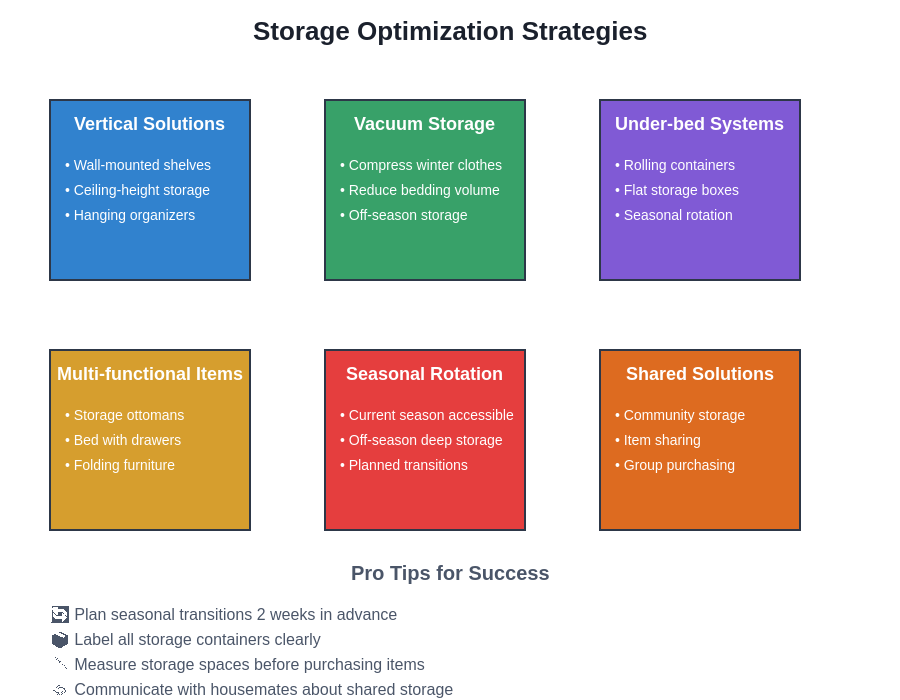
Effective seasonal storage management requires systematic approaches that maximize space efficiency while maintaining access to needed items throughout changing weather conditions. Vertical storage solutions including ceiling-height shelving and hanging systems multiply available storage capacity within existing floor space limitations.
Vacuum storage bags significantly reduce the volume of off-season clothing and bedding, allowing residents to store seasonal items in compact formats that free up space for current necessities. These solutions work particularly well for bulky winter items during summer months and lightweight summer clothing during winter storage.
Rotation systems that move seasonal items between accessible and deep storage areas ensure that current needs remain easily accessible while off-season items occupy less convenient storage locations. Japanese sharehouse rules every foreigner should know often include guidelines about seasonal storage rotation in shared areas.
Under-bed storage solutions maximize otherwise unused space for seasonal items that don’t require frequent access, while maintaining easy retrieval when seasonal transitions require item rotation. Stackable containers and modular systems adapt to changing storage needs throughout the seasonal cycle.
Community Storage Dynamics
Shared storage areas in sharehouses can provide additional capacity for seasonal items but require coordination among residents to prevent conflicts and ensure fair access to limited shared resources. Understanding house rules and developing communication systems prevents disputes over storage allocation and usage priorities.
Collaborative storage solutions including group purchasing of storage systems, shared seasonal items, and coordinated storage rotation can maximize efficiency for entire sharehouse communities while reducing individual storage burdens. Making friends through Tokyo sharehouse communities includes opportunities for storage cooperation.
Storage security in shared areas requires consideration of valuable seasonal items, personal belongings, and access control that protects residents’ possessions while maintaining community harmony. Clear labeling and organization systems prevent conflicts over shared storage areas.
Seasonal storage cooperation can include sharing rarely used items like holiday decorations, seasonal sports equipment, and specialized tools that benefit multiple residents while reducing individual storage requirements.
Financial Implications of Seasonal Storage
Storage limitations in sharehouses create financial pressures when residents must choose between purchasing seasonal items annually versus investing in storage solutions that enable long-term retention of seasonal purchases. The cost-benefit analysis of storage investment versus replacement purchasing affects overall living budgets significantly.
External storage rental options provide additional capacity but add monthly expenses that impact overall housing budgets, particularly when storage needs fluctuate seasonally and may not justify year-round rental costs. Living costs in Tokyo sharehouses explained should include considerations for seasonal storage expenses.
Quality storage solutions represent upfront investments that can provide long-term savings through better preservation of seasonal items, reduced replacement needs, and more efficient space utilization that improves daily living quality.
The cost of replacing seasonal items due to poor storage conditions or lack of storage space often exceeds the investment in proper storage solutions, making strategic storage planning a financial necessity rather than a convenience consideration.
Minimalism and Intentional Consumption
Storage limitations encourage residents to develop more intentional shopping habits that prioritize versatile, high-quality items over quantity accumulation that quickly overwhelms available space. This shift toward minimalism can improve both financial management and living space organization.
Multi-season items that serve functions across different weather conditions maximize utility while minimizing storage requirements, encouraging investment in higher-quality pieces that provide better value over time. Strategic purchasing focuses on items that earn their storage space through frequent use and multiple functions.
Seasonal item sharing among housemates can reduce individual storage needs while building community relationships and reducing overall consumption patterns that benefit both personal finances and environmental sustainability.
Regular decluttering and donation of unused seasonal items prevents accumulation of items that consume storage space without providing practical value, maintaining balance between preparedness and space efficiency throughout seasonal cycles.
The challenge of managing seasonal shopping within limited sharehouse storage space represents a fundamental aspect of Tokyo living that requires strategic planning, creative solutions, and ongoing adaptation to seasonal patterns. Success in this area significantly improves overall quality of life while developing valuable skills in organization, financial planning, and intentional consumption that benefit residents throughout their sharehouse experience and beyond.
Understanding these dynamics enables residents to make informed decisions about seasonal purchases, storage investments, and lifestyle adaptations that optimize their limited living space while maintaining comfort and preparedness throughout Japan’s distinct seasonal transitions. The ability to effectively manage seasonal storage challenges often determines overall satisfaction with sharehouse living and contributes to successful long-term residence in Tokyo’s unique housing environment.
Disclaimer
This article is for informational purposes only and does not constitute professional advice. Storage solutions and seasonal shopping patterns may vary significantly between different sharehouses, individual circumstances, and personal preferences. Readers should consider their specific living situations and consult with sharehouse management regarding storage policies and regulations. The effectiveness of storage strategies mentioned may depend on individual space limitations, budget constraints, and seasonal needs.