The proliferation of security cameras in Tokyo sharehouses has created a dangerous illusion of comprehensive protection that lulls residents into complacency while fundamental security vulnerabilities remain unaddressed, transforming visible surveillance equipment into props in a theater of safety that obscures real risks and prevents residents from taking necessary precautions. International residents consistently overestimate the protective value of camera systems based on assumptions derived from their home countries, failing to understand the significant limitations and operational failures that characterize most sharehouse surveillance installations.
This false confidence in technological solutions diverts attention and resources away from fundamental security practices that provide genuine protection, creating scenarios where residents rely on ineffective surveillance systems while neglecting basic safety measures that would offer superior protection against the most common security threats encountered in shared living environments. The psychological comfort provided by visible cameras often correlates inversely with actual security effectiveness, establishing dangerous patterns of reduced vigilance precisely when heightened awareness becomes most critical for personal safety.
The Illusion of Comprehensive Coverage
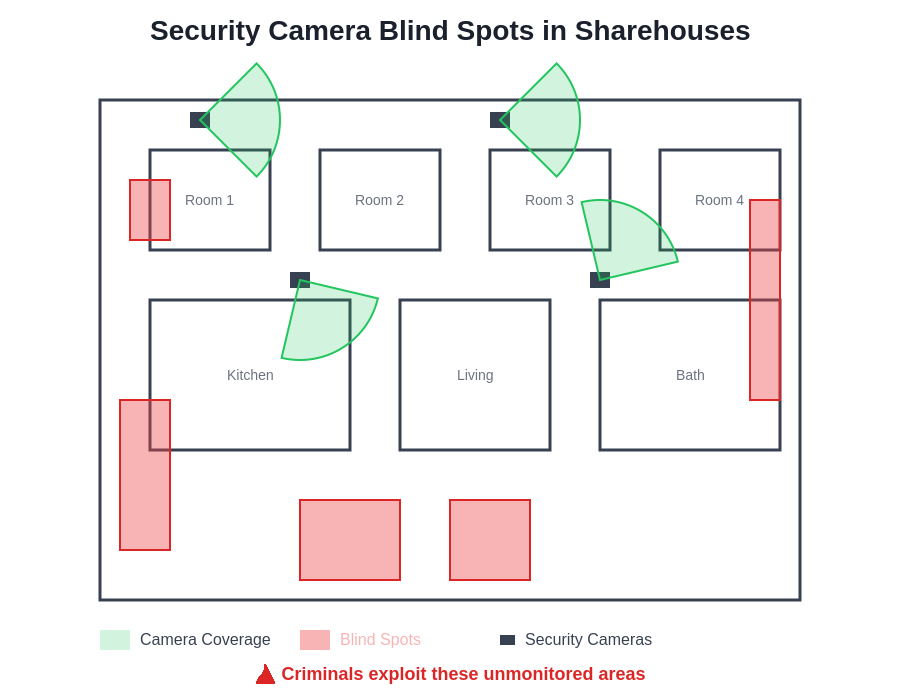
Most residents assume that security cameras provide complete coverage of sharehouse premises, failing to understand the significant blind spots, technical limitations, and operational failures that characterize typical surveillance installations in budget-focused rental properties where cost considerations consistently override security effectiveness. How security cameras affect privacy expectations explores resident perspectives, but the technical reality reveals extensive coverage gaps that residents never recognize until security incidents expose the system limitations.
Camera placement in sharehouses typically prioritizes visible deterrence over functional coverage, resulting in installations that create impressive visual impact while failing to monitor critical areas where security incidents most commonly occur, including building entrances, stairwells, storage areas, and exterior perimeters where intruders can operate undetected despite the presence of numerous cameras in common areas. The strategic positioning required for effective surveillance often conflicts with resident privacy expectations and building design constraints that force compromise solutions providing minimal actual protection.
Image quality and recording capabilities in budget surveillance systems rarely meet the standards necessary for useful incident documentation or criminal identification, with poor lighting conditions, inadequate resolution, and unreliable recording systems creating footage that proves worthless for security purposes despite providing psychological comfort to residents who assume the equipment functions effectively. Night vision capabilities, motion detection accuracy, and storage reliability consistently fall short of promotional claims, leaving residents protected only during optimal conditions that rarely coincide with actual security threats.
Camera maintenance and technical support receive minimal attention in most sharehouse operations where property managers view surveillance systems as one-time installations rather than ongoing security infrastructure requiring regular maintenance, software updates, and technical support to maintain effectiveness over time. Broken cameras, corrupted recordings, and system failures often remain unaddressed for weeks or months while residents continue assuming they enjoy comprehensive protection from non-functional surveillance equipment.
Active Monitoring Absence and Response Delays
The presence of security cameras creates resident expectations of active monitoring and immediate response capabilities that simply do not exist in most sharehouse environments where surveillance systems record footage for potential future review rather than providing real-time security intervention during developing threat situations. How emergency communication plans often fail demonstrates broader response inadequacies that extend to surveillance system limitations in emergency situations.
Property management companies rarely provide 24-hour monitoring services despite resident assumptions about surveillance oversight, leaving camera systems to function as passive recording devices that document security incidents after they occur rather than preventing or interrupting criminal activity during the critical moments when intervention could protect residents and property. The delayed discovery of security footage often occurs days or weeks after incidents, eliminating any protective value while providing only limited evidence collection capabilities.
Emergency response protocols connecting surveillance systems to police or security services remain uncommon in sharehouse environments where cost considerations prevent investment in professional monitoring services that would provide genuine security response capabilities during actual threat situations. Residents consistently overestimate the connection between visible cameras and emergency response capabilities, assuming that surveillance presence guarantees rapid intervention that rarely exists in budget-focused rental operations.
Local police response to sharehouse security incidents involving camera evidence often proves disappointingly slow and ineffective, particularly for property crimes and minor security violations that receive low priority in Tokyo’s busy law enforcement system where surveillance footage rarely results in successful prosecution or recovery of stolen property. The bureaucratic complexity of accessing and processing surveillance evidence further reduces the practical protective value of camera systems for residents facing immediate security concerns.
Privacy Violations and Resident Vulnerability
Security camera installations create new categories of privacy violations and personal vulnerability that often exceed the security benefits they provide, transforming shared living spaces into surveillance environments where residents lose control over their personal information while gaining minimal actual protection from security threats. The data collection and storage practices associated with sharehouse surveillance systems rarely receive adequate oversight or resident consent, creating legal and personal risks that compound rather than reduce overall resident vulnerability.
Unauthorized access to surveillance footage by property managers, maintenance staff, and other residents creates privacy invasion opportunities that far exceed the security protection provided by the camera systems, particularly in environments where access controls and footage handling procedures receive minimal attention from cost-focused property operators. How personal information gets compromised explores broader privacy risks that surveillance systems often exacerbate rather than mitigate.
Recording of personal conversations, private moments, and intimate activities in common areas creates blackmail and harassment opportunities for individuals with access to surveillance systems, transforming security infrastructure into tools for exploitation and abuse that target the very residents the systems supposedly protect. The inability to control or verify who accesses recorded footage creates ongoing vulnerability that persists long after residents leave sharehouses where their personal information remains stored in inadequately secured surveillance archives.
Data retention policies and footage disposal procedures in sharehouse surveillance systems rarely meet professional standards for personal data protection, creating long-term privacy risks as recorded personal information accumulates without adequate security measures or clear deletion schedules that would limit resident exposure to identity theft and personal exploitation. The indefinite storage of personal surveillance data creates cumulative privacy risks that increase over time rather than providing enhanced security protection for current residents.
Technical Failures and System Reliability Issues
Surveillance system reliability in sharehouse environments consistently falls short of resident expectations due to inadequate installation practices, poor maintenance protocols, and budget constraints that prioritize visible equipment over functional performance, creating security infrastructure that fails precisely when residents most need protection from genuine security threats. Power outages, network failures, and equipment malfunctions regularly disable surveillance systems without resident notification, leaving communities unprotected while maintaining the illusion of security through non-functional camera installations.
Storage system failures and recording corruption occur frequently in budget surveillance installations where inadequate hardware and poor system design create data loss situations that eliminate crucial evidence during security investigations while residents remain unaware of the system failures until attempting to access footage after incidents occur. The false confidence created by visible cameras prevents residents from recognizing when surveillance protection has been compromised through technical failures that may persist for extended periods.
Software bugs, firmware problems, and compatibility issues regularly disable surveillance functionality in sharehouse camera systems where professional technical support remains unavailable and property managers lack the expertise necessary to maintain complex security infrastructure effectively. System updates, security patches, and performance optimization rarely receive attention in budget-focused operations where surveillance equipment functions as abandoned technology that degrades over time without professional maintenance.
Weather damage, vandalism, and intentional tampering frequently compromise surveillance system effectiveness without triggering immediate repair responses from property managers who view camera maintenance as discretionary expense rather than essential security infrastructure requiring immediate attention when failures occur. Physical security measures protecting surveillance equipment often prove inadequate against determined interference, creating situations where security systems become liability rather than protection for residents who depend on non-functional surveillance infrastructure.
Criminal Adaptation and System Circumvention
Professional criminals and experienced intruders quickly identify surveillance system weaknesses and blind spots, adapting their methods to exploit camera limitations while residents remain unaware of the sophisticated circumvention techniques that render visible security measures ineffective against determined threats. The static nature of most sharehouse camera installations creates predictable surveillance patterns that criminals can study and avoid, transforming security infrastructure into mapped obstacles rather than effective deterrents.
Technology-savvy intruders employ jamming devices, signal interference, and network attacks to disable surveillance systems during planned criminal activities, utilizing readily available equipment and techniques that exceed the defensive capabilities of budget security installations common in sharehouse environments. The lack of professional security monitoring means that surveillance system attacks often succeed without detection or response, leaving residents unprotected while maintaining false confidence in disabled security infrastructure.
Disguise techniques, timing strategies, and group coordination allow criminals to operate effectively despite camera presence by exploiting the passive nature of surveillance systems that record but do not prevent criminal activity during the critical moments when intervention could protect residents and property. The documentary function of surveillance footage provides minimal protection against criminals who understand the delayed response nature of typical security investigations.
Social engineering attacks targeting sharehouse staff and residents often focus on compromising surveillance systems by obtaining access credentials, manipulating footage, or disabling recording functions through insider cooperation or deception techniques that exploit human vulnerabilities rather than technological weaknesses. The integration of surveillance systems with other building infrastructure creates multiple attack vectors that criminals can exploit to compromise security while maintaining the appearance of functional protection.
False Security Leading to Reduced Vigilance
The psychological comfort provided by visible security cameras often results in decreased personal awareness and reduced safety precautions as residents assume that technological solutions eliminate the need for individual vigilance and basic security practices that provide superior protection against most common threats encountered in shared living environments. How stranger access compromises security demonstrates how surveillance presence can actually facilitate unauthorized access when residents become overconfident in technological protections.
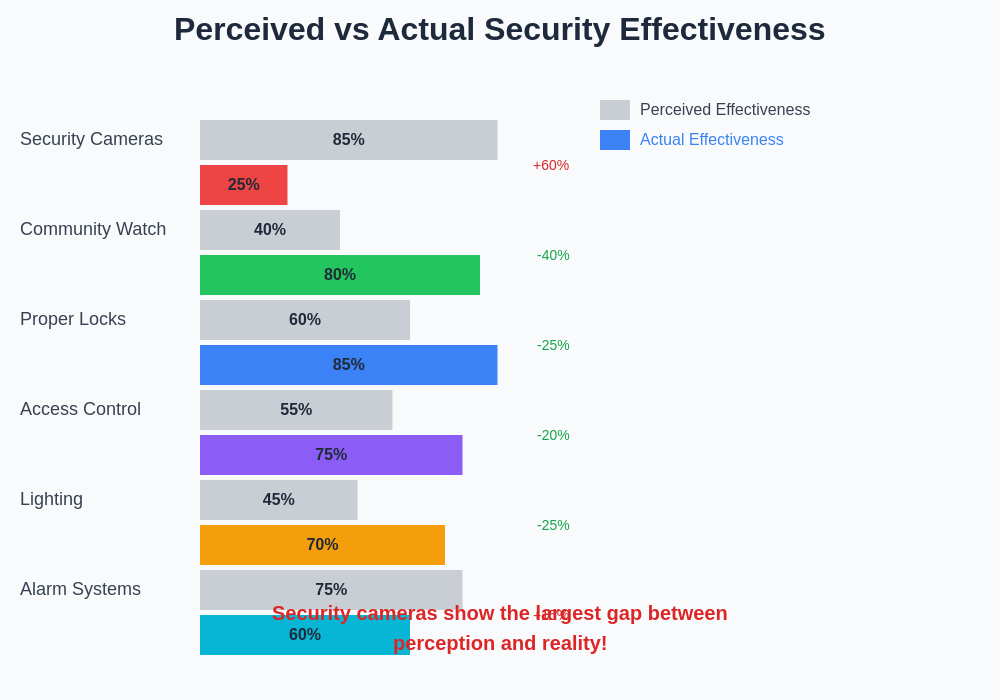
Reduced lock usage, decreased situational awareness, and relaxed personal security practices become common in camera-monitored sharehouses where residents assume that surveillance presence eliminates personal responsibility for security maintenance, creating vulnerabilities that criminals can exploit more easily than in environments where residents maintain appropriate caution and protective behaviors. The delegation of security responsibility to technological systems often results in security degradation rather than improvement as human vigilance decreases without corresponding increases in technological effectiveness.
Trust in surveillance systems often extends beyond their actual capabilities, leading residents to ignore suspicious activities, unusual sounds, and potential security threats under the assumption that camera systems will detect and address problems automatically without requiring personal intervention or reporting to appropriate authorities. This technological dependence creates response delays that allow security situations to escalate before residents recognize the need for personal protective action.
Guests and visitors often receive reduced scrutiny in camera-monitored sharehouses where residents assume that surveillance systems provide adequate monitoring of non-resident access, creating opportunities for unauthorized individuals to exploit reduced vigilance while operating under the protective cover of assumed technological oversight. The presence of cameras often correlates with decreased personal verification and access control practices that would provide superior protection against unauthorized entry and criminal activity.
Economic Exploitation Through Security Theater
Property managers often market surveillance systems as premium security features that justify higher rental rates and fees while providing minimal actual protection improvements over basic security measures that would offer superior safety benefits at lower costs. Why some sharehouses charge hidden cleaning fees demonstrates how technological features become revenue generation tools rather than genuine resident benefits.
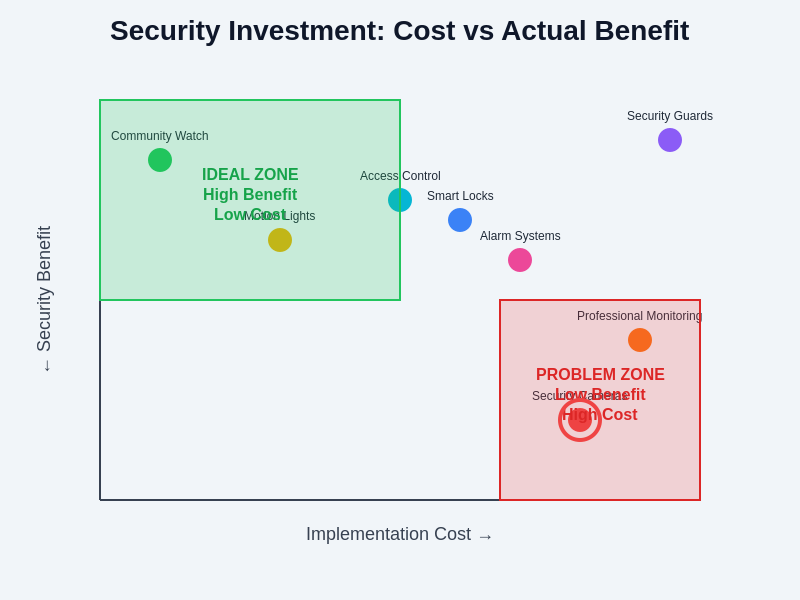
Security deposit increases and additional fees associated with surveillance system maintenance and monitoring rarely correspond to actual security improvements, creating revenue streams that exploit resident security concerns while providing minimal protective benefits beyond what basic access control and community awareness programs could achieve more effectively. The marketing emphasis on technological solutions diverts attention from fundamental security weaknesses that require operational improvements rather than equipment installations.
Insurance premium reductions promised through surveillance system installations often prove minimal or non-existent while residents bear the costs of technological infrastructure that provides primarily psychological rather than practical security benefits. The economic burden of surveillance system maintenance and operation typically falls on residents through rent increases and fees while property owners capture the marketing and perceived value benefits of security technology presence.
False advertising regarding surveillance system capabilities, coverage areas, and protective effectiveness creates consumer deception that residents cannot easily verify until security incidents reveal the limitations of marketed security infrastructure. The complexity of surveillance technology allows property managers to make impressive claims about system capabilities while providing minimal actual protection that becomes apparent only during emergency situations when technological failures compromise resident safety.
Legal Limitations and Evidence Complications
Surveillance footage from sharehouse camera systems rarely provides legally admissible evidence that supports successful prosecution of criminal activities due to technical limitations, procedural failures, and documentation inadequacies that render recorded material useless in legal proceedings despite resident expectations about evidence collection capabilities. How legal disputes get resolved in sharehouses explores broader legal complications that extend to surveillance evidence limitations.
Privacy law complications in Japan create legal restrictions on surveillance footage usage that often prevent residents from accessing or utilizing recorded evidence even when cameras successfully document security incidents, transforming surveillance systems into legal liabilities rather than protective assets during dispute resolution and criminal prosecution efforts. The complex legal framework governing surveillance data creates barriers to evidence utilization that residents rarely understand when evaluating security system benefits.
Chain of custody requirements and evidence authentication procedures necessary for legal proceedings rarely receive adequate attention in sharehouse surveillance installations where informal handling and storage procedures compromise the evidentiary value of recorded footage even when cameras function effectively during security incidents. Professional standards for evidence collection and preservation typically exceed the capabilities of property management staff responsible for surveillance system operation.
International legal complications affecting foreign residents create additional barriers to surveillance evidence utilization in Japanese legal proceedings where language barriers, procedural unfamiliarity, and cultural differences compound the technical limitations of sharehouse security systems during criminal investigations and civil dispute resolution processes.
Building Genuine Security Through Community Awareness
Effective security in sharehouse environments depends primarily on resident awareness, community cooperation, and basic access control measures that provide superior protection compared to passive surveillance systems that create false confidence while failing to address fundamental security vulnerabilities. Making friends through Tokyo sharehouse communities demonstrates how social connections provide better security than technological solutions.
Neighborhood watch principles adapted for sharehouse communities create genuine security improvements through enhanced communication, shared responsibility, and collective awareness that address security threats more effectively than isolated surveillance systems operating without community integration or resident participation. Active community engagement in security maintenance provides ongoing protection that adapts to changing threats and circumstances unlike static technological solutions.
Basic security practices including proper lock usage, access control verification, visitor management, and emergency communication protocols provide immediate and reliable protection that exceeds the effectiveness of most surveillance systems while requiring minimal investment and maintenance compared to technological security infrastructure. The foundation of genuine security rests on human awareness and community cooperation rather than expensive technological solutions that often fail when most needed.
Professional security consultation and risk assessment services provide superior security analysis and protection planning compared to standard surveillance installations that address perceived rather than actual security vulnerabilities in sharehouse environments where genuine threats require comprehensive security approaches rather than simple technological solutions.
The seductive appeal of surveillance technology consistently leads sharehouse residents into false security relationships that substitute technological comfort for genuine protection, creating dangerous complacency that increases rather than reduces actual security risks while consuming resources that could support more effective security measures. Understanding and acknowledging surveillance system limitations enables residents to build comprehensive security approaches that provide real protection rather than expensive psychological comfort through ineffective technological theater.
Disclaimer
This article is for informational purposes only and does not constitute professional security advice. Security needs and camera system effectiveness vary significantly based on specific circumstances, locations, and implementations. Readers should conduct their own security assessments and consult with qualified security professionals for comprehensive protection planning. The experiences and limitations described may not apply to all surveillance systems or sharehouse environments.