
The concept of shared shopping lists in Tokyo sharehouses initially appears as a logical solution for reducing individual costs, minimizing food waste, and fostering community cooperation among residents. However, what begins as a simple collaborative effort to purchase household essentials and groceries often evolves into a complex web of miscommunication, conflicting preferences, financial disputes, and cultural misunderstandings that can strain relationships and create lasting tensions within the living community.
The reality of managing shared shopping lists reveals fundamental differences in individual consumption patterns, quality expectations, brand loyalties, and financial priorities that rarely surface during initial house introductions and compatibility assessments. These seemingly minor discrepancies compound over time, transforming routine purchasing decisions into sources of ongoing friction that require constant negotiation, compromise, and diplomatic intervention to maintain household harmony.
The Initial Appeal and False Simplicity
When new residents first encounter the idea of shared shopping lists in their Tokyo sharehouse, the concept presents numerous attractive benefits that seem to address common concerns about urban living costs and social integration. Understanding how bulk shopping changes in shared living demonstrates the theoretical advantages that draw residents toward collaborative purchasing arrangements.
The mathematical logic appears straightforward: combining purchasing power allows access to bulk discounts, reduces individual shopping frequency, and distributes the burden of carrying heavy items from distant supermarkets back to the sharehouse. Early conversations about shared shopping typically focus on obvious items like cleaning supplies, toilet paper, and basic condiments that everyone uses regularly without significant personal preference variations.
However, this surface-level simplicity masks the underlying complexity of coordinating multiple individuals with different schedules, dietary requirements, quality standards, and communication styles into a cohesive purchasing system. How group buying power reduces individual costs explores the theoretical benefits while overlooking the practical implementation challenges that emerge once the system begins operating.
The honeymoon period of shared shopping typically lasts through the first few successful trips, where residents purchase universally acceptable items and split costs evenly without major disagreements. This initial success creates false confidence in the system’s sustainability and leads to expansion into more complex categories like fresh food, specialty items, and personal care products where individual preferences become more pronounced and problematic.
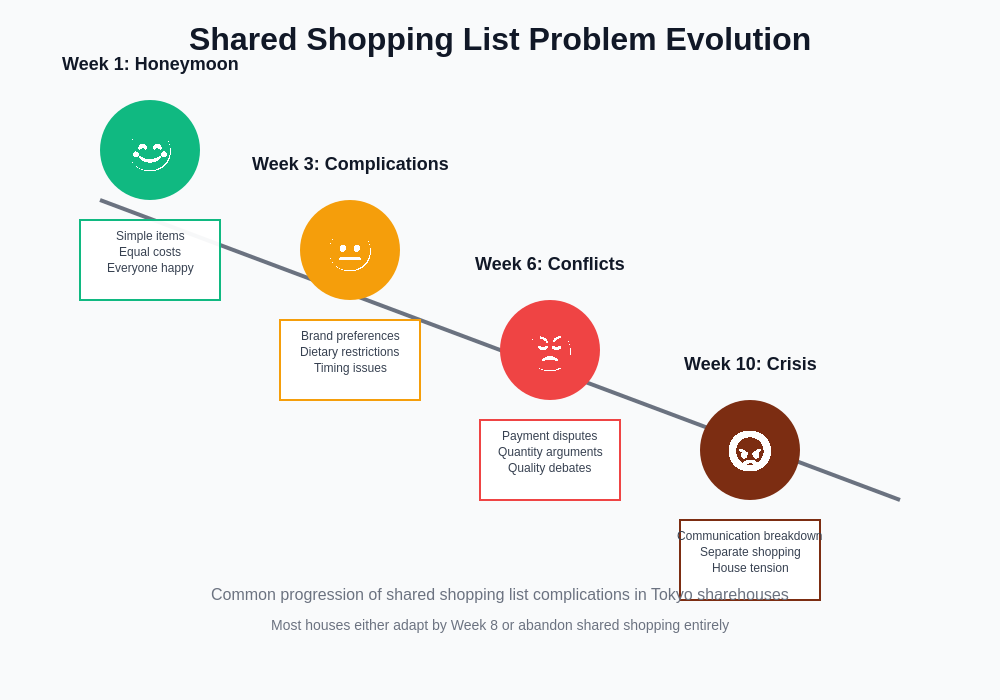
This predictable progression from initial enthusiasm to eventual complications affects nearly all sharehouse communities that attempt comprehensive shared shopping coordination, regardless of resident backgrounds or initial commitment levels.
Communication Breakdown and Coordination Failures
The most fundamental challenge in shared shopping list management stems from the inherent difficulty of coordinating multiple individuals with different daily schedules, work commitments, and availability windows for shopping trips and list consultations. How different learning styles clash illustrates how communication preferences affect collaborative efforts beyond academic contexts.
Digital tools and smartphone apps designed to facilitate shared shopping lists often introduce additional complications rather than solving coordination problems. Different residents prefer different platforms, have varying levels of technological proficiency, and maintain inconsistent habits regarding app usage and notification responses. The result frequently involves multiple parallel lists across different platforms, handwritten notes on refrigerators, and verbal requests that get forgotten or misunderstood.
Language barriers in international sharehouses compound communication difficulties exponentially. Product names, brand preferences, and quantity specifications become sources of confusion when residents attempt to communicate shopping needs across multiple languages. How language barriers complicate legal documents demonstrates similar challenges in other collaborative contexts within sharehouse living.
The timing of shopping trips creates another layer of coordination complexity. Residents who volunteer to shop often face pressure to accommodate everyone’s requests while managing their own schedules and transportation limitations. Emergency additions to shopping lists frequently occur after shoppers have already left, leading to incomplete purchases, disappointed residents, and repeated trips that negate the efficiency benefits of shared shopping.
Financial Disputes and Payment Complications
Money management represents the most contentious aspect of shared shopping list coordination, with seemingly minor financial disagreements escalating into major household conflicts that affect overall community dynamics. How shared expense apps create new problems examines how technological solutions often amplify rather than resolve financial coordination issues.
The fundamental challenge lies in establishing fair cost-sharing mechanisms that account for different consumption levels, product preferences, and financial capabilities among residents. Simple equal splitting fails to address situations where some residents consume significantly more of shared items, prefer expensive brands, or have dietary restrictions that prevent them from using certain purchased products.
Advance payment collection creates cash flow problems for residents who shop on behalf of the group. The expectation that shoppers will front costs for expensive bulk purchases places financial strain on individuals who may already be managing tight budgets. Delayed reimbursements and forgotten payment obligations create resentment and reluctance to participate in future shopping coordination efforts.
Brand preference disputes reveal underlying class and cultural differences that residents may not have recognized during initial interactions. Some residents prioritize cost savings above all other considerations, while others view certain brands as necessities rather than luxuries. These differences become particularly pronounced with food items, where quality expectations directly impact daily satisfaction and health outcomes.
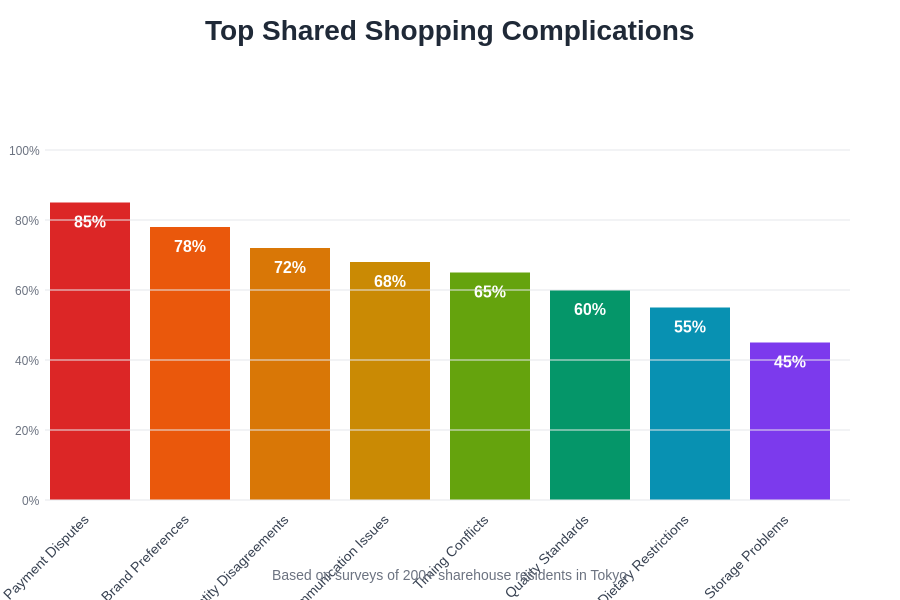
Payment disputes consistently rank as the most frequent source of shared shopping conflicts, followed by brand preferences and quantity disagreements that reflect deeper differences in consumption patterns and financial priorities.
Cultural and Dietary Preference Conflicts
International sharehouses face unique challenges when dietary restrictions, cultural food preferences, and religious requirements intersect with shared shopping coordination efforts. How dietary restrictions complicate meal planning explores how individual food needs affect group living dynamics beyond shopping coordination.
Vegetarian, vegan, halal, kosher, and other dietary restrictions create complex situations where shared purchasing decisions must accommodate multiple overlapping and sometimes conflicting requirements. Products that satisfy one resident’s dietary needs may be unacceptable to others, leading to separate purchasing arrangements that defeat the purpose of collaborative shopping while creating additional coordination overhead.
Cultural differences in food quality expectations and storage preferences create ongoing tensions in shared shopping contexts. Residents from different backgrounds may have varying standards for produce freshness, meat quality, and expiration date tolerance that affect purchasing timing and storage management. How traditional cooking methods clash demonstrates how cultural food practices extend beyond individual meal preparation.
Spice preferences, cooking oil types, and seasoning choices represent seemingly minor details that become major sources of disagreement when residents attempt to share condiments and cooking ingredients. What appears as basic salt and pepper to some residents may require specific brands, salt types, or pepper varieties that others consider unnecessarily expensive or exotic.
Quantity Estimation and Waste Management Issues
Accurate quantity estimation for shared purchases requires understanding individual consumption patterns, usage frequencies, and storage capabilities that residents rarely discuss openly or understand completely themselves. How food waste increases in shared kitchens examines how group purchasing decisions contribute to household waste problems.
Bulk purchasing benefits depend on consuming products before expiration dates, but shared items often sit unused as residents avoid being the first to open expensive shared products or wait for others to consume their portions first. This psychological hesitation leads to product waste that negates financial benefits and creates guilt among residents who contributed to the purchase but failed to utilize their share.
Storage space limitations in typical Tokyo sharehouses create additional complications for bulk purchasing plans. Refrigerator space, pantry storage, and freezer capacity must accommodate shared purchases alongside individual food items, leading to space conflicts and organization challenges that affect daily kitchen usage for all residents.
Seasonal consumption variations and changing resident preferences make quantity estimation particularly difficult for non-perishable items with long shelf lives. Cleaning supplies, toiletries, and household items purchased in bulk may outlast resident turnover, creating confusion about replacement responsibilities and cost allocation for new residents joining established shopping arrangements.
Quality Standard Disagreements
Individual quality expectations for shared purchases reveal significant disparities in personal standards, financial priorities, and consumption philosophies that can strain household relationships and decision-making processes. Why expensive taste creates budget conflicts explores how quality preferences affect financial harmony in shared living situations.
Generic versus brand-name product debates become recurring sources of tension as residents advocate for their preferred balance between cost savings and quality assurance. These discussions often reflect deeper values about health consciousness, environmental responsibility, and personal comfort standards that extend beyond simple purchasing decisions into lifestyle philosophy differences.
Organic versus conventional product choices create particularly divisive situations where health-conscious residents feel strongly about avoiding pesticides and artificial additives, while budget-conscious residents prioritize cost savings and view organic premiums as unnecessary expenses. These fundamental disagreements about food safety and environmental impact resist easy compromise solutions.
Cleaning supply quality standards vary dramatically among residents, with some prioritizing effectiveness regardless of cost while others focus on environmental friendliness, scent preferences, or skin sensitivity considerations. These differences affect daily comfort levels and household cleanliness standards in ways that influence everyone’s living experience beyond individual usage patterns.
Shopping Trip Logistics and Responsibility Distribution
The practical logistics of executing shared shopping trips introduce numerous complications related to transportation, timing, product selection, and responsibility distribution that often overwhelm the supposed convenience benefits of collaborative purchasing. How convenience store proximity affects daily costs illustrates how location factors influence shopping patterns and expenses.
Transportation limitations significantly impact shopping trip feasibility, particularly for bulk purchases that exceed individual carrying capacity or require multiple trips using public transportation. Residents with bicycles or car access often bear disproportionate responsibility for heavy shopping tasks, creating imbalanced contribution patterns that breed resentment over time.
Product selection decisions during shopping trips require real-time communication with absent residents when unexpected situations arise, such as out-of-stock items, price changes, or alternative product options. Phone calls and text messages from grocery stores become frequent interruptions that extend shopping time and create pressure to make quick decisions without full consensus.
The psychological burden of making purchasing decisions on behalf of others creates stress for volunteer shoppers who worry about disappointing housemates or making choices that others will criticize later. This responsibility pressure often leads to over-purchasing as shoppers attempt to satisfy multiple preferences simultaneously, increasing costs and waste.
Technology Solutions That Create New Problems
Digital platforms and mobile applications designed to streamline shared shopping coordination often introduce additional complications while failing to address the underlying human factors that create coordination difficulties. How shared streaming accounts work in practice demonstrates how technological solutions for sharing create new challenges in different contexts.
Notification fatigue from shopping list apps becomes problematic as residents receive frequent updates about list changes, trip confirmations, and payment requests that compete with other daily digital communications. The constant stream of shopping-related notifications can feel overwhelming and lead to residents disabling notifications entirely, defeating the coordination purpose.
Platform compatibility issues arise when residents use different operating systems, app versions, or prefer different shopping coordination tools. The need to maintain multiple accounts and check various platforms to stay updated on shopping plans increases rather than decreases the coordination burden for busy residents.
Data privacy concerns emerge when residents share shopping preferences, purchase histories, and financial information through third-party applications. Some residents feel uncomfortable with the level of personal information exposure required for comprehensive shopping coordination, leading to limited participation that undermines the system’s effectiveness.
Social Dynamics and Relationship Strain
The interpersonal relationships within sharehouses often suffer significant strain when shared shopping coordination fails repeatedly or creates ongoing sources of conflict between residents. How personality conflicts escalate quickly examines how minor disagreements can damage long-term community harmony.
Power dynamics emerge when certain residents consistently volunteer for shopping responsibilities while others participate minimally in coordination efforts. These imbalanced contribution patterns create hierarchies and resentment that extend beyond shopping coordination into other aspects of communal living and social interaction.
Passive-aggressive behavior becomes common as residents avoid direct confrontation about shopping preferences while expressing dissatisfaction through indirect means such as ignoring shared products, making separate purchases, or complaining to other housemates about coordination failures.
The social pressure to participate in shared shopping arrangements can make residents feel trapped in systems that don’t work well for their individual needs but seem essential for community integration and cost management. This pressure creates ongoing stress and reduces overall satisfaction with the sharehouse living experience.
Alternative Solutions and Adaptation Strategies
Successful sharehouses often develop modified approaches to shopping coordination that acknowledge the inherent complications while preserving some collaborative benefits. How to budget realistically for sharehouse living provides context for understanding how shopping strategies fit into overall financial planning.
Category-specific sharing arrangements work better than comprehensive shopping lists by focusing collaborative efforts on items where preferences align naturally, such as basic cleaning supplies, while maintaining individual responsibility for groceries and personal care products where taste variations create conflict.
Rotating responsibility systems distribute the burden of shopping coordination among all residents while allowing each person to implement their preferred shopping style during their designated periods. This approach reduces dependency on volunteer shoppers while exposing everyone to the coordination challenges involved.
Emergency-only shared purchasing limits collaborative efforts to situations where individual shopping is genuinely impractical, such as bulk discount opportunities or emergency supply shortages, while maintaining individual autonomy for routine purchases that work better with personal choice and scheduling flexibility.
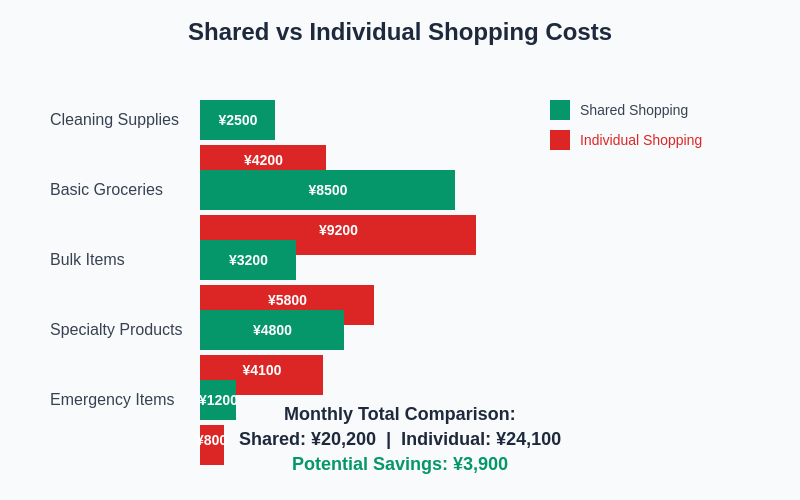
While shared shopping can provide genuine cost savings for certain categories like cleaning supplies and bulk items, the financial benefits often fail to offset the time, stress, and relationship costs associated with coordination complications.
The evolution from shared shopping lists to more individualized approaches often represents maturity in sharehouse communities as residents develop more realistic understanding of collaboration limitations and prioritize relationship harmony over theoretical efficiency benefits. Learning to identify which aspects of daily life work well as collaborative efforts versus those that function better through individual management represents crucial wisdom for successful long-term sharehouse living.
Understanding the inevitable complications of shared shopping lists helps new residents set appropriate expectations and develop backup plans that prevent minor coordination failures from escalating into major household conflicts. The goal should be finding sustainable approaches that support community goals while respecting individual differences and practical limitations that make perfect coordination impossible in diverse living environments.
Disclaimer
This article is for informational purposes only and does not constitute professional advice about household management or financial planning. The experiences described reflect common challenges in shared living situations but may vary significantly depending on individual circumstances, cultural contexts, and specific household dynamics. Readers should consider their own situations and communication styles when implementing shared shopping strategies.