The intricate balance of sharehouse harmony faces its greatest challenge when shift workers with irregular schedules attempt to coexist with residents maintaining traditional work patterns, creating a complex web of conflicting needs that tests the limits of shared living arrangements in Tokyo’s already cramped housing environment. The fundamental disconnect between night shift workers requiring daytime sleep and day shift residents conducting normal daily activities creates tension patterns that can escalate from minor inconveniences to relationship-destroying conflicts that force residents to choose between career obligations and housing stability.
This scheduling incompatibility extends far beyond simple noise concerns to encompass fundamental lifestyle differences that affect every aspect of shared living, from kitchen usage patterns and bathroom schedules to social activities and guest policies that must accommodate residents whose active hours occur when others need rest and recovery. Understanding these complex dynamics becomes essential for both shift workers seeking compatible living arrangements and regular schedule residents who find themselves sharing space with individuals whose daily rhythms operate in direct opposition to conventional household patterns.
The Fundamental Schedule Incompatibility Problem
Night shift workers in Tokyo’s service, healthcare, and manufacturing industries face the biological challenge of maintaining sleep schedules that directly conflict with the natural rhythms of shared living spaces designed around conventional work patterns, creating situations where their essential rest periods coincide with peak household activity times when other residents conduct cooking, cleaning, socializing, and general daily maintenance activities. How to handle roommate conflicts without moving out provides general conflict resolution strategies, but shift work scheduling creates unique challenges that require specialized approaches to manage successfully.
The economic pressure on international residents to accept shift work positions in Tokyo’s competitive job market often forces individuals into housing situations where their work schedules create unavoidable conflicts with housemate schedules, particularly in budget-conscious sharehouses where residents cannot afford the luxury of choosing living arrangements based on schedule compatibility rather than financial necessity. The concentration of shift work opportunities in specific industries means that many international residents find themselves working irregular hours without adequate preparation for the social and logistical challenges these schedules create in shared living environments.
Cultural differences in communication about scheduling needs often prevent effective coordination between shift workers and regular schedule residents, particularly when language barriers complicate discussions about reasonable accommodation expectations and boundary establishment that could prevent conflicts before they escalate into relationship-damaging disputes. The Japanese cultural emphasis on avoiding direct confrontation can mask growing resentment about scheduling conflicts until tensions reach crisis levels that require dramatic interventions or housing changes to resolve.
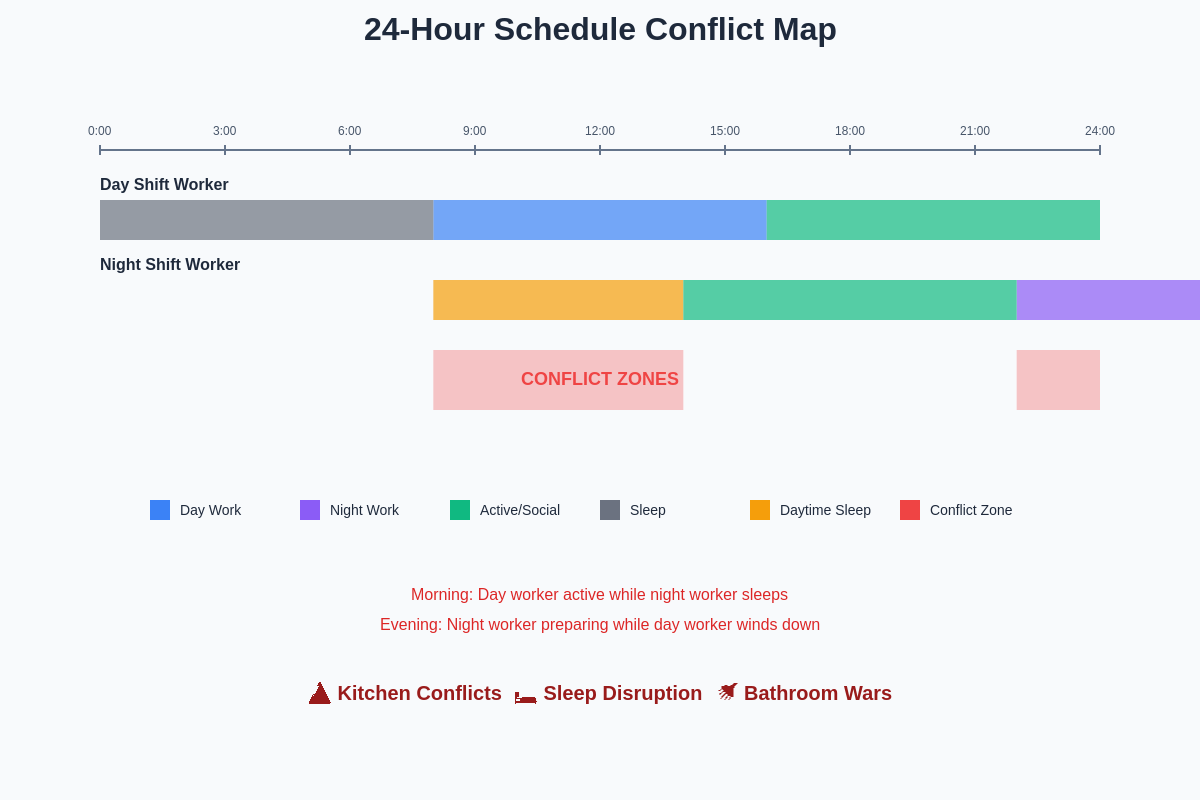
The physical limitations of typical Tokyo sharehouse construction often amplify schedule conflicts because thin walls, shared ventilation systems, and interconnected utility infrastructure transmit sounds and activities between rooms in ways that make it impossible for shift workers to achieve the quiet environment necessary for daytime rest while other residents maintain normal activity levels during their natural waking hours.
Kitchen Usage Wars and Meal Timing Conflicts
Kitchen access becomes a battlefield when shift workers need to prepare meals during peak usage times that coincide with other residents’ breakfast, lunch, or dinner preparation, creating competition for limited cooking space and appliances that can escalate into bitter disputes over fair usage allocation and courtesy expectations that differ dramatically between residents with opposing schedules. Kitchen politics actually work in Japanese sharehouses explains general kitchen dynamics, but shift work adds complex layers of timing conflicts that require specialized management approaches.
Refrigerator space allocation becomes particularly contentious when shift workers store meals and ingredients for consumption during hours when other residents expect quiet kitchen environments, leading to conflicts over food storage rights, preparation timing, and cleanup responsibilities that must accommodate multiple overlapping usage patterns throughout twenty-four hour periods. The limited refrigerator capacity typical in Tokyo sharehouses creates zero-sum competition situations where shift workers’ storage needs directly compete with regular schedule residents’ meal planning and preparation requirements.
Cooking odor management presents unique challenges when shift workers prepare aromatic meals during early morning or late evening hours that disturb sleeping residents, while simultaneously facing restrictions on their own meal preparation during conventional cooking times when kitchen ventilation and noise levels would be more acceptable to the household community. The interconnected ventilation systems common in converted sharehouse buildings often distribute cooking smells throughout living spaces in ways that make it impossible to contain meal preparation impacts to kitchen areas alone.
Dishwashing and cleanup timing creates ongoing friction when shift workers complete meal preparation cleanup during hours when water usage, dishwasher operation, and general kitchen maintenance activities disturb residents trying to sleep, while delaying cleanup until more socially acceptable hours allows food residue and odors to develop that affect kitchen cleanliness standards expected by the broader household community. The cultural expectations around immediate cleanup in Japanese living situations often conflict with shift workers’ need to minimize noise during their housemates’ sleeping hours.
Bathroom Schedule Chaos and Personal Hygiene Timing
Bathroom access scheduling becomes exponentially more complex when shift workers require shower and personal hygiene time during peak usage periods that coincide with other residents’ morning preparation routines or evening wind-down activities, creating bottlenecks that affect everyone’s ability to maintain their preferred schedule patterns and personal care standards. The limited bathroom facilities typical in Tokyo sharehouses create natural competition situations that become acute when residents operate on fundamentally different daily schedules that prevent effective coordination and fair usage allocation.
Morning rush hour conflicts intensify when night shift workers return home needing immediate shower access to decompress from work while day shift residents simultaneously require bathroom facilities for their own work preparation routines, creating time pressure situations that can escalate into heated disputes over priority rights and reasonable accommodation expectations. The cultural importance of cleanliness and personal hygiene in Japanese society adds pressure to these conflicts because residents cannot easily compromise on their hygiene standards to accommodate scheduling difficulties.
Hot water availability becomes a critical issue when shift workers’ shower needs coincide with peak hot water usage times, particularly in older sharehouse buildings with limited hot water capacity that cannot accommodate multiple residents’ simultaneous usage requirements during concentrated time periods. The expense of upgrading hot water systems often prevents property managers from addressing capacity limitations, leaving residents to negotiate complex usage schedules that require constant coordination and compromise from all parties involved.
Bathroom cleaning responsibilities create additional complexity when shift workers’ optimal cleaning times conflict with other residents’ usage needs, making it difficult to maintain hygiene standards while accommodating everyone’s schedule requirements and cultural expectations around shared space maintenance. The expectation for immediate post-usage cleaning in many Japanese sharehouses conflicts with shift workers’ need to schedule cleaning activities during hours that minimize disruption to sleeping residents.
Sleep Disruption and Noise Management Challenges
Daytime sleep requirements for night shift workers create the most fundamental conflict in shared living arrangements because maintaining the quiet environment necessary for quality rest becomes impossible when other residents conduct normal daily activities including phone conversations, television viewing, cooking, cleaning, and social interactions that generate noise levels incompatible with sleep needs. The biological necessity of sleep cannot be negotiated or postponed, making this conflict category the most likely to force housing changes when accommodation efforts fail to provide adequate solutions.
Sound transmission through typical Tokyo sharehouse construction makes it nearly impossible to contain normal activity noise to specific areas, meaning that shift workers attempting daytime sleep face disruption from activities occurring throughout the building rather than just adjacent rooms, creating situations where entire household communities must modify their behavior patterns to accommodate individual residents’ sleep needs. The cost of soundproofing improvements often exceeds both residents’ budgets and property managers’ willingness to invest in specialized accommodations for minority schedule requirements.
Television and music consumption patterns create ongoing friction when shift workers need quiet environments during peak entertainment hours for other residents, while their own entertainment needs occur during late night or early morning hours when sound usage becomes socially unacceptable to the broader household community. The shared nature of common area entertainment systems often prevents individual control over noise levels, requiring constant negotiation and compromise that can exhaust community patience and goodwill over time.
Guest policies become complicated when shift workers’ social activities occur during unconventional hours that may disturb other residents’ sleep, while restrictions on guest access during traditional social hours limit shift workers’ ability to maintain normal social relationships and community connections that support their mental health and cultural integration. The balance between individual social needs and community rest requirements often proves impossible to achieve without significant sacrifice from one or both parties involved in scheduling conflicts.
Social Activity Exclusion and Community Integration Problems
Household social events and community building activities typically occur during evening and weekend hours when shift workers may be sleeping, working, or recovering from work, creating systematic exclusion from relationship building opportunities that form the foundation of positive sharehouse experiences and long-term housing satisfaction. Making friends through Tokyo sharehouse communities describes typical community building approaches, but shift work schedules often prevent participation in standard social activities that create household bonds.
Meal sharing traditions that build community connections become impossible when shift workers’ eating schedules conflict with communal meal times, preventing them from participating in the cultural exchange and relationship development that occurs around shared food experiences in international sharehouse communities. The cultural significance of communal meals in building cross-cultural understanding means that shift workers miss essential opportunities for language practice, cultural learning, and friendship development that other residents experience regularly.
House meeting participation becomes problematic when important household decisions must be made during times when shift workers are unavailable due to work or sleep requirements, potentially excluding them from decisions that affect their living environment while creating resentment among other residents who feel their accommodation efforts are not reciprocated through active community participation. The democratic decision-making processes common in sharehouse management often assume all residents can participate in evening or weekend discussions that conflict with shift work obligations.
Holiday and celebration participation suffers when shift workers cannot join cultural celebrations, birthday parties, or seasonal events that occur during their work or rest periods, creating feelings of isolation and cultural disconnection that undermine the international community experience that attracts many residents to sharehouse living arrangements. The timing of traditional celebrations often conflicts with shift work schedules in ways that prevent meaningful cultural exchange and community building through shared festive experiences.
Stress Transmission and Emotional Contagion Effects
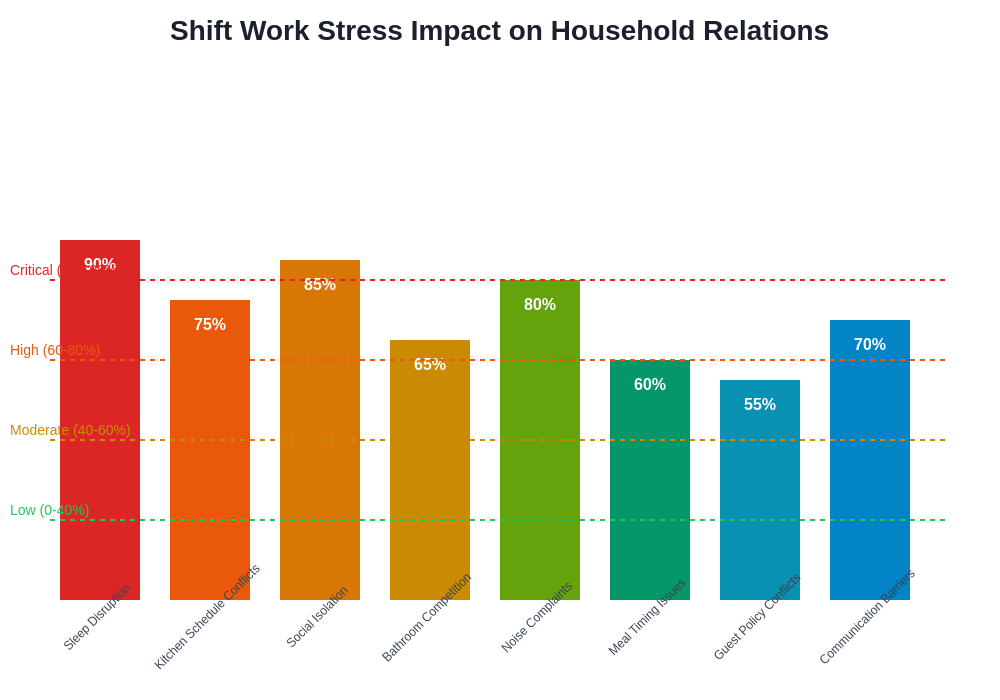
Work-related stress from shift work positions often intensifies household tensions because irregular schedules, sleep deprivation, and social isolation create emotional volatility that affects interpersonal relationships and conflict resolution abilities within the shared living environment. The accumulated stress from managing work obligations alongside complex household scheduling negotiations can overwhelm residents’ capacity for patience and compromise, leading to conflicts that escalate beyond their original scheduling causes into broader relationship disputes.
Sleep deprivation effects from inadequate rest due to household noise and scheduling conflicts create cognitive impairment that reduces shift workers’ ability to communicate effectively, manage emotions appropriately, and maintain perspective during household disputes, potentially causing minor scheduling disagreements to escalate into major relationship crises that threaten housing stability. The biological impacts of chronic sleep disruption extend beyond individual health concerns to affect entire household dynamics through increased irritability, reduced empathy, and impaired judgment during community interactions.
Financial stress from potential job loss due to performance problems caused by inadequate rest can create additional pressure on household relationships when shift workers become desperate to maintain their housing arrangements while simultaneously struggling to meet work obligations that require optimal rest and recovery. The interconnection between work performance, housing stability, and household relationships creates high-stakes situations where scheduling conflicts can threaten multiple aspects of residents’ lives simultaneously.
Mental health deterioration from social isolation and chronic stress can affect entire household communities when shift workers experience depression, anxiety, or other psychological difficulties that impact their ability to maintain positive relationships and contribute constructively to shared living arrangements. The stigma around mental health issues in Japanese culture often prevents seeking appropriate support, allowing psychological problems to compound and affect broader household dynamics through increased conflicts and reduced community cohesion.
Cultural Communication Barriers and Conflict Resolution
Language limitations often prevent effective negotiation of scheduling accommodations because shift workers may lack the vocabulary and cultural knowledge necessary to explain their needs appropriately while understanding other residents’ concerns and proposed solutions that require nuanced communication about complex logistical arrangements. The indirect communication style preferred in Japanese culture can obscure the severity of scheduling conflicts until they reach crisis levels that require dramatic interventions rather than gradual accommodation development.
Cultural expectations around work-life balance vary significantly between different nationalities represented in international sharehouses, creating conflicts when residents from cultures that prioritize work obligations encounter others who emphasize personal comfort and social harmony in ways that make shift work accommodation seem unreasonable or selfish. The negotiation of cultural differences around work priority often becomes intertwined with scheduling conflicts in ways that make practical solutions difficult to identify and implement effectively.
Authority structures within household communities may not adequately represent shift workers’ needs when decision-making processes favor residents who participate in regular community meetings and social activities, potentially creating governance systems that systematically disadvantage residents with irregular schedules who cannot engage with traditional democratic participation methods. The informal leadership that develops in sharehouse communities often reflects availability for social interaction rather than fairness in representing diverse scheduling needs.
Conflict escalation patterns in cross-cultural environments often involve misunderstandings about cultural appropriateness of different accommodation requests, with shift workers potentially viewed as demanding special treatment while other residents feel their own cultural norms around rest and social behavior are being disrespected through forced accommodation requirements that alter household dynamics.
Technology Solutions and Communication Systems
Digital scheduling systems can provide solutions for coordinating complex household logistics when residents maintain different schedules, allowing advance planning for kitchen usage, bathroom access, and quiet hours that accommodates everyone’s needs while providing transparency about scheduling decisions that affect household harmony. The implementation of shared calendar systems requires cultural adaptation and technological literacy that may not be equally distributed among international residents with varying digital comfort levels.
Noise monitoring applications and communication tools can help establish objective standards for acceptable noise levels during different time periods while providing data-driven approaches to resolving disputes about sound management that remove subjective interpretations and cultural bias from conflict resolution processes. The cultural resistance to direct confrontation in Japanese society often makes technological mediation more acceptable than personal negotiations about behavioral changes.
Smart home technology including programmable lighting, sound systems, and appliance controls can help minimize schedule conflicts by allowing automated management of shared resources that reduces the need for real-time coordination and negotiation between residents with fundamentally different daily patterns. The investment costs for smart home solutions often exceed sharehouse budgets, limiting implementation to higher-end properties that may not be accessible to budget-conscious shift workers.
Emergency communication systems become essential when shift workers’ schedules prevent participation in normal household communication patterns, requiring alternative methods for sharing important information about maintenance, safety issues, or community decisions that cannot wait for conventional meeting times or social interaction opportunities.
Building Sustainable Accommodation Strategies
Proactive house rule development that specifically addresses shift work scheduling needs can prevent conflicts by establishing clear expectations and accommodation protocols before problems arise, creating frameworks for fair resource sharing and conflict resolution that acknowledge diverse schedule requirements while maintaining community harmony standards acceptable to all residents. The development of comprehensive house rules requires input from residents with different schedule patterns to ensure fair representation of diverse needs and cultural expectations.
Quiet hour policies must balance shift workers’ sleep needs with other residents’ lifestyle requirements through carefully negotiated time periods and activity restrictions that provide adequate rest opportunities while preserving reasonable freedom for household activities and social interaction during conventional hours. The enforcement of quiet hour policies often requires ongoing negotiation and adjustment as household composition changes and individual needs evolve over time.
Physical space modifications including soundproofing improvements, designated quiet zones, and separate kitchen facilities can reduce schedule conflicts by providing infrastructure that accommodates diverse timing needs without requiring constant behavioral modification and compromise from all residents. The cost and complexity of physical modifications often exceed what is practical in rental properties, limiting solution options to behavioral and policy adjustments.
Community support network development within and between sharehouses can provide shift workers with social connections and practical assistance that reduces their dependence on household community participation for relationship building and problem-solving support. The creation of shift worker support networks requires initiative and cultural bridge-building that may be challenging for residents dealing with work stress and social isolation.
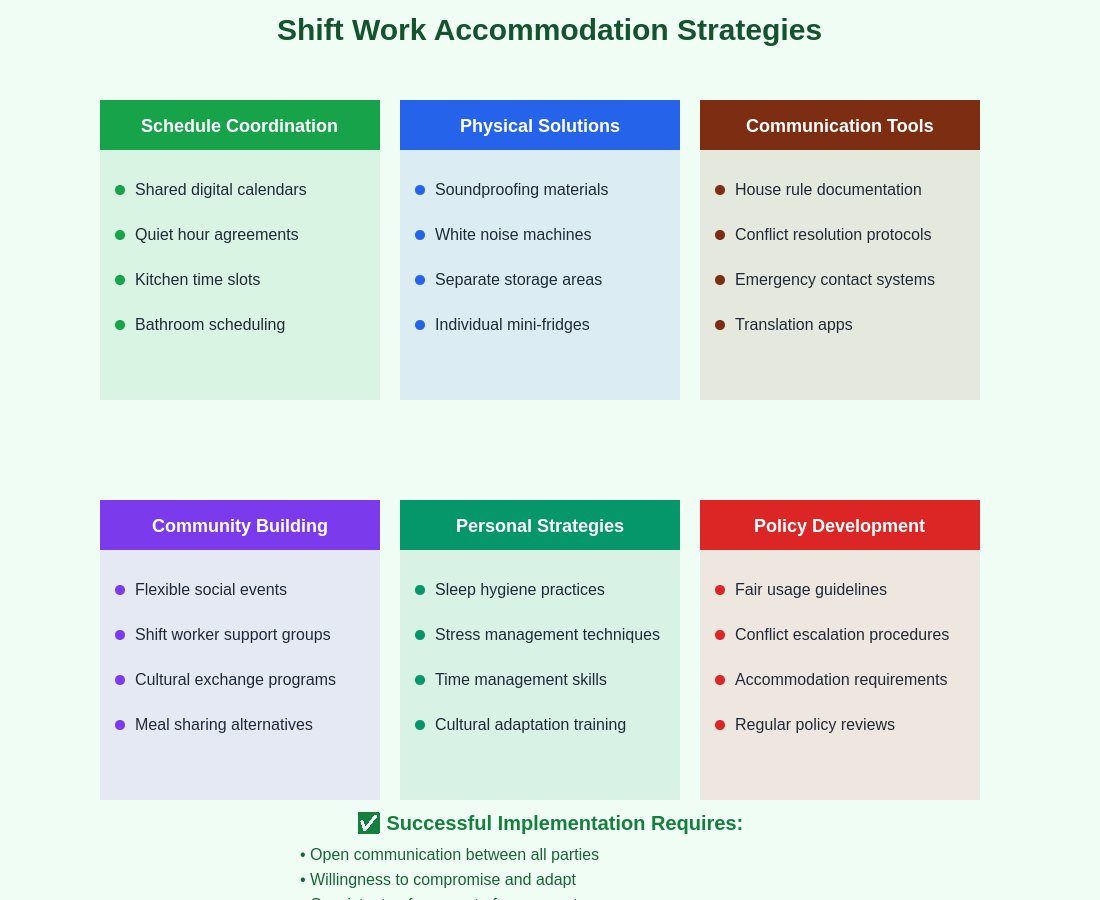
The successful integration of shift workers into sharehouse communities requires recognition that scheduling conflicts represent fundamental lifestyle incompatibilities rather than simple logistical challenges, demanding comprehensive approaches that address social, practical, and cultural dimensions of shared living while acknowledging that some scheduling conflicts may prove irreconcilable despite good-faith accommodation efforts from all parties involved.
Disclaimer
This article is for informational purposes only and does not constitute professional advice on employment, housing, or conflict resolution. Shift work impacts and roommate dynamics vary significantly based on individual circumstances, cultural backgrounds, and specific living arrangements. Readers should consider their personal needs and consult with relevant professionals when making housing and career decisions that involve shift work scheduling challenges.