Living in a Tokyo sharehouse presents countless opportunities for cultural exchange and personal growth, but few residents anticipate how sign language skills can become one of their most valuable communication tools. Beyond its primary purpose of serving the deaf and hard-of-hearing community, sign language reveals itself as an incredibly versatile form of communication that addresses numerous practical challenges inherent to shared living environments where noise restrictions, language barriers, and cultural sensitivities create complex social dynamics.
The discovery that sign language serves multiple purposes in sharehouse living often comes as a delightful surprise to residents who initially learned it for entirely different reasons. Whether acquired through academic study, personal relationships, or professional requirements, these skills find unexpected applications that enhance daily interactions, resolve communication challenges, and create deeper connections among housemates from diverse linguistic and cultural backgrounds.
Silent Communication in Noise-Sensitive Environments
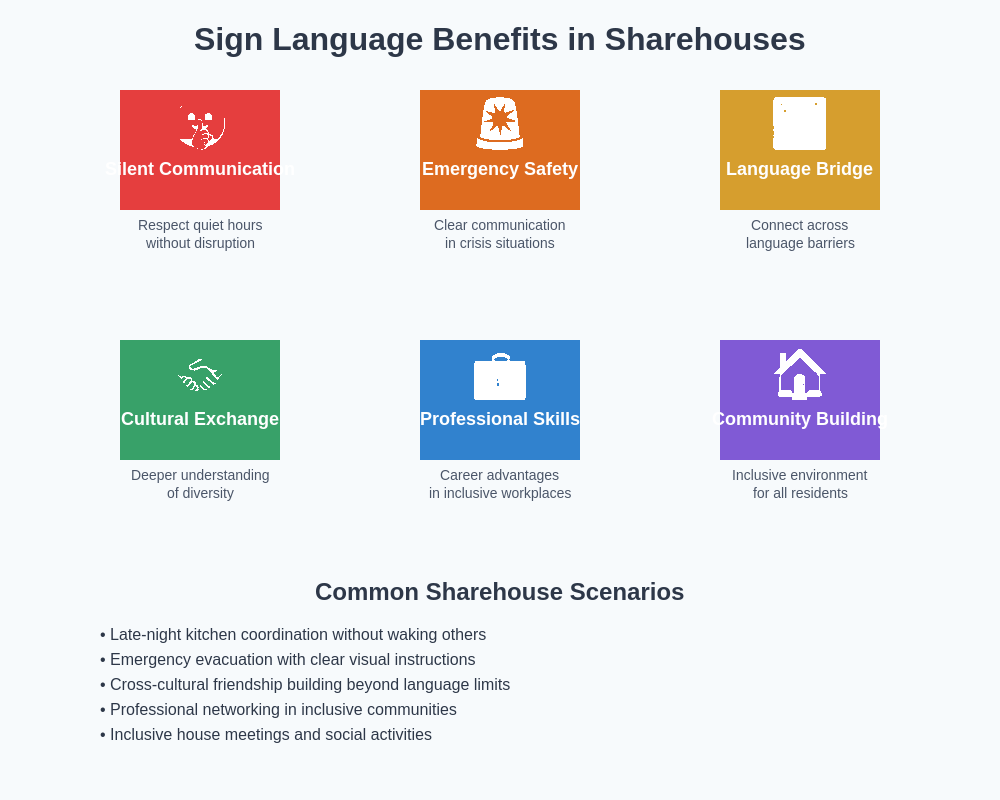
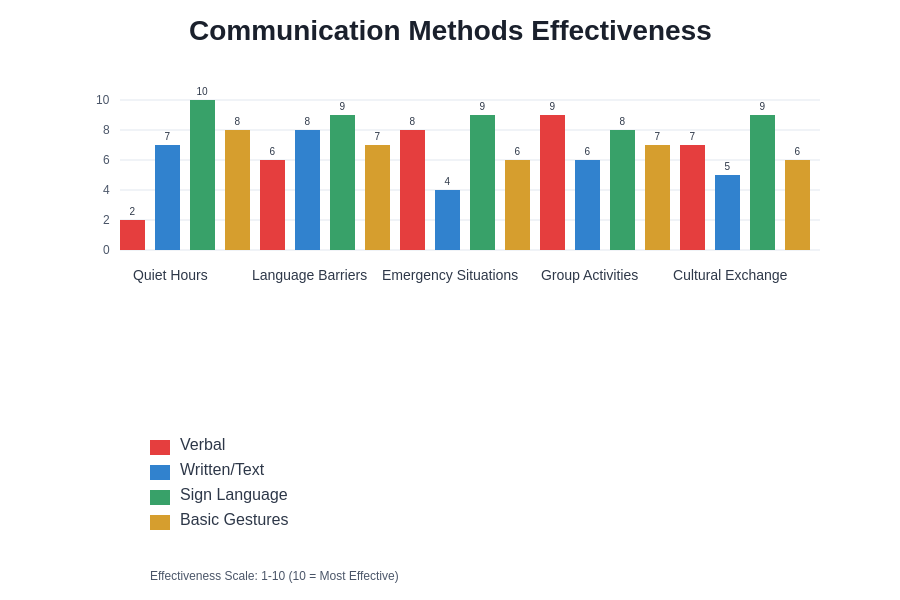
Tokyo sharehouses operate within strict noise regulations that become particularly challenging during evening and early morning hours when residents maintain different schedules due to varying work patterns, study commitments, and social activities. Understanding Japanese sharehouse rules every foreigner should know emphasizes the importance of respecting quiet hours, making sign language an invaluable tool for maintaining communication without disturbing sleeping housemates.
The ability to conduct entire conversations through visual communication transforms how residents navigate shared spaces during sensitive time periods. Kitchen coordination becomes seamless when multiple people can discuss meal preparation, cooking schedules, and cleanup responsibilities without creating noise that travels through thin walls to adjacent bedrooms. Bathroom queuing systems develop organically when residents can communicate availability and timing through simple hand signals visible from common areas.
Television viewing and entertainment activities benefit enormously from sign language capabilities, allowing groups to discuss programming choices, share reactions, and coordinate remote control usage without adding to audio levels that might exceed acceptable noise thresholds. Movie nights become more inclusive when sign language users can provide real-time translation or commentary for international films without disrupting the viewing experience for others.
Bridging Language Barriers Through Universal Gestures
International sharehouses in Tokyo typically house residents from numerous countries, each bringing different levels of Japanese proficiency and varying degrees of English comprehension. Making friends through Tokyo sharehouse communities explores how communication challenges can initially limit relationship development, but sign language offers a universal bridge that transcends spoken language limitations.
Basic sign language vocabulary provides common ground for expressing essential concepts such as emotions, needs, preferences, and daily activities that might be difficult to convey through limited shared vocabulary in any particular spoken language. Mathematical concepts, time references, and spatial relationships translate easily through visual communication, enabling practical discussions about schedules, measurements, and directional guidance that support daily living coordination.
Cultural concepts that lack direct translation between languages often find expression through sign language’s visual nature, allowing residents to share ideas about traditions, customs, and personal experiences that might otherwise remain unexpressed due to linguistic constraints. The physical nature of sign language also reduces the anxiety many international residents experience when attempting to pronounce unfamiliar words or construct grammatically correct sentences in their non-native languages.
Emergency Communication and Safety Applications
Emergency situations in sharehouses require immediate, clear communication that can’t wait for language translation or repeated explanations. Sign language provides instant visual communication that works across linguistic barriers and remains effective even when verbal communication becomes impossible due to noise, panic, or physical limitations that might arise during crisis situations.
Fire emergency procedures benefit significantly from sign language capabilities when smoke alarms create overwhelming noise levels that make verbal communication nearly impossible. Evacuation coordination through visual signals allows residents to quickly assess headcounts, communicate alternate escape routes, and maintain group cohesion during emergency egress when audio instructions become unintelligible.
Medical emergencies often involve situations where affected individuals cannot speak clearly or at all, making sign language skills crucial for gathering information about symptoms, allergies, and medical history that emergency responders need for proper treatment. How medical emergencies expose system weaknesses highlights how communication breakdowns can complicate emergency response, emphasizing the value of alternative communication methods.
Natural disaster preparedness in earthquake-prone Tokyo particularly benefits from sign language communication when building damage or environmental factors compromise normal communication channels. Coordination of shelter activities, resource distribution, and safety checks becomes more efficient when residents can communicate visually across distances where shouting might not be heard or appropriate.
Professional and Academic Advantages
The professional landscape in Tokyo increasingly values employees with diverse communication skills, and sign language proficiency often provides unexpected career advantages in fields ranging from customer service to international business. Companies serving diverse populations recognize that staff members who can communicate with deaf and hard-of-hearing customers create more inclusive service environments that reflect positively on corporate social responsibility initiatives.
Academic environments, particularly language schools and universities popular among international students, frequently need individuals who can facilitate communication between students with different abilities and backgrounds. Student sharehouses near top Tokyo universities attract residents pursuing various academic disciplines, creating opportunities for sign language users to support fellow students through tutoring, study group facilitation, and academic project collaboration.
Healthcare and social service sectors in Tokyo actively recruit professionals with sign language capabilities to serve the deaf and hard-of-hearing community, which has historically faced significant barriers to accessing quality care and support services. International residents with these skills often discover volunteer opportunities that provide meaningful community engagement while developing professional networks and cultural understanding.
Technology Integration and Digital Communication
Modern technology enhances sign language communication through video calling platforms that enable visual conversations across distances, connecting sharehouse residents with deaf friends, family members, and professional contacts worldwide. High-quality camera systems and reliable internet infrastructure in many Tokyo sharehouses support clear video communication that maintains the nuances essential for effective sign language conversation.
Social media platforms and messaging applications increasingly incorporate features designed to support visual communication, including video messaging capabilities, gesture recognition software, and community forums specifically designed for sign language users. These technological advances create opportunities for sharehouse residents to connect with broader deaf and hard-of-hearing communities both locally and internationally.
Translation applications and augmented reality tools continue evolving to support sign language recognition and conversion, though human communication skills remain irreplaceable for nuanced conversations and cultural exchange. Understanding both traditional sign language and emerging technological applications provides comprehensive communication capabilities that adapt to various social and professional contexts.
Cultural Appreciation and Disability Awareness
Living alongside residents who use sign language naturally increases cultural awareness and understanding of disability rights, accessibility challenges, and inclusive communication practices. How cultural differences affect friendship building explores how diverse living environments foster personal growth, with sign language exposure contributing significantly to developing empathy and inclusive thinking patterns.
Japanese Sign Language possesses unique characteristics that reflect Japanese cultural values and social structures, offering insights into how different societies approach visual communication, hierarchy expression, and respectful interaction patterns. Learning these cultural nuances through daily sharehouse interactions provides deeper understanding than traditional classroom instruction alone.
Accessibility awareness develops organically when residents observe how physical environments, social interactions, and information sharing systems can either support or hinder effective communication for community members with different abilities. This awareness often translates into advocacy skills and design thinking approaches that benefit various professional and personal endeavors.
Building Stronger Community Connections
Sign language creates inclusive communication environments where all residents can participate fully in house meetings, social activities, and daily interactions regardless of their hearing abilities or spoken language proficiencies. Living with Japanese roommates in Tokyo sharehouses discusses cultural integration challenges, with visual communication often providing breakthrough moments that deepen cross-cultural understanding.
Community activities such as cooking classes, game nights, and cultural celebrations become more engaging when sign language enables broader participation and real-time interaction among residents with diverse communication preferences. These inclusive environments often attract residents who value diversity and accessibility, creating self-reinforcing communities committed to mutual support and understanding.
Conflict resolution processes benefit from sign language capabilities when emotional discussions require careful, deliberate communication that allows all parties to express complex feelings and concerns without the pressure of rapid verbal response. How to handle roommate conflicts without moving out emphasizes communication techniques, with visual communication providing additional tools for maintaining respectful dialogue.
Economic and Practical Benefits
Sign language skills often provide economic advantages through part-time employment opportunities in translation, tutoring, and community support roles that pay premium rates due to the specialized nature of these services. The demand for qualified interpreters and communication facilitators in Tokyo frequently exceeds supply, creating reliable income streams for residents with certified proficiency levels.
Educational opportunities expand significantly when residents can access sign language courses, cultural events, and community programs designed for deaf and hard-of-hearing participants. These programs often offer unique perspectives on Japanese culture, history, and social issues that complement traditional language learning approaches and cultural immersion experiences.
Cost savings emerge through expanded social networks that include deaf and hard-of-hearing community members who often maintain resource-sharing systems, group purchasing arrangements, and mutual support networks that welcome inclusive-minded individuals. How group buying power reduces individual costs explores collaborative consumption benefits that extend beyond typical sharehouse arrangements.
Long-term Personal Development
The cognitive benefits of multilingual communication that includes visual-spatial language processing enhance overall communication abilities, creative thinking patterns, and problem-solving approaches that prove valuable across various life domains. Research consistently demonstrates that sign language proficiency supports enhanced spatial reasoning, memory retention, and multitasking capabilities that benefit academic and professional performance.
Leadership skills develop naturally when residents become communication bridges between diverse community members, facilitating interactions, organizing inclusive activities, and advocating for accessibility improvements within their living environments. These experiences translate into valuable professional competencies in team management, project coordination, and inclusive design thinking.
Personal relationships often deepen significantly when communication transcends typical verbal exchanges to include visual, emotional, and cultural dimensions that sign language communication naturally incorporates. Many residents report that learning to communicate through sign language enhanced their overall empathy, patience, and appreciation for diverse forms of human expression and connection.
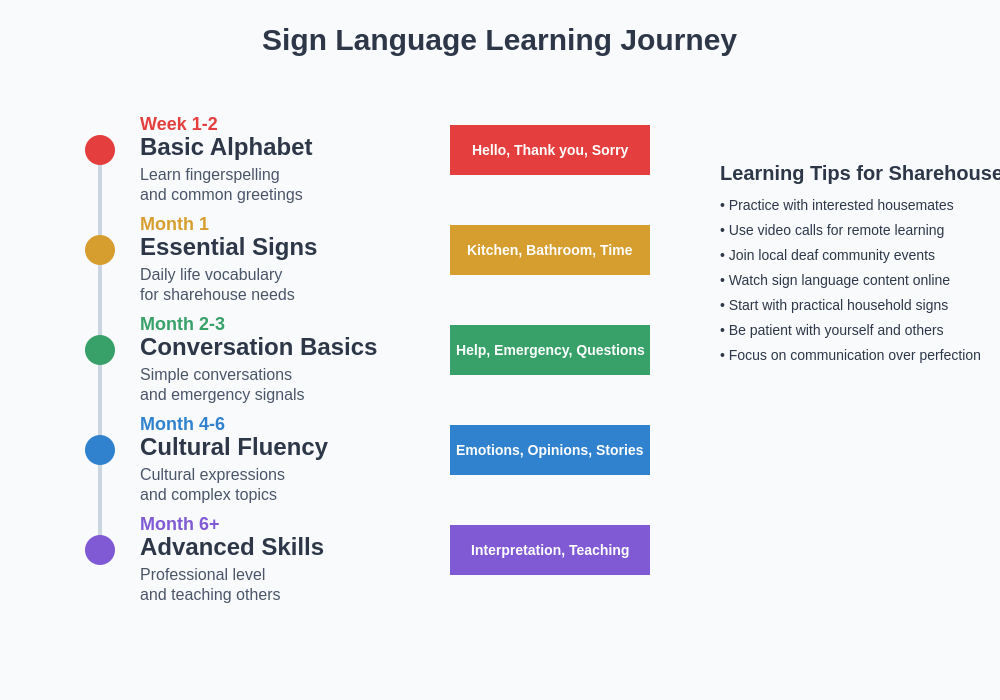
The unexpected utility of sign language in Tokyo sharehouse environments reveals how skills acquired for specific purposes often find broader applications that enrich daily life in ways impossible to anticipate. Whether learned through academic study, personal relationships, or professional requirements, sign language capabilities consistently prove valuable for enhancing communication, building community, and creating inclusive environments that benefit all residents regardless of their hearing abilities or linguistic backgrounds.
Disclaimer
This article is for informational purposes only and does not constitute professional advice regarding sign language instruction, accessibility accommodations, or disability services. Sign language proficiency requirements and cultural practices vary significantly across different communities and contexts. Readers interested in learning sign language should consult qualified instructors and community organizations for proper training and cultural guidance. The experiences described may vary depending on individual circumstances, sharehouse environments, and community dynamics.