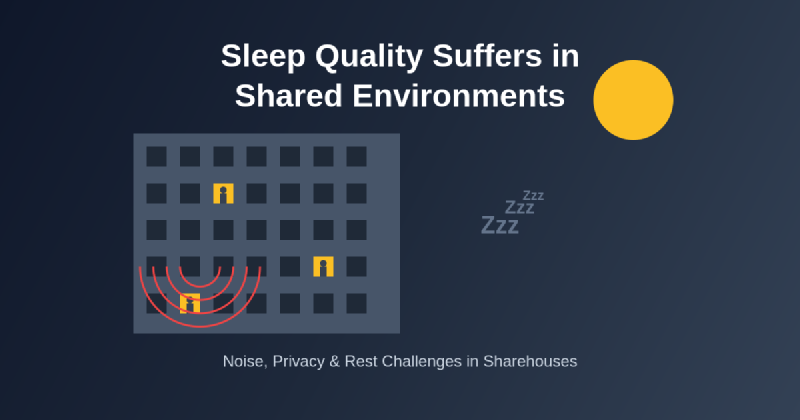
The pursuit of quality sleep becomes significantly more complex when transitioning from private accommodation to shared living environments, particularly in densely populated urban centers like Tokyo. The challenges that arise from communal living situations extend far beyond simple noise disturbances, encompassing a comprehensive range of physiological, psychological, and environmental factors that can dramatically impact sleep duration, depth, and overall restorative quality. Understanding these multifaceted challenges represents the first step toward developing effective strategies for maintaining healthy sleep patterns despite the inherent complications of sharehouse living.
The significance of sleep quality extends beyond mere comfort considerations, directly influencing cognitive performance, emotional stability, immune system function, and long-term health outcomes that affect every aspect of daily life. When sleep quality deteriorates in shared environments, residents often experience cascading effects that impact work performance, social relationships, and overall quality of life, creating a cycle of stress and fatigue that becomes increasingly difficult to break without targeted intervention strategies.
The Complex Nature of Sleep Disruption in Sharehouses
Sleep disruption in shared living environments manifests through multiple interconnected pathways that create a challenging web of interference with natural sleep cycles. Understanding noise pollution affects sleep quality becomes essential for residents seeking to identify and address the primary sources of sleep interference that commonly plague communal living situations across Tokyo’s diverse sharehouse landscape.
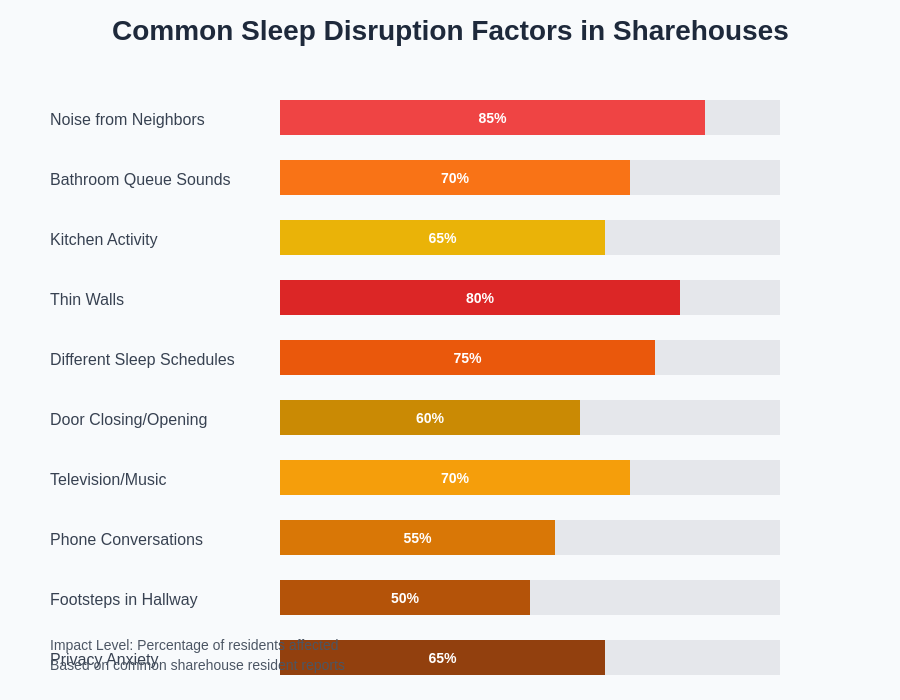
The architectural limitations inherent in many converted residential buildings used for sharehouses often feature inadequate sound insulation between rooms, allowing even moderate noise levels to penetrate living spaces during critical sleep hours. The constant awareness of nearby residents creates a state of hypervigilance that prevents the deep relaxation necessary for entering restorative sleep phases, even when actual noise disturbances are minimal or intermittent.
Irregular sleep schedules among multiple residents compound these architectural challenges, creating situations where normal daily activities such as cooking, showering, or phone conversations occur during others’ designated sleep hours. How shift work schedules affect roommate relations explores how varying work patterns create ongoing conflicts between residents’ sleep needs and daily activity requirements.
The psychological stress associated with uncertain sleep environments creates anticipatory anxiety that further compromises sleep quality, as residents develop heightened sensitivity to potential disturbances and struggle to achieve the mental calm necessary for natural sleep onset. This creates a self-perpetuating cycle where fear of sleep disruption becomes itself a primary cause of sleep difficulties.
Noise-Related Sleep Challenges and Sound Management
The acoustic environment in sharehouses presents unique challenges that extend beyond typical urban noise considerations, encompassing a complex array of internal and external sound sources that collectively create sustained interference with natural sleep patterns. The proximity of multiple residents engaging in diverse daily activities creates overlapping noise periods that can extend throughout traditional sleep hours, making consistent quiet periods increasingly rare.
Common internal noise sources include footsteps in hallways and adjacent rooms, door closing and opening sounds, kitchen appliance usage during late evening or early morning hours, and conversations that carry through inadequate wall insulation. Why morning bathroom queues are inevitable in sharehouses highlights how shared facilities create concentrated periods of activity that can disrupt sleep for light sleepers and those with early bedtime preferences.
Electronic device usage presents another significant category of sleep disruption, with television sounds, music, gaming audio, and video call conversations creating sustained noise exposure that can penetrate even closed doors and windows. The cultural differences in noise sensitivity and consideration for others can exacerbate these issues, particularly in internationally diverse sharehouses where varying standards of acceptable noise levels create ongoing conflicts.
External noise factors compound internal disturbances, with urban environments contributing traffic sounds, construction activities, and neighborhood noise that becomes more noticeable and disruptive when combined with internal sharehouse sounds. The inability to control external noise sources increases reliance on internal noise management strategies that often prove inadequate for comprehensive sleep protection.
Privacy Concerns and Mental Rest Requirements
The psychological aspects of sleep quality in shared environments extend far beyond physical noise considerations, encompassing fundamental human needs for privacy, security, and mental decompression that become compromised in communal living situations. Why privacy is limited even in private rooms examines how the constant awareness of nearby residents affects the ability to achieve the mental relaxation necessary for quality sleep.
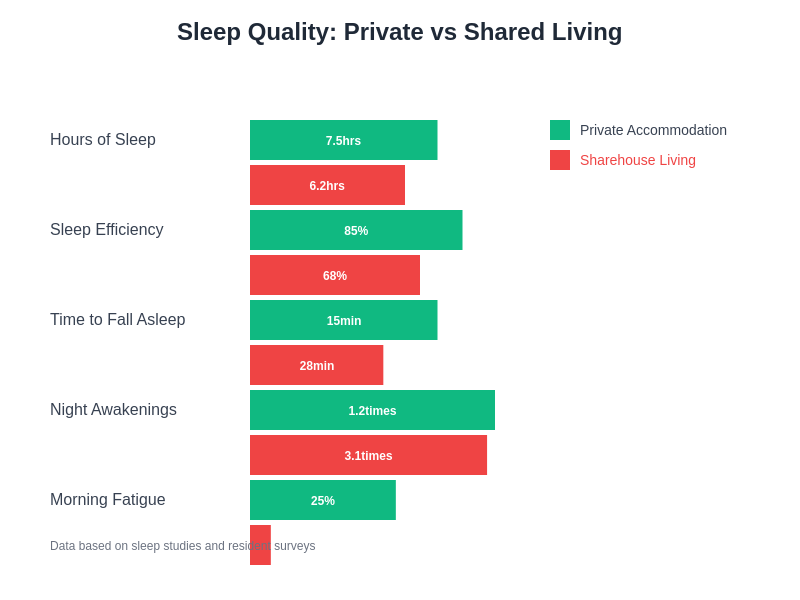
The absence of true privacy creates ongoing stress responses that interfere with the natural wind-down process required for healthy sleep onset, as residents remain subconsciously alert to potential interactions or disturbances from housemates. This hypervigilance prevents the deep relaxation that characterizes healthy pre-sleep periods, resulting in longer sleep latency and reduced sleep efficiency throughout the night.
Concerns about personal security and belongings safety can create anxiety that persists into sleep hours, particularly for residents who have experienced theft or privacy violations within their sharehouse environment. Why personal belongings disappear despite locks discusses how security concerns can create lasting sleep difficulties that extend beyond specific incident occurrences.
The inability to control immediate environment factors such as temperature, lighting, and air circulation in shared buildings creates additional stress factors that compound privacy concerns and contribute to overall sleep quality deterioration. The need to accommodate others’ preferences and schedules often prevents residents from optimizing their personal sleep environment according to individual needs and preferences.
Cultural and Lifestyle Differences Impacting Sleep
The international nature of many Tokyo sharehouses creates unique sleep challenges arising from diverse cultural approaches to sleep hygiene, noise tolerance, and consideration for others’ rest needs. These cultural differences manifest in varying bedtime schedules, acceptable noise levels during evening hours, and differing expectations regarding quiet periods that can create ongoing conflicts affecting all residents’ sleep quality.
Work schedule variations among international residents compound cultural differences, with some residents maintaining home country time zones for remote work, others following traditional Japanese business hours, and still others working in hospitality or entertainment industries with late-night schedules. How different academic systems affect expectations explores how educational backgrounds influence residents’ approaches to sleep scheduling and noise consideration.
Dietary and meal timing differences can create late-night kitchen activity that conflicts with early sleepers’ needs, while social and entertainment preferences may lead to evening activities that extend into traditional sleep hours. The challenge of balancing individual lifestyle preferences with collective living harmony often results in compromises that satisfy no one completely and create ongoing stress for all residents.
Communication barriers arising from language differences can prevent effective discussion of sleep-related concerns, allowing problems to persist and escalate rather than being addressed through collaborative problem-solving approaches. How language barriers complicate legal documents demonstrates how communication difficulties can extend to house rule discussions and conflict resolution attempts.
Environmental Factors and Physical Comfort Issues
The physical environment in shared living spaces often presents multiple challenges to optimal sleep conditions, ranging from temperature control difficulties to lighting management issues that directly impact sleep quality and duration. The inability to individually control environmental factors creates ongoing compromises that prevent residents from achieving their optimal sleep conditions consistently.
Temperature regulation becomes particularly challenging in shared buildings where heating and cooling systems serve multiple rooms with varying occupancy patterns and individual preferences. Why heating bills create health vs budget dilemmas examines how cost considerations often override optimal temperature settings for quality sleep, forcing residents to choose between comfort and financial concerns.
Lighting control issues arise from shared hallways, common area illumination that penetrates individual rooms, and urban environment light pollution that becomes more noticeable in buildings with inadequate window coverings. The disruption of natural circadian rhythms from artificial light exposure during evening hours can significantly impact sleep onset timing and overall sleep architecture throughout the night.
Air quality concerns in densely occupied buildings can affect breathing comfort and sleep quality, particularly when ventilation systems are inadequate for the number of residents or when cooking odors and other airborne contaminants accumulate in shared spaces. How moisture control prevents mold growth discusses how humidity and air circulation issues can create health concerns that directly impact sleep comfort and quality.
Sleep Schedule Conflicts and Time Management
The coordination of multiple residents’ sleep schedules within shared living spaces creates complex logistical challenges that often result in ongoing conflicts between individual needs and collective harmony. The diversity of work schedules, academic commitments, and personal preferences among residents makes establishing mutually agreeable quiet periods increasingly difficult as house populations grow and become more diverse.
Early risers and night owls create particular challenges when their schedules overlap in shared spaces, with morning activities from early workers potentially disturbing late sleepers, while evening activities from night shift workers or students can interfere with traditional bedtime schedules. How university schedules affect sharehouse rhythms explores how academic calendars and study schedules contribute to sleep schedule variability within student-heavy sharehouses.
Weekend schedule variations often exacerbate weekday sleep challenges, as residents with different social preferences and weekend obligations create inconsistent noise patterns that prevent adaptation to predictable sleep environments. The social pressure to participate in house activities or accommodate others’ schedules can force residents to compromise their optimal sleep timing for social harmony.
International residents maintaining connections with home countries may follow communication schedules that conflict with local sleep hours, creating late-night or early morning phone calls and video conferences that disturb other residents. The challenge of balancing personal relationships and professional obligations with consideration for housemates creates ongoing stress that can significantly impact sleep quality over time.
Health Implications of Chronic Sleep Disruption
The cumulative health effects of sustained sleep quality deterioration in shared living environments extend far beyond temporary fatigue, encompassing serious long-term consequences for physical health, mental wellbeing, and cognitive performance that can persist even after residents transition to different living arrangements. Understanding these health implications helps residents recognize the importance of addressing sleep challenges proactively rather than accepting poor sleep as an inevitable aspect of sharehouse living.
Chronic sleep deprivation from ongoing environmental disturbances can significantly compromise immune system function, increasing susceptibility to respiratory infections, digestive issues, and other health problems that become more concerning in close-quarters living situations. Why illness spreads faster in sharehouses examines how compromised sleep quality can contribute to increased disease transmission and longer recovery periods among residents.
Mental health impacts from sustained sleep disruption include increased anxiety, depression symptoms, and emotional regulation difficulties that can strain relationships with housemates and create cycles of conflict that further compromise sleep quality. The stress of managing sleep difficulties while maintaining social harmony within the sharehouse environment can create additional psychological burdens that compound existing sleep challenges.
Cognitive performance deterioration from poor sleep quality directly impacts work and academic performance, potentially affecting career advancement opportunities and educational outcomes that extend far beyond the immediate sharehouse experience. How academic deadlines affect house mood explores how sleep-deprived students can create additional stress within house communities during critical academic periods.
Practical Solutions and Adaptation Strategies
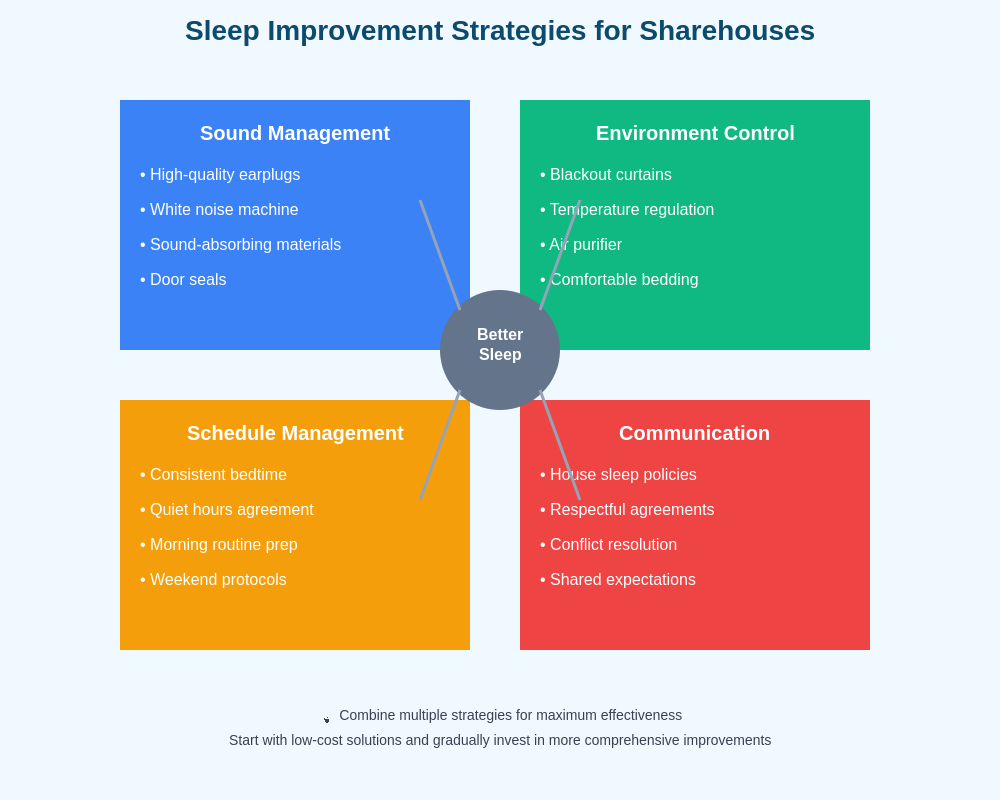
Developing effective strategies for maintaining sleep quality in shared environments requires a multifaceted approach that addresses both individual adaptation techniques and collaborative house management practices. Successful sleep management in sharehouses typically combines personal protective measures with community-wide agreements and environmental modifications that benefit all residents while respecting individual needs and preferences.
Sound management strategies form the foundation of most successful sleep improvement efforts, ranging from personal protective equipment such as high-quality earplugs and white noise machines to room modifications including additional insulation, carpet installation, and strategic furniture placement that can reduce noise transmission. Why noise control becomes critical for career success demonstrates how investing in sound management can provide benefits that extend far beyond sleep improvement.
Sleep hygiene optimization becomes even more critical in shared environments, requiring stricter adherence to consistent bedtime routines, limitation of electronic device usage before sleep, and creation of personal sleep sanctuaries within limited space constraints. The establishment of personal boundaries and communication protocols can help residents address sleep-related concerns before they escalate into serious conflicts or health issues.
Technology solutions including sleep monitoring apps, smart alarm systems, and environmental control devices can help residents optimize their personal sleep conditions while gathering data about sleep quality patterns that can inform longer-term housing decisions. How smart home features change daily routines explores how technological interventions can improve quality of life in shared living situations.
The journey toward better sleep quality in shared environments requires patience, creativity, and often significant investment in both personal adaptations and community relationship building. While the challenges are substantial and multifaceted, residents who successfully address sleep quality issues often find that their problem-solving skills and adaptability developed through this process provide valuable life skills that benefit them long after their sharehouse experience concludes. The key lies in recognizing sleep quality as a serious health priority that deserves proactive attention and collaborative solutions rather than passive acceptance of poor conditions.
Disclaimer
This article is for informational purposes only and does not constitute professional medical or health advice. Sleep disorders and chronic sleep problems may require professional medical evaluation and treatment. The strategies mentioned may vary in effectiveness depending on individual circumstances and specific living conditions. Readers experiencing persistent sleep difficulties should consult with healthcare professionals for proper evaluation and treatment recommendations.